Collection · PL
The Stockholm Spinnhus Pollett System: A Unique Monetary Experiment in Penal Labor
The Stockholm Spinnhus was neither a financial institution nor a charitable enterprise. It was a women’s correctional facility and workhouse, designed to confine, discipline, and economically exploit marginalized women within eighteenth-century Stockholm. Vagrancy, petty crime, debt, and perceived moral deviance were sufficient grounds for confinement. Labor was compulsory, regimented, and enforced through strict institutional control.
Situated on Långholmen Island, the Spinnhus operated as a physically and socially isolated environment. Women confined there were required to spin flax and wool, process textiles, and perform repetitive labor intended to generate institutional revenue. Compensation existed, but it was deliberately severed from the national economy. This separation was not accidental. It was policy.
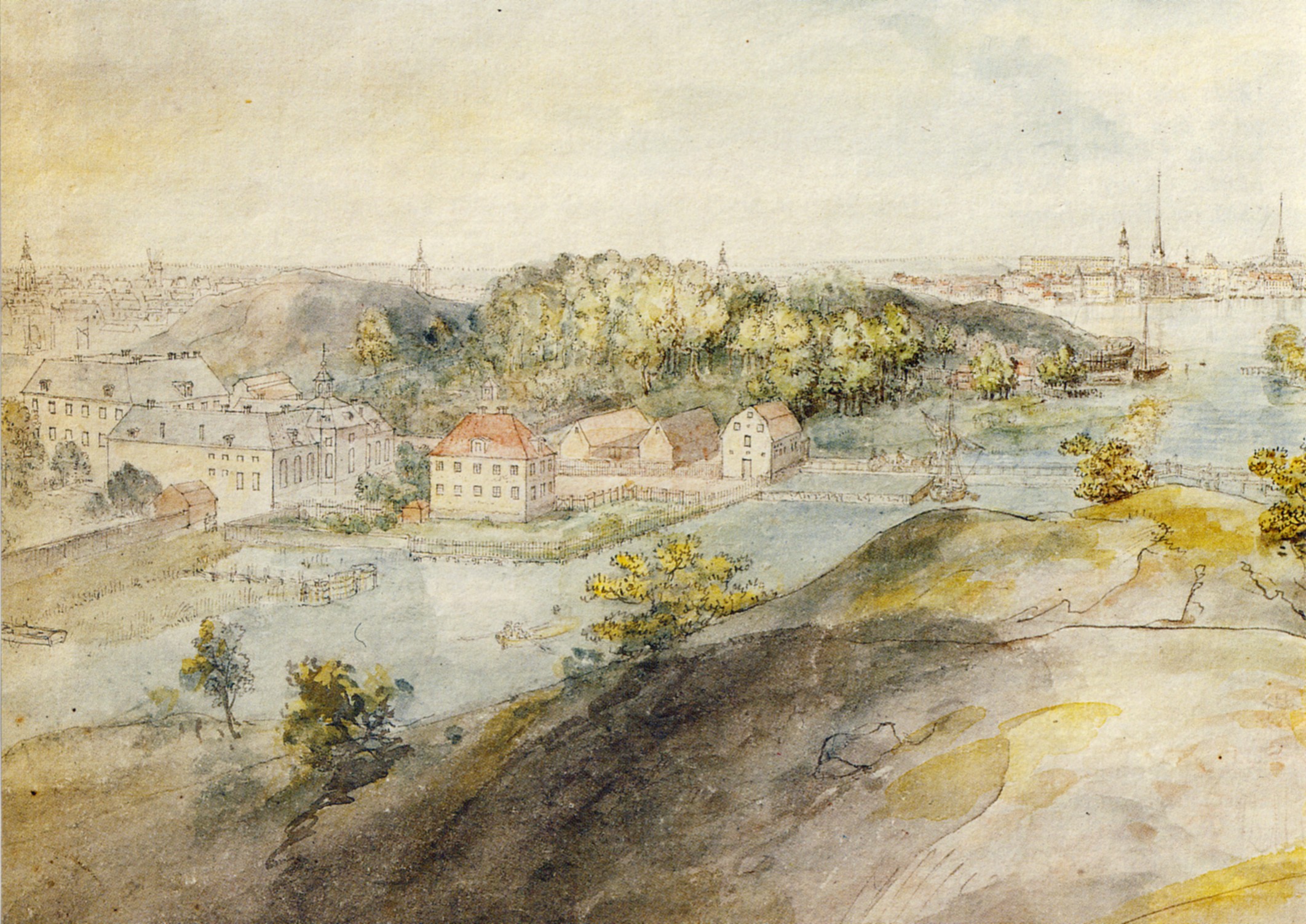
This physical isolation made a self-contained economic system unavoidable, and it is within this closed environment that the Spinnhus pollett currency functioned as the sole medium through which labor, discipline, and access to necessities were regulated.
Produced circa 1785, the Stockholm Spinnhus polletts formed a closed monetary circuit, valid only within the institution and meaningless beyond it. Unlike earlier Swedish paper money, such as the seventeenth-century Kreditivsedlar, which remained redeemable into metal and tied to national circulation, Spinnhus polletts possessed no intrinsic value and no external convertibility. Their acceptance was compulsory, enforced by the absence of alternatives.
In functional terms, the system operated as a proto-fiat currency decades before fiat principles became dominant at the state level. Value existed solely by institutional decree, and monetary abstraction became a tool of governance rather than exchange.
The Architecture of a Closed Monetary System
The Spinnhus monetary system consisted of nine denominations: one half öre, one öre, two öre, five öre, six öre, seven öre, sixteen öre, twenty-four öre, and one daler. This was not a symbolic or simplified token economy. It was a fully articulated internal monetary hierarchy capable of supporting daily subsistence, differentiated labor valuation, accumulation, and deferred exchange.
The presence of irregular, non-decimal denominations such as six öre and seven öre demonstrates that the system was not modeled on national monetary conventions. Instead, it was engineered around internal labor units and institutional accounting requirements. Monetary structure followed governance logic, not tradition.
Denominations as Evidence of Function
Half Öre
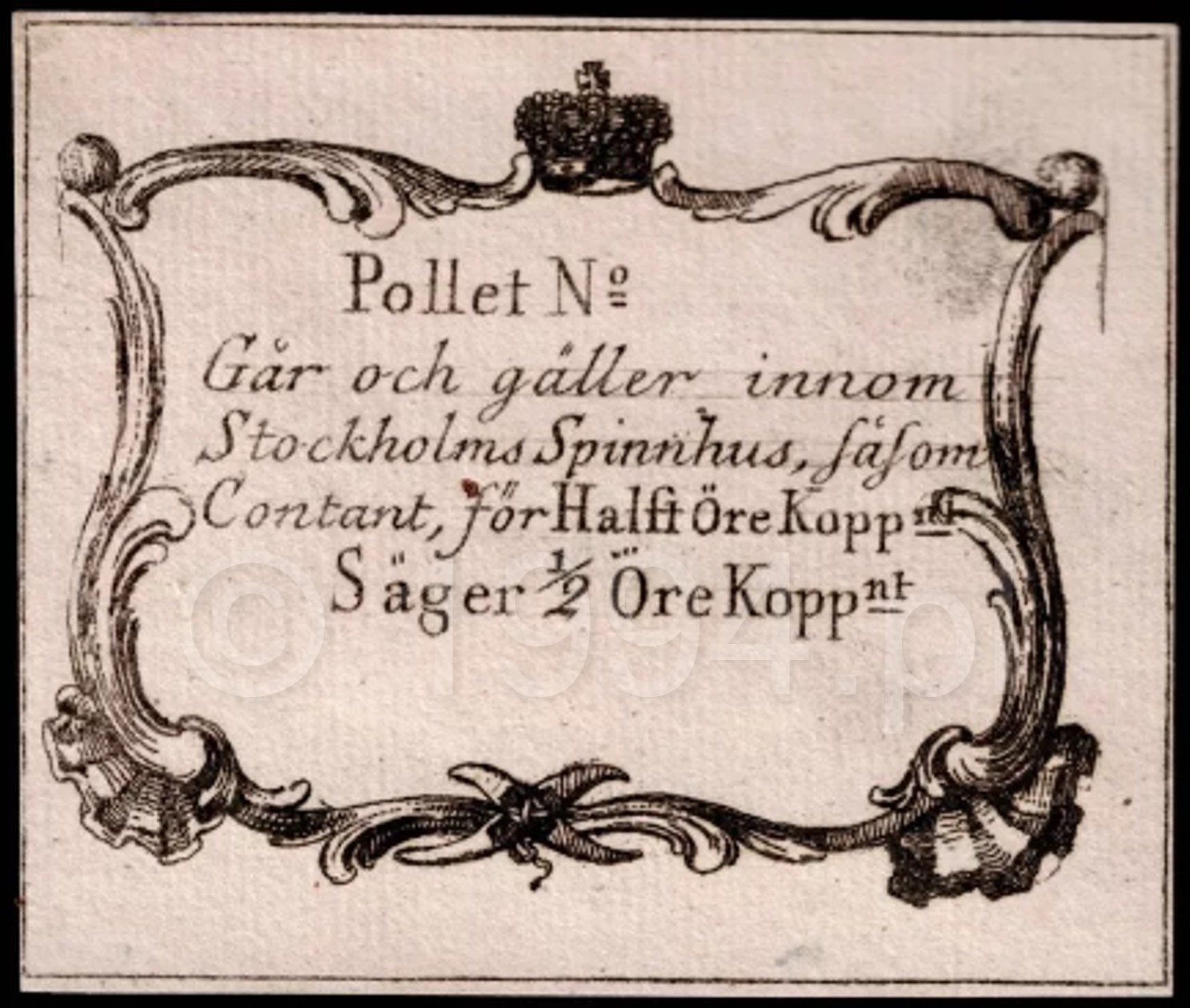
The half öre represents the foundational unit of the Spinnhus economy. It facilitated the smallest measurable transactions within the institution and allowed labor output to be quantified with extreme granularity. Its existence confirms that the system was designed for constant daily exchange rather than abstract bookkeeping.
One Öre
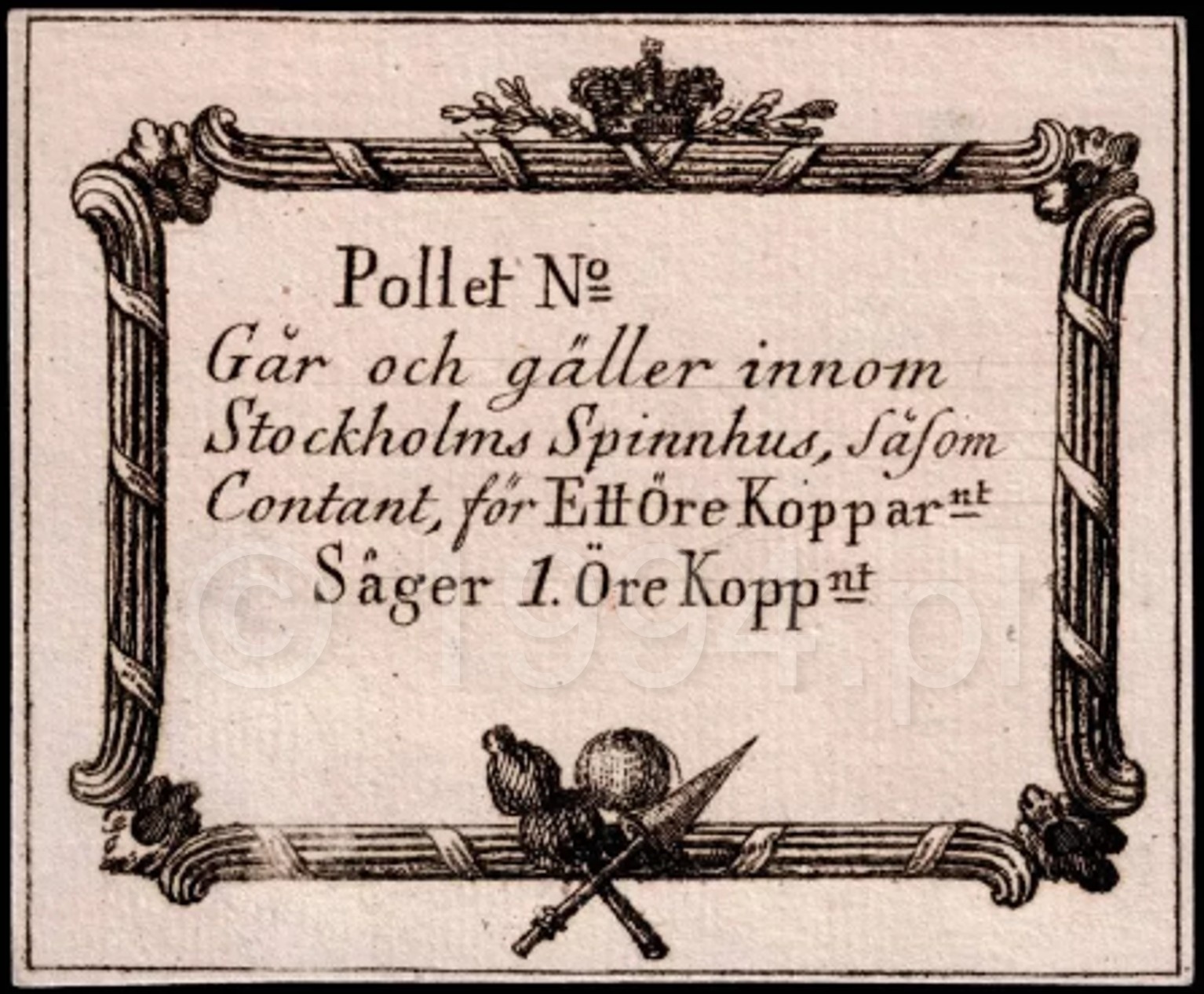
The one öre expanded the wage structure and enabled incremental scaling of compensation. It reflects the use of monetary differentiation as a disciplinary tool, linking productivity and compliance directly to purchasing power within the closed environment.
Two Öre
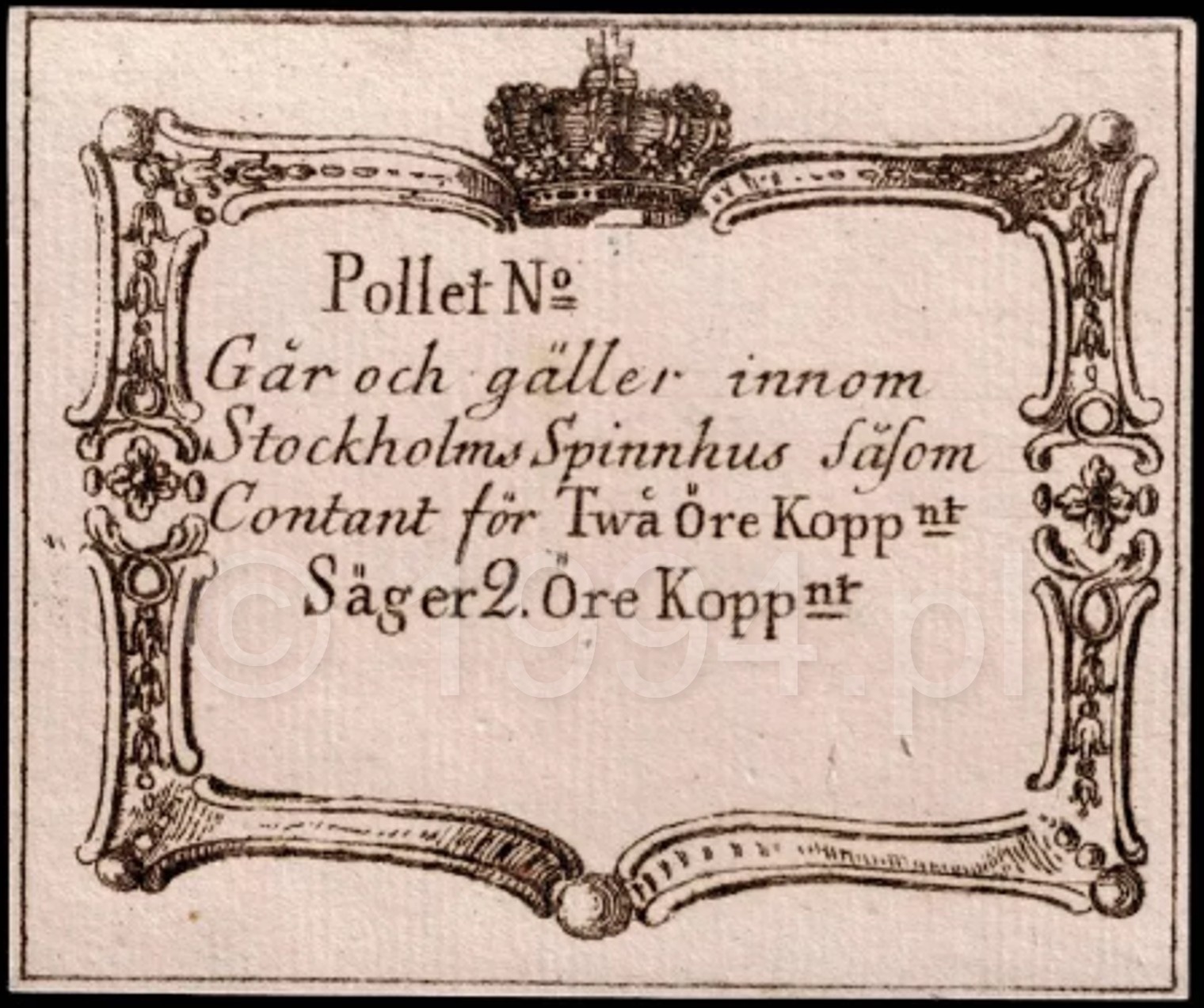
The two öre illustrates the emergence of tiered labor valuation. It evidences deliberate economic planning, where time, effort, and task complexity were translated into numerical units of value imposed by the institution.
Five Öre
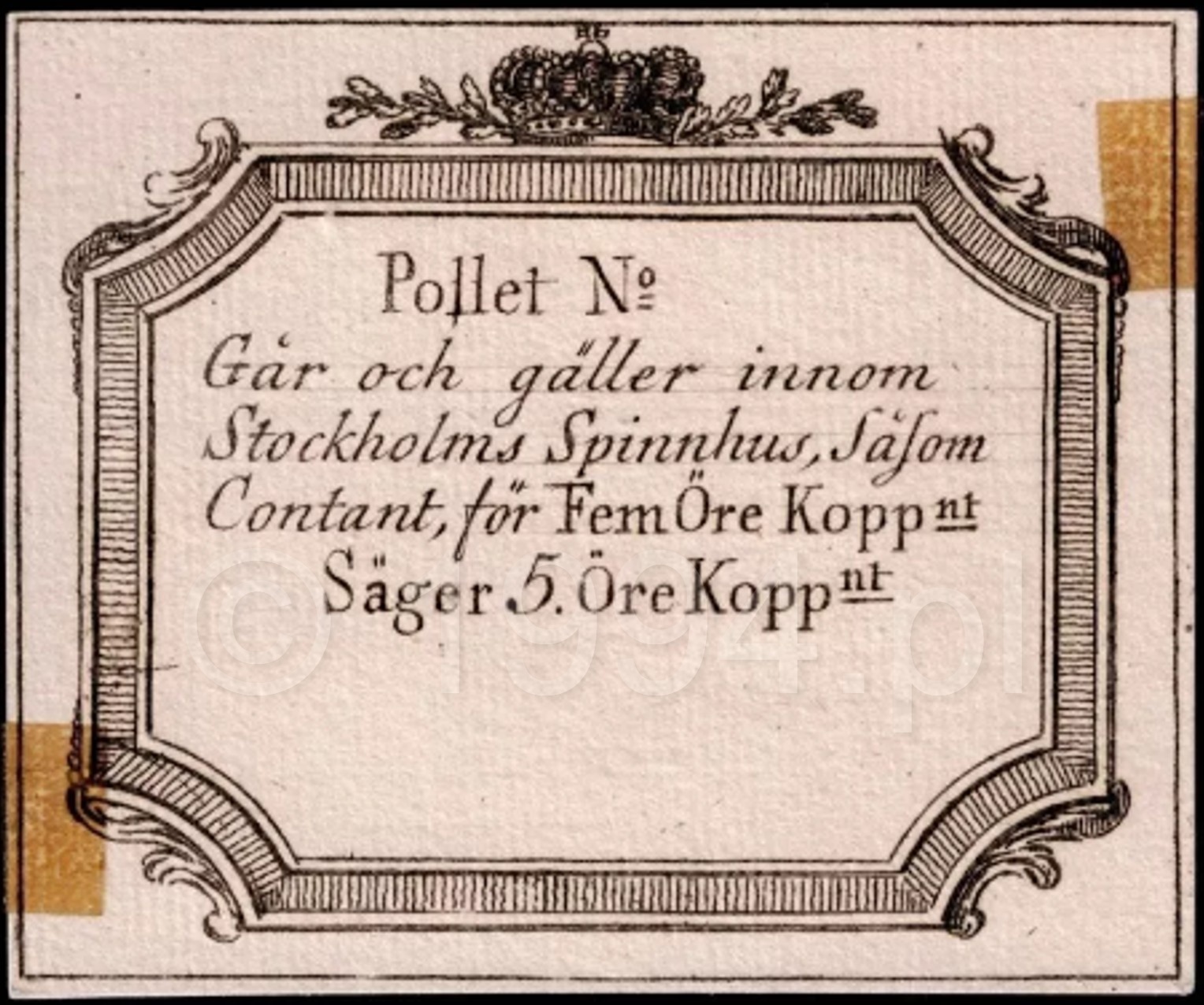
At five öre, the system transitions from subsistence accounting to meaningful accumulation. This denomination likely corresponded to extended labor periods or more demanding tasks, reinforcing internal hierarchies of work and reward.
Six Öre
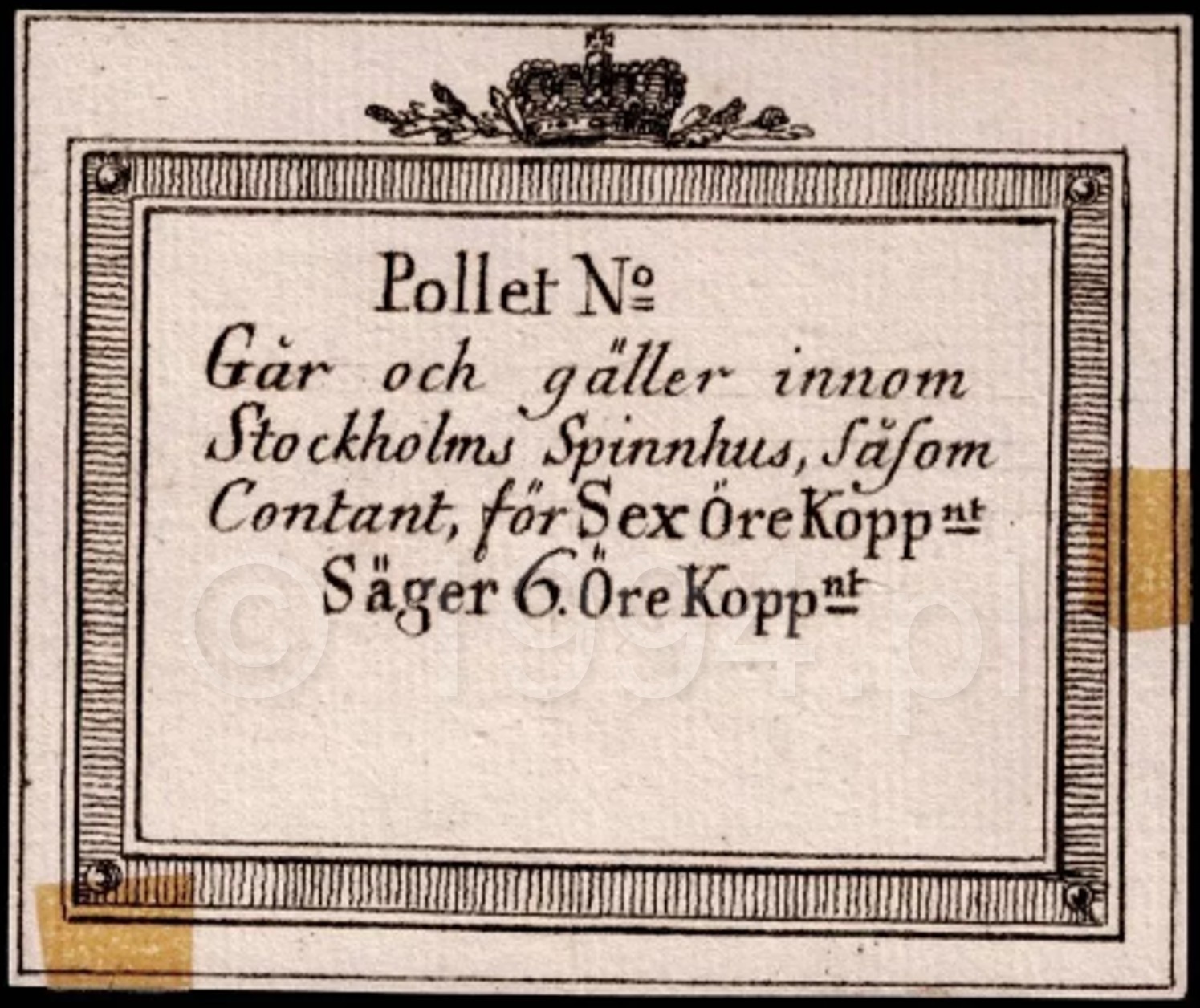
The six öre is particularly revealing. Its non-decimal value confirms that the system was not adapted from national currency but designed independently to match institutional accounting practices. This reinforces the conclusion that Spinnhus currency was a purpose-built governance instrument.
Seven Öre
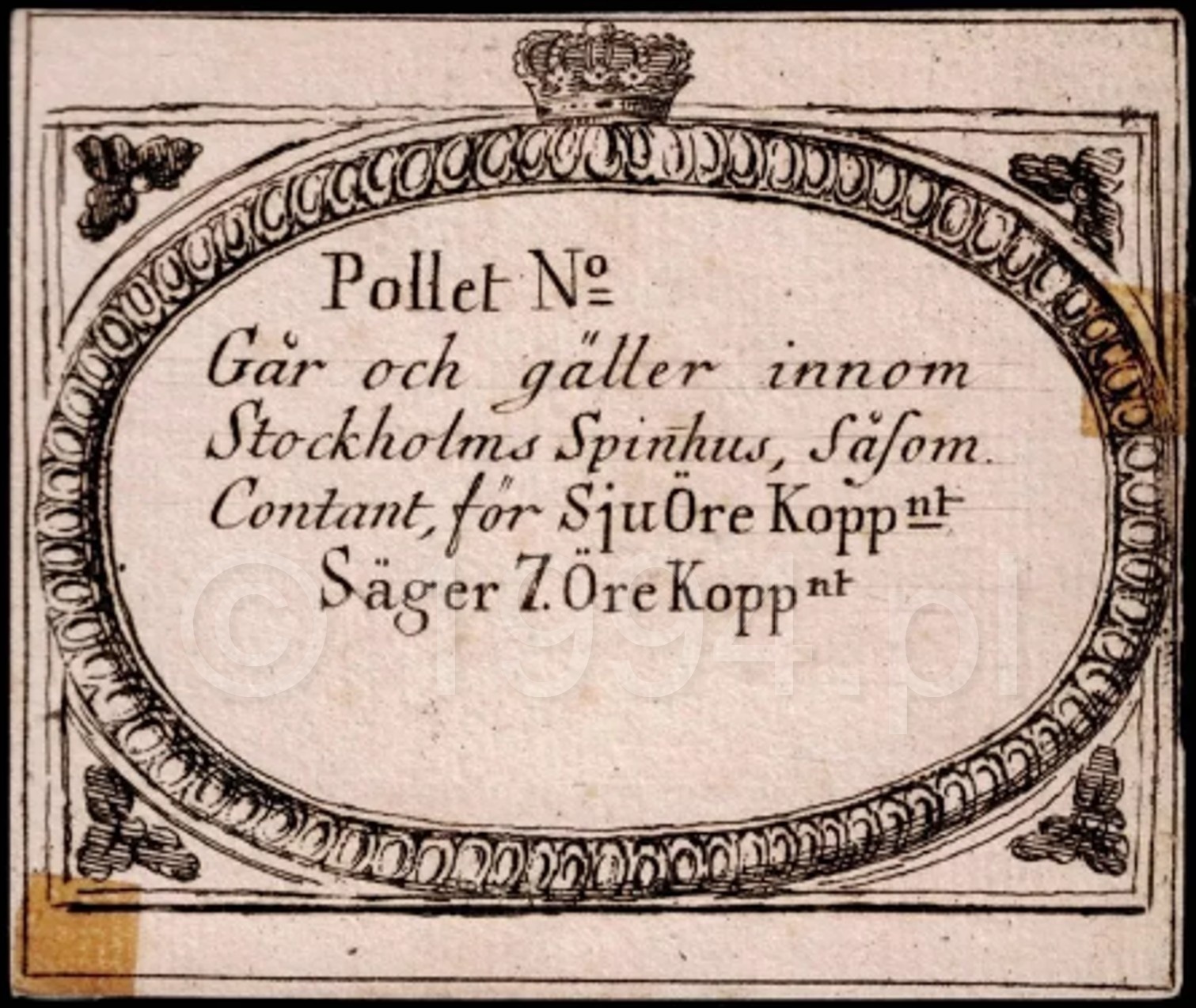
The seven öre occupies the upper-middle tier of the wage structure and is among the rarest surviving denominations. Its presence is essential for reconstructing the full monetary ladder and demonstrates that higher labor values were formally recognized within the institution.
Sixteen Öre
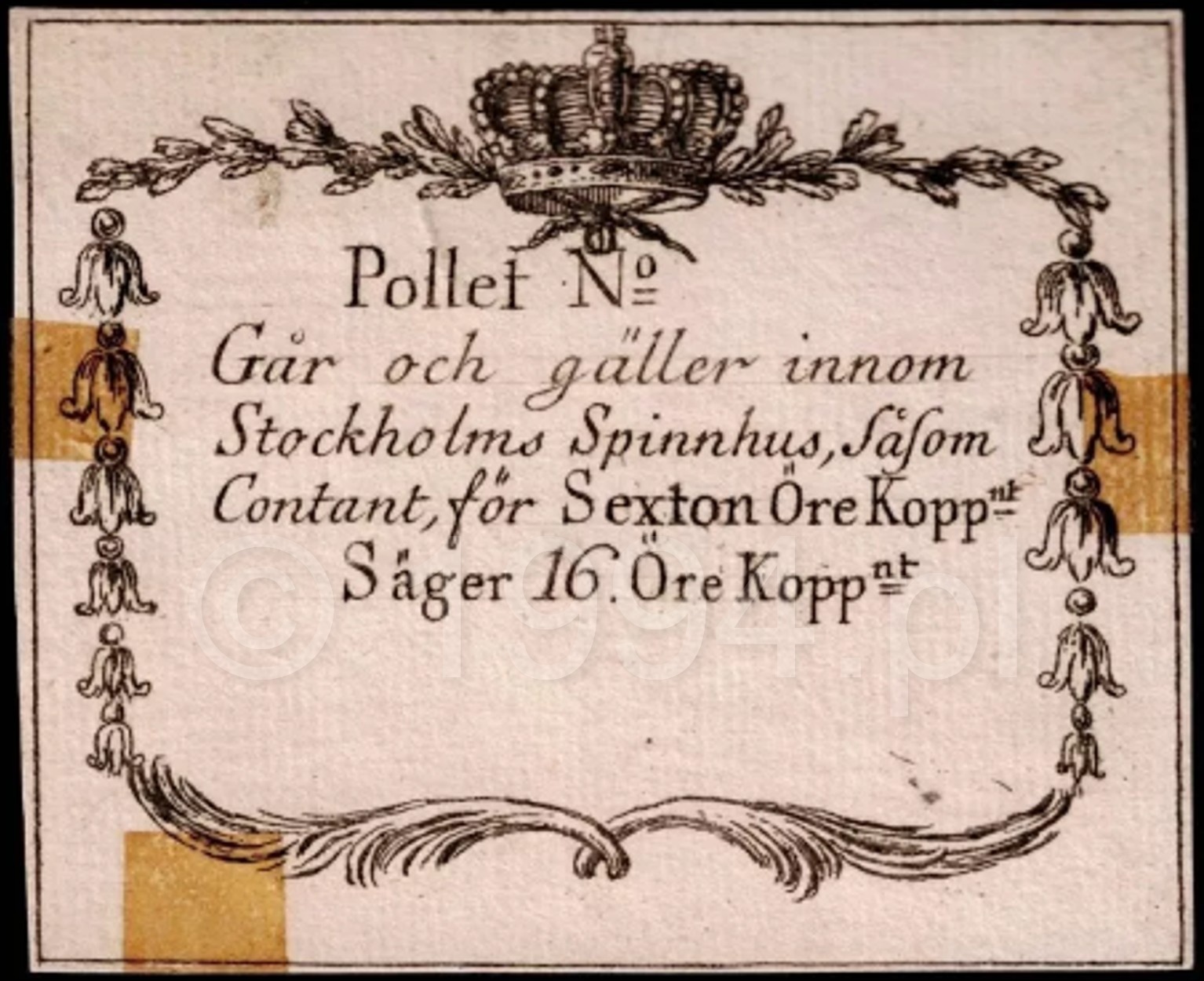
The sixteen öre marks a decisive escalation in internal purchasing power. Its existence confirms that the Spinnhus economy supported accumulation and deferred consumption, characteristics typically associated with mature monetary systems.
Twenty-Four Öre
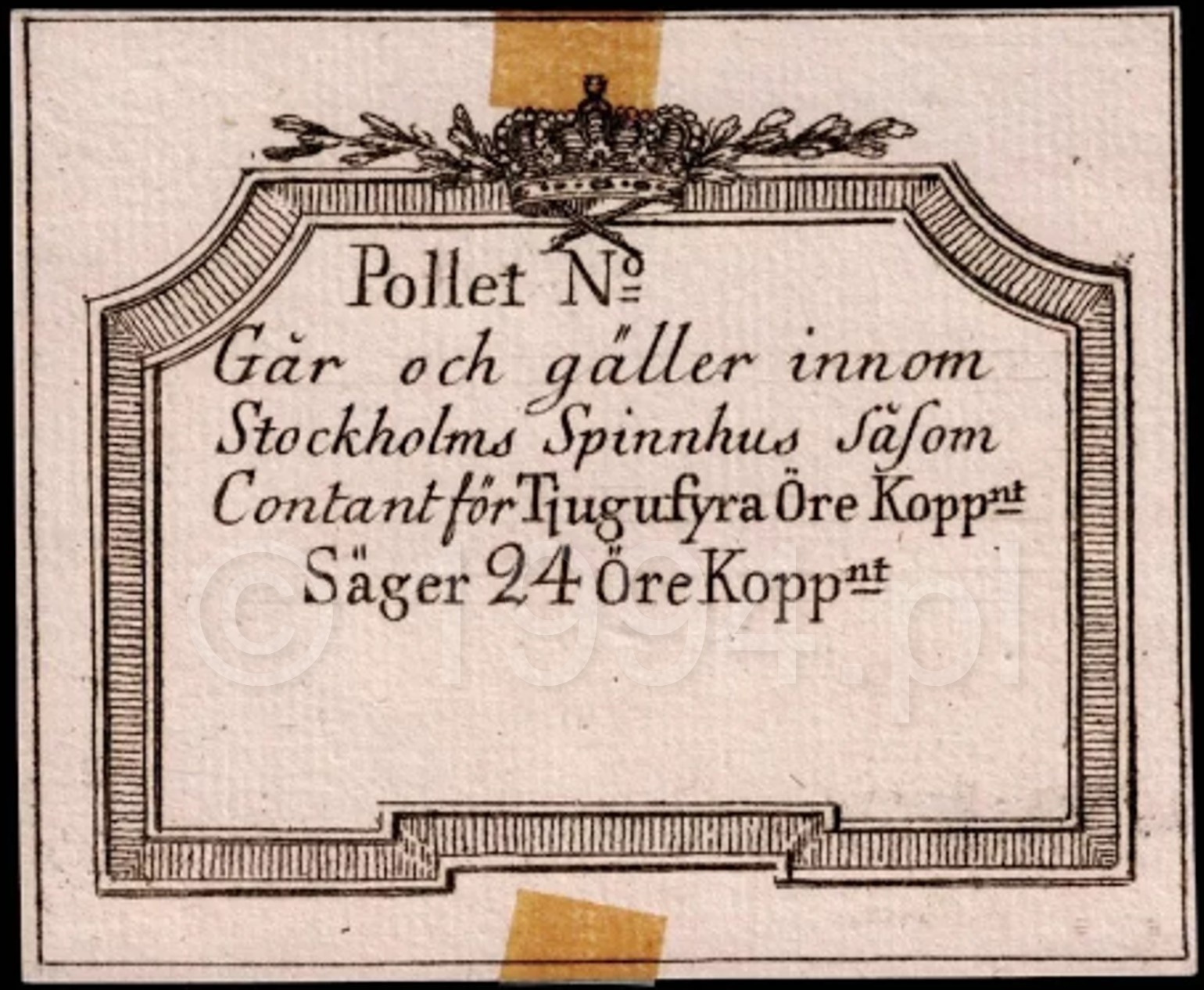
As one of the highest intermediary denominations, the twenty-four öre bridges routine labor compensation and high-value institutional exchange. It demonstrates the depth and internal complexity of the system.
One Daler
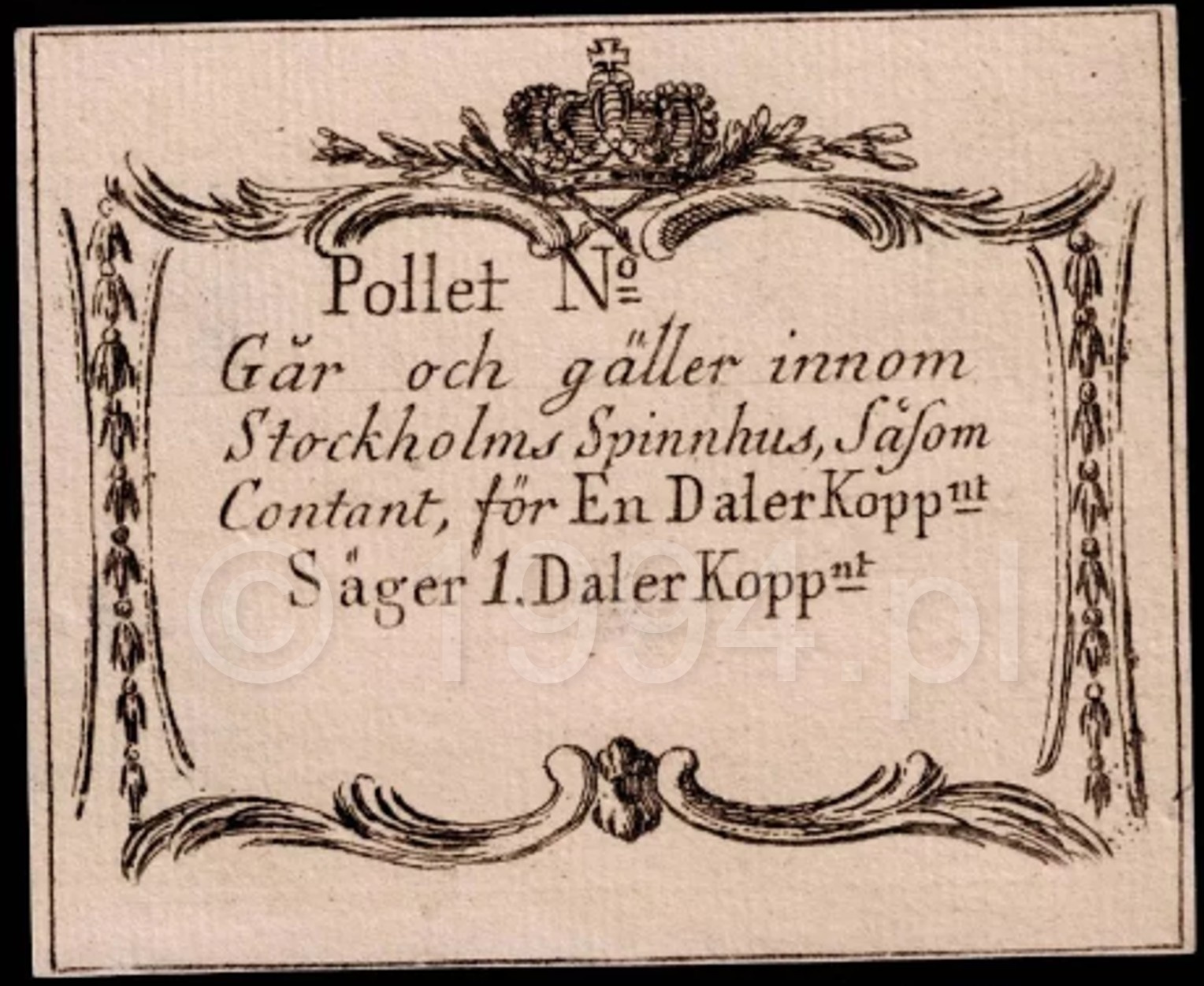
The one daler represents the apex of the Spinnhus monetary hierarchy. Its role was not symbolic; it completed the system’s internal accounting logic and confirms that the institution maintained a fully articulated currency structure capable of complex economic regulation.
Survival and Historical Significance
All known examples within this ensemble remain unissued and uncirculated, with several retaining archival tape residue from long-term institutional storage. Individual Spinnhus polletts occasionally surface in isolation, often in inferior condition or as later restrikes. Higher denominations are almost never encountered.
No Swedish institutional archive is known to preserve the complete original Spinnhus monetary system. As a unified ensemble, this nine-denomination series is believed to be the only surviving complete representation of the system as originally conceived.
The Stockholm Spinnhus Pollett System therefore transcends conventional numismatics. It constitutes a primary historical document of how monetary abstraction was used as a technology of governance, discipline, and social control. Its relevance extends well beyond Sweden, offering rare material evidence for the study of institutional economies and the early emergence of fiat logic in confined environments.