Description and research notes
Issued fractional bank vale of the Banco de Londres y Rio de la Plata dated Rosario, 15 de Setiembre de 1866. The note promises payment at sight of one Real in Plata Boliviana and belongs to the earliest circulation phase of British-controlled private banking activity in Argentina.
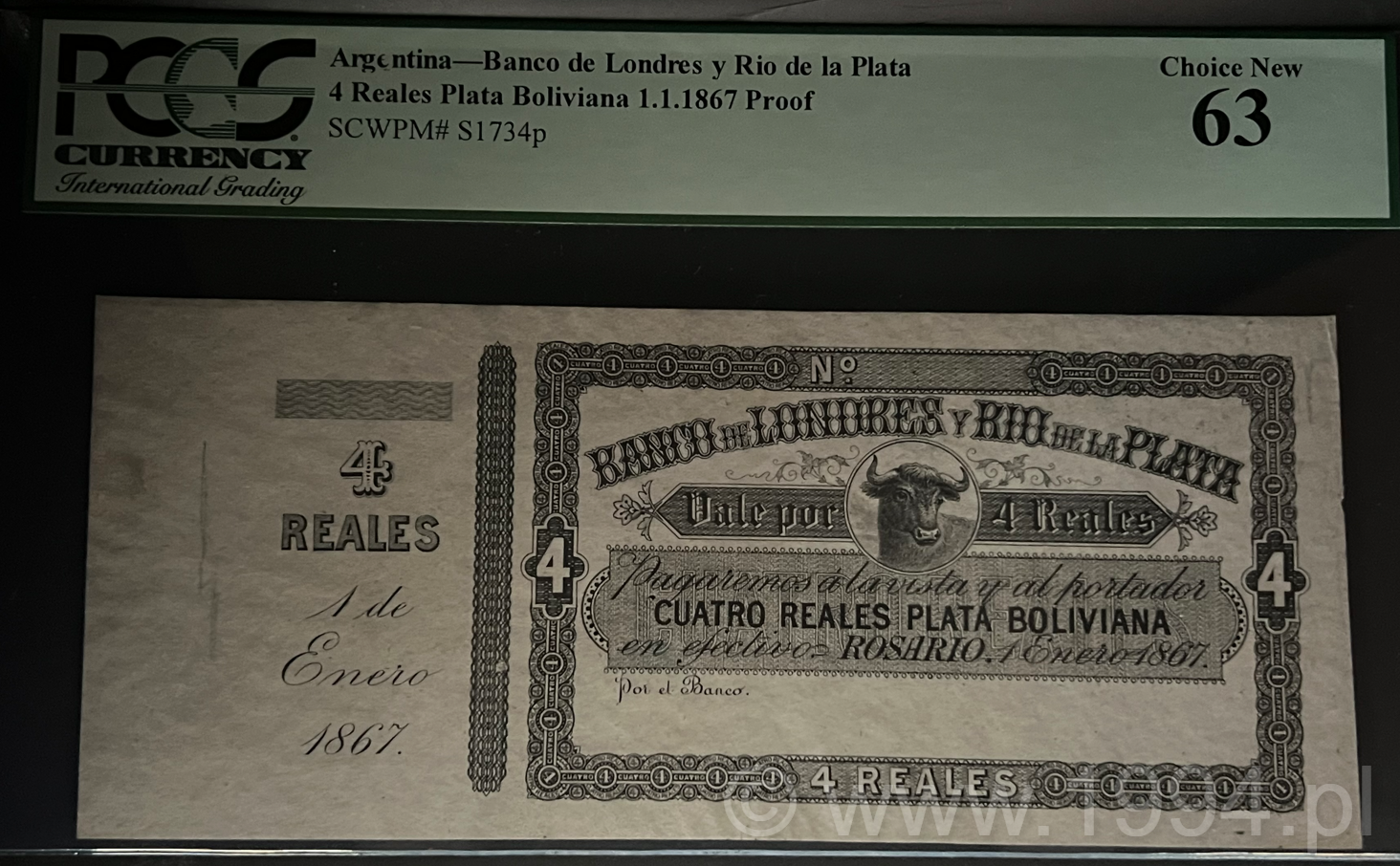
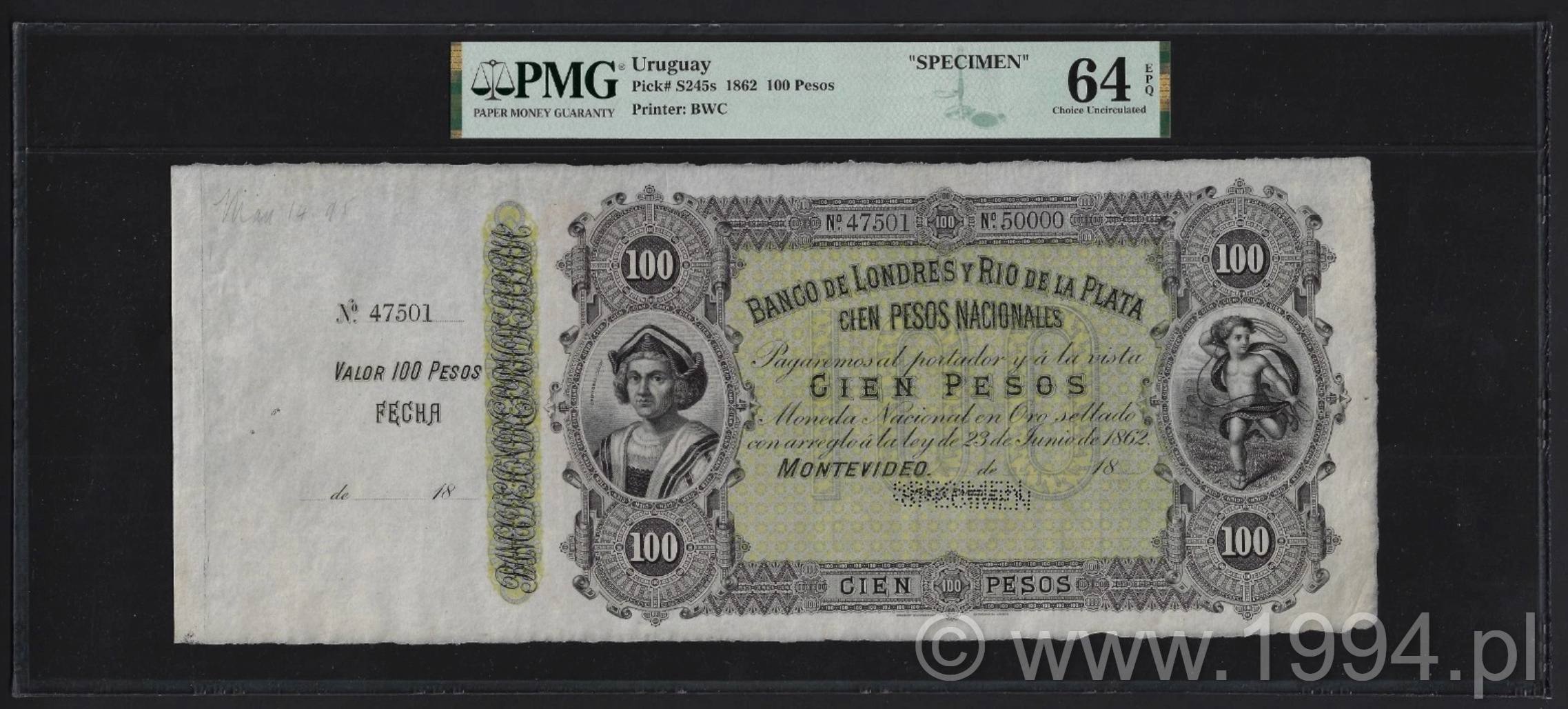
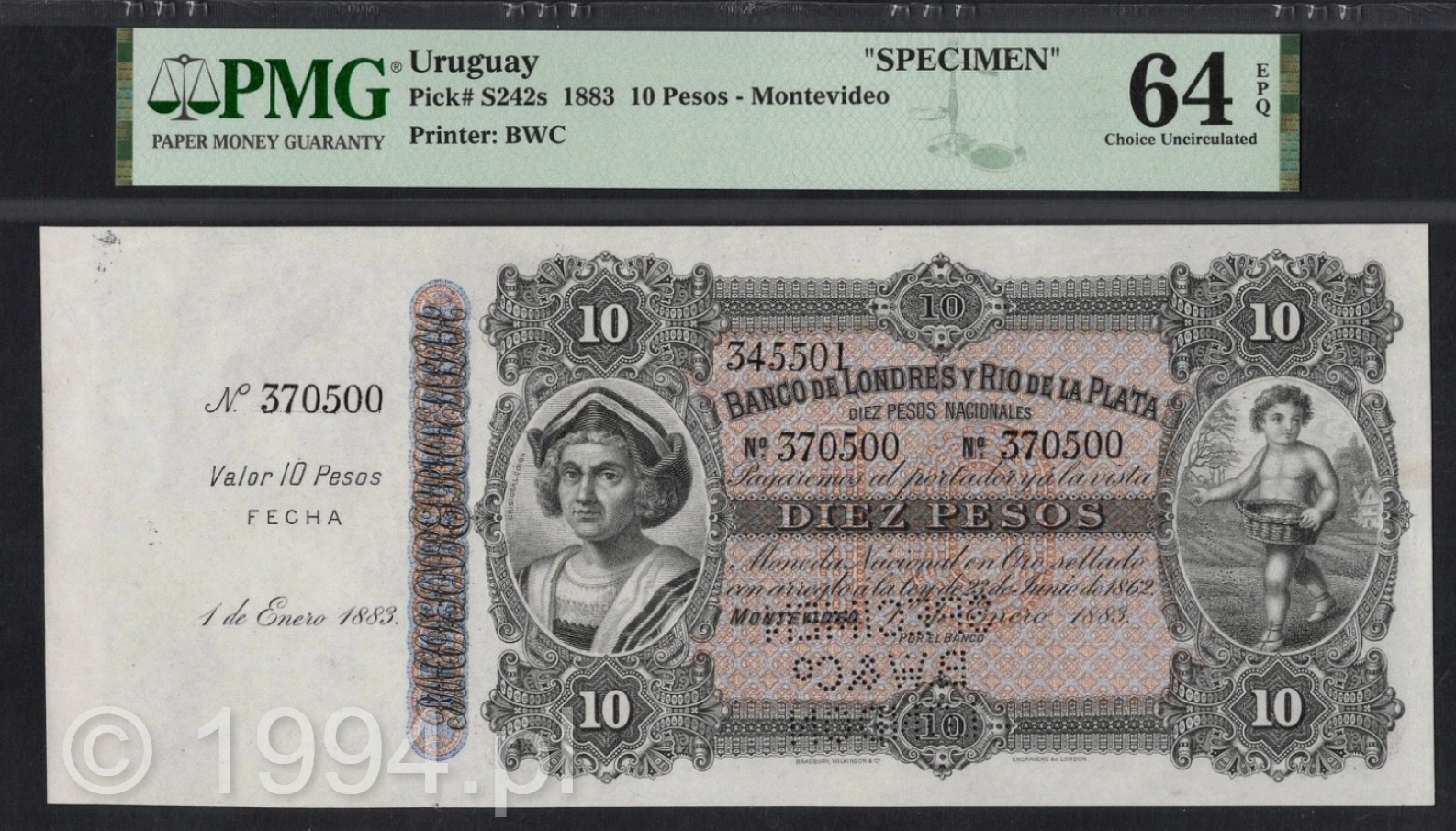
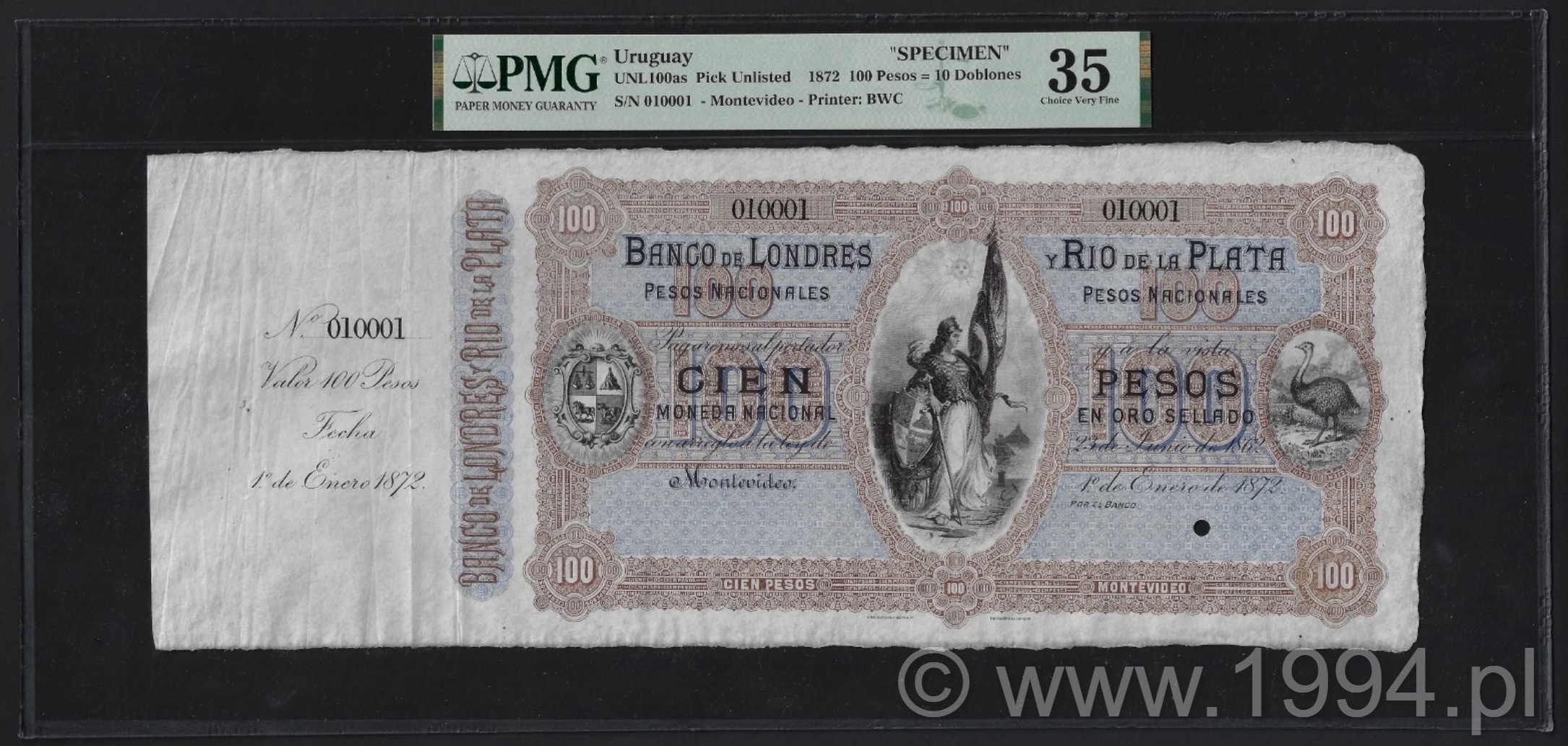
Founded in London in 1862, the Banco de Londres y Rio de la Plata rapidly became one of the most influential foreign financial institutions operating in the Rio de la Plata region. Its Rosario branch supported the expanding agricultural frontier of Santa Fe province, where grain exports, cattle trade, and river transport connected interior production zones with international markets. Fractional notes such as the 1 Real replaced scarce silver coin in routine commercial exchange.
The Argentine monetary system of the 1860s remained highly fragmented. Provincial issues circulated alongside pesos fuertes, reales, merchant drafts, and Bolivian silver coinage. By specifying redemption in "Plata Boliviana," the bank aligned its obligations with a widely recognized silver reference used throughout regional trade networks.
The note belongs to the typographic bank vale tradition that preceded the engraved security banknotes produced by specialized printing houses later in the century. The frame uses ornamental typographic borders repeating the word "REAL," with the denomination centered in a circular medallion. The manuscript payment text and place of issue emphasize functional clarity over decorative imagery.
The printed obligation also includes the phrase "al portador de ocho de estos vales," indicating that eight such notes equaled one peso in the accounting structure used by the bank. This reflects the long-standing Spanish monetary relationship of eight reales to the peso and confirms that the 1 Real vale functioned as a fractional component of a larger peso-based system circulating in regional trade.
This example represents the Type B variety distinguished by its handwritten authorization signature. Unlike Type A notes bearing printed authorization, Type B examples were manually countersigned by a bank officer at the Rosario branch before entering circulation. Such signatures reflect the semi-private operational structure of provincial banking during this early period.
Direct comparison with the printed-signature Type A note preserved in the same collection reveals that the two examples are separated by only 1,391 serial numbers (Type A: 635405; Type B: 636796). This close proximity indicates that both signature formats were produced within the same emission sequence of the Rosario branch, suggesting a transitional administrative practice in which printed and manually authorized notes circulated simultaneously.
Most examples of the 1866 issue were redeemed and destroyed during Argentina's later monetary consolidation. Surviving notes therefore represent rare documentation of the formative stage of British-backed banking infrastructure in the country.
Cataloged as PS1731 and Bauman SFE 70, the Rosario 1 Real series stands among the earliest surviving paper instruments issued by the Banco de Londres y Rio de la Plata, capturing the moment when international capital, provincial trade expansion, and practical commercial credit intersected in nineteenth-century Argentina.