Description and research notes
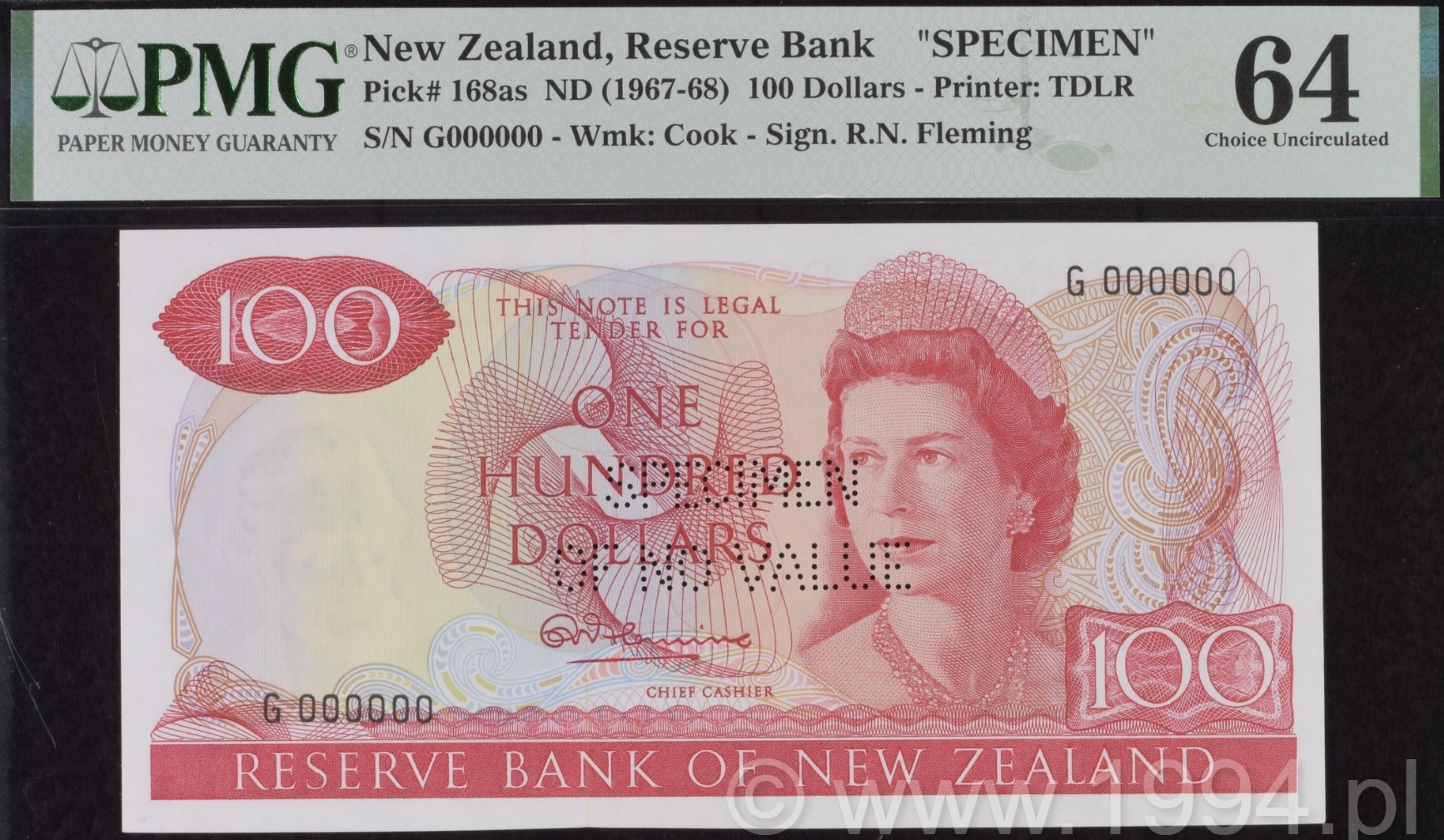
The 1967 one hundred dollars perforated specimen represents the highest denomination of New Zealand’s inaugural decimal currency issue, produced during the ND (1967–1968) period under the signature of Roderick Ninian Fleming as Chief Cashier. Fleming’s tenure was limited to the opening phase of decimalization, making his signature exclusive to the earliest production window of the modern dollar system.
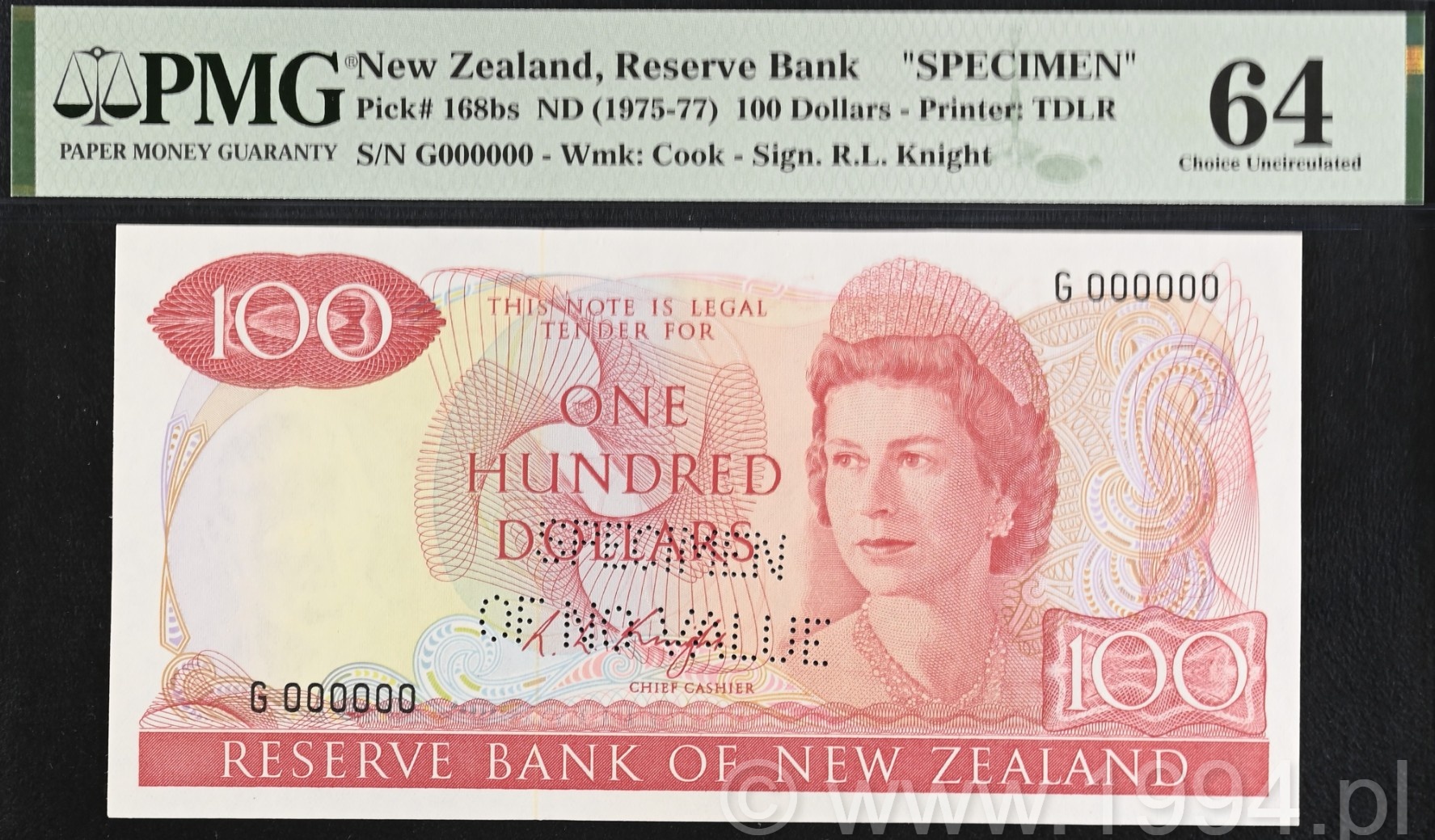
Printed by Thomas De La Rue & Company, London, this specimen belongs to the internal archival class rather than the externally distributed presentation format. Instead of overprint and punch cancellation, the note is invalidated by a full perforated legend reading 'SPECIMEN OF NO VALUE' across the central design. This perforation serves as the sole cancellation method and is executed with precision pin perforation forming readable text within the note’s main vignette area.
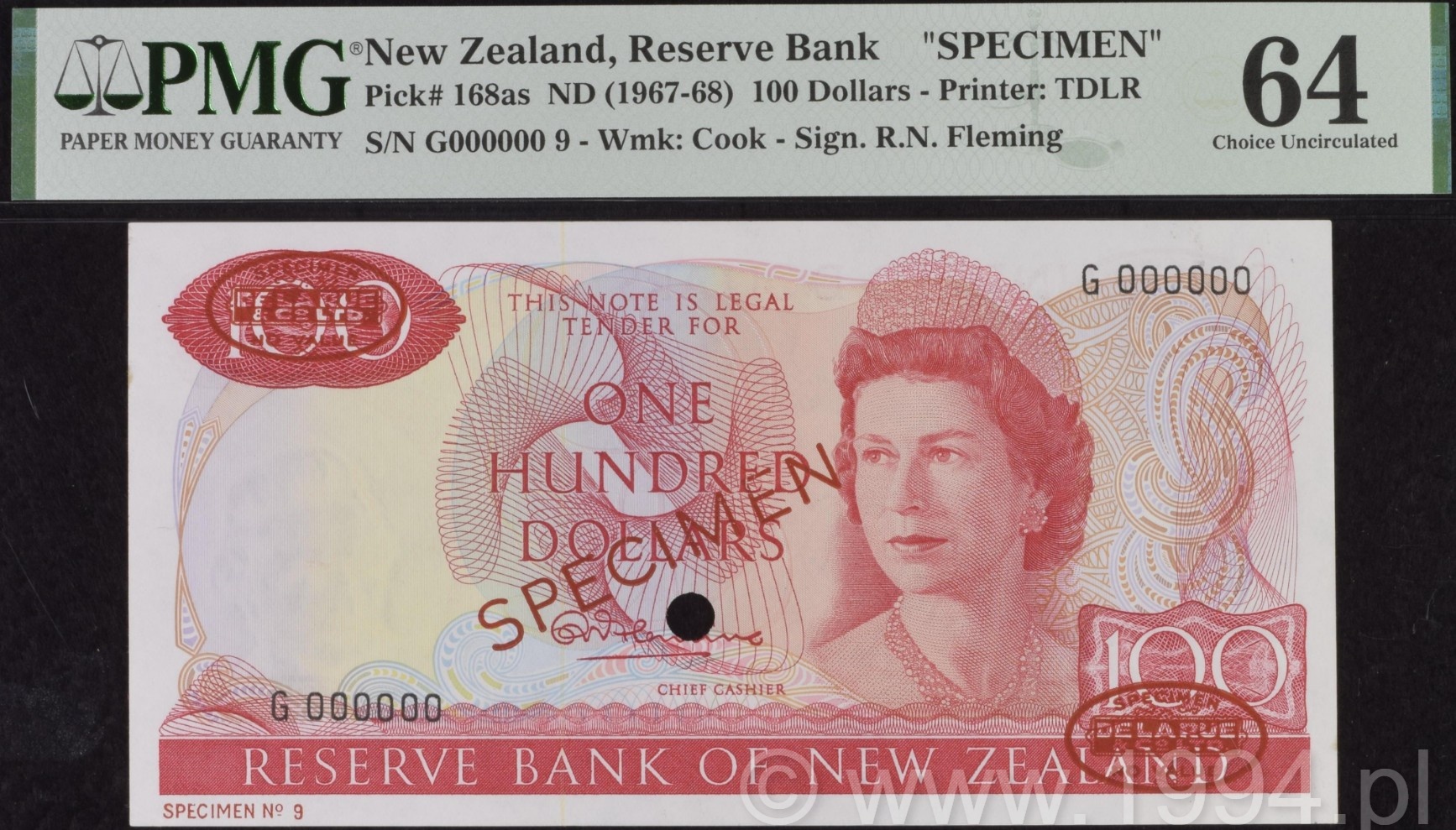
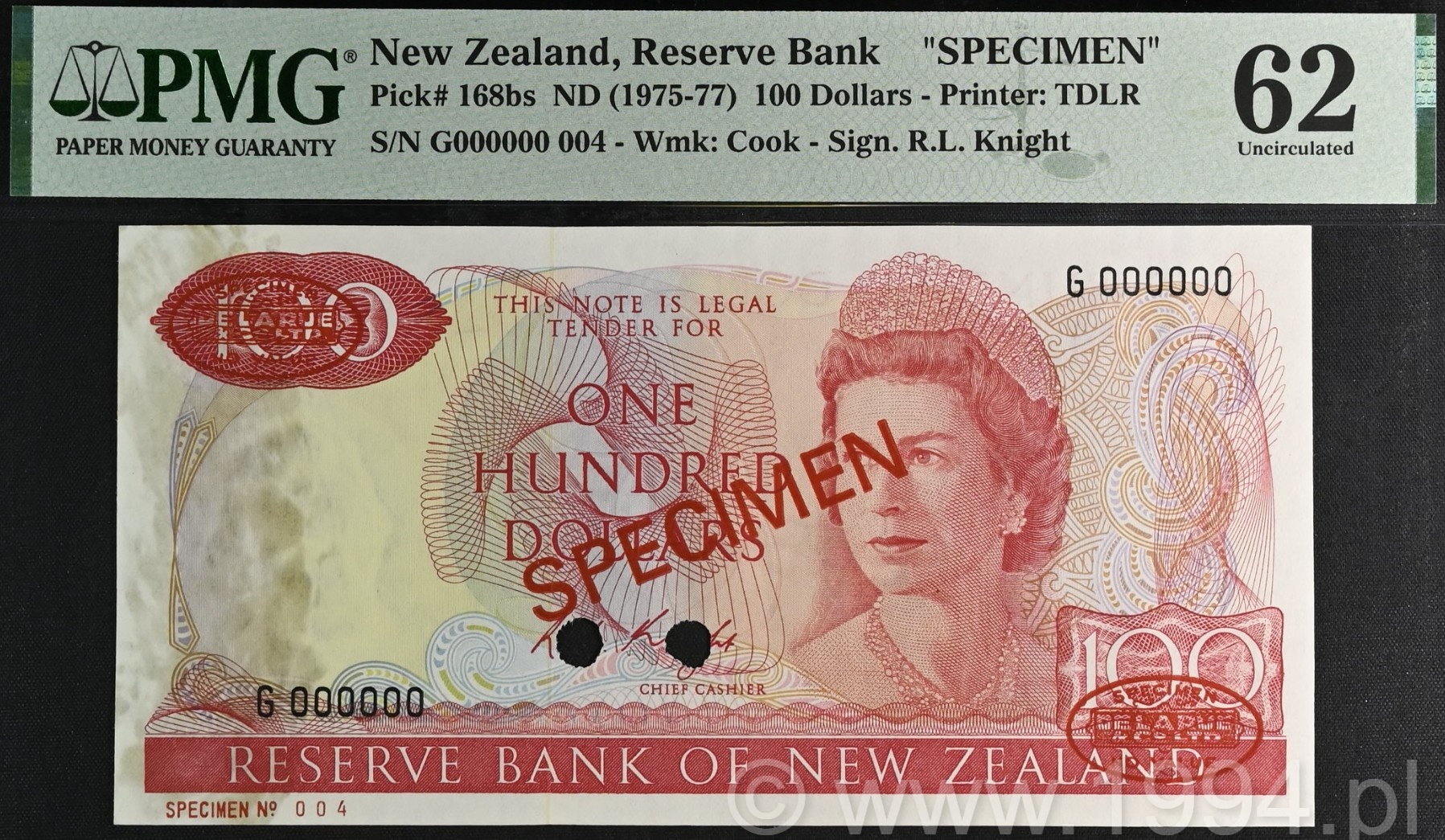
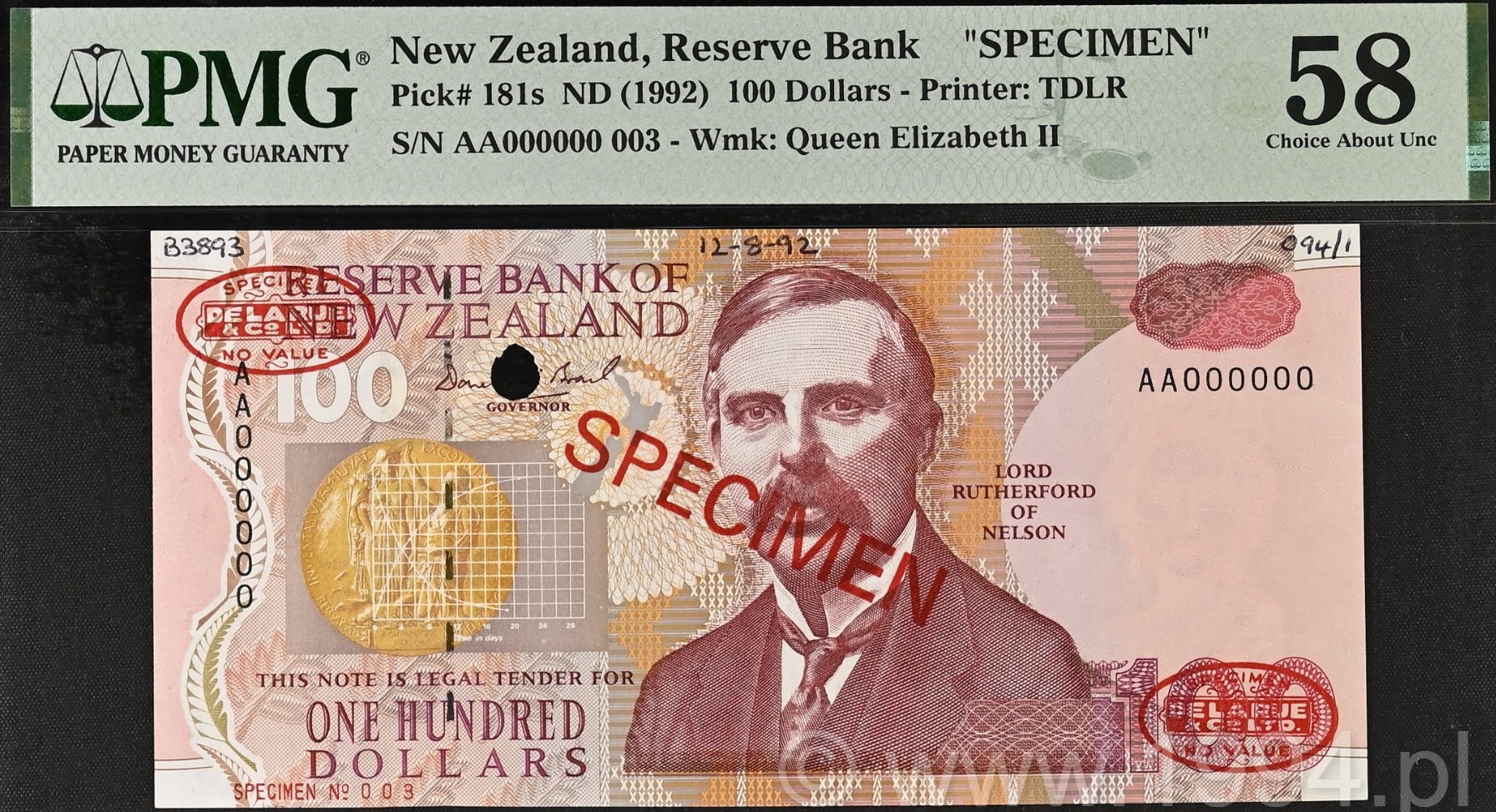
This example carries Serial G000000, a standard specimen serial format used for controlled internal reference. Unlike the overprint specimens of the same issue, this piece does not display any ink overprint, oval control stamp, or punch-hole cancellation, clearly distinguishing it as part of a different production and control pathway within Thomas De La Rue’s specimen system.
The design follows the decimal layout introduced in 1967, featuring Queen Elizabeth II in engraved portrait form on the obverse and the Captain James Cook watermark embedded within the paper. As the highest denomination of the inaugural series, the one hundred dollars note was intended primarily for institutional and reserve functions, reflecting its position within the upper tier of the monetary structure.
As a perforated specimen from the ND (1967–1968) Fleming issue, this note represents the internal documentation stage of banknote production. Such pieces were typically retained for archival verification and were seldom released, resulting in limited survival.
Graded PMG 64 Choice Uncirculated, the note retains strong paper originality, clear embossing, and sharp design integrity. The perforated 'SPECIMEN OF NO VALUE' legend remains fully legible and precisely executed, defining the note as a technically distinct and historically significant specimen type within the New Zealand decimal series.