Description and research notes
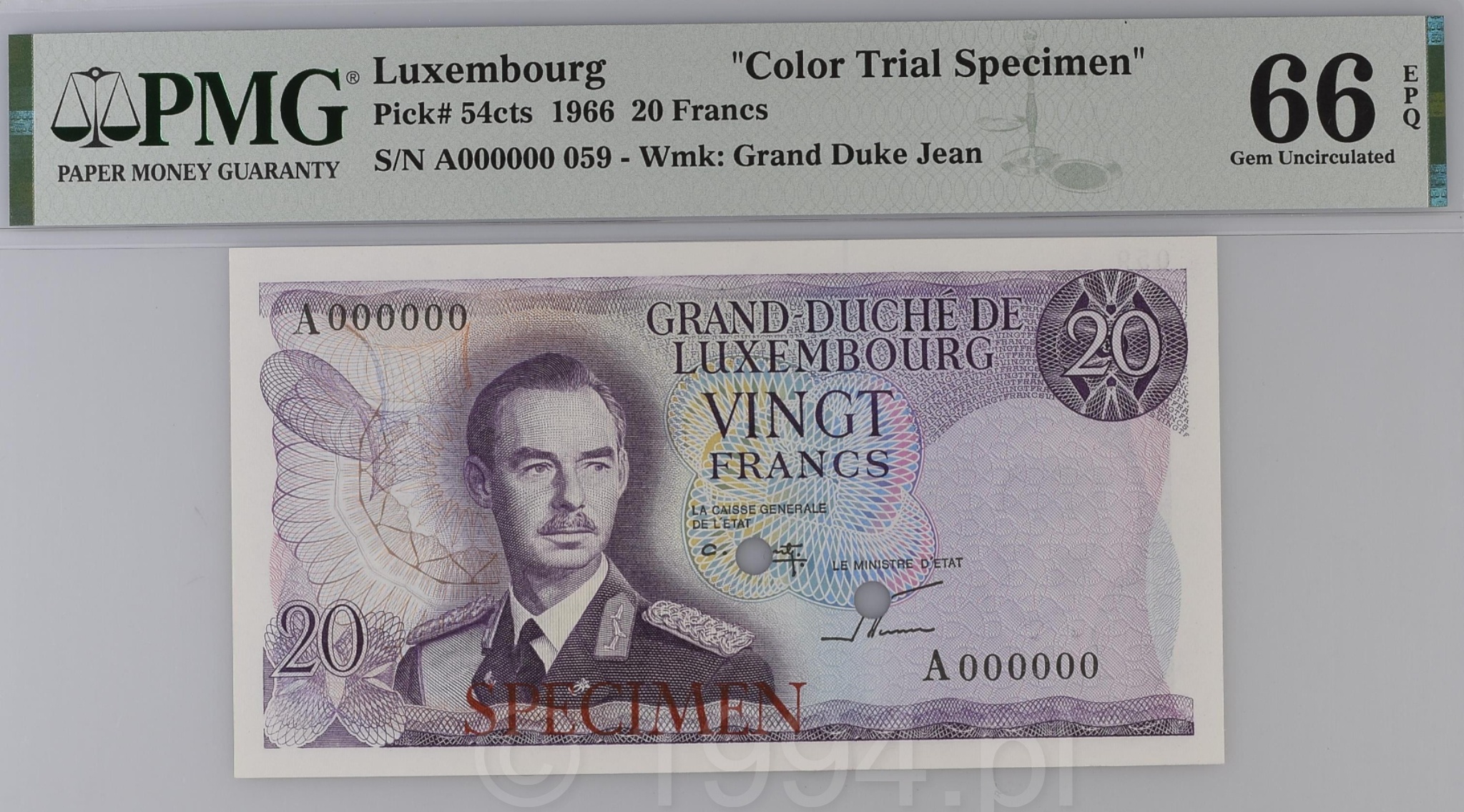
Color trial specimen of the twenty francs note of the Grand Duchy of Luxembourg dated 1966, produced during the advanced evaluation phase of the Grand Duke Jean series within the Belgian Luxembourg Economic Union framework. Printed by Thomas De La Rue and Company, London, this example represents a controlled press-stage trial where final color relationships, engraving visibility, and overall tonal balance were assessed prior to full production approval.
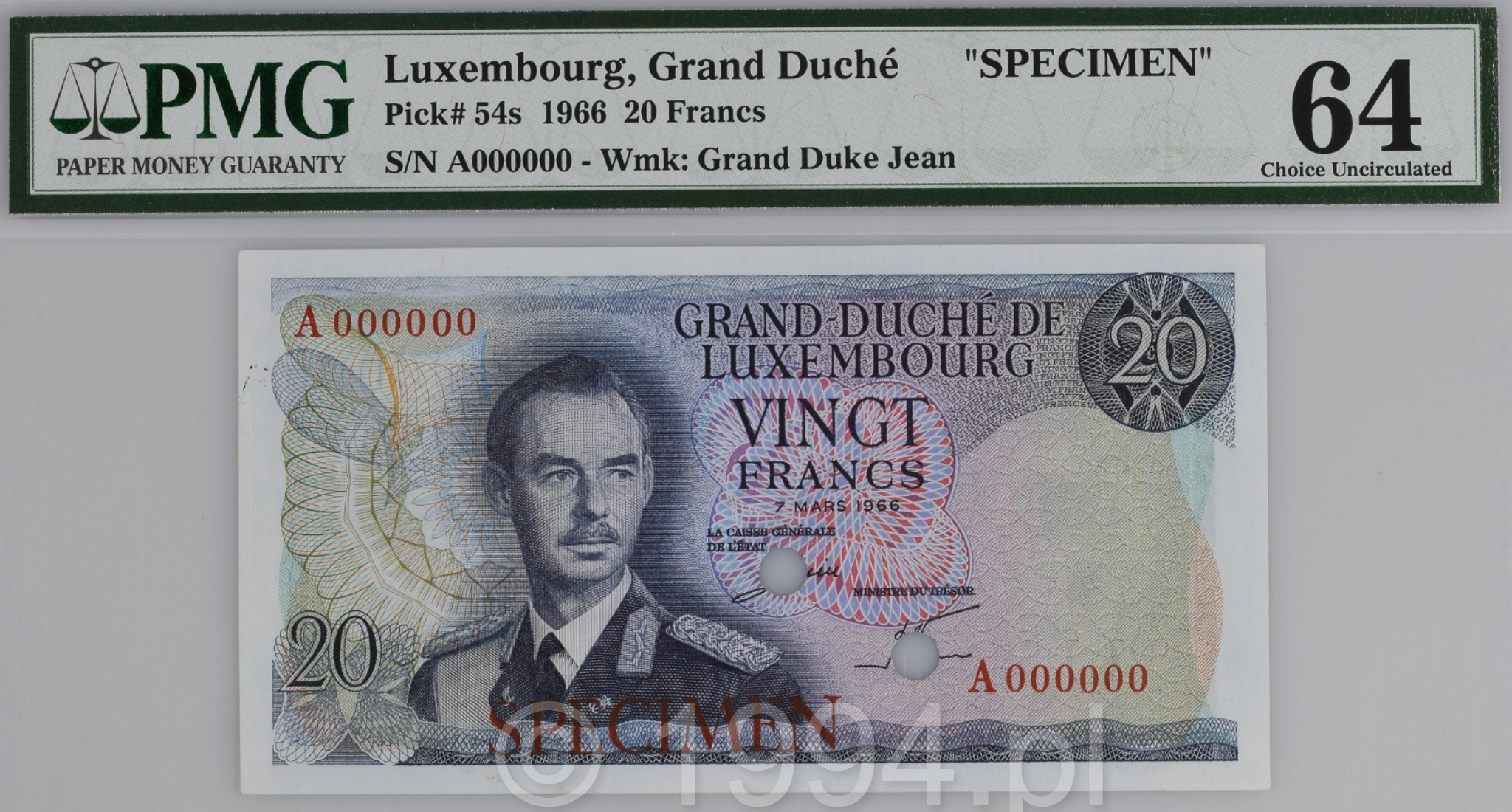
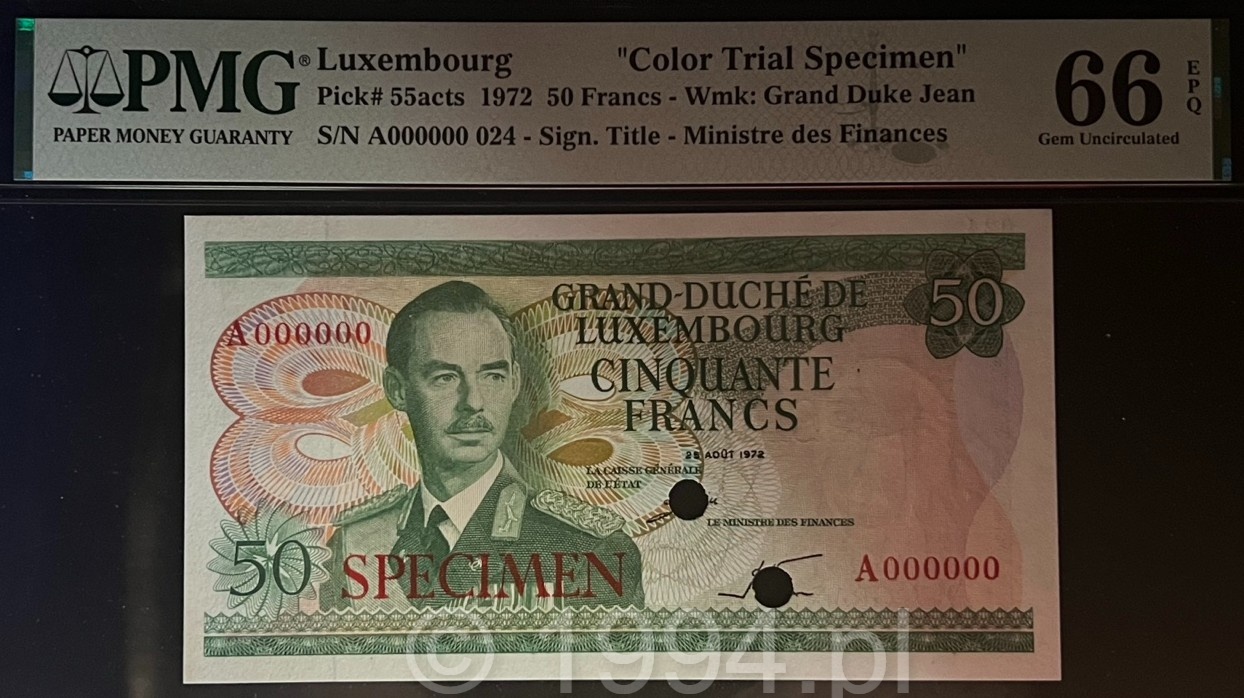
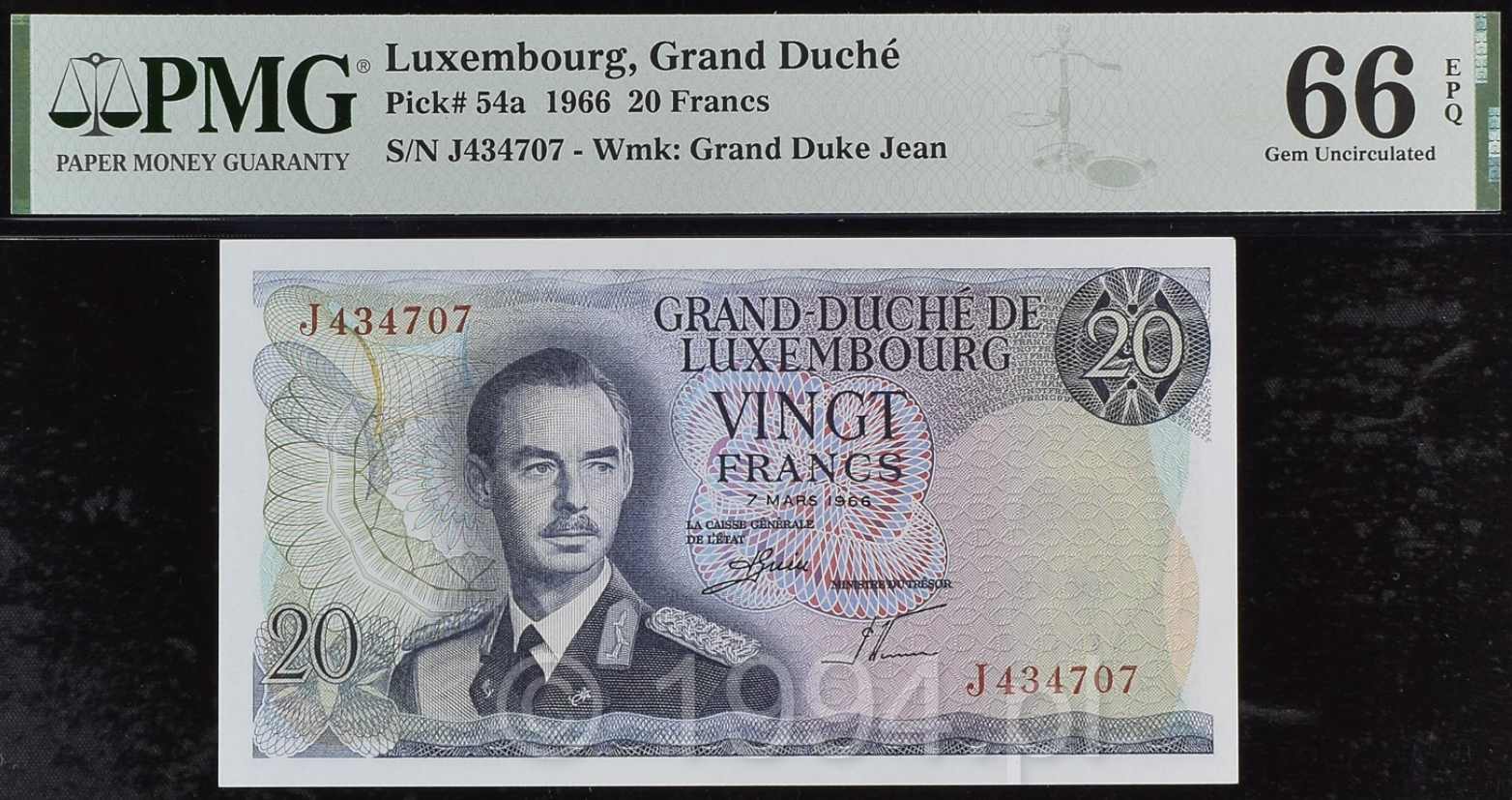
The obverse displays Grand Duke Jean in formal military attire, rendered in finely controlled intaglio and surrounded by complex multicolor guilloche structures. Unlike the issued format, this trial emphasizes a more experimental palette, allowing printers to evaluate contrast between portrait, denomination, and background security elements under varying lighting and handling conditions. The interplay of color layers demonstrates how visual hierarchy was refined before standardization.
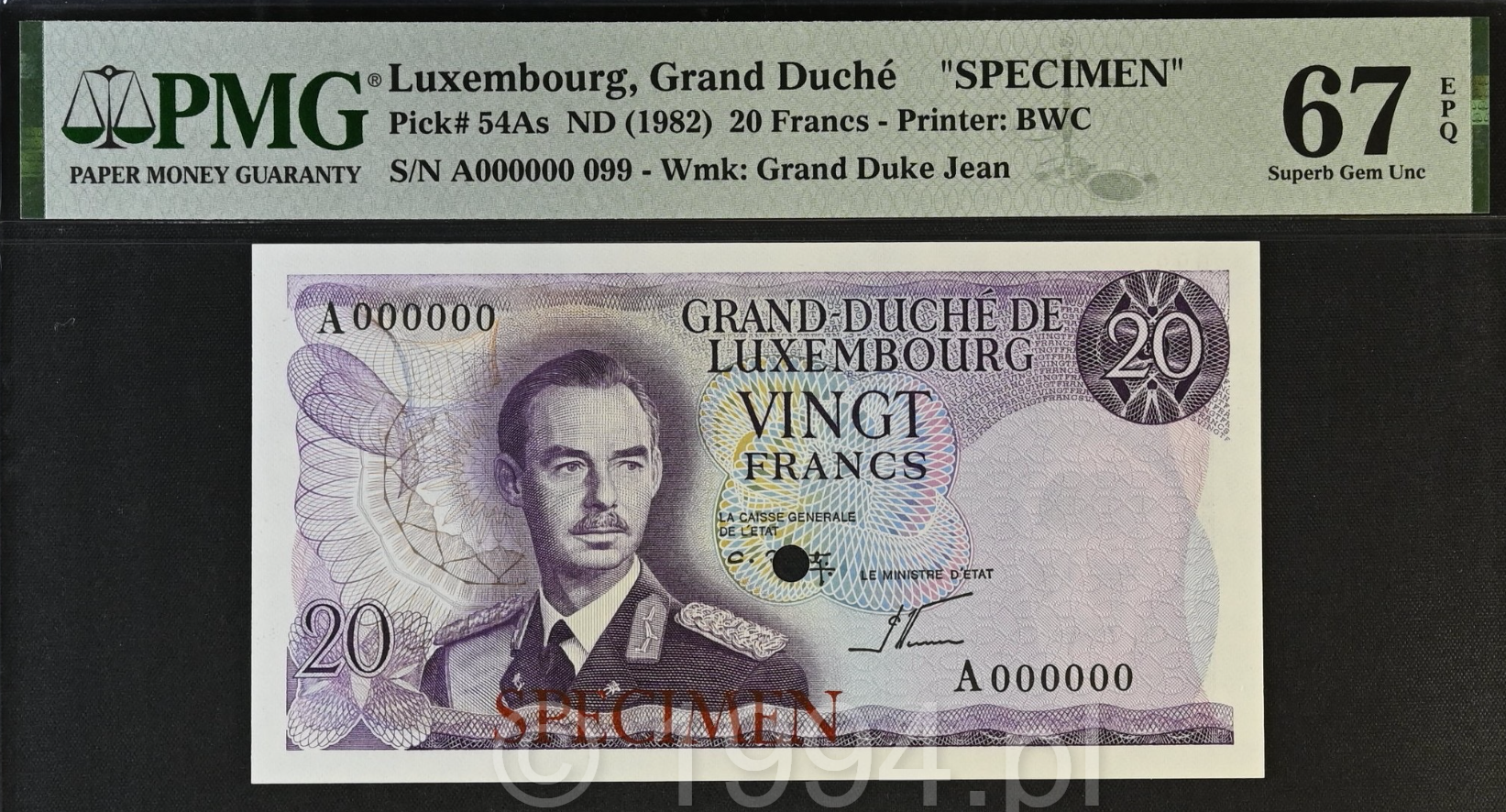
Of particular interest, the color palette bears a striking resemblance to the unissued Luxembourg twenty francs emergency series prepared in 1982. The violet-dominant engraving and pastel blue, yellow and pink guilloche work of the later Bradbury Wilkinson specimen closely echo the visual direction represented by this 1966 color trial. Produced sixteen years apart as part of separate banknote programs, the two pieces preserve a notable visual connection between the experimental 1966 palette and the later 1982 emergency issue.
Serial number A000000 059 is applied in specimen format, confirming its controlled production status. A red SPECIMEN overprint is present, accompanied by dual punch-hole cancellations through the signature area. On the reverse, the SPECIMEN overprint is applied in a more restrained, centrally aligned format instead of the bold diagonal style seen on standard specimens, reflecting variation in internal marking practices during the trial phase.
The reverse design presents a detailed Moselle river landscape, integrating agricultural and transport elements within a finely engraved framework. In this trial state, the monochrome execution of the reverse highlights compositional balance and structural clarity without reliance on final color application, reinforcing its role as an evaluation piece rather than a presentation specimen.
Within the Luxembourg production sequence, color trial specimens occupy a critical position between photographic proofs and finalized specimens. They document the moment where design decisions transition into production reality, preserving evidence of how color, contrast, and engraving depth were calibrated before issuance.