Description and research notes
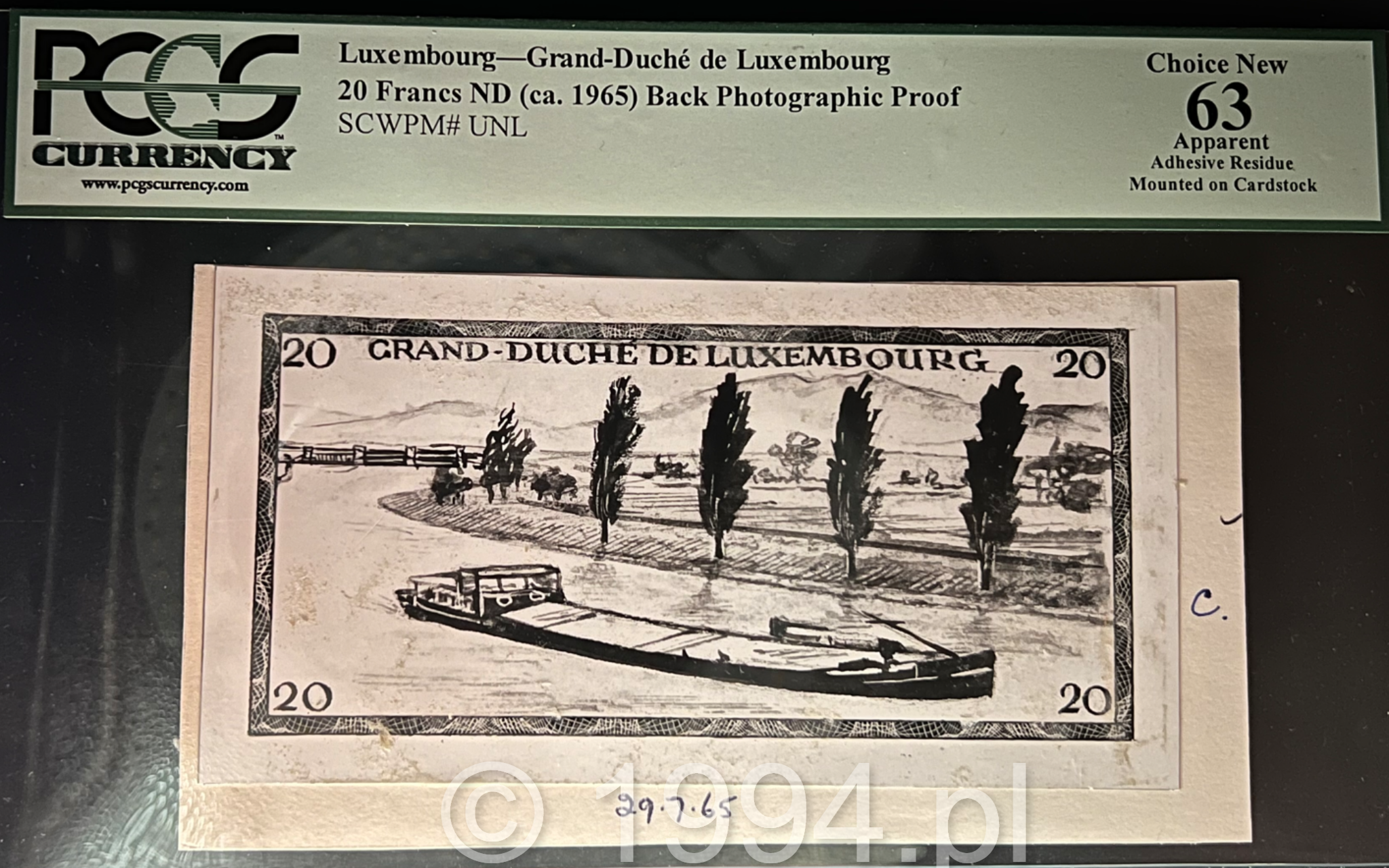
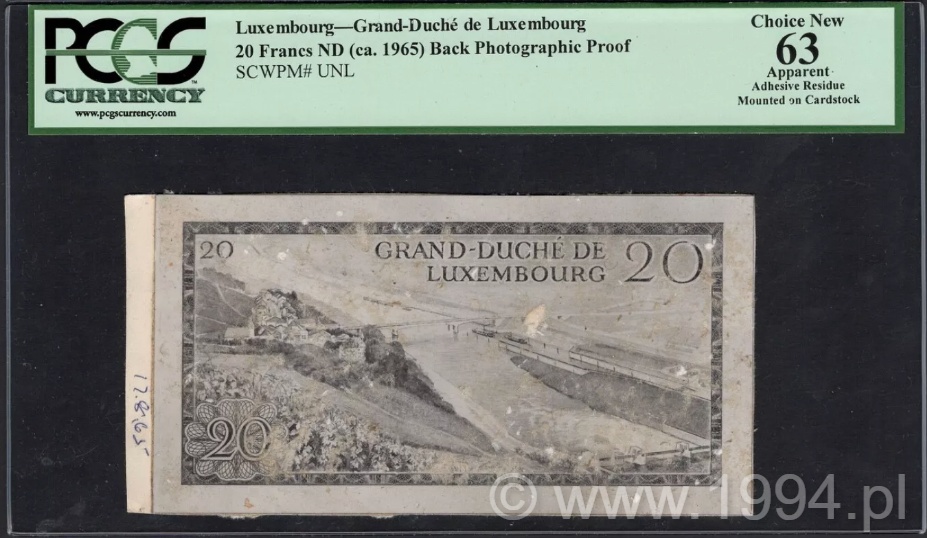
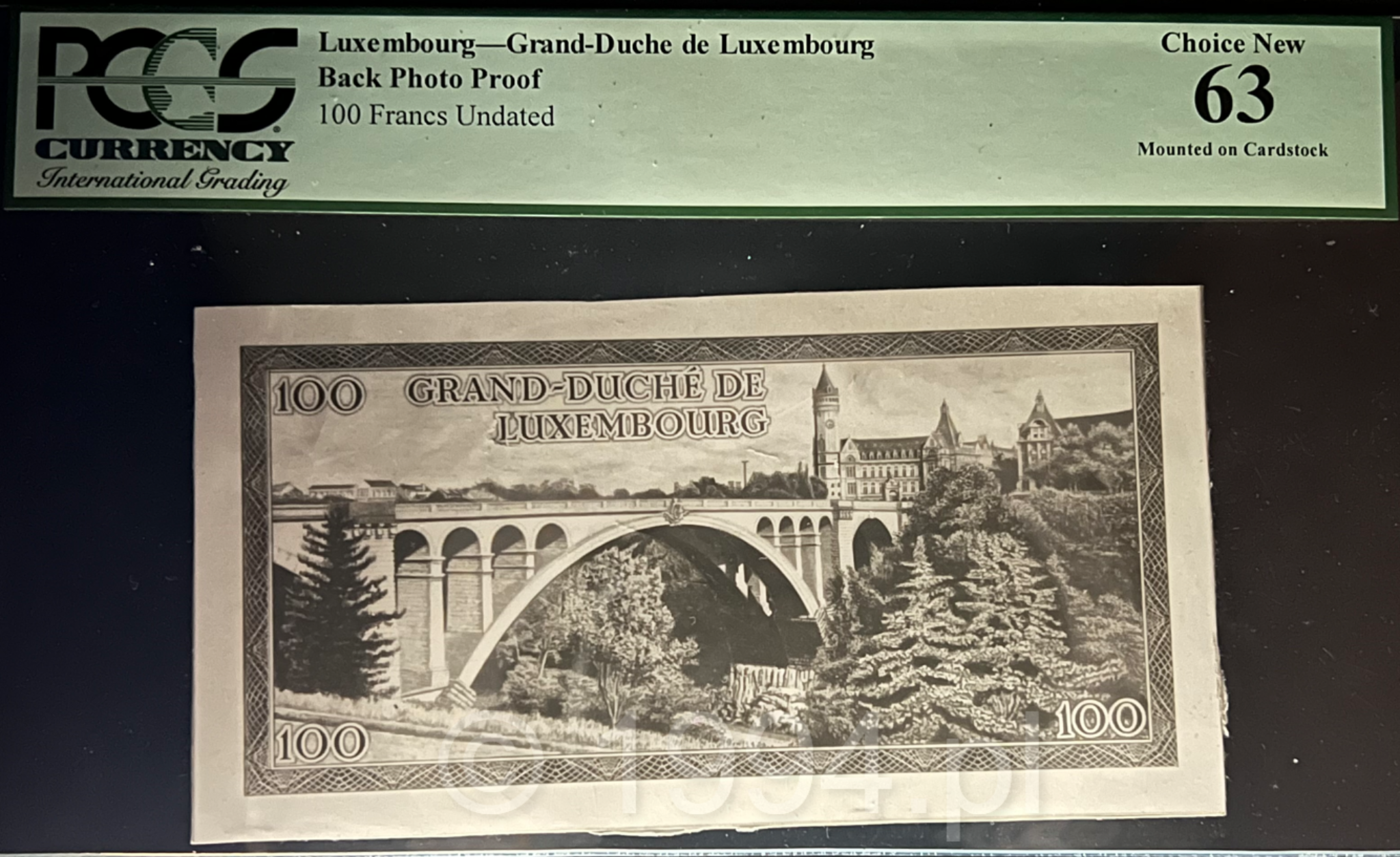
Back-side photographic proof for the one hundred francs design of the Grand Duchy of Luxembourg, preserved as an archival working piece mounted on cardstock. This example represents an early composition study within the development of the Grand Duke Jean series, prior to final engraving and production alignment.
The central vignette depicts the same bridge motif later used in the issued design, but rendered from a more distant viewpoint and within a broader spatial framework. This variation reflects an intermediate stage in which composition, scale, and visual balance were actively refined. The change in perspective demonstrates how designers adjusted scene depth and framing to achieve optimal clarity and integration with denomination and border elements.
Printed in monochrome, the proof isolates tonal hierarchy and structural relationships, allowing evaluation of foreground detail, architectural depth, and surrounding ornament without the influence of color. Denomination placement and border geometry are already established, indicating a late-stage layout study approaching finalization.
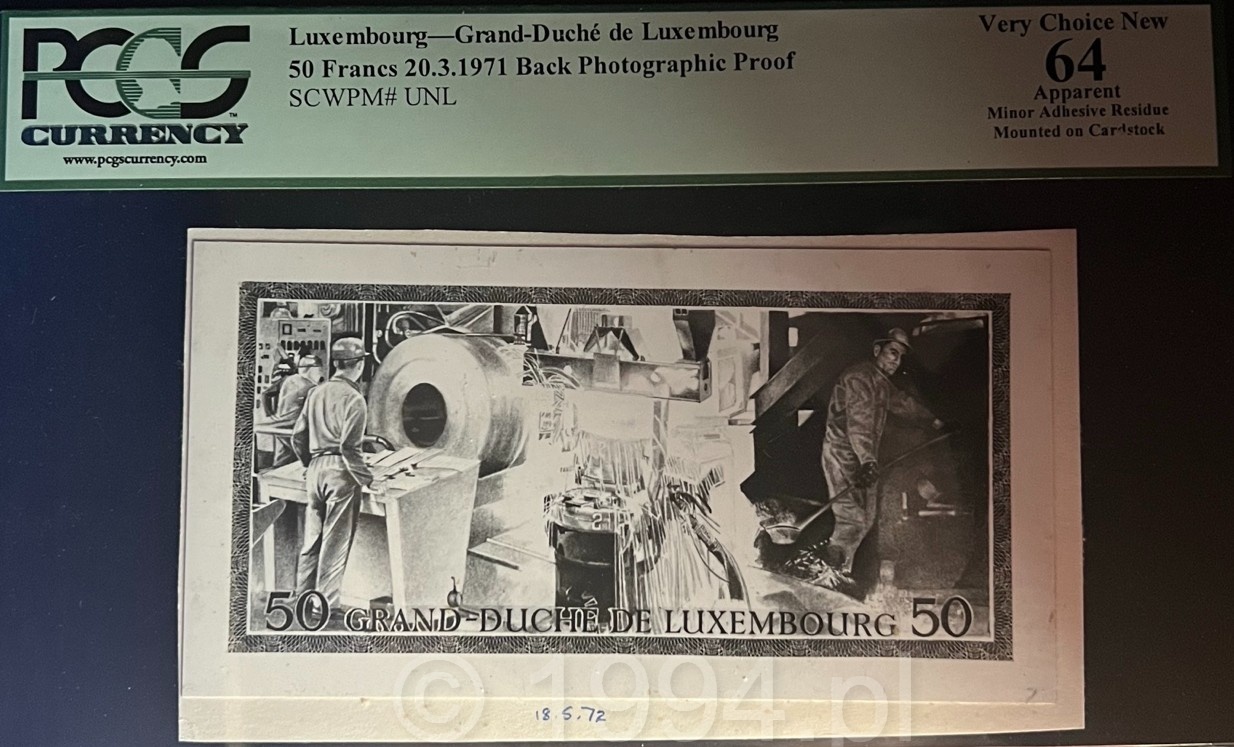
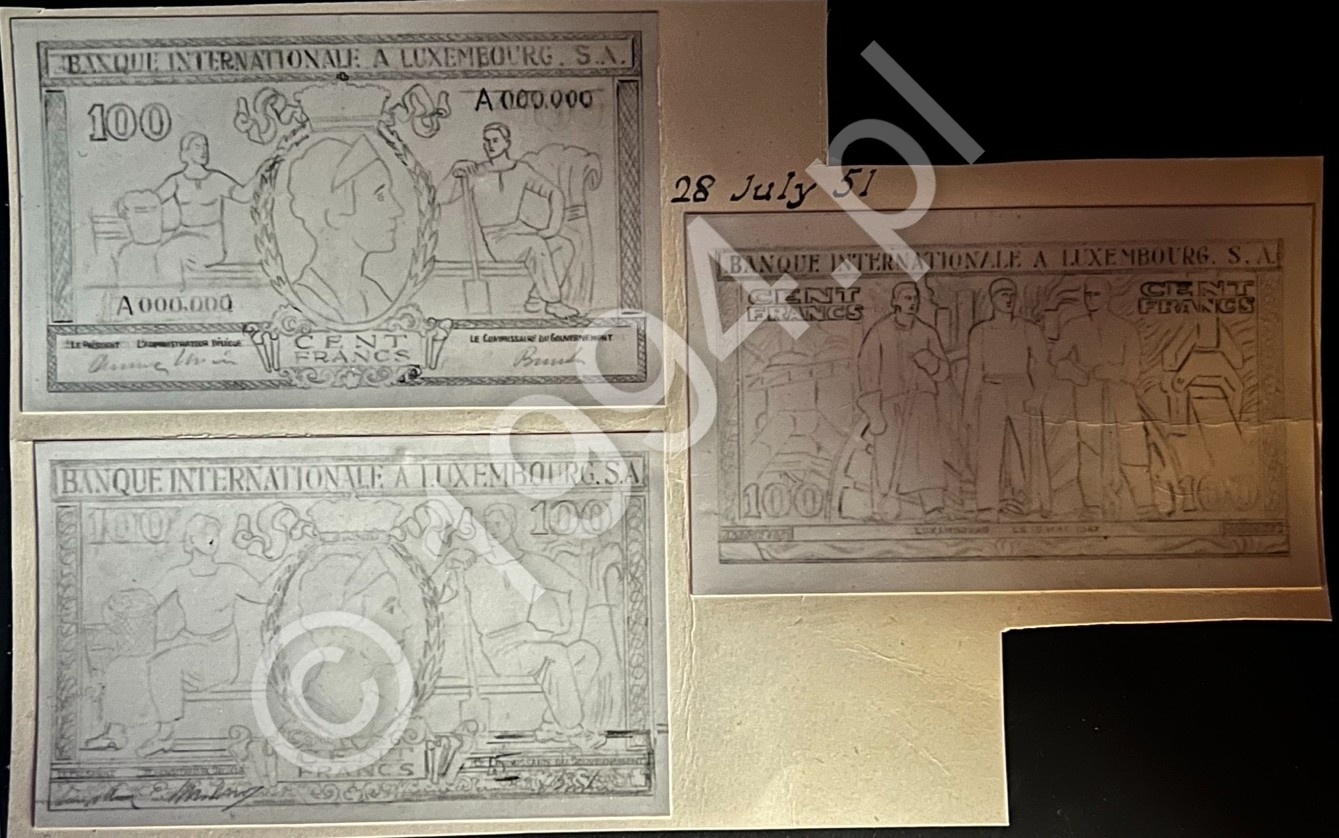
Photographic proofs of this type were internal tools used to refine composition before committing to engraving. They document the evolution of a design rather than presenting a separate or competing concept. Most were discarded once the final layout was selected, making surviving examples rare evidence of the decision-making process.
Within the broader production sequence, this piece occupies the stage between initial layout definition and finalized reverse engraving. It complements the issued note and other developmental material by revealing how the adopted composition was derived through controlled adjustment rather than abrupt redesign.
The proof is preserved in Choice New condition, mounted on original cardstock, retaining strong photographic clarity and full visibility of this intermediate design stage.