Description and research notes
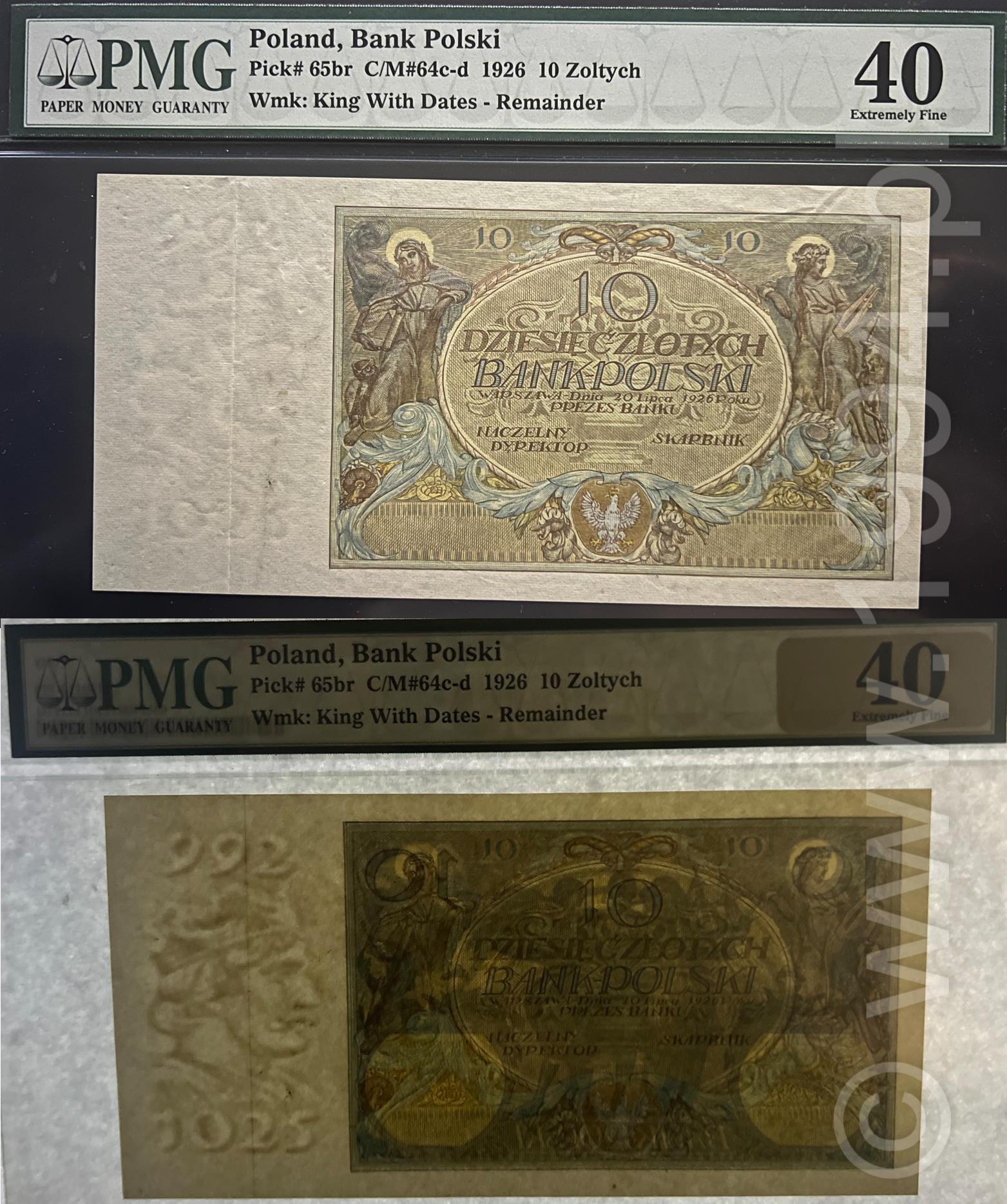
This banknote is a remainder from the 10 złotych issue of Bank Polski dated 20 July 1926, printed on paper carrying a portrait watermark of Bolesław Chrobry together with the dates of his reign, 992–1025. In standard catalog references, this material is recorded as Pick 65br and represents the remainder counterpart to the issued type Pick 65b, sharing the same paper and watermark characteristics.
The portrait watermark featuring Poland’s first crowned king was introduced within a specific historical and symbolic framework. Its adoption followed the nationwide commemorations of 1925, marking the 900th anniversary of Bolesław Chrobry’s coronation and death. Within the visual language of the Second Polish Republic, the motif formed part of a broader state program that deliberately embedded national history into monetary design, paralleling similar iconographic choices in contemporary coinage.
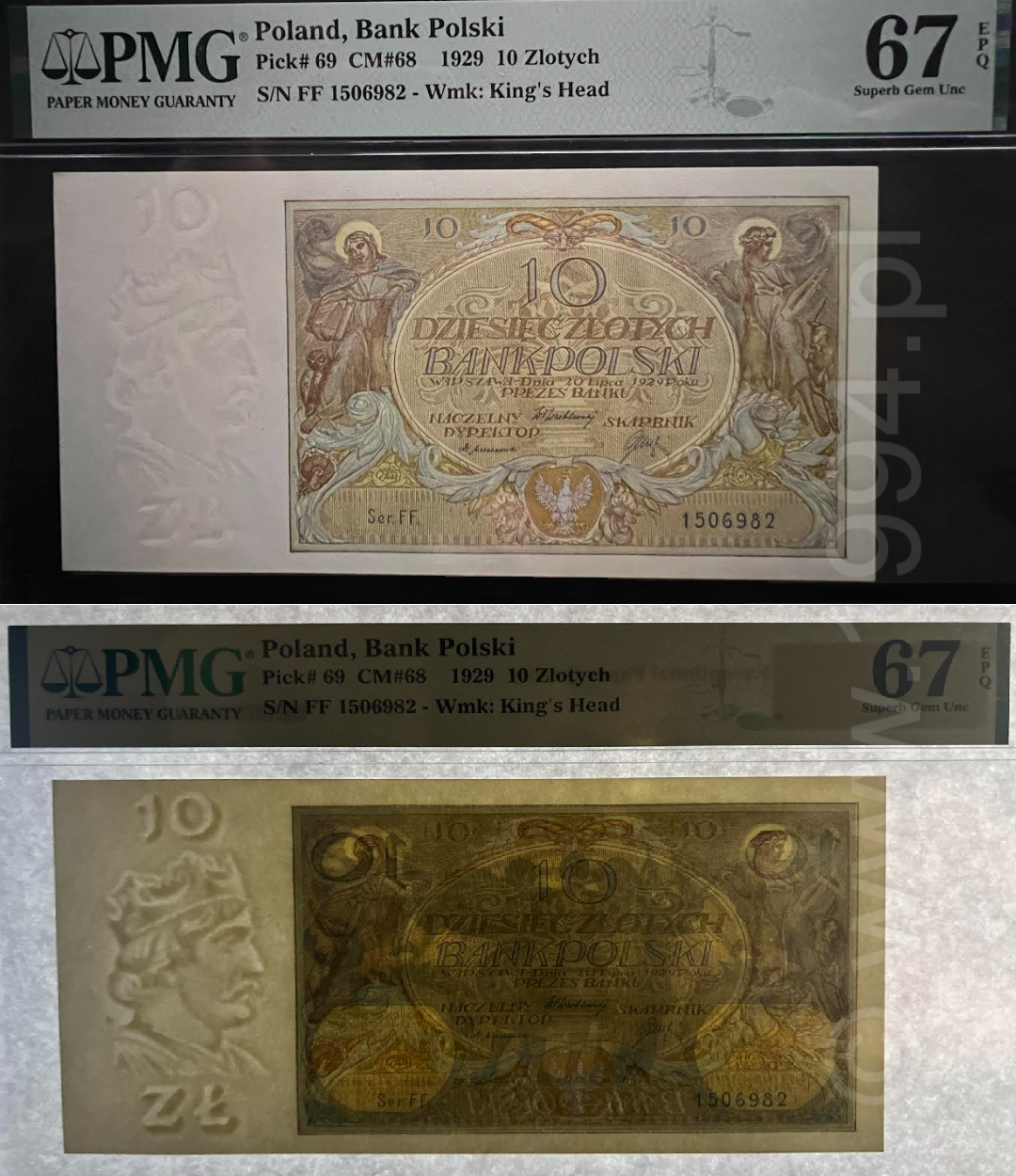
During the production of the 1926 10 złotych issue, this historically charged watermark was replaced by a redesigned variant that incorporated clear denomination markings - “10” and “ZŁ” - directly into the watermark field. The change was driven by practical considerations. A denomination-based watermark could be identified more quickly and reliably, improving everyday authentication and reducing the risk of denomination confusion in circulation. The transition reflects a shift from commemorative emphasis toward functional clarity in the banknote’s security design.
As a consequence of this change, paper bearing the original Chrobry 992–1025 watermark was used only during the initial phase of printing and in limited quantity. Once the simplified denomination watermark was adopted, remaining sheets of the earlier paper no longer served a monetary purpose.
In printing practice, remainders were not separate issues and were never intended for preservation. They consisted of unused paper and sheets left after production concluded, arising from the technical requirements of paper manufacture and press setup. From the standpoint of the issuing authority, such material represented surplus with no function as currency.
Remainder material of this kind was therefore routinely scheduled for destruction shortly after printing ceased, in order to prevent uncontrolled use. Survival was incidental rather than deliberate and resulted only from isolated departures from standard disposal procedures.
As a result, the banknote presented here stands as the only known surviving remainder corresponding to the issued Pick 65b paper. At present, no additional examples are recorded in institutional collections, private holdings, or reliably documented auction archives.