Description and research notes
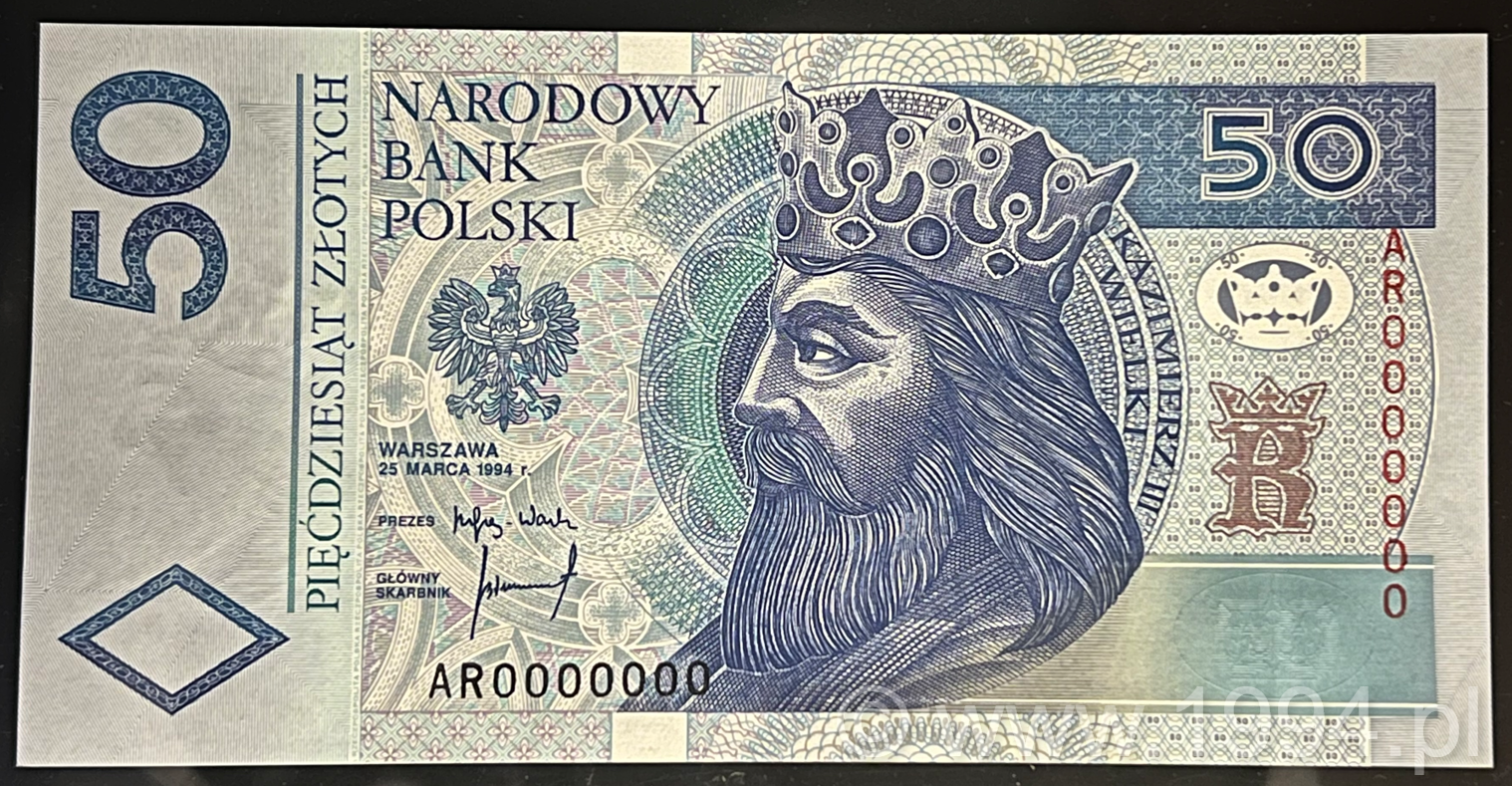
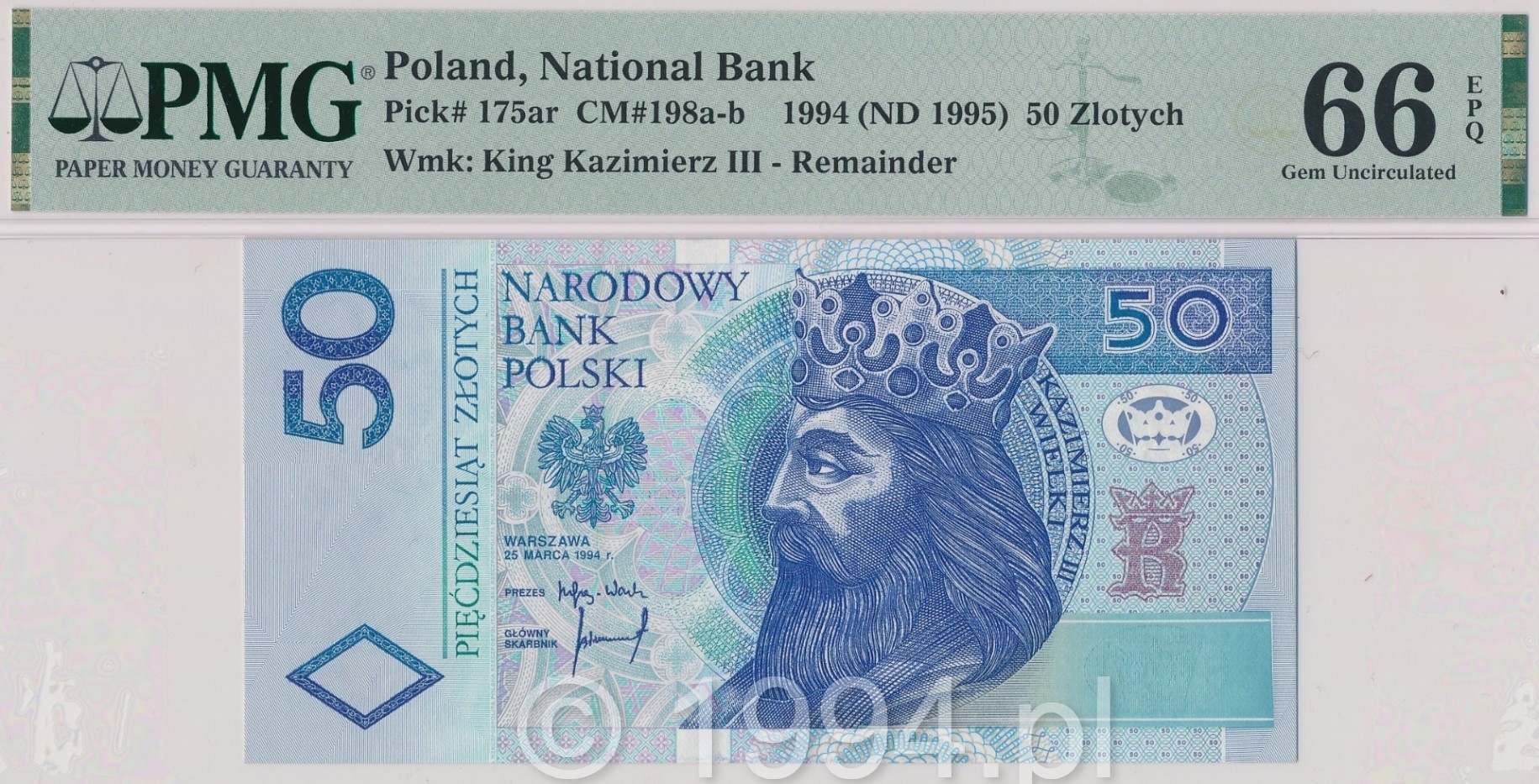
Remainder of the 50 złotych note issued by Narodowy Bank Polski within the first fully modern banknote series of the Third Republic, dated 25 March 1994. This example represents production-stage material retained outside the finalized circulation workflow and is cataloged as Pick 175ar, corresponding to Miłczak 198a–b.
The note preserves the complete printed design prepared by Thomas De La Rue, London, including the portrait of King Kazimierz III Wielki (Casimir the Great), the integrated guilloche structures, and the finalized denomination and emblematic layout of the modernized Polish currency system. All elements of the intaglio and offset composition are present in their issued form, confirming that the sheet had progressed through the principal printing stages of production.
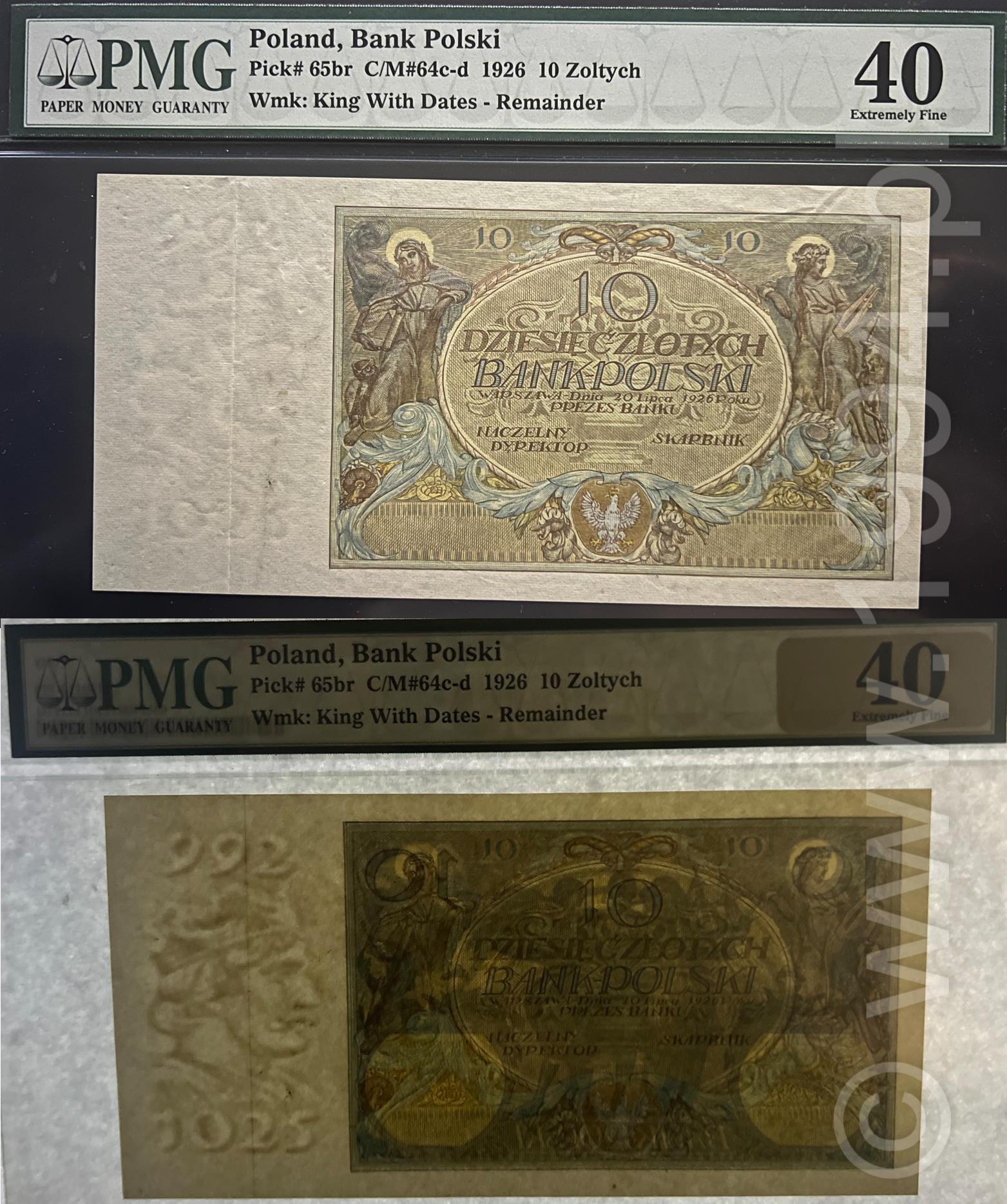
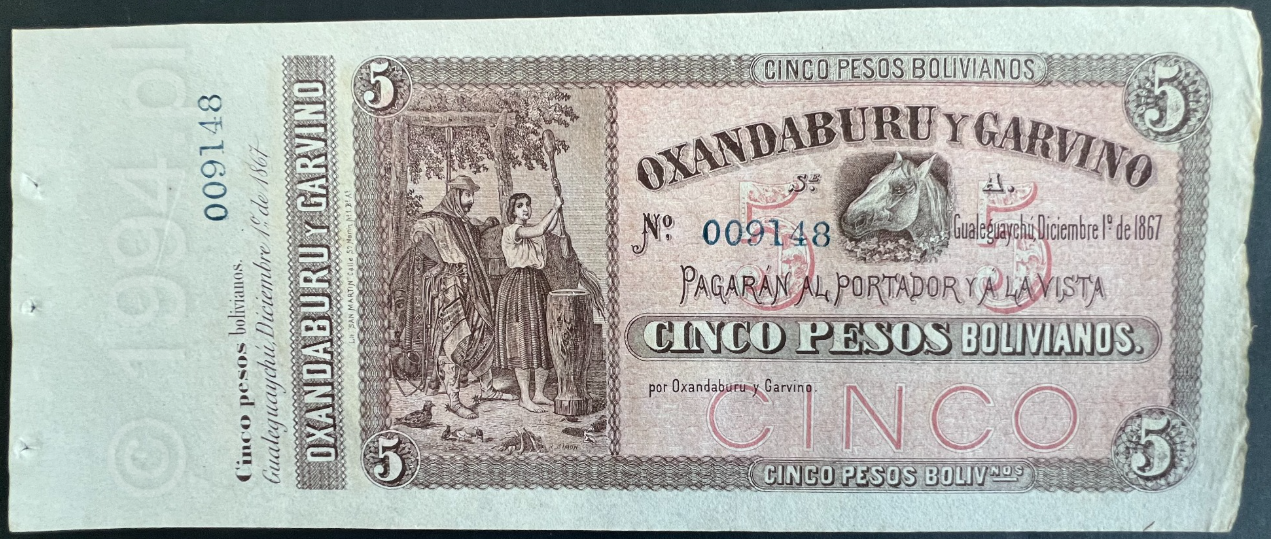
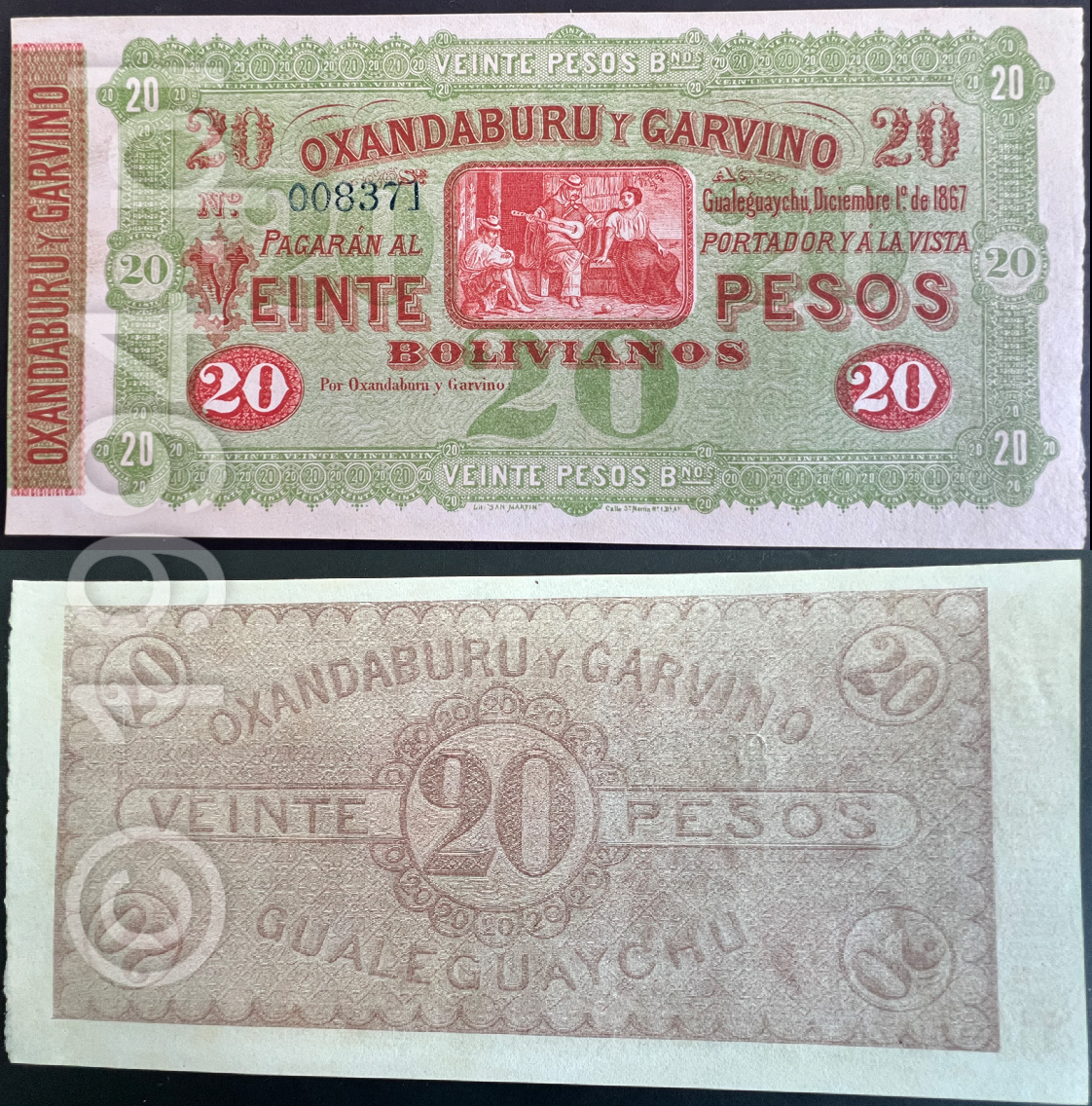
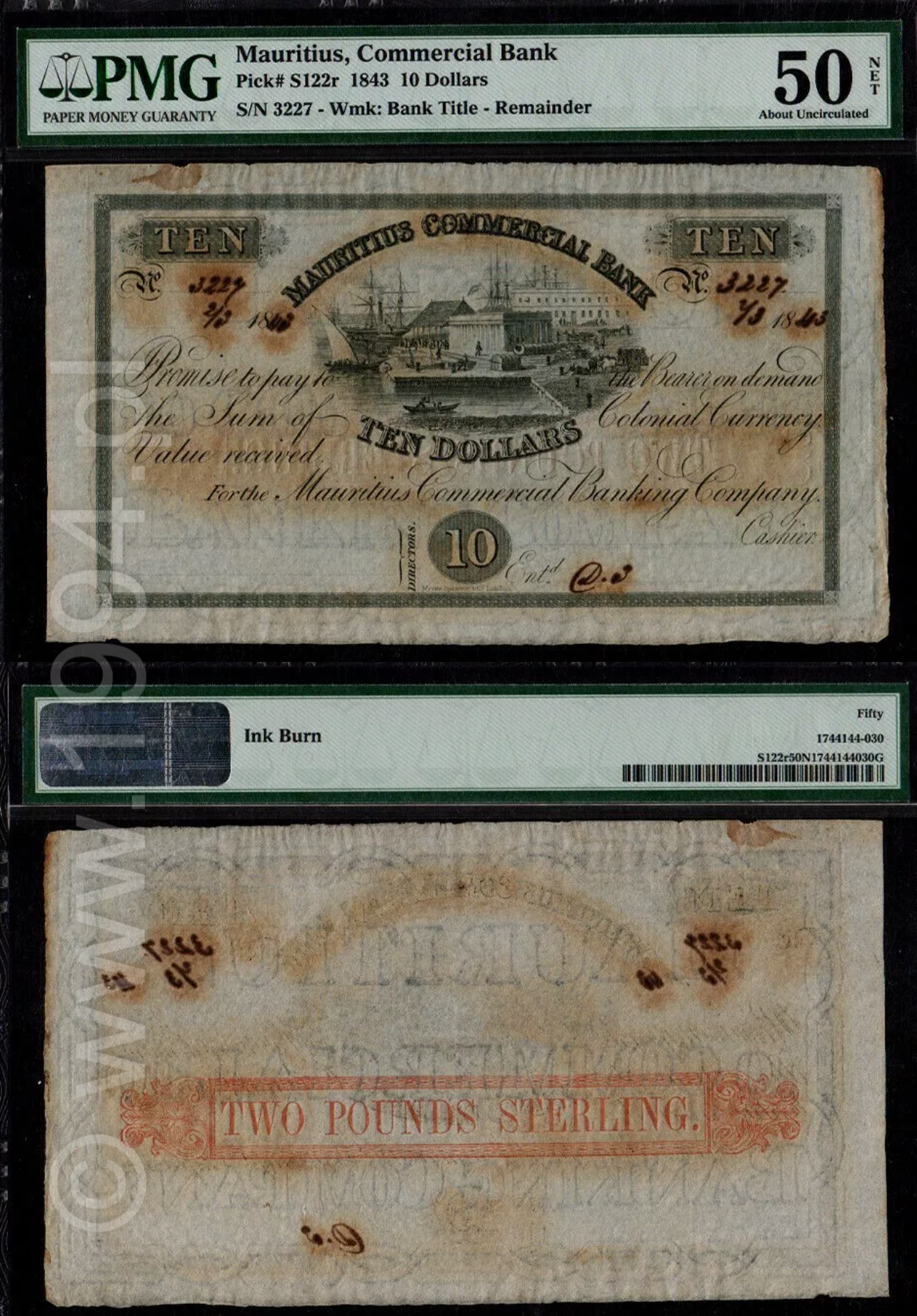
What distinguishes this remainder is the complete absence of both serial numbers and series prefixes. This condition reflects an interruption or exclusion at the numbering stage, one of the final operations in the banknote manufacturing sequence. As such, the piece documents a precise moment within the production workflow, positioned between fully printed but unnumbered sheets and finalized circulation notes.
In printing practice, remainder material was not produced as a separate collectible category and was never intended for preservation. It consisted of surplus sheets and finished prints retained after production runs, typically arising from setup requirements, spoilage allowances, or process adjustments. Standard procedure dictated controlled disposal of such material following completion of printing, as it held no monetary function and posed a potential risk if left unaccounted for.
The survival of modern remainder material of this type is therefore highly uncommon. Contemporary banknote production, particularly in the 1990s, operated under stringent quality-control and accounting systems designed to eliminate defective or surplus prints through systematic destruction. The presence of an unnumbered remainder from this series indicates a rare exception to these protocols.
Within the observable PMG population, only two examples of this remainder type have been recorded. No broader accumulation has emerged in institutional holdings or in the collector market over decades of active circulation and replacement of the issued series. On the basis of verifiable population data, this note qualifies as R8 — extremely rare.
As a result, this piece stands as a production-stage artifact rather than a circulation anomaly, documenting the numbering omission phase within Poland’s modern banknote manufacturing process and providing direct evidence of the controlled transition from printed sheets to fully serialized currency.