Description and research notes
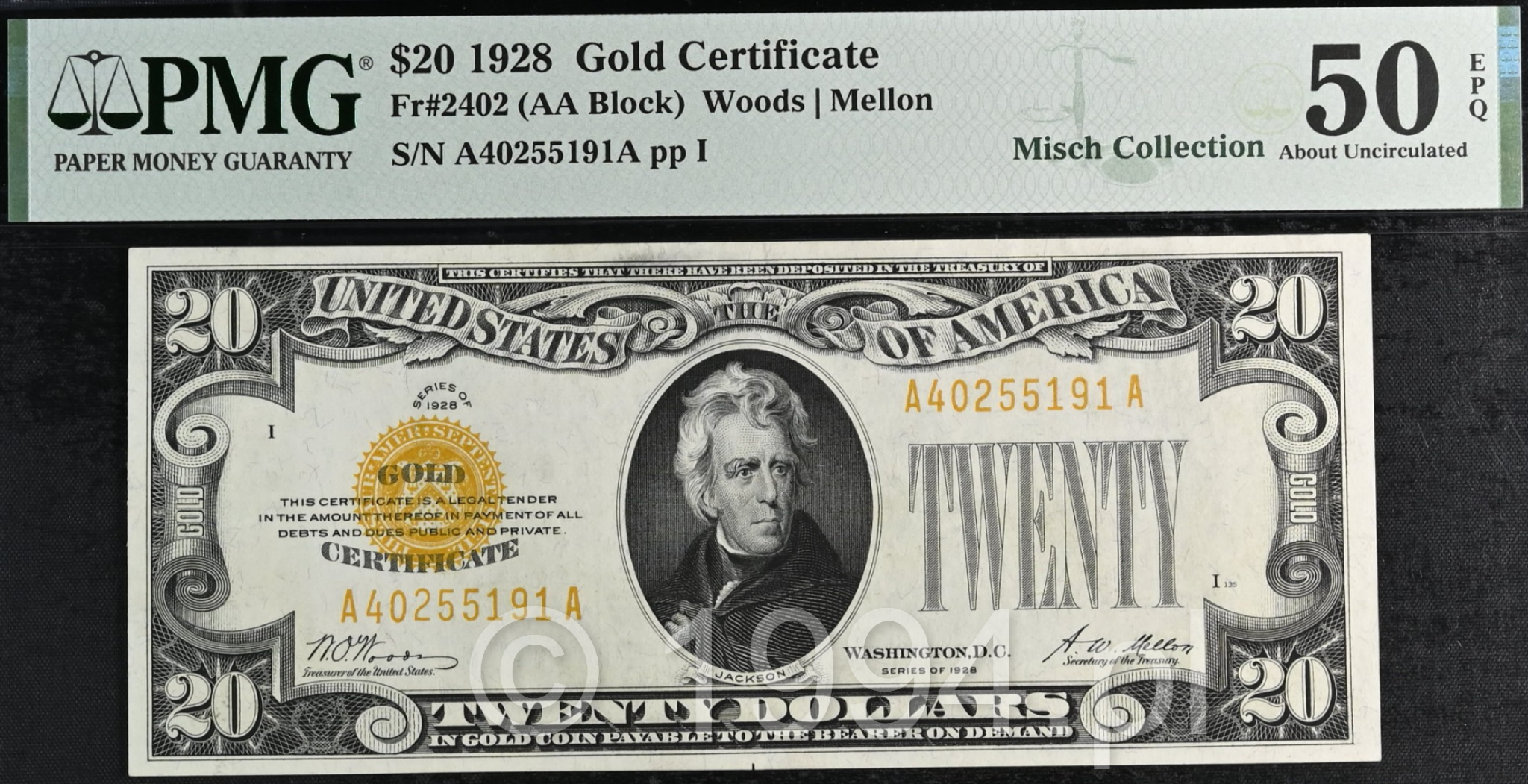
The Series 1928 20 Dollars Gold Certificate, cataloged as Friedberg 2402, represents the inaugural small-size issue of the denomination and one of the final circulating forms of gold-backed United States paper money. Bearing the signatures of Woods and Mellon, this example from the AA block carries the distinctive orange-gold Treasury seal and matching serial numbers that define Gold Certificate issues of the era.
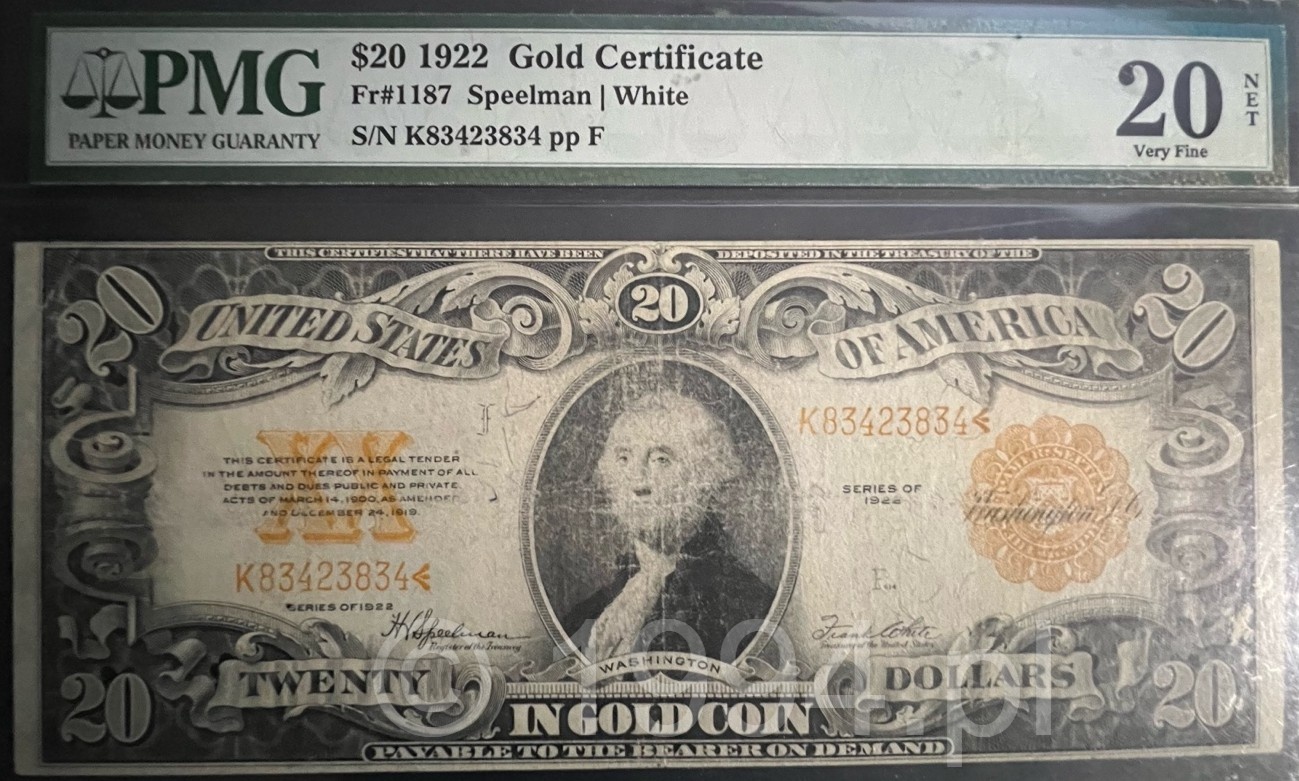
Gold Certificates were obligations payable in gold coin to the bearer on demand, a clause prominently displayed on the face of the note. These certificates functioned as direct claims on gold reserves held by the United States Treasury, circulating alongside Federal Reserve Notes and Silver Certificates during the late gold standard period. The 1928 series marked the transition from large-size to small-size format, standardizing dimensions across denominations while preserving the intricate intaglio artistry of earlier designs.
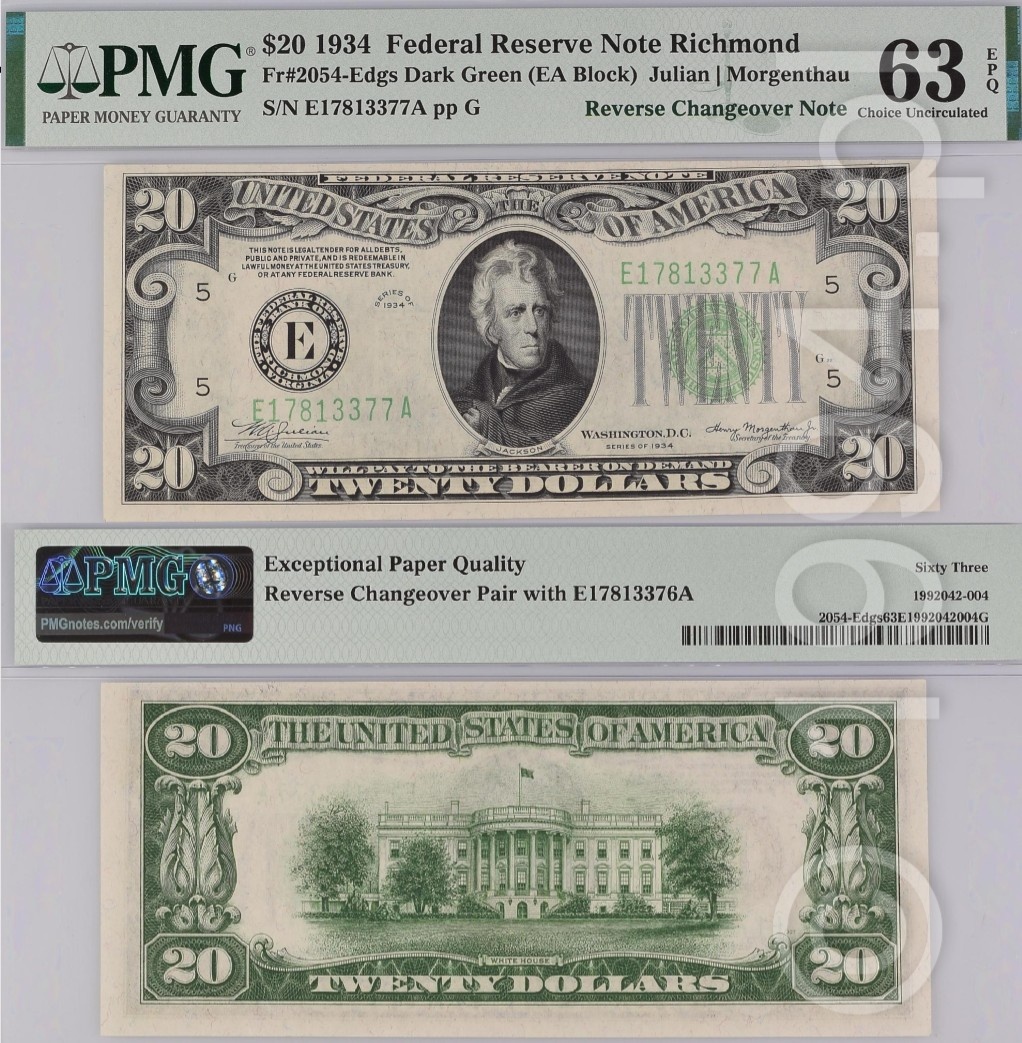
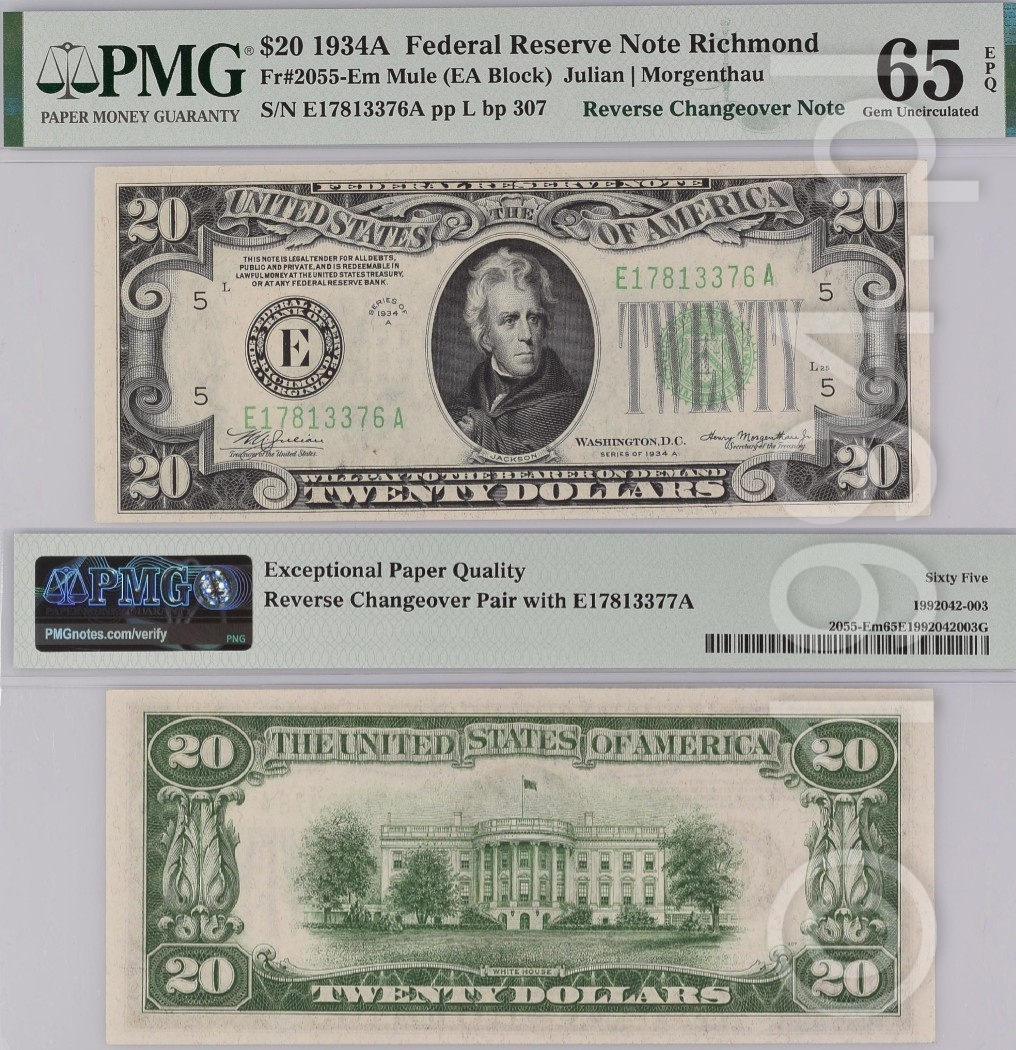
The obverse features the portrait of Andrew Jackson, engraved with layered depth and fine line work characteristic of Bureau of Engraving and Printing production. The reverse presents the stately vignette of the White House, framed within the bold geometric border typical of early small-size twenty-dollar notes. The vibrant gold seal and serial numbers immediately distinguish the type from green-seal Federal Reserve Notes and blue-seal Silver Certificates.
Issued prior to the suspension of gold redemption in 1933, small-size Gold Certificates such as this example were subsequently withdrawn from circulation and largely recalled. Surviving pieces therefore represent a tangible link to the final chapter of gold-convertible United States currency.
Graded PMG 50 EPQ About Uncirculated, this note retains original paper quality as confirmed by the Exceptional Paper Quality designation. Light handling consistent with the grade does not diminish the strength of color, engraving clarity, or the visual impact of the gold overprint elements. The inclusion of the Misch Collection pedigree further anchors the note within a recognized provenance, adding contextual depth to its preservation history.
Within the broader framework of United States monetary history, the 1928 20 Dollars Gold Certificate stands as a foundational small-size gold-backed issue. It embodies the technical refinement of modern note production while marking the closing era of domestic gold redemption, making it both historically and aesthetically significant.