Description and research notes
This Series 1995 ten-dollar Federal Reserve Note from the Minneapolis District (designation I) illustrates how a small mechanical flaw can transform a routine print into a collectible printing anomaly. Cataloged as Friedberg 2032-I, it bears serial I36180363A and the printed signatures of Treasury officials Mary Ellen Withrow and Robert E. Rubin. The note was produced at the Bureau of Engraving and Printing’s Washington facility, identified by the 'FW' plate mark.
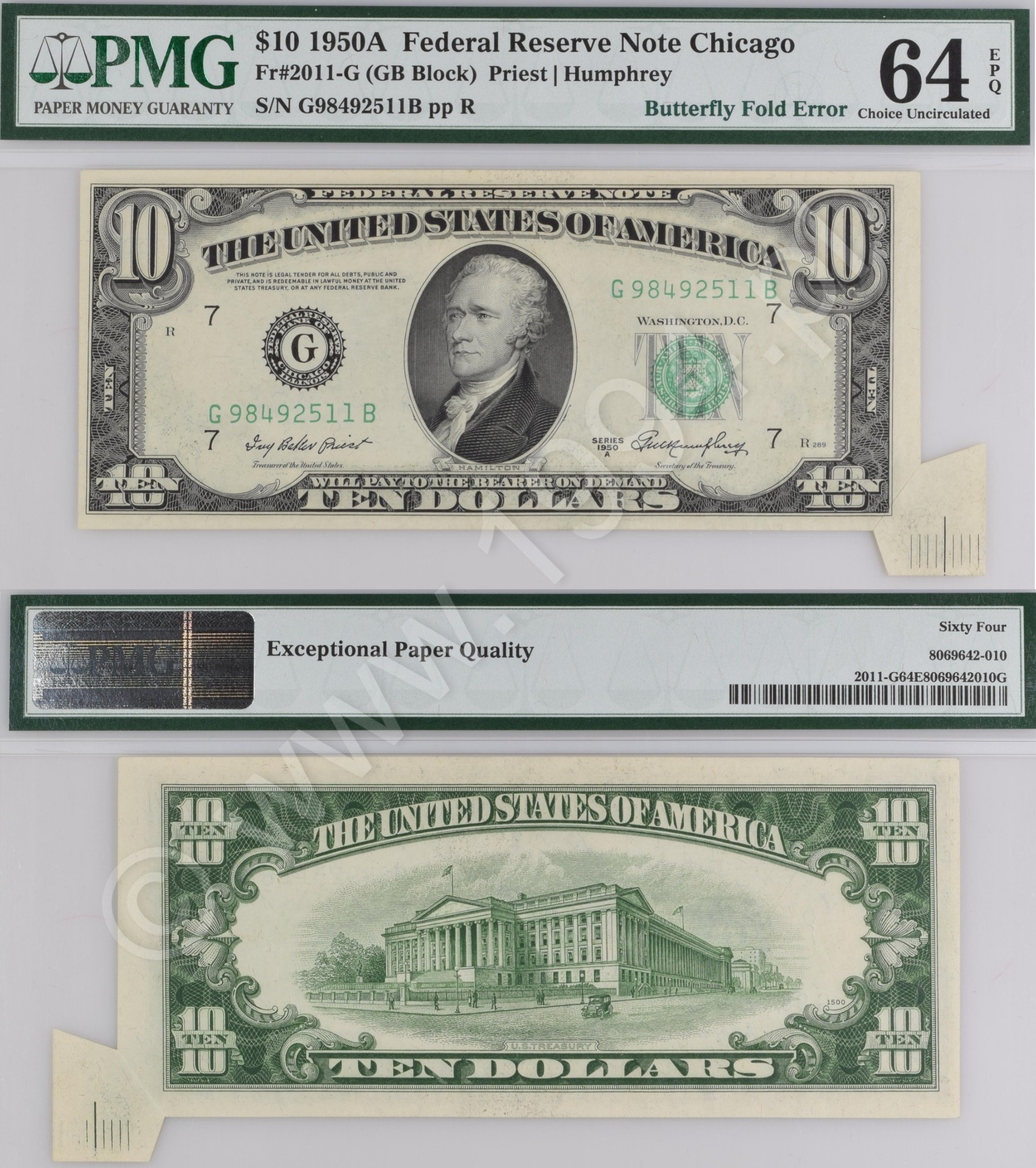
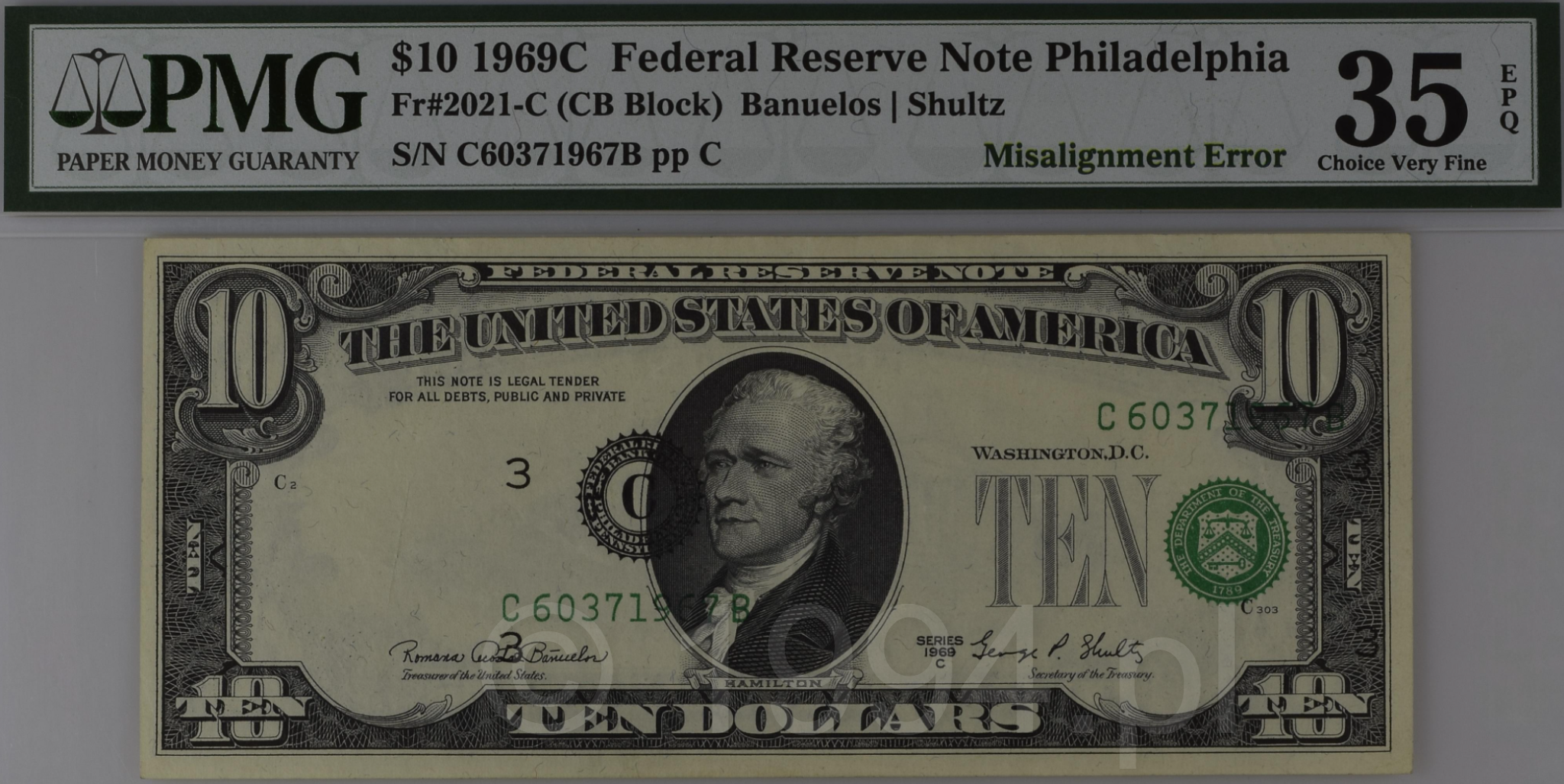
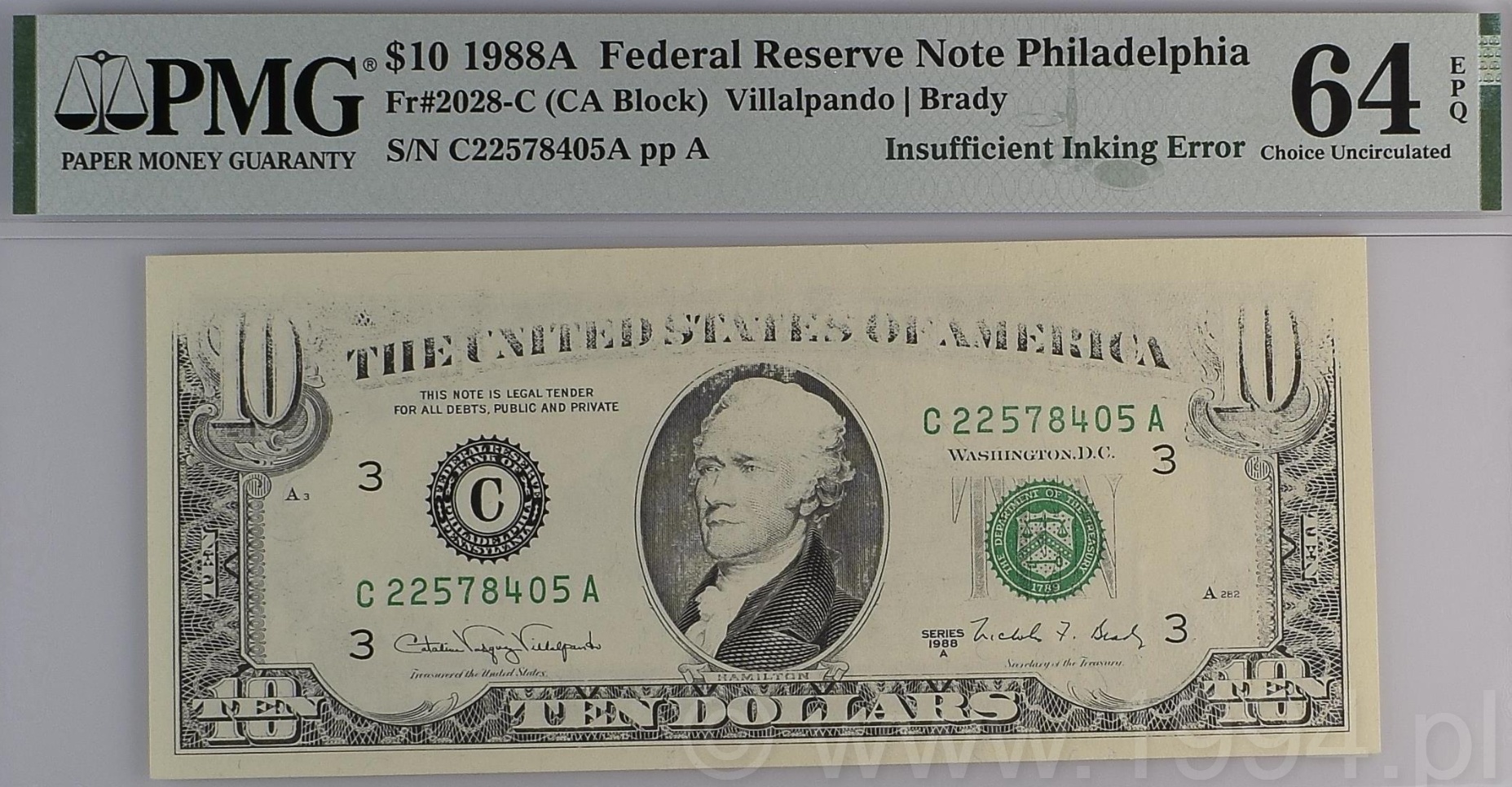
The error noted by PMG as 'Printed Tear Error' occurred when the sheet suffered a slight tear or snag during the intaglio impression stage. Instead of discarding the damaged substrate, the BEP press cycle continued, causing a distortion or ink void along the affected margin before the paper was repaired or trimmed. Such anomalies provide a glimpse into the precision-and occasional fallibility-of modern currency production, where speed and volume can produce rare, visually distinctive results.
The obverse presents the familiar portrait of Alexander Hamilton framed by fine-line engraving and geometric guilloche. The reverse depicts the U.S. Treasury building, an apt symbol for a note whose very error emerged within that institution’s own printing process. Although post-1990s Federal Reserve Notes are generally abundant, verified production errors in superb gem condition remain scarce, as quality-control rejection rates are exceptionally high.
Certified PMG 66 EPQ Gem Uncirculated, this example displays exceptional registration, full embossing, and perfect paper originality. It represents not only a striking visual oddity but also a case study in the intersection of industrial precision, human oversight, and collector fascination with the unintentional artistry of error notes.