Description and research notes
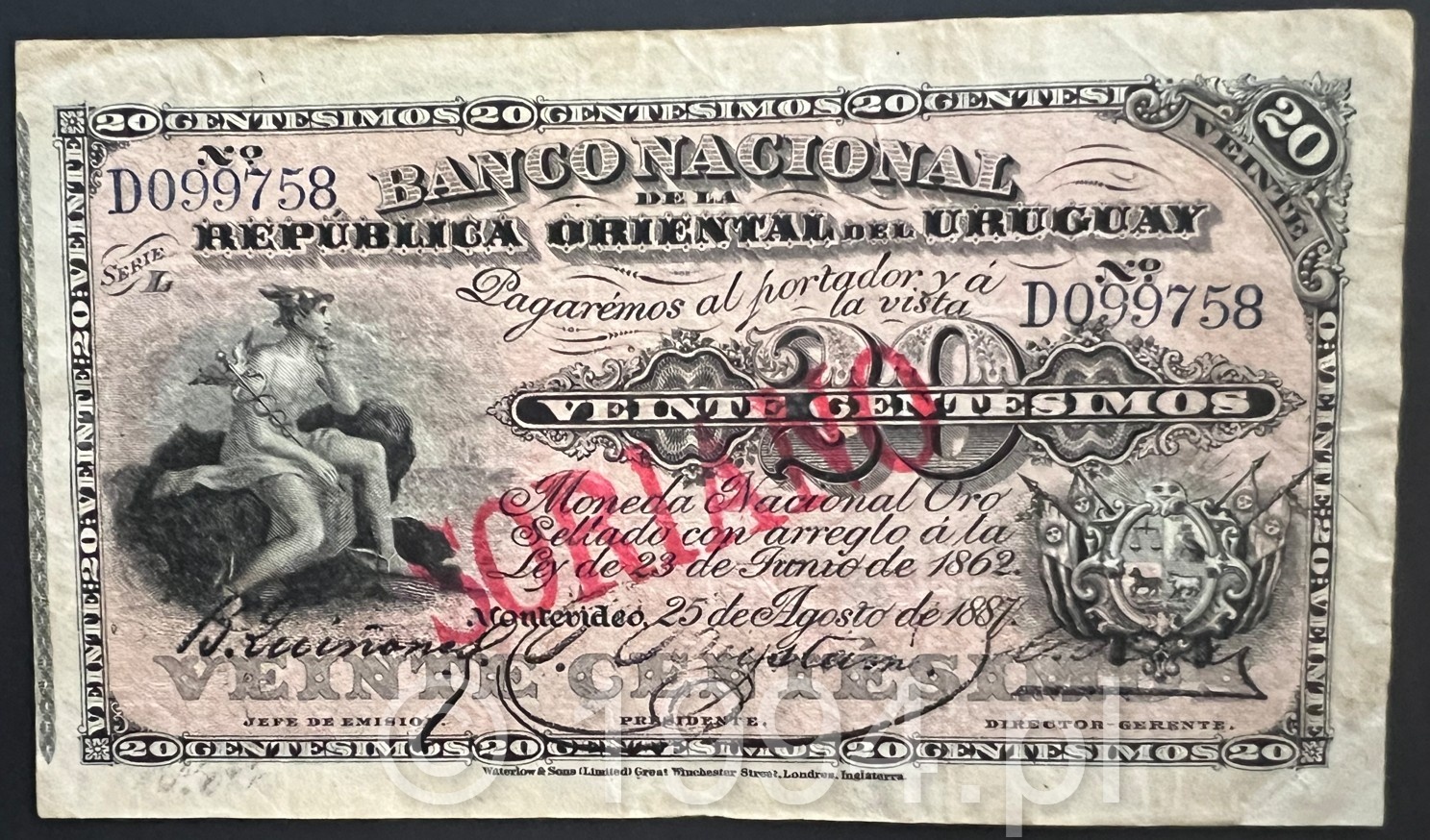
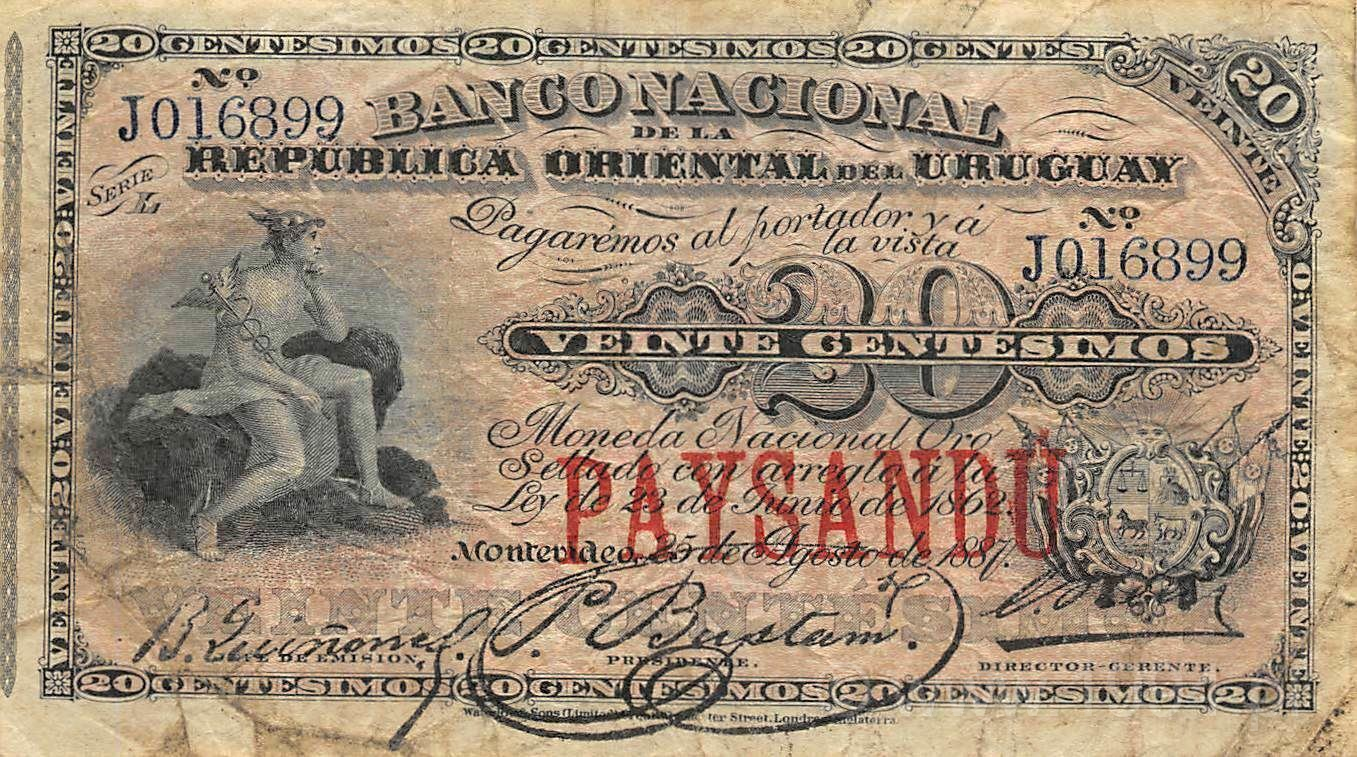
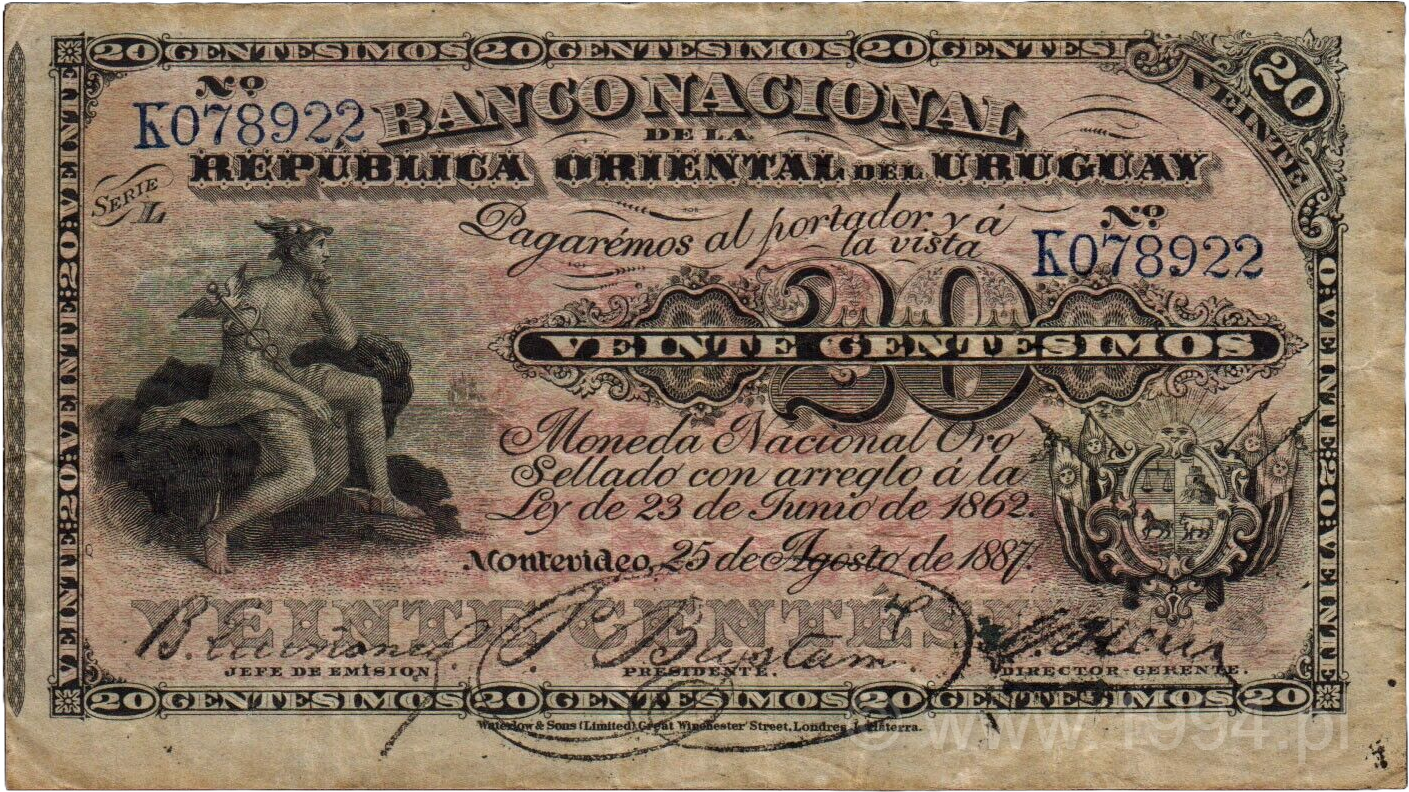
This 20 Centesimos note was issued by the Banco Nacional de la Republica Oriental del Uruguay under the monetary framework dated 25 de Agosto de 1887, during a phase of institutional consolidation and expanding note production. Printed in London by Waterlow and Sons, this example represents the mechanically signed emission classified as Pick A88c, marking a technical evolution within the same engraved design series.
The Banco Nacional functioned as a principal national banking authority in late nineteenth century Uruguay, issuing notes convertible within a metallic-based monetary structure. The 20 Centesimos denomination formed the fractional tier of the 1887 emission, facilitating small commercial transactions while retaining the same high level of engraved security sophistication applied to higher denominations.
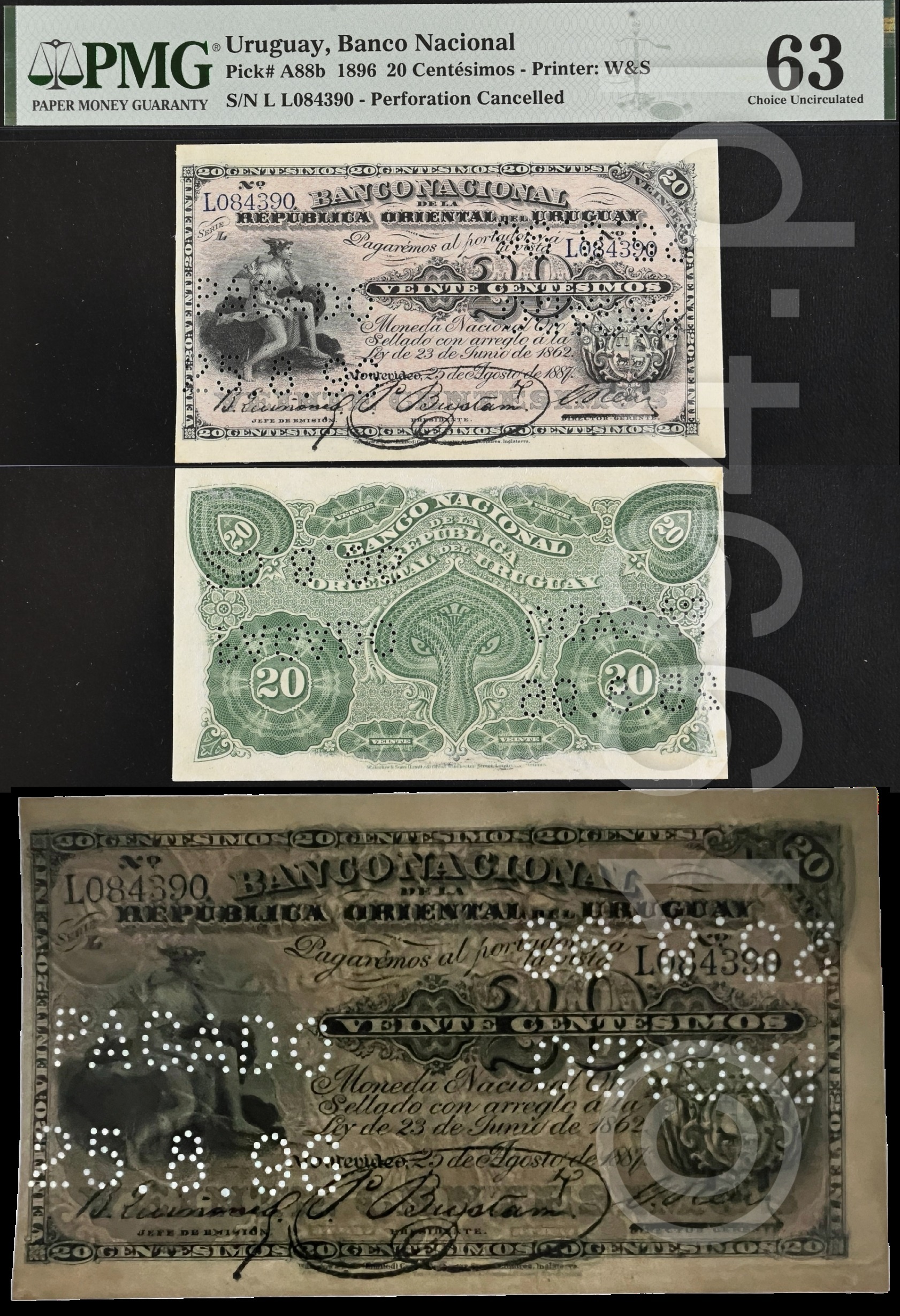
The obverse presents the seated Mercury allegory at left, symbolizing commerce and circulation, engraved in fine intaglio and integrated within a complex green and black guilloche framework. At right appears the national coat of arms, reinforcing sovereign authority within the monetary system. The ornamental density and structured typography reflect Waterlow export engraving standards of the 1880s.
Serial K078922 belongs to the later production phase of the issue. The signatures of Vittone, Bugliam, and Gimenez are mechanically reproduced rather than individually hand applied. Their uniformity in stroke, pressure, and placement distinguishes this A88c classification from the earlier hand-signed A88a variety. This transition reflects operational scaling and production efficiency rather than any alteration in denomination authority or design composition.
The reverse displays a dense green guilloche security field with balanced denomination panels, consistent with Waterlow and Sons printing methodology of the period. Paper texture and ink saturation correspond to later deliveries within the 1887 production cycle.
As a mechanically signed emission, this example documents the administrative refinement of Banco Nacional note production during a period of increasing circulation demand. It stands as evidence of evolving security and efficiency practices within Uruguay's late nineteenth century engraved currency system.