Description and research notes
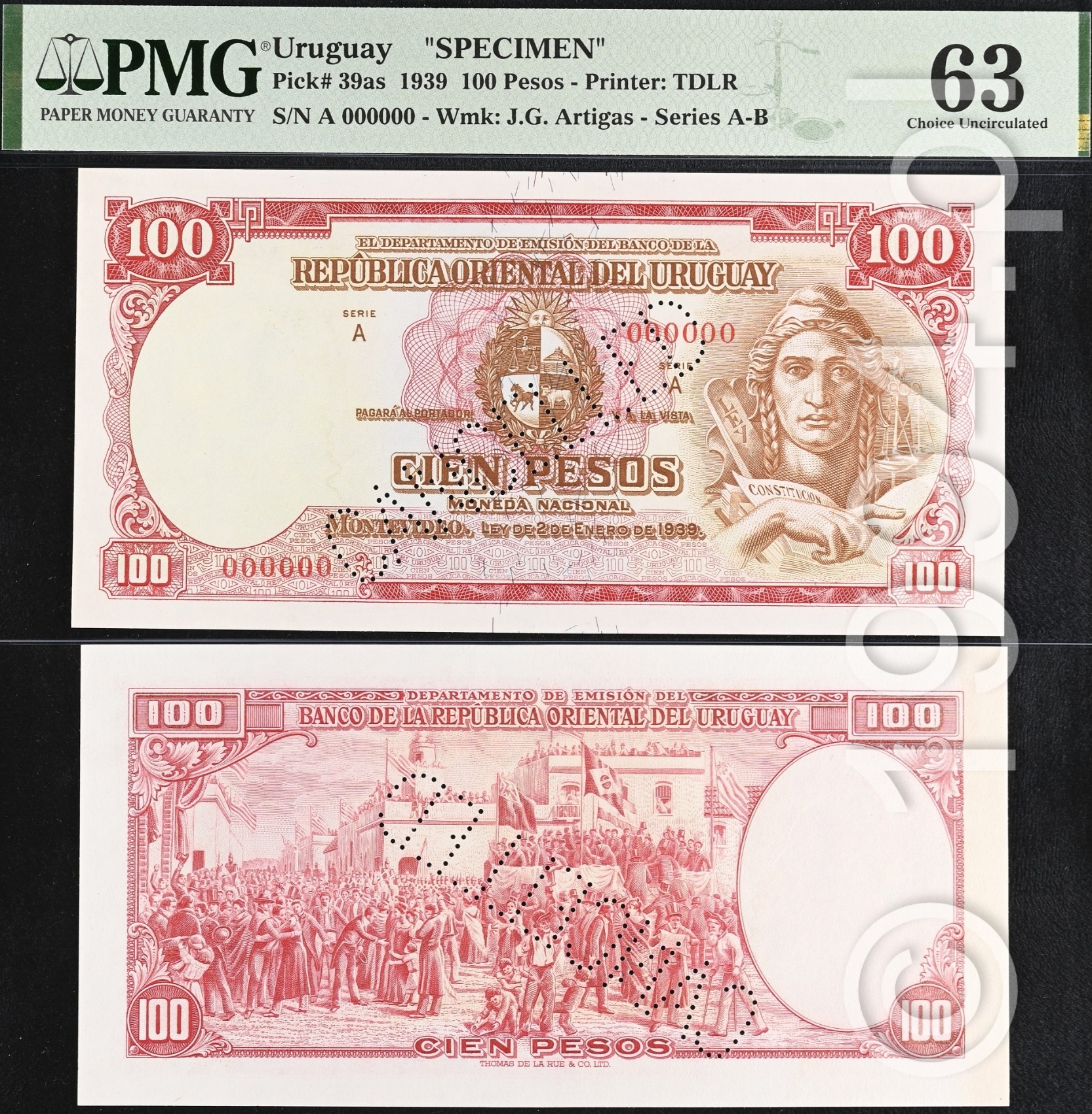
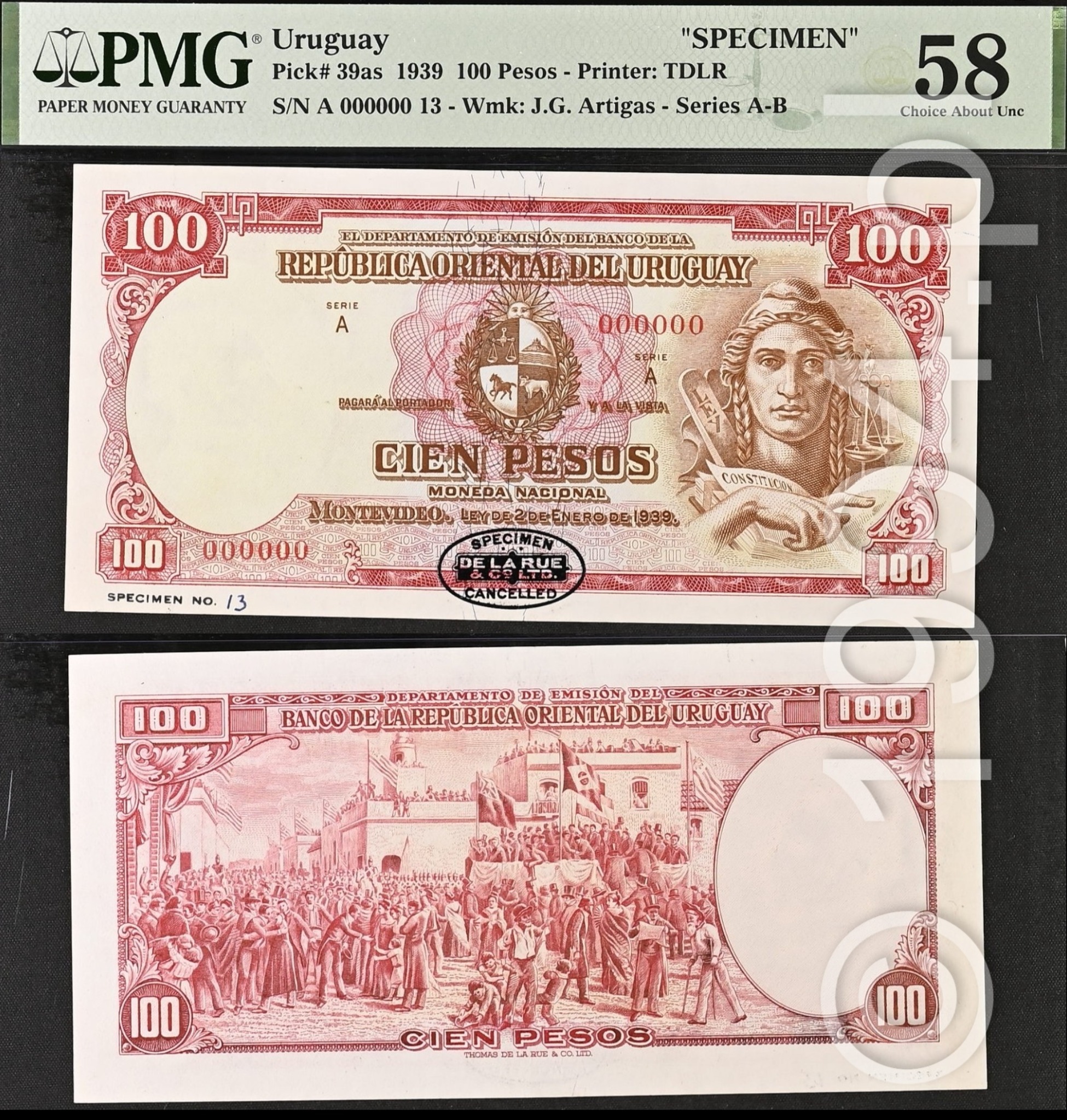
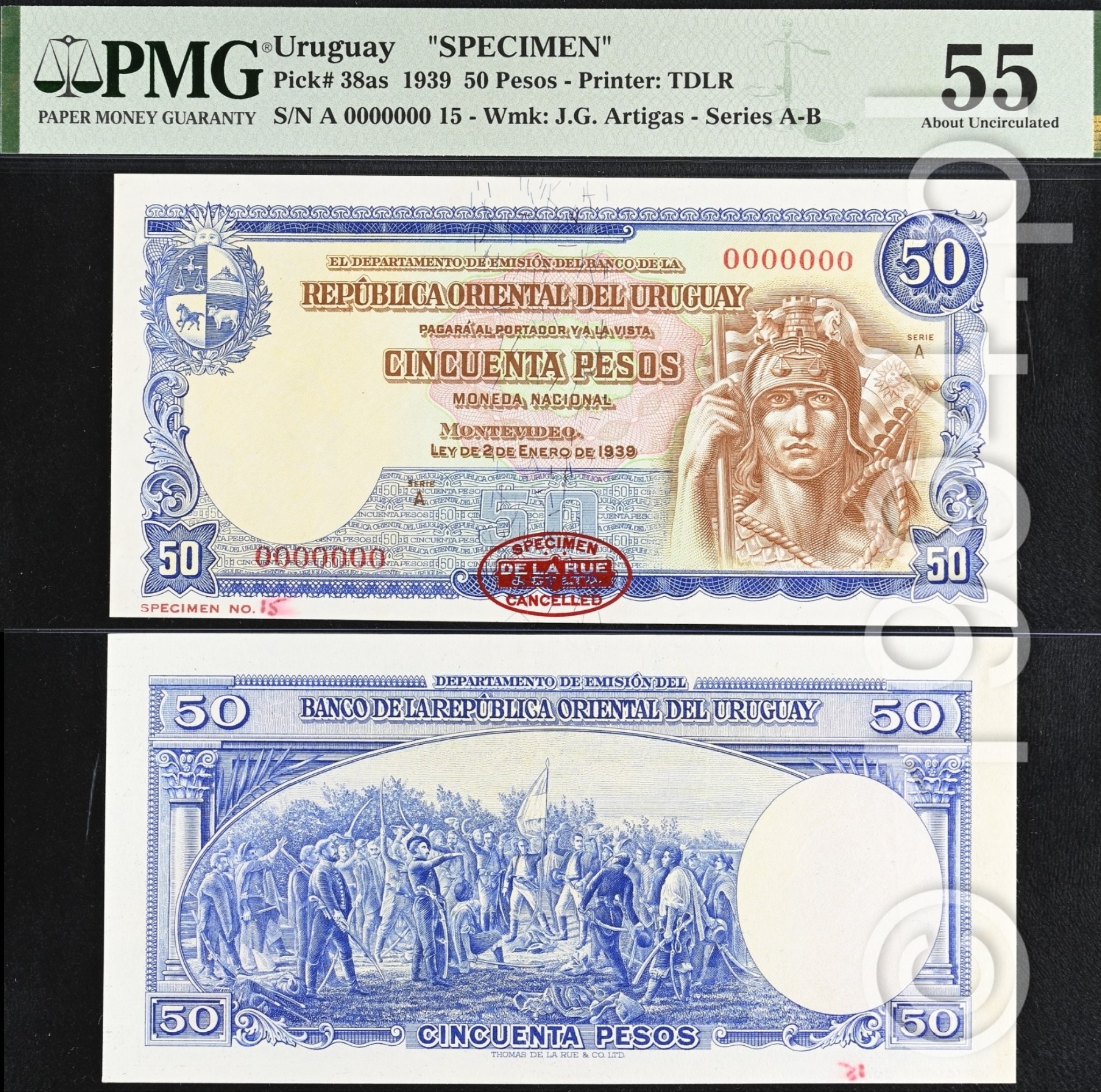
This specimen note represents a further distinct institutional handling variant of the one thousand pesos denomination of the Republica Oriental del Uruguay issued under the monetary law of 2 January 1939. As the highest denomination issued within Uruguay’s paper currency system at the time, the 1000 pesos was reserved exclusively for interbank settlement, treasury accounting, and high-level financial administration, and was never intended for routine public circulation.
By the late 1930s, the Banco de la Republica Oriental del Uruguay had consolidated its position as the central state banking institution, responsible not only for commercial banking functions but also for currency issuance, monetary regulation, and financial stability. Specimen notes of the highest denomination were produced as authoritative reference documents for institutional use, enabling printer verification, accounting control, and archival documentation without introducing monetary risk.
The obverse design features the engraved portrait of José Gervasio Artigas, Uruguay’s foundational national figure, executed within an ornate architectural framework characteristic of Thomas De La Rue and Company’s late-interwar intaglio production. The denomination MIL PESOS dominates the central cartouche, underscoring the note’s position at the apex of the denomination hierarchy. This example belongs to the Series A–B grouping and bears a controlled all-zero serial format, accompanied by the printed designation SPECIMEN No. 50 at the lower left margin, confirming its place within a numbered specimen sequence.
Cancellation on this specimen is effected through a restrained printer-applied method rather than mechanical perforation or large overprint. The obverse bears a small red oval stamp reading SPECIMEN DE LA RUE – CANCELLED, applied near the lower central portion of the design. No diagonal SPECIMEN overprint or perforated cancellation is present. This cancellation style reflects a controlled printer-level handling protocol, balancing permanent non-monetary invalidation with maximal preservation of the engraved artwork.
The reverse displays the complete allegorical equestrian scene associated with the one thousand pesos type, executed at the same engraving standard as circulation notes. The absence of cancellation on the reverse reinforces the interpretation of this piece as a formal institutional reference specimen rather than a presentation or display example.
Printed by Thomas De La Rue and Company of London, this De La Rue-cancelled specimen documents one of the specific control mechanisms applied to Uruguay’s highest-denomination banknote during the late interwar period. It stands as material evidence of the administrative practices through which the issuing bank and printer differentiated institutional reference material from circulating currency while maintaining full design fidelity and archival completeness.