Description and research notes
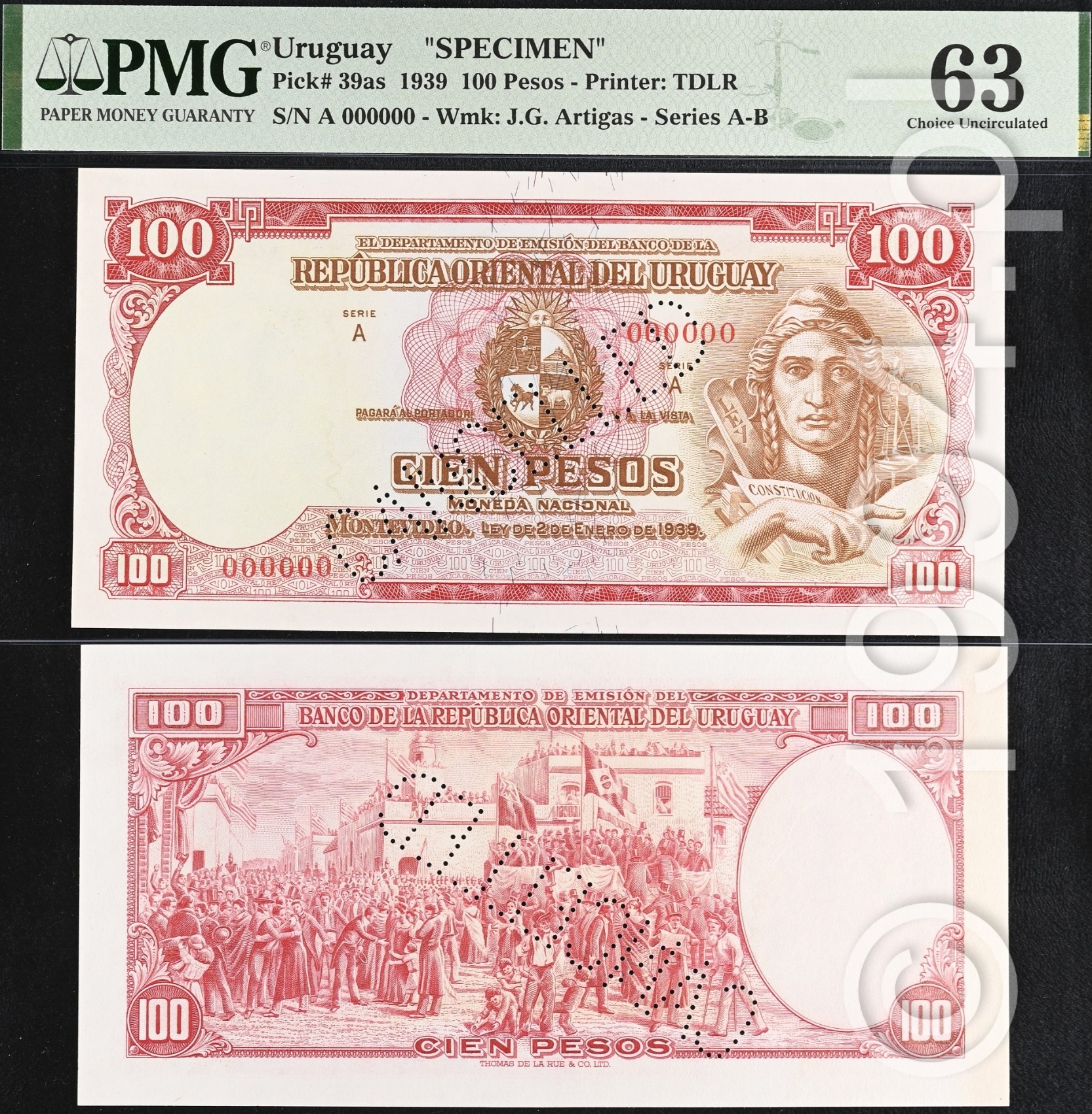
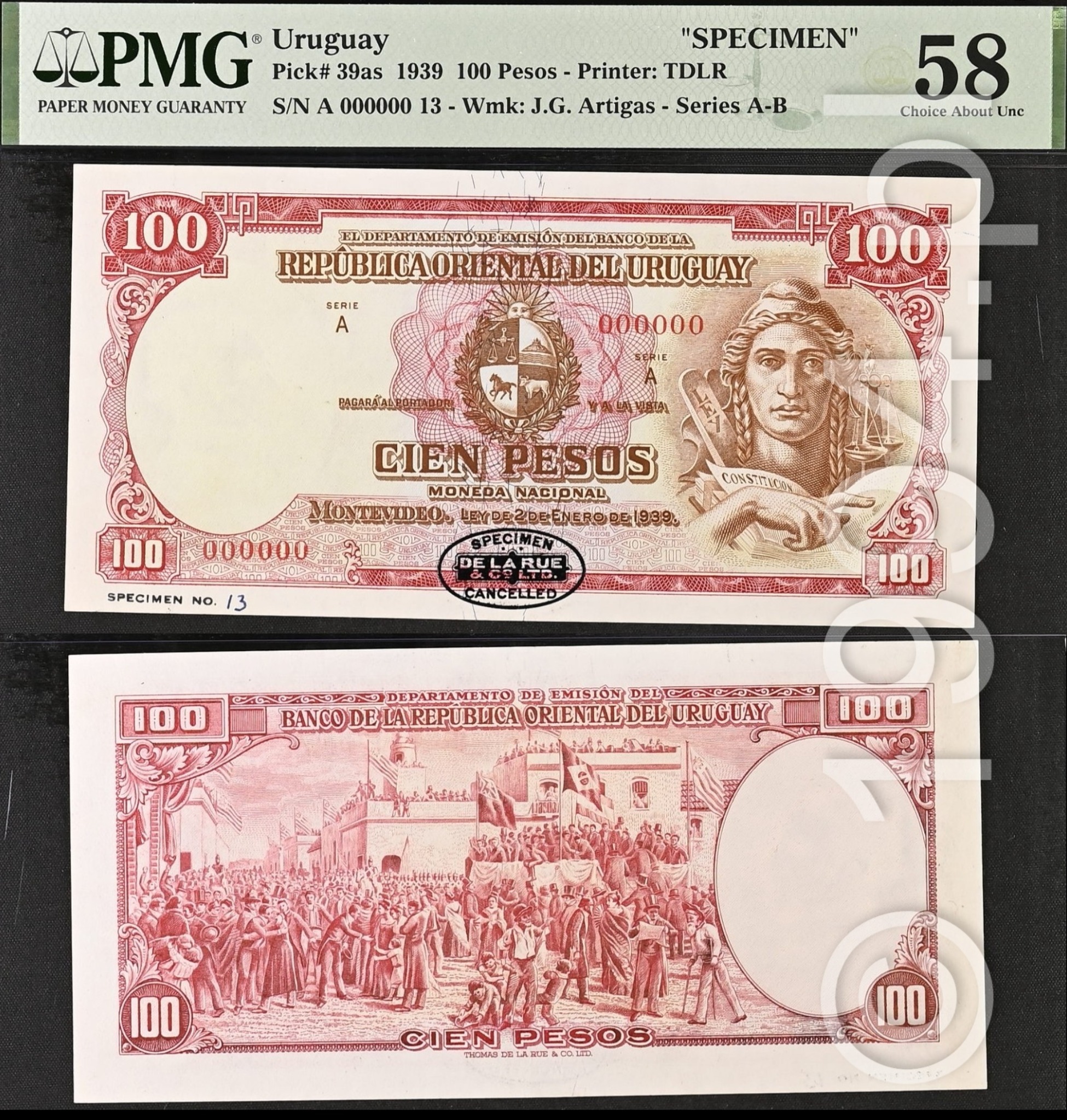
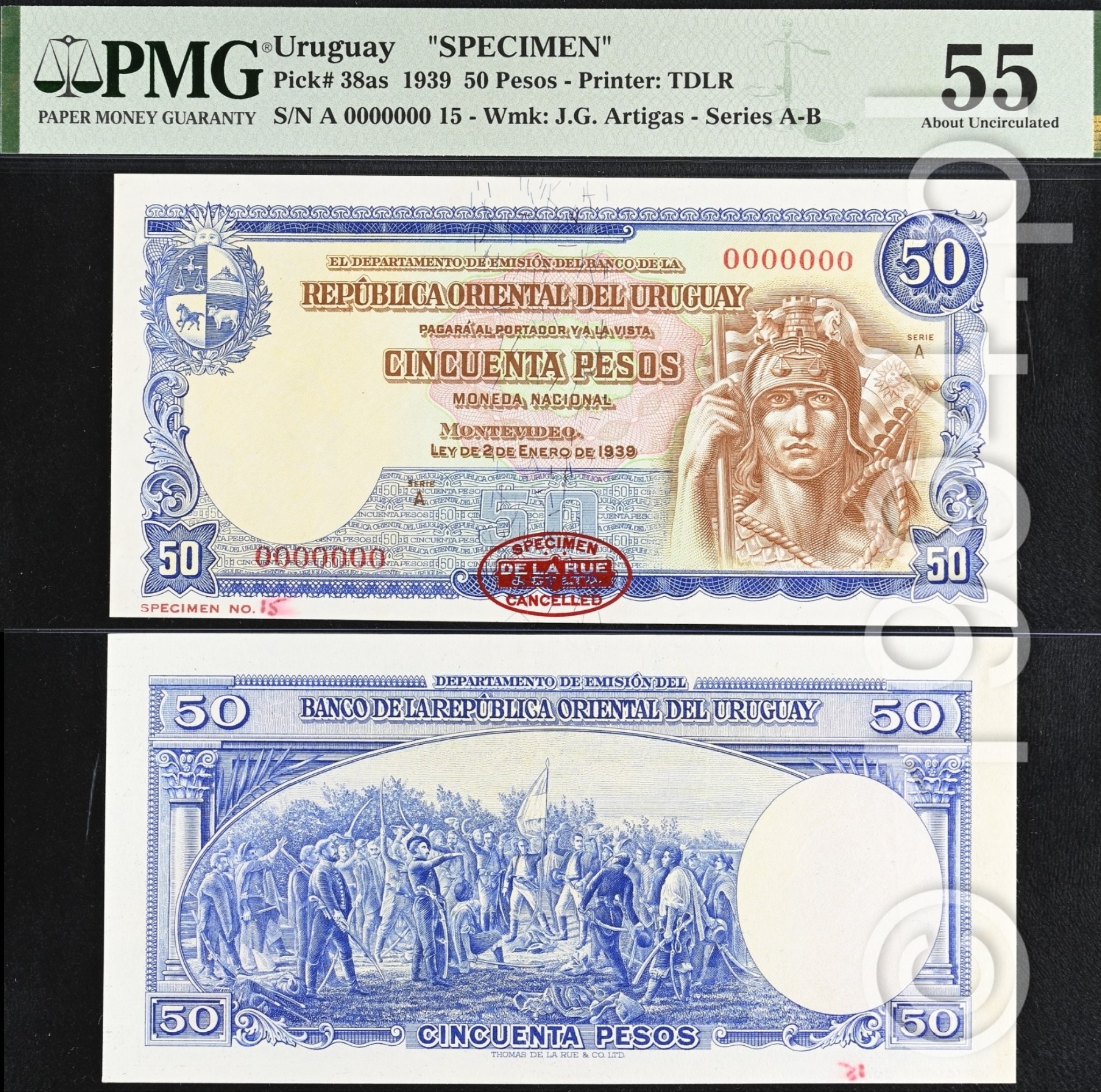
This specimen note represents a distinct institutional handling variant of the one thousand pesos denomination of the Republica Oriental del Uruguay issued under the monetary law of 2 January 1939, during the mature phase of state-directed banking and currency policy in Uruguay. As the highest denomination issued within the national paper money system at the time, the 1000 pesos was reserved exclusively for interbank settlement, treasury accounting, and large-scale financial operations, and was never intended for routine public circulation.
By the late 1930s, the Banco de la Republica Oriental del Uruguay functioned as the central pillar of the country’s monetary framework, combining commercial banking activity with responsibility for currency issuance, financial regulation, and monetary stability. Specimen notes of the highest denomination were produced as institutional reference instruments, enabling design verification, accounting control, and archival documentation without introducing monetary risk into circulation.
The obverse design presents an engraved portrait of José Gervasio Artigas, Uruguay’s foundational national figure, rendered within an ornate architectural framework characteristic of Thomas De La Rue and Company’s late-interwar intaglio production. The denomination MIL PESOS dominates the central cartouche, emphasizing the note’s position at the apex of the denomination hierarchy. This example belongs to the Series A–B grouping and bears a controlled all-zero serial format, consistent with non-circulating specimen preparation.
Cancellation on this specimen is effected through a mechanical perforation process rather than ink application. The sheet bears a perforated mark spelling “CANCELLED” diagonally across the note, rendering it permanently non-monetary while preserving the full clarity and legibility of the engraved design. No printed overprints, oval ink stamps, or specimen numbering are present. This method represents a formal institutional cancellation protocol used for reference material rather than presentation display.
The reverse displays the complete allegorical equestrian scene associated with the one thousand pesos type, executed at the same engraving standard as circulation notes. The presence of the perforated cancellation across the design confirms the note’s administrative invalidation while preserving its function as a complete institutional reference document.
Printed by Thomas De La Rue and Company of London, this perforated-cancel specimen documents one of the control mechanisms applied to Uruguay’s highest-denomination banknote during the late interwar period. It stands as material evidence of how the issuing bank and printer differentiated institutional reference material from circulating currency while maintaining full design fidelity and archival completeness.