Description and research notes
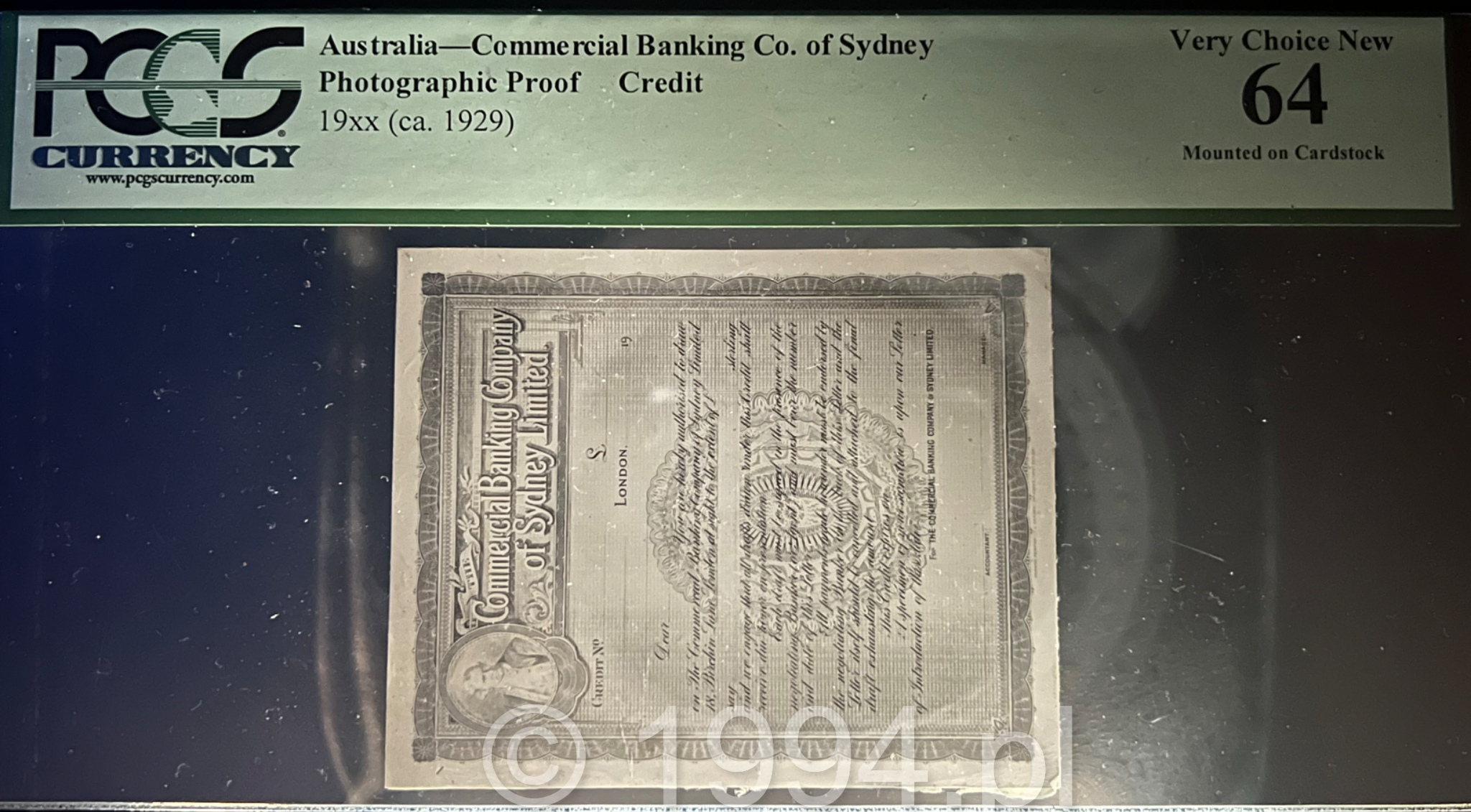
This photographic proof represents a Circular Letter of Introduction prepared for the Commercial Banking Company of Sydney Limited during the late interwar period. Such documents functioned as formal financial identification instruments, issued to bank clients traveling abroad to establish identity, credibility, and recognized standing within an international banking network. In practical use, the holder would present the letter to correspondent banks, which would acknowledge the issuing institution and extend services based on that established relationship.
Unlike instruments of direct monetary transfer, the Letter of Introduction operated as a trust-based credential within the global correspondent banking system. Australian institutions such as the Commercial Banking Company of Sydney relied heavily on established links with London and other financial centers, allowing their clients to transact, verify identity, and initiate financial operations across borders without the need for physical currency transfer. In this context, the document functioned as a secure financial passport, bridging geographic distance through institutional reputation.
The design reflects security printing practices closely aligned with banknote production. The layout combines a structured writing field with dense guilloche ornamentation and a prominent central rosette, which serves both aesthetic and anti-fraud purposes. The open central panel was intended for controlled handwritten or typed entries, while the surrounding engraved framework provided resistance to alteration and unauthorized reproduction. The balance between blank space and intricate line work illustrates a deliberate hybrid between negotiable instrument and high-security document.
Produced as a photographic proof, this example belongs to the pre-engraving approval stage within the printer’s workflow. Photographic proofs allowed bank officials and printers to evaluate layout, typography, and security features before committing to engraved plates. The mounting on original cardstock confirms its role as an internal reference or presentation piece, rather than a document prepared for circulation or issue.
The Commercial Banking Company of Sydney Limited, one of the principal banking institutions in colonial and early Commonwealth Australia, operated within an expanding international financial framework. Documents of this type demonstrate how banks extended their operational reach beyond domestic borders, enabling clients to function within a coordinated global system of credit recognition and identity verification.
Certified PCGS 50 About New, the piece retains the essential characteristics of a production-stage artifact, with the photographic surface and cardstock mount preserved as evidence of its function within the institutional and printing process rather than as a circulated financial document.