Description and research notes
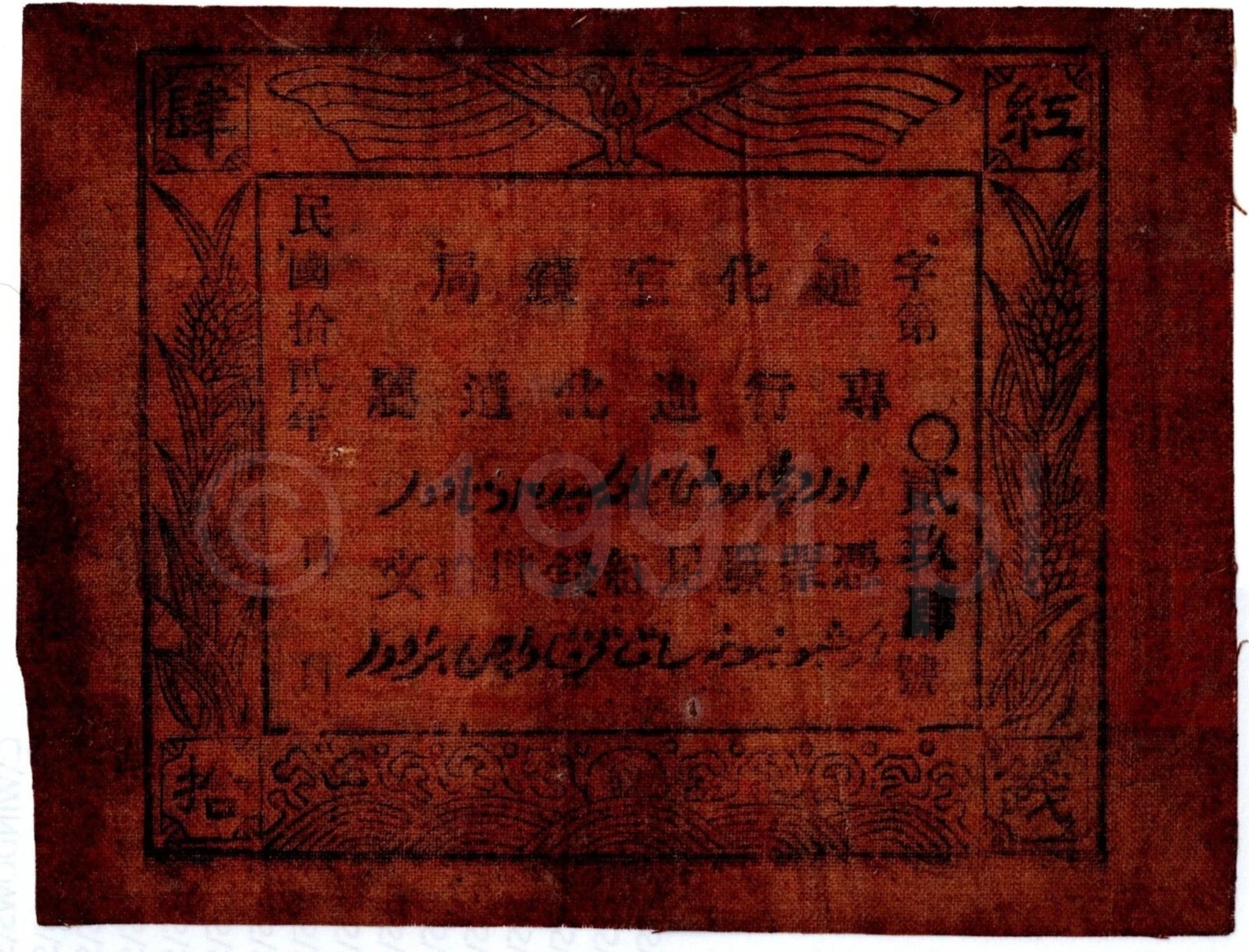
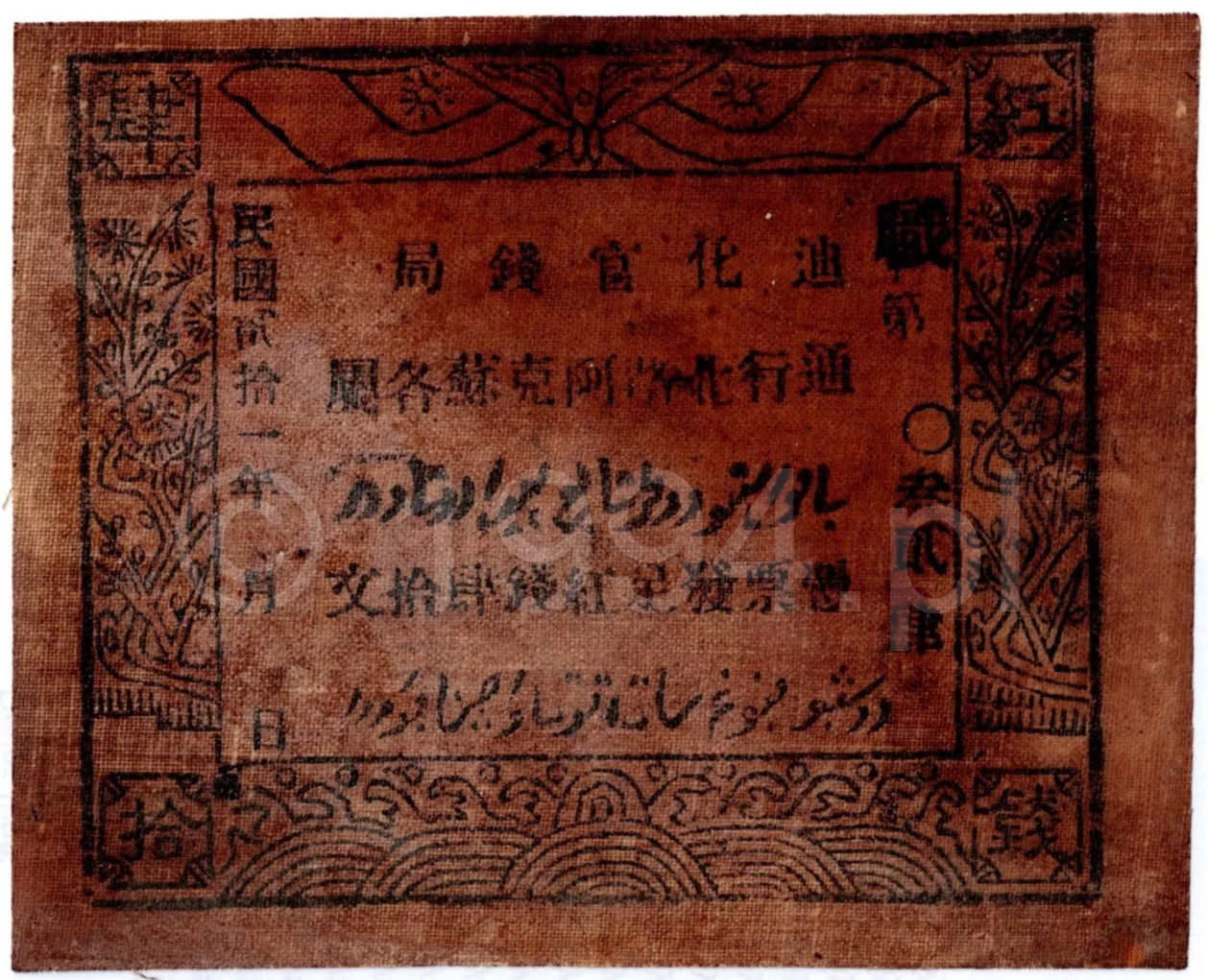
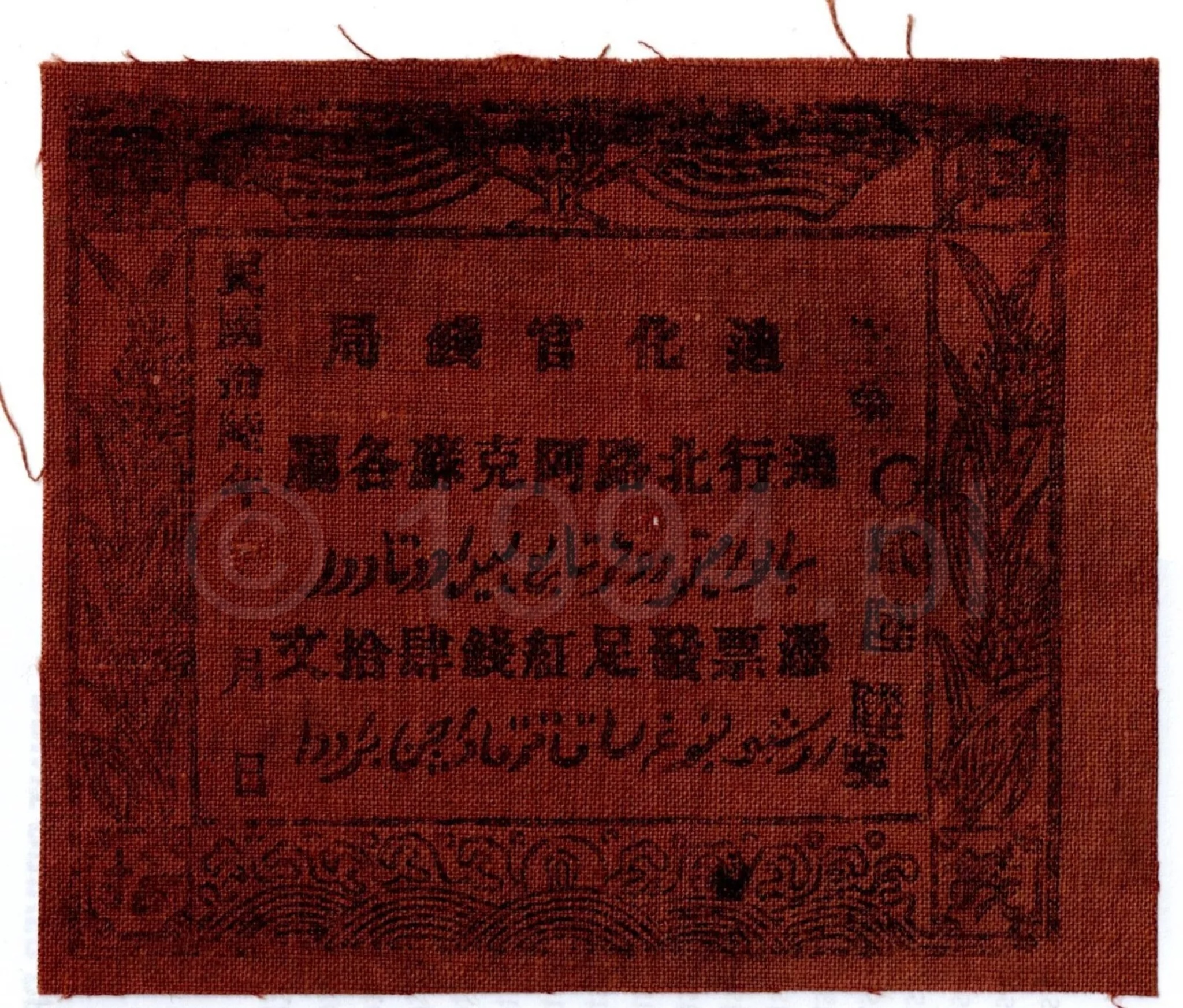
This textile emergency currency from Sinkiang belongs to the late Qing frontier monetary tradition, when regional authorities relied on locally produced substitutes in response to chronic shortages of official coin and paper money. Executed on coarse red-dyed cloth and printed by hand-carved woodblocks, the note reflects a monetary environment shaped by isolation, logistical constraints, and reliance on pre-modern administrative practices.
The use of textile as a monetary substrate is not symbolic but functional. In western China during the late nineteenth century, cloth was durable, locally available, and resistant to the environmental conditions that rapidly degraded paper. Its fibrous structure absorbed pigment deeply, making hand-applied ink and overprints difficult to erase or alter. These characteristics made cloth suitable for emergency currency in regions far removed from centralized minting and printing facilities.
The visual structure is consistent with Qing-era frontier issues. Irregular woodblock borders, asymmetrical ornamental elements, and uneven ink saturation indicate manual block alignment rather than mechanized printing. The calligraphy shows brush-based execution with variable stroke weight and non-standardized character spacing, a feature typical of late Qing administrative production and incompatible with twentieth-century commercial banknote printing.
Multilingual inscriptions appear within the design, combining Chinese characters with regional Turkic script forms used in Sinkiang administration. This reflects the practical need for legibility across multiple linguistic communities involved in trade, taxation, and supply logistics along caravan routes linking Kashgar, Yarkand, Khotan, and Dihua. The note was intended to function within a mixed commercial environment rather than as a symbolic imperial issue.
The absence of modern security engraving, serial numbering systems, and standardized typographic elements confirms its placement before the institutional reforms that transformed Chinese currency production in the early Republican period. Nothing in the printing technique, material choice, or visual language aligns with post-1910 monetary infrastructure.
Cloth emergency currencies of this type have an exceptionally low survival rate. Their organic material, combined with heavy circulation and lack of archival preservation, resulted in widespread loss. Documented institutional examples are extremely limited, and confirmed private holdings are few. At present, only a single verifiable example of this specific type is known.
As a historical artifact, this note records how late Qing frontier authorities sustained economic continuity using locally adapted solutions. It stands as material evidence of a monetary system operating beyond the reach of centralized control, relying instead on durability, recognizability, and regional legitimacy to function.