Description and research notes
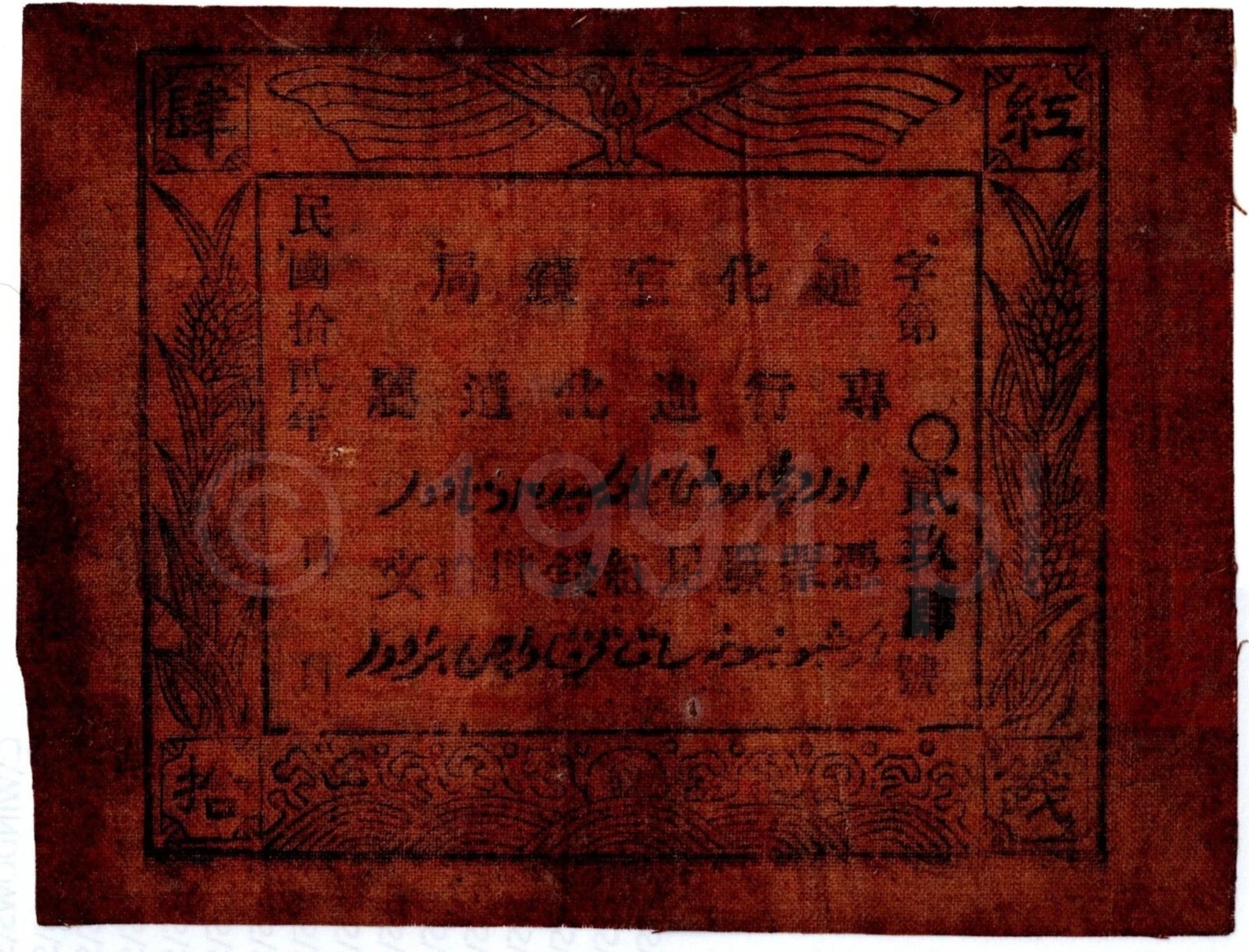
An issued textile emergency currency produced in Xinjiang (Sinkiang) during the early Republican period, printed by hand from carved woodblocks onto red-dyed cotton cloth. This note represents a distinct local issue within the Xinjiang textile tradition, created for circulation under conditions of monetary instability, limited access to paper currency, and decentralized administrative control in China’s western frontier.
The design is printed directly onto coarse textile in dark ink, with the weave of the fabric clearly visible through the impression. A rectangular central inscription panel is framed by vegetal side borders, while the upper register features a winged emblem incorporating a stylized sun motif. This emblem marks a clear departure from earlier Xinjiang textile issues and reflects the introduction of Republican-era symbolic vocabulary into frontier monetary design.
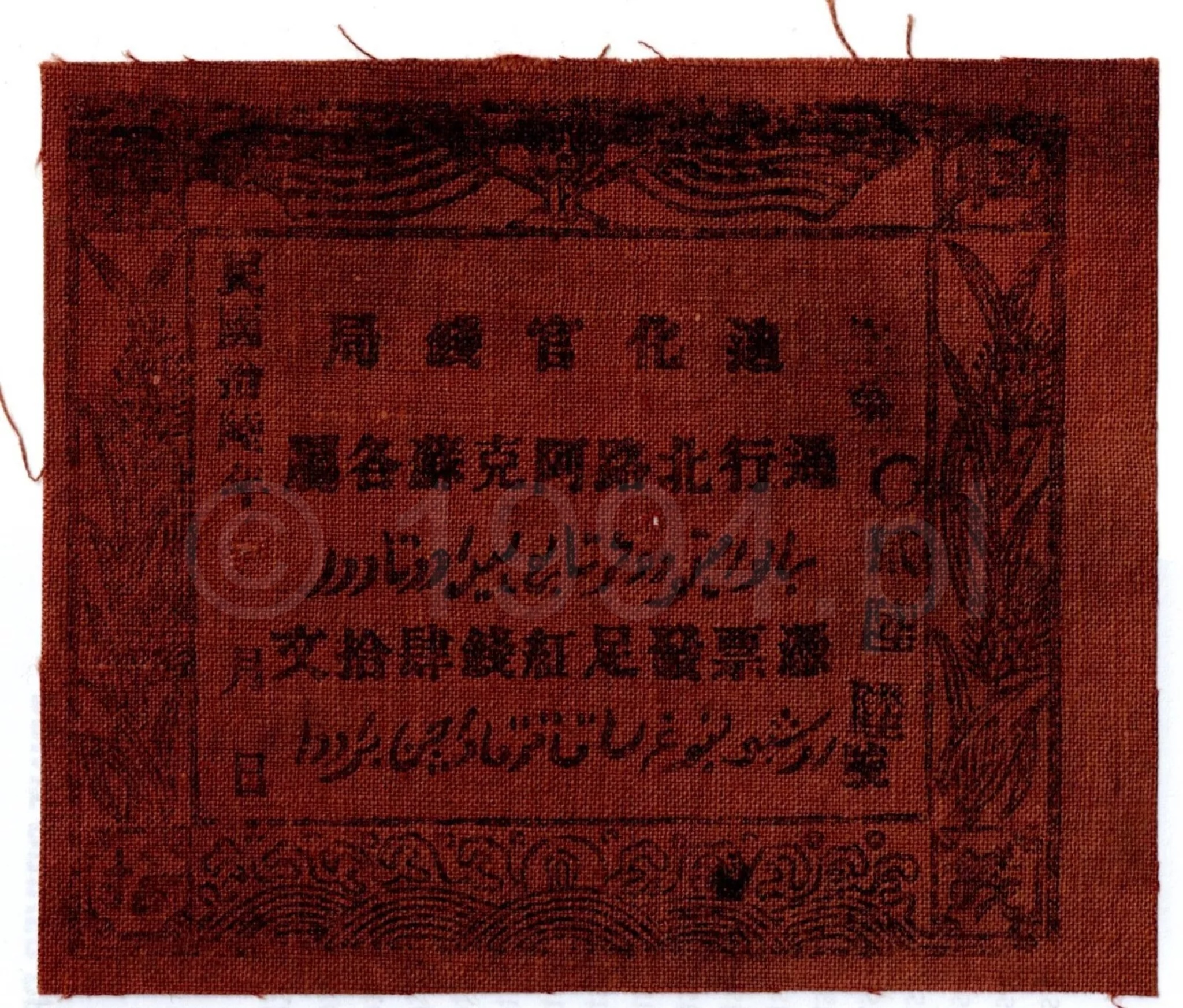
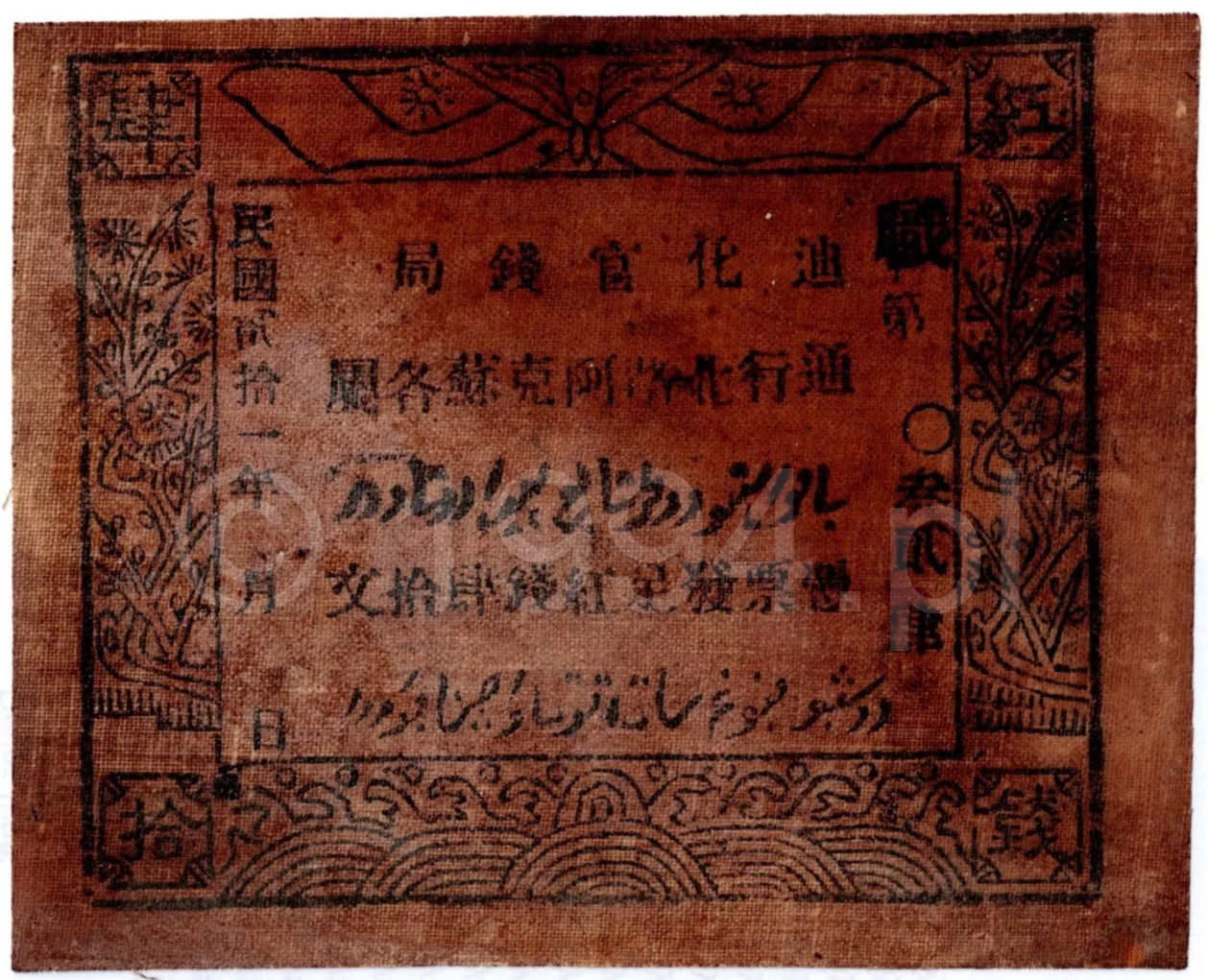
While the lower wave-pattern band remains consistent with regional decorative practice, the presence of the sun motif distinguishes this issue from the 1918 local textile type. Calligraphy appears more compact and evenly structured, with darker and more uniform ink saturation, indicating a later phase of block cutting and workshop execution within the same non-centralized production environment.
Textile emergency currency of this type was issued as functional money for everyday transactions, provisioning, and local settlement in environments where conventional paper currency was unavailable or impractical. Once monetary conditions stabilized and centralized systems expanded, such cloth notes were withdrawn and destroyed, resulting in extremely low survival rates.
No catalog listing, institutional reference, or documented parallel example corresponding to this specific textile type with sun-emblem motif is known. Based on observable evidence, this note is treated as a single known example at present and classified as R9 under the collection’s evidence-based system.
As a historical artifact, this cloth note documents the evolution of Xinjiang textile currency from transitional local forms toward explicitly Republican visual language, illustrating how political symbolism entered frontier monetary systems prior to full bureaucratic standardization.