Description and research notes
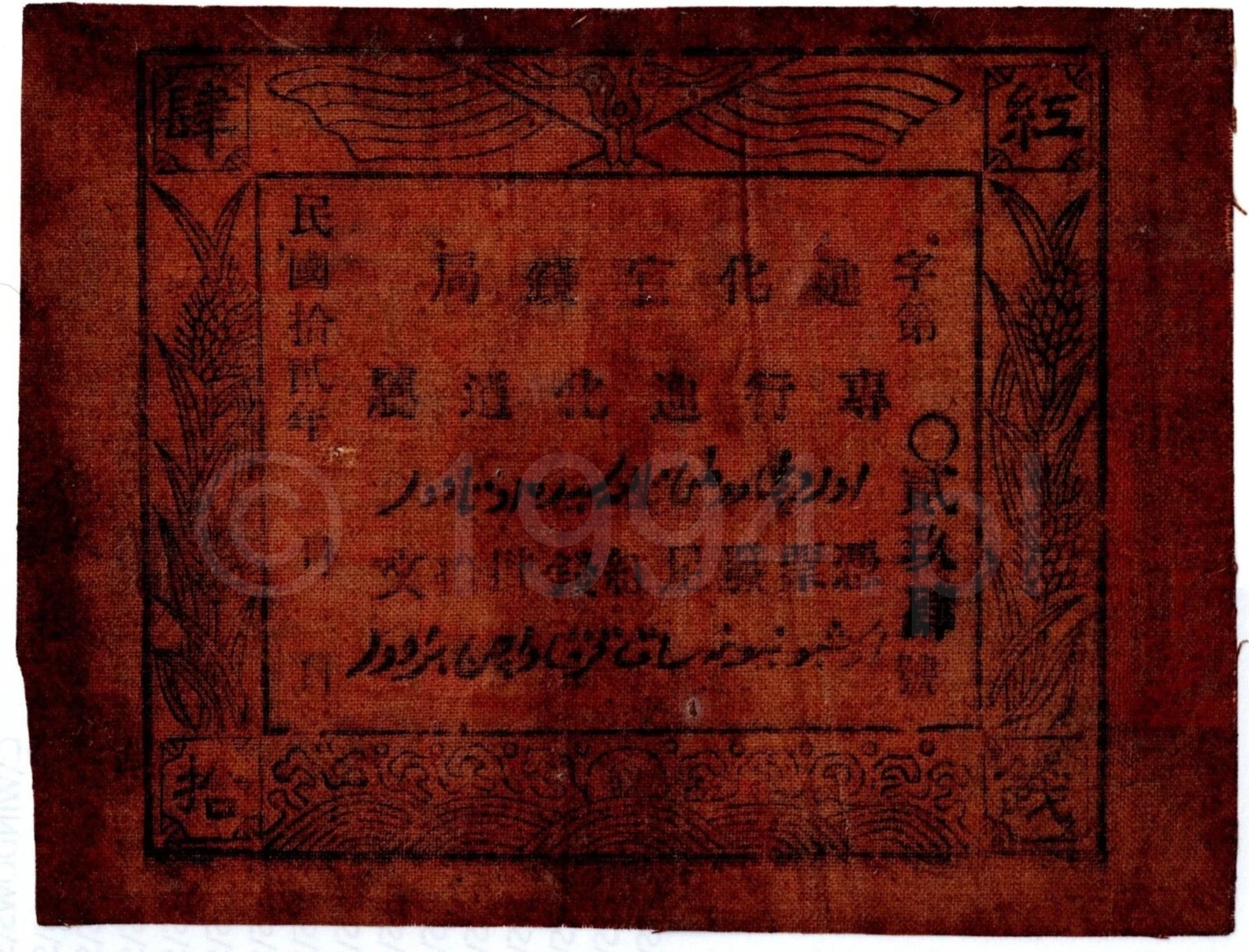
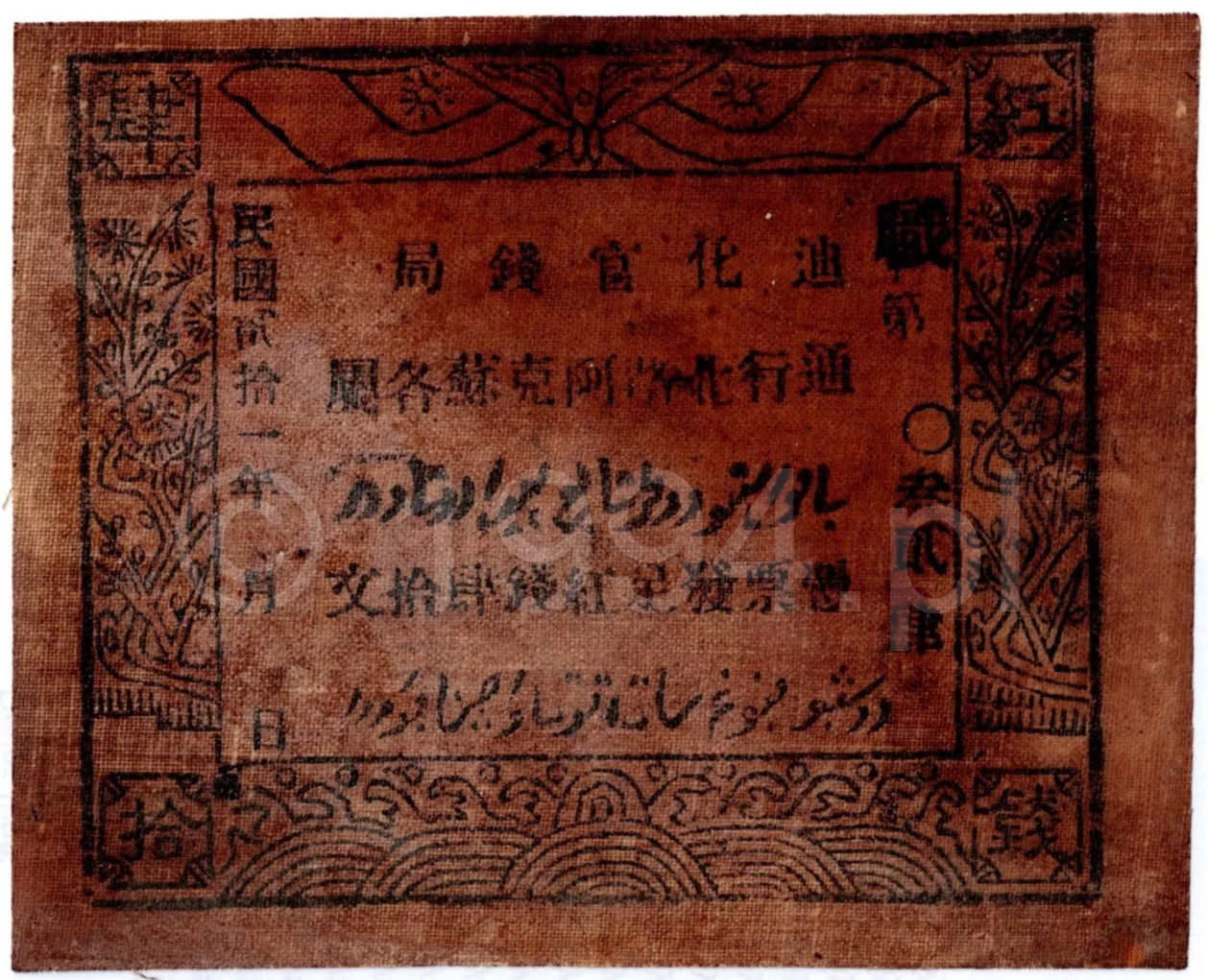
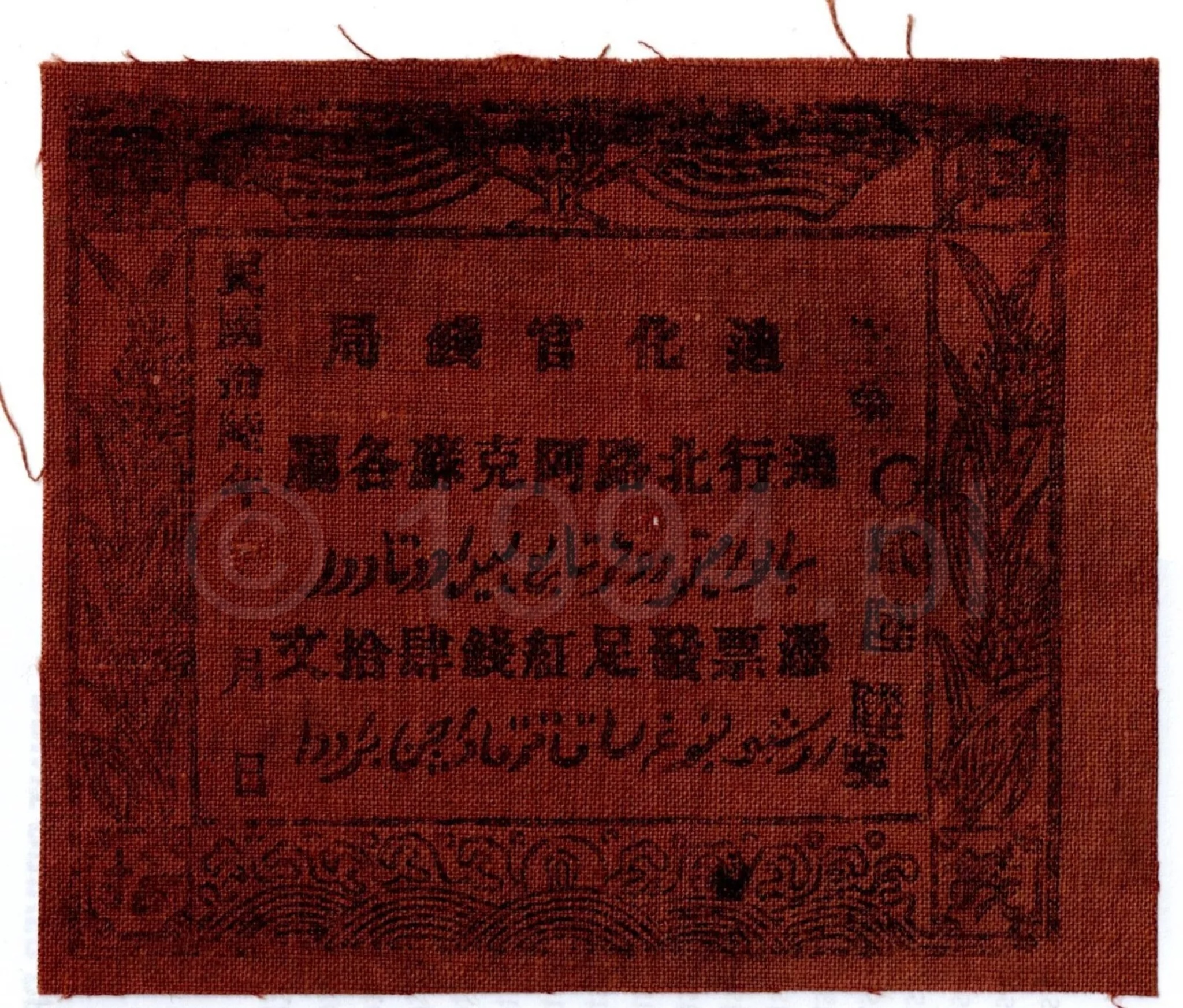
An issued textile emergency currency produced in Xinjiang (Sinkiang) during the early Republican period and printed by hand from carved woodblocks onto coarse red-dyed cotton cloth. This note represents a locally authorized substitute currency created for circulation under conditions of monetary disruption, limited access to paper stock, and fragmented administrative control in China’s western frontier.
The design is executed directly onto fabric in dark ink, with the textile weave clearly visible through the printed impression. The layout centers on a rectangular inscription panel framed by vegetal side borders and a wave-pattern band along the lower register. The upper register incorporates a winged ornamental motif distinct from earlier nineteenth-century Xinjiang textile issues, indicating a later re-cut or locally adapted block tradition rather than reuse of original plates.
Calligraphy on this note is denser and more compact than that seen on earlier Xinjiang textile currency, with tighter spacing and heavier stroke weight. Ink saturation is deeper and more uniform, suggesting a later workshop phase or revised production method while still retaining the irregularities characteristic of hand-printed cloth money.
Although the lower wave band reflects a shared regional design vocabulary common across Xinjiang textile issues, the overall composition, emblem structure, and calligraphic execution distinguish this note from the known 1880 Xinjiang issue and from later, more standardized paper emissions such as those of the Dihua Coin Bureau. It represents a descended regional design rather than the same issue or authority.
Textile emergency currency of this type was issued as functional money for everyday transactions, provisioning, and local settlement. Once monetary conditions stabilized, such notes were routinely withdrawn and destroyed, accounting for their extreme scarcity today.
No catalog listing, institutional reference, or documented parallel example corresponding to this specific textile type is known. Under the collection’s evidence-based classification system, this note is treated as a single known example at present and classified as R9.