Description and research notes
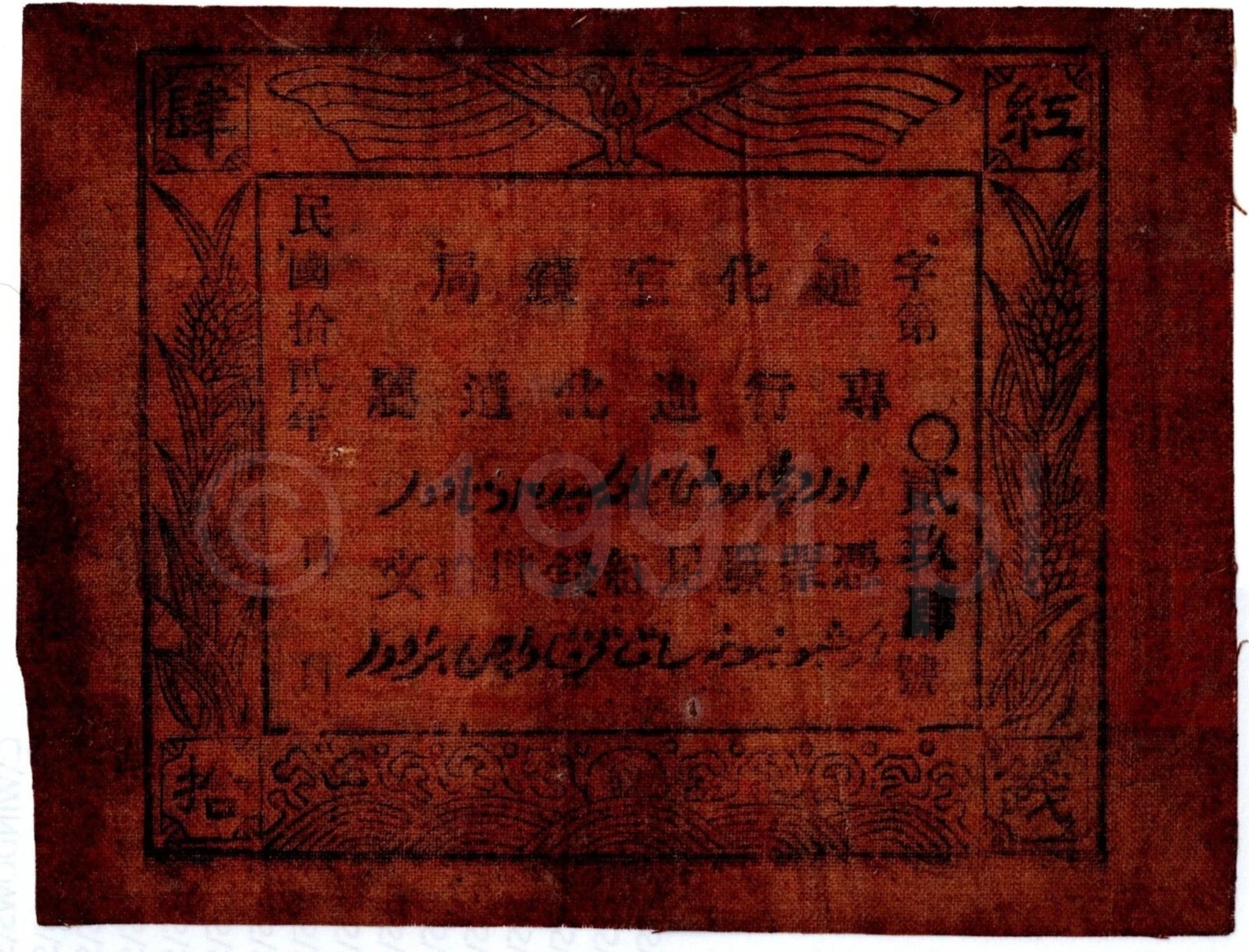
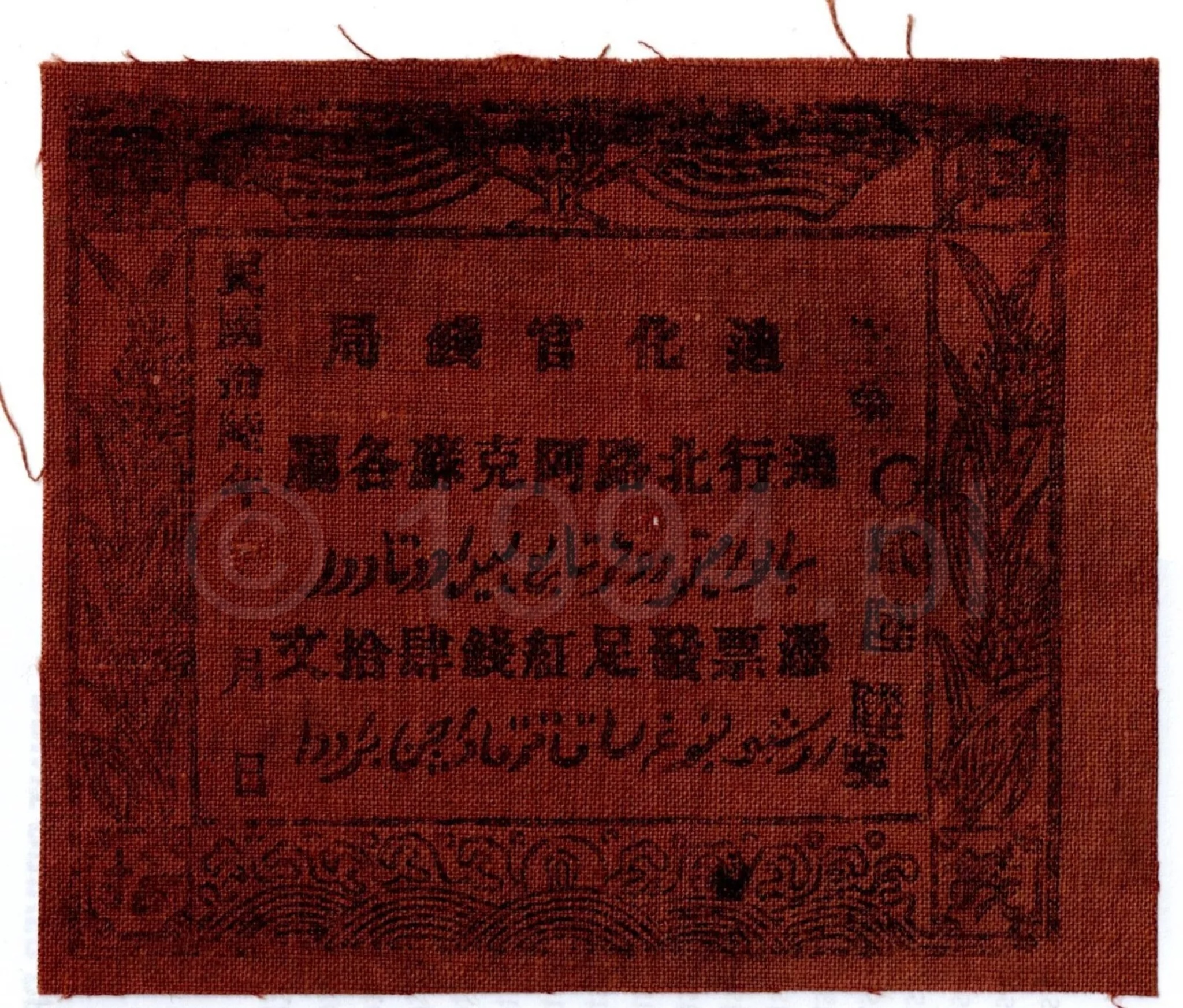
This 40 wen textile banknote represents a formally authorized emergency issue produced in 1924 by the Dihua Official Coin Bureau during a period of acute monetary disruption in Xinjiang. Faced with shortages of paper currency, disrupted transport routes, and limited access to centralized printing facilities, local authorities adopted cloth as an alternative monetary substrate to sustain everyday economic activity.
The note was printed on coarse red cotton using traditional woodblock techniques, a method well suited to decentralized production and durable circulation under harsh regional conditions. The central Chinese inscription identifies the issuing authority and denomination, while the surrounding ornamental elements reference agrarian taxation and local administrative order. Beneath the main text appears an inscription in Uyghur or Chagatai script, reflecting the multilingual reality of Dihua’s early Republican bureaucracy and the necessity of legibility across ethnic communities.
Textile currency in Xinjiang was not a folk improvisation but an official response to fiscal isolation. Cloth provided a locally available, resilient medium that could be authenticated through familiar visual conventions and regional authority rather than reliance on metropolitan paper supply. In this context, durability and recognizability outweighed refinement, and the resulting notes occupy a distinct category within Chinese monetary history.
The official status of this issue is confirmed by institutional preservation. One documented example is held by the British Museum, establishing that the 40 wen textile note was produced under governmental authority rather than as a private or ceremonial object. Together with the present specimen, this represents the full extent of currently documented examples.
No additional specimens, archival hoards, or production remnants are known. On the basis of observable, verifiable material only, the issue is classified as R8.
As a historical artifact, this textile note illustrates how regional authorities in early Republican China adapted monetary practice to local constraints. Its material choice, bilingual inscriptions, and woodblock execution record a pragmatic system of emergency finance at the edge of state infrastructure, making it one of the most distinctive surviving expressions of provisional currency in twentieth-century China.