Description and research notes
Archival calibration specimen of the 1970 one hundred francs issue of the Grand Duchy of Luxembourg, produced during the Belgian Luxembourg Economic Union period and printed by Thomas De La Rue & Company, London. Unlike standard specimen notes bearing placeholder serials, this example carries a live production-format serial number D170001, linking it directly to an active print batch within the manufacturing process.
Across the full surface, original blue registration gridlines remain visible. These were applied during pre-production calibration to verify positional alignment, spacing, and structural balance of all design elements prior to final output. Such grid systems were strictly functional and normally absent from finished material, making surviving examples direct physical evidence of press preparation and quality control procedures.
At the upper margin, a handwritten printer’s annotation is present, consisting of a date and internal control reference. These markings document the note’s movement through a specific stage of production review, connecting the physical sheet to a defined moment within the printing workflow.
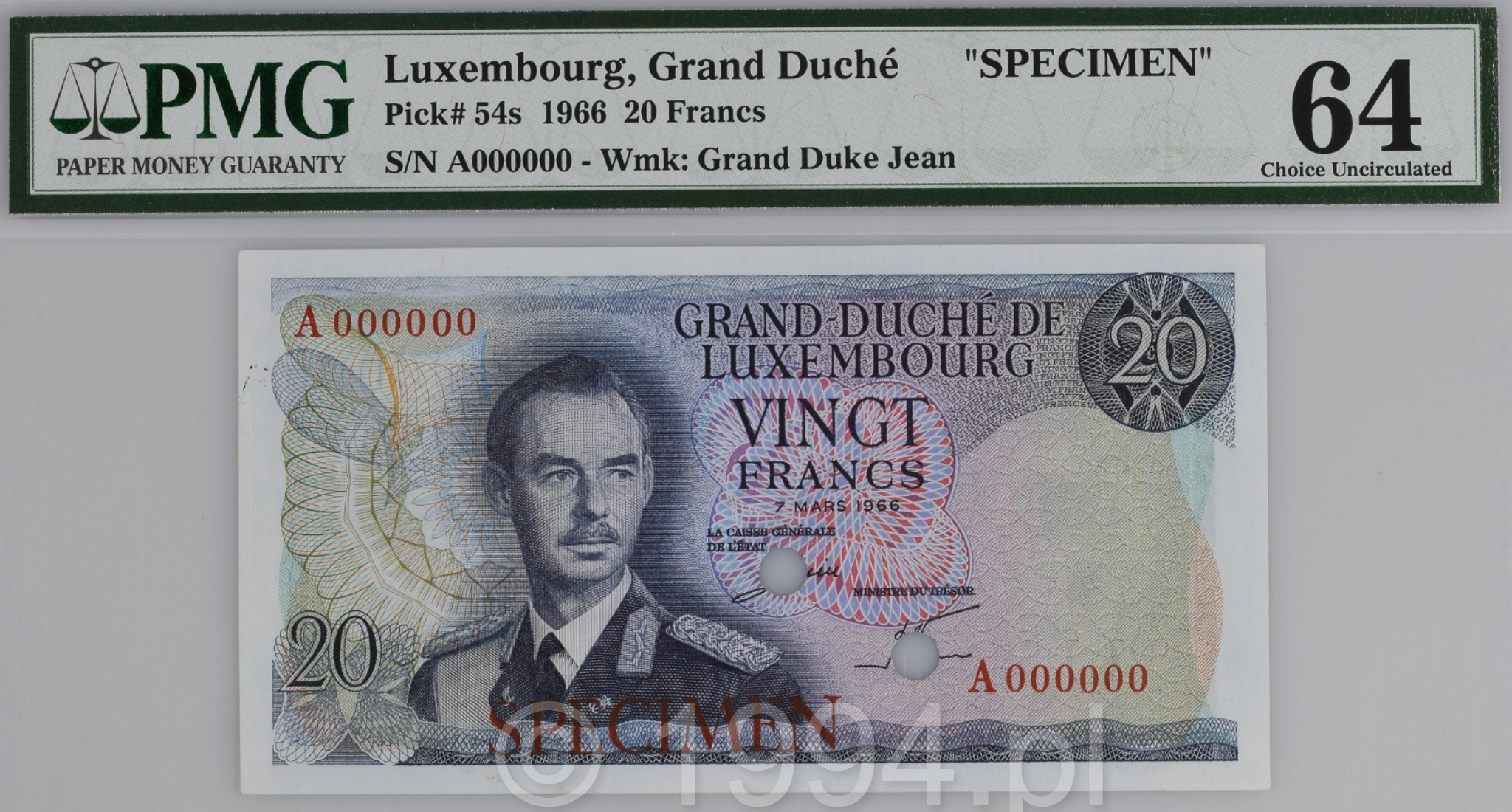
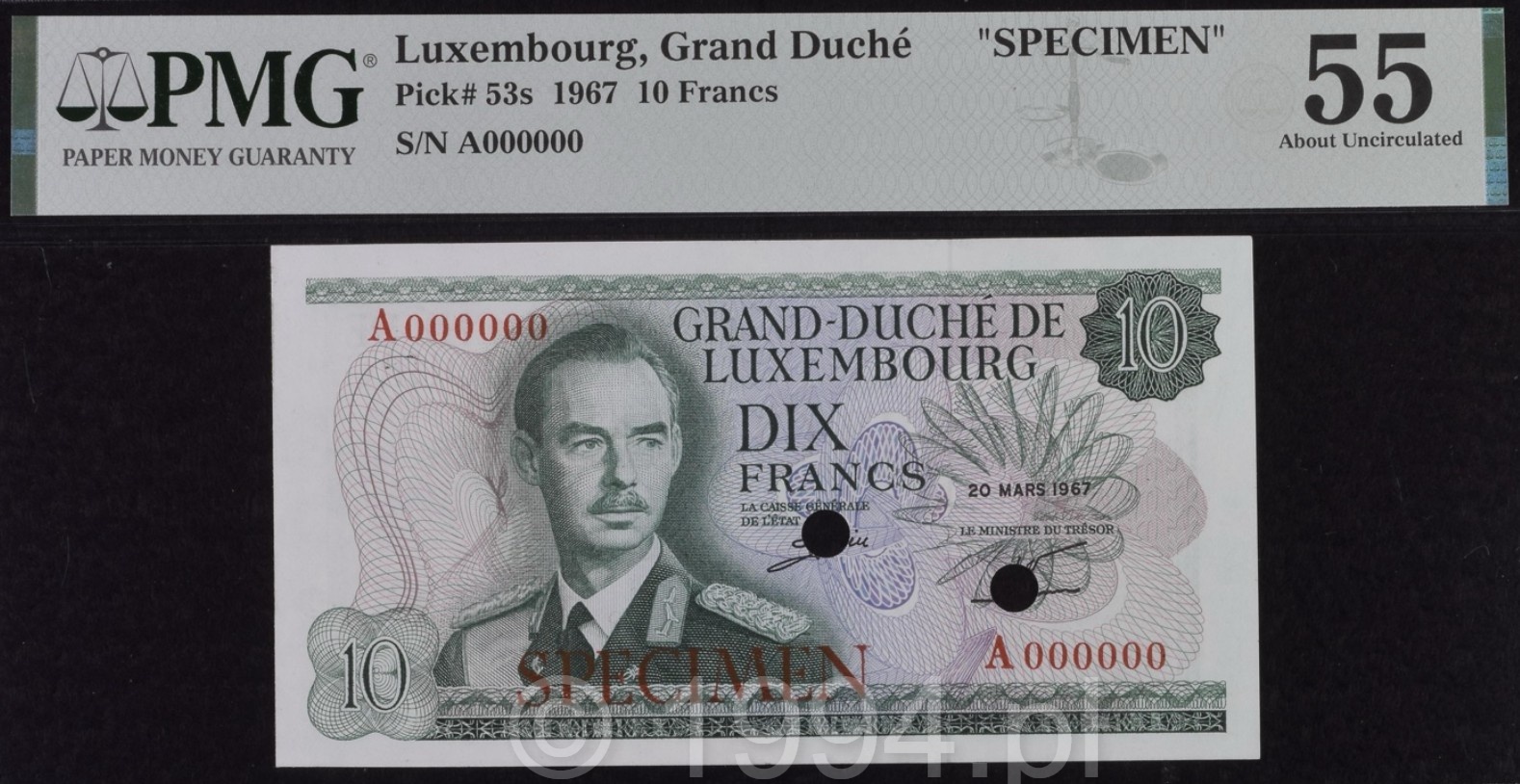
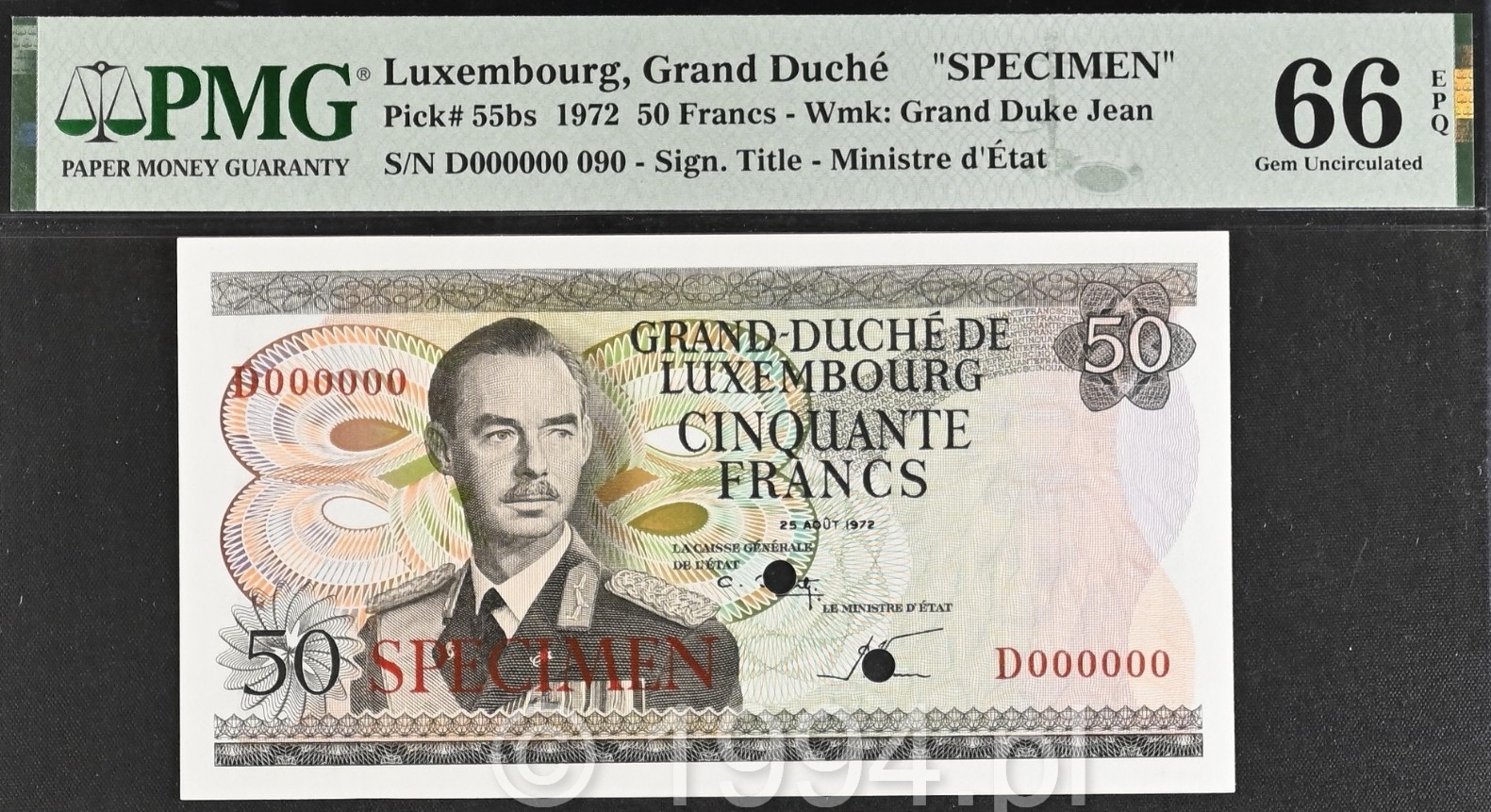
The presence of a live serial number combined with calibration gridlines distinguishes this piece fundamentally from standard A000000 specimen issues. Rather than serving as a presentation or archival reference copy, this note represents a working calibration sheet-pulled during production to verify accuracy before full issuance.
The design features Grand Duke Jean in formal portrait, integrated within a structured guilloche framework characteristic of De La Rue’s late twentieth-century banknote production. The layout reflects increasing emphasis on machine-readable consistency, symmetry, and controlled spacing required for automated processing environments.
Within the broader production sequence, this example occupies the transitional stage between finalized design approval and full circulation output. It stands between photographic proofs, which establish layout, and finished specimens, which represent completed notes. As such, it captures the exact point at which design becomes controlled production.
Surviving calibration specimens of this type are extremely scarce, as they were never intended for retention outside internal use. The combination of live serial D170001, preserved gridline system, and dated annotation establishes this piece as a direct artifact of the manufacturing process rather than a conventional specimen, making it one of the most technically informative examples within the 1970 Luxembourg series.