Description and research notes
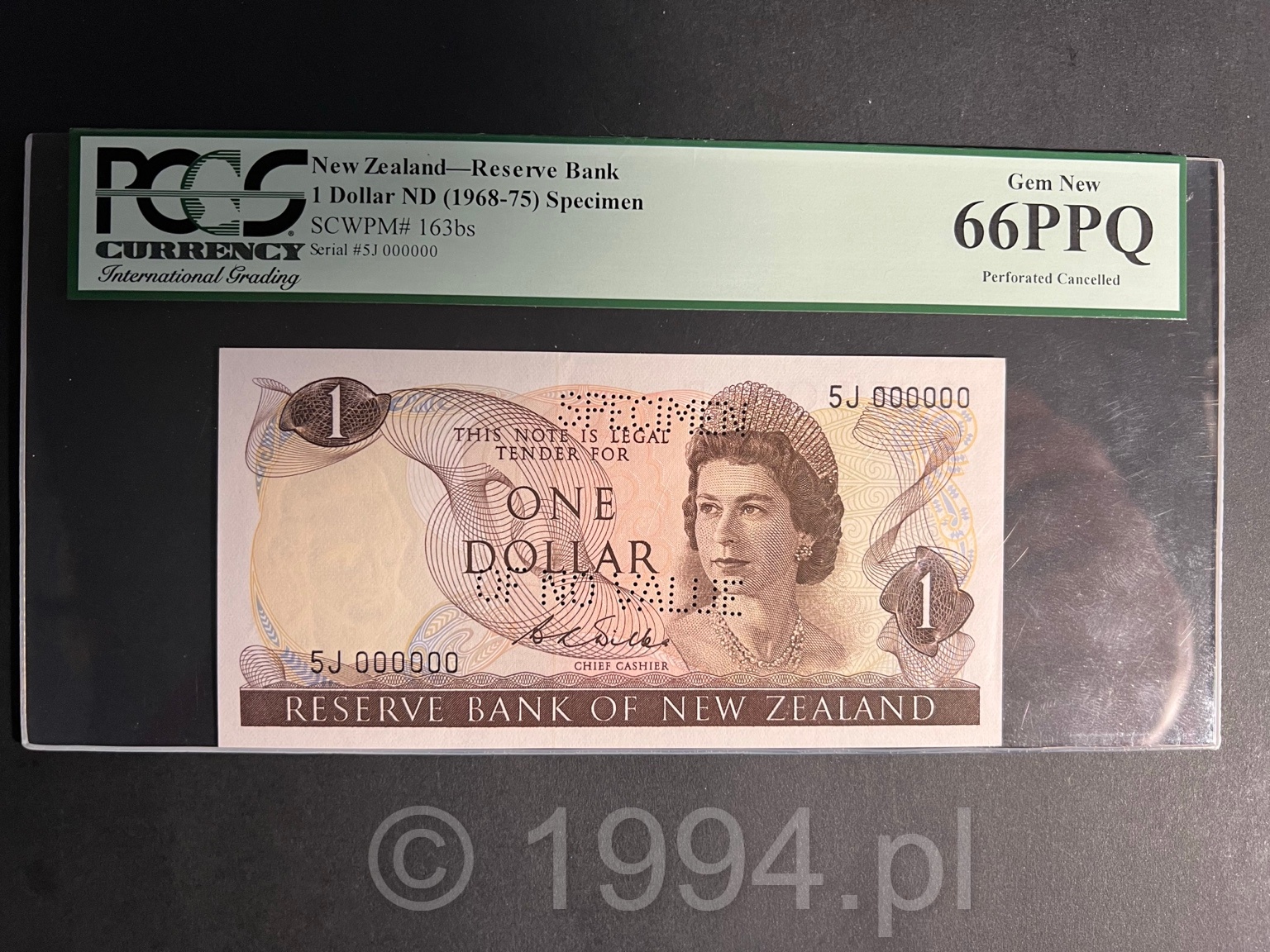
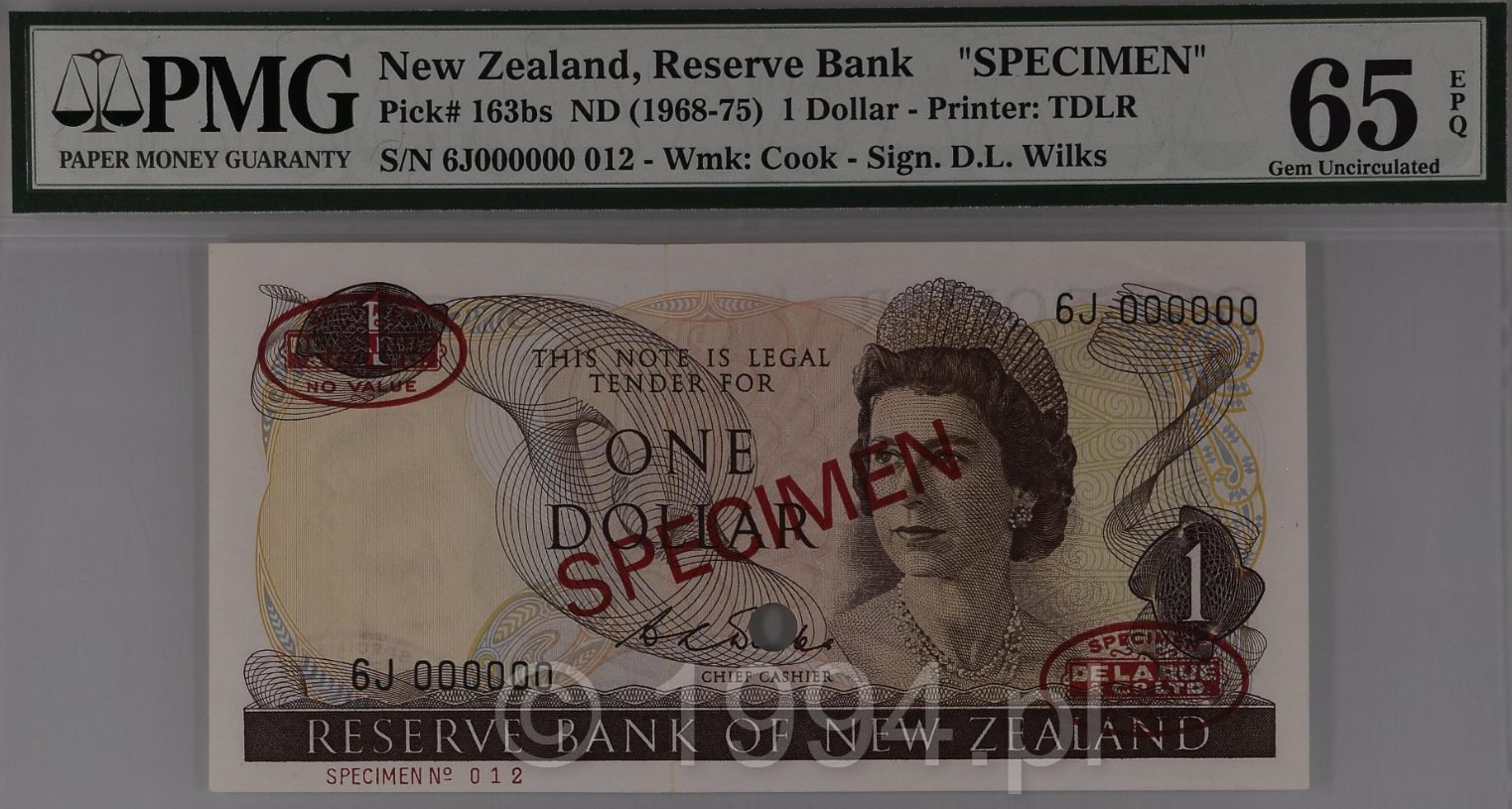
The 1968 one-dollar specimen represents the continuation of New Zealand’s decimal currency series following its initial introduction in 1967, now bearing the signature of D.L. Wilks as Chief Cashier. Issued during the ND (1968–1975) period, Wilks’ tenure marks the second signature phase of the decimal era, extending production beyond the short Fleming window and into the early years of system stabilization. Notes signed by Wilks therefore define the next stage in the development of New Zealand’s modern monetary framework.
Printed by Thomas De La Rue & Company, London, this specimen follows the established external presentation format used for institutional distribution. It displays the bold red diagonal 'SPECIMEN' overprint, accompanied by two De La Rue oval control stamps and a single punch-hole cancellation. The note carries Serial 6J000000 and is marked as Specimen No. 012, placing it within the controlled allocation sequence prepared for official reference and distribution.
The design remains consistent with the original decimal issue, featuring Queen Elizabeth II in engraved portrait form and the Captain James Cook watermark embedded within the paper. The one-dollar denomination continued to function as the foundation of everyday circulation, maintaining continuity with the structure introduced in 1967 while transitioning into the Wilks signature period.
As a Wilks-signed specimen from the ND (1968–1975) issue, this note reflects the early post-introduction phase of New Zealand’s decimal currency system, where production shifted from initial rollout to sustained circulation supply. The presence of the full De La Rue specimen format-overprint, dual oval stamps, and punch cancellation-confirms its role as a formal presentation piece rather than an internal archival specimen.
Graded PMG 65 EPQ Gem Uncirculated, the note retains full originality, strong embossing, and clear ink definition. The sharp overprint, well-defined oval control stamps, and intact punch cancellation together present a technically complete and well-preserved specimen from the Wilks signature period.