Description and research notes
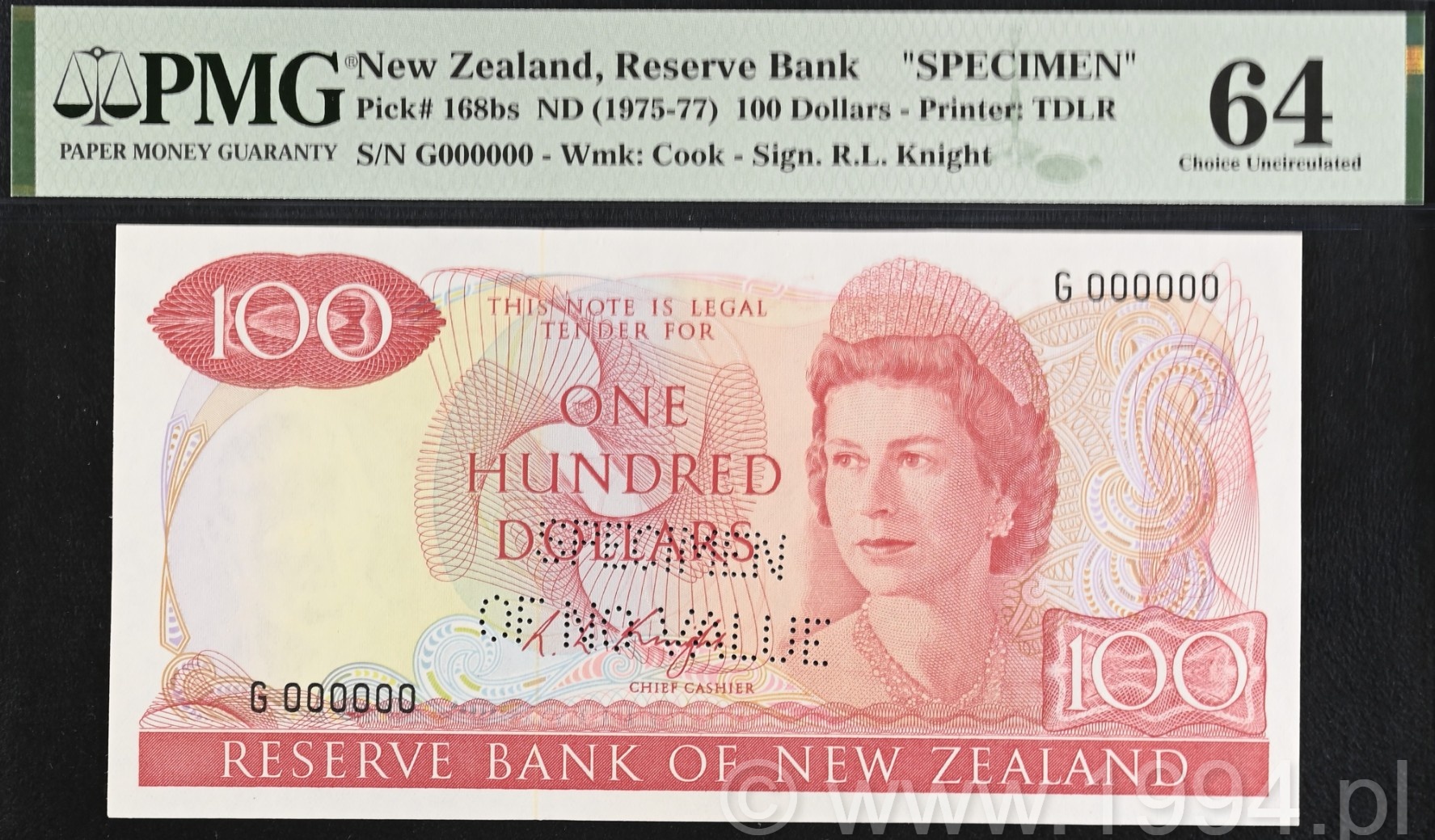
The 1975 one hundred dollars specimen represents the highest denomination of New Zealand’s decimal currency series during the tenure of R.L. Knight as Chief Cashier, issued within the ND (1975–1977) period. Knight’s signature defines the third phase of the decimal era, following the Fleming and Wilks periods, and reflects a stage in which the system had transitioned from initial introduction into a fully established national currency structure.
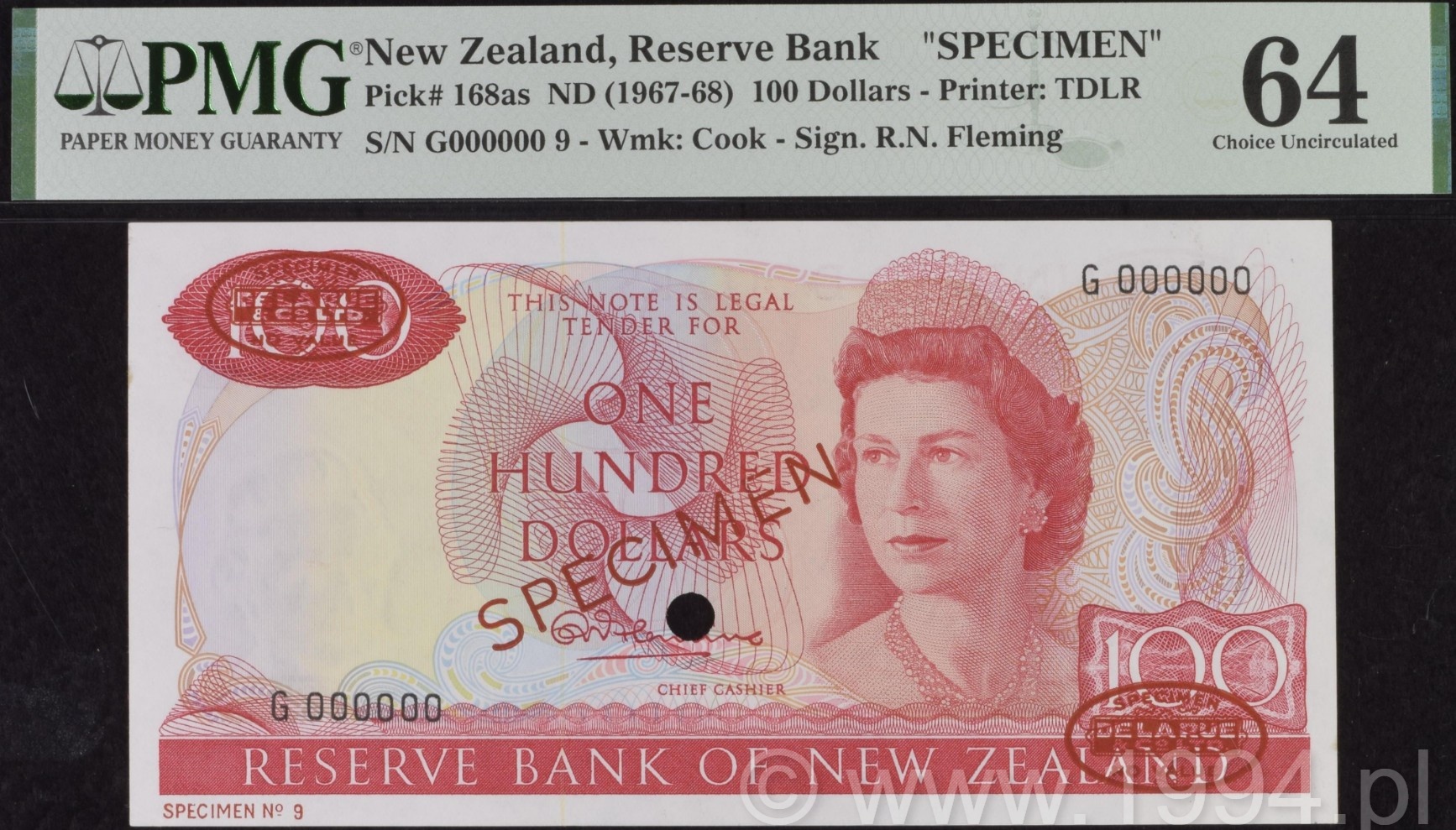
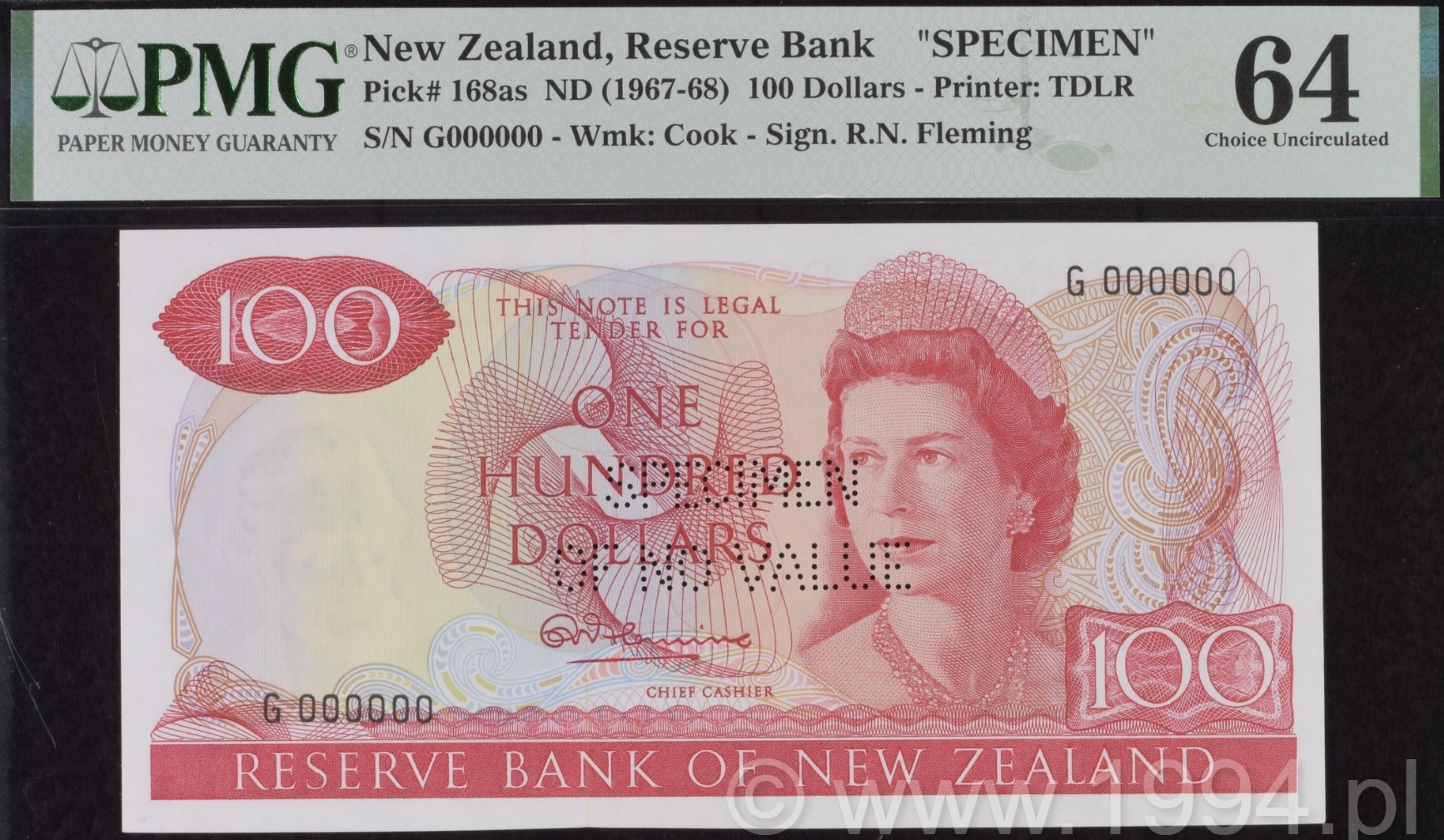
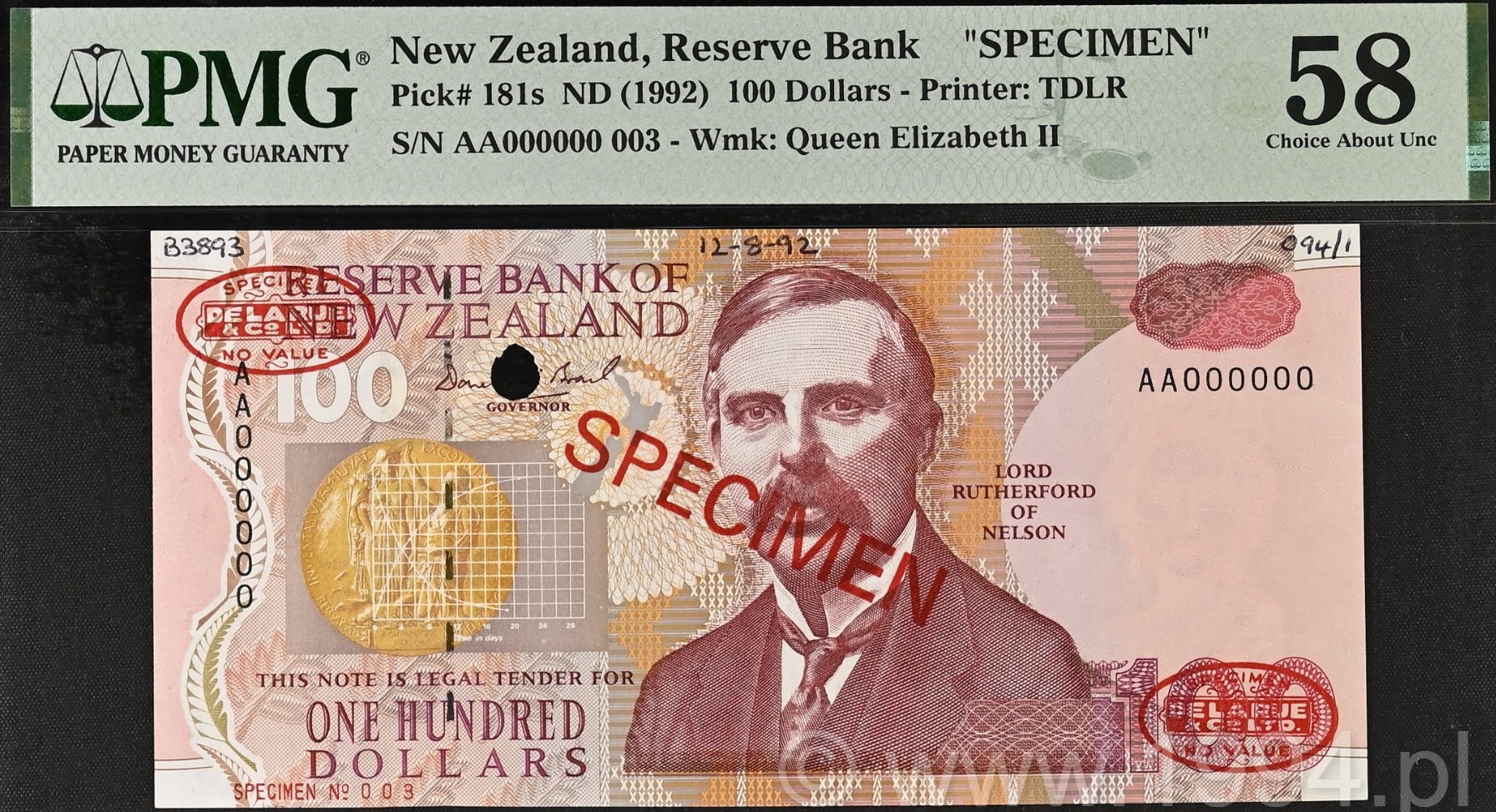
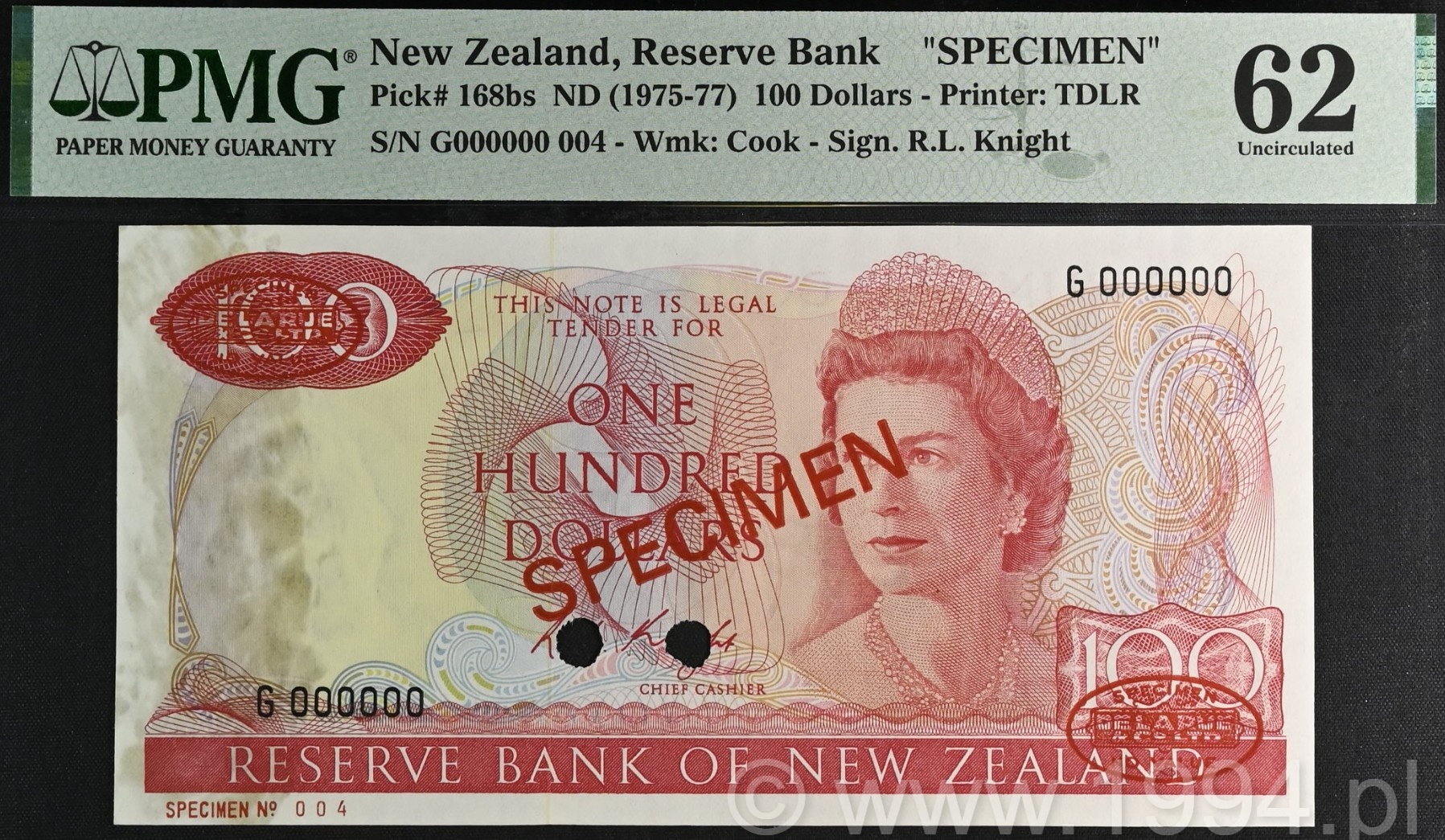
Printed by Thomas De La Rue & Company, London, this specimen was produced as part of the formal external distribution program for central banks and institutional archives. It displays the complete De La Rue presentation format characteristic of the period: a bold diagonal red 'SPECIMEN' overprint, a De La Rue oval control stamp positioned on the face, and a double punch-hole cancellation applied through the lower central area. The note carries Serial G000000004 and is marked as Specimen No. 004, confirming its placement within a controlled specimen allocation sequence.
The design follows the decimal layout introduced in 1967, featuring Queen Elizabeth II in engraved portrait form on the obverse, paired with the Captain James Cook watermark embedded within the paper. As the highest denomination of the series, the one hundred dollars note was primarily intended for institutional and reserve functions rather than everyday circulation, reinforcing its role within the upper tier of the monetary system.
As a Knight-signed specimen from the ND (1975–1977) issue, this note represents a mature stage of Thomas De La Rue’s specimen production methodology. The combined use of diagonal overprint, oval control stamp, and punch-hole cancellation reflects a standardized and fully developed presentation format, clearly distinguishing it from earlier and later specimen types.
Graded PMG 62 Uncirculated, the note retains original paper integrity, visible embossing, and strong ink presence. The complete set of specimen features-overprint, oval stamp, and double punch holes-remains clearly defined, presenting a fully identifiable and technically representative example of the Knight-period specimen format.