Description and research notes
The 1975 twenty-dollar specimen belongs to the third signature phase of New Zealand’s decimal currency system and bears the signature of R.L. Knight as Chief Cashier, issued within the 1975-1977 production period. Knight’s tenure reflects a fully developed stage of the decimal series, following the earlier Fleming and Wilks periods, where both production quality and institutional distribution formats had reached consistency and maturity.
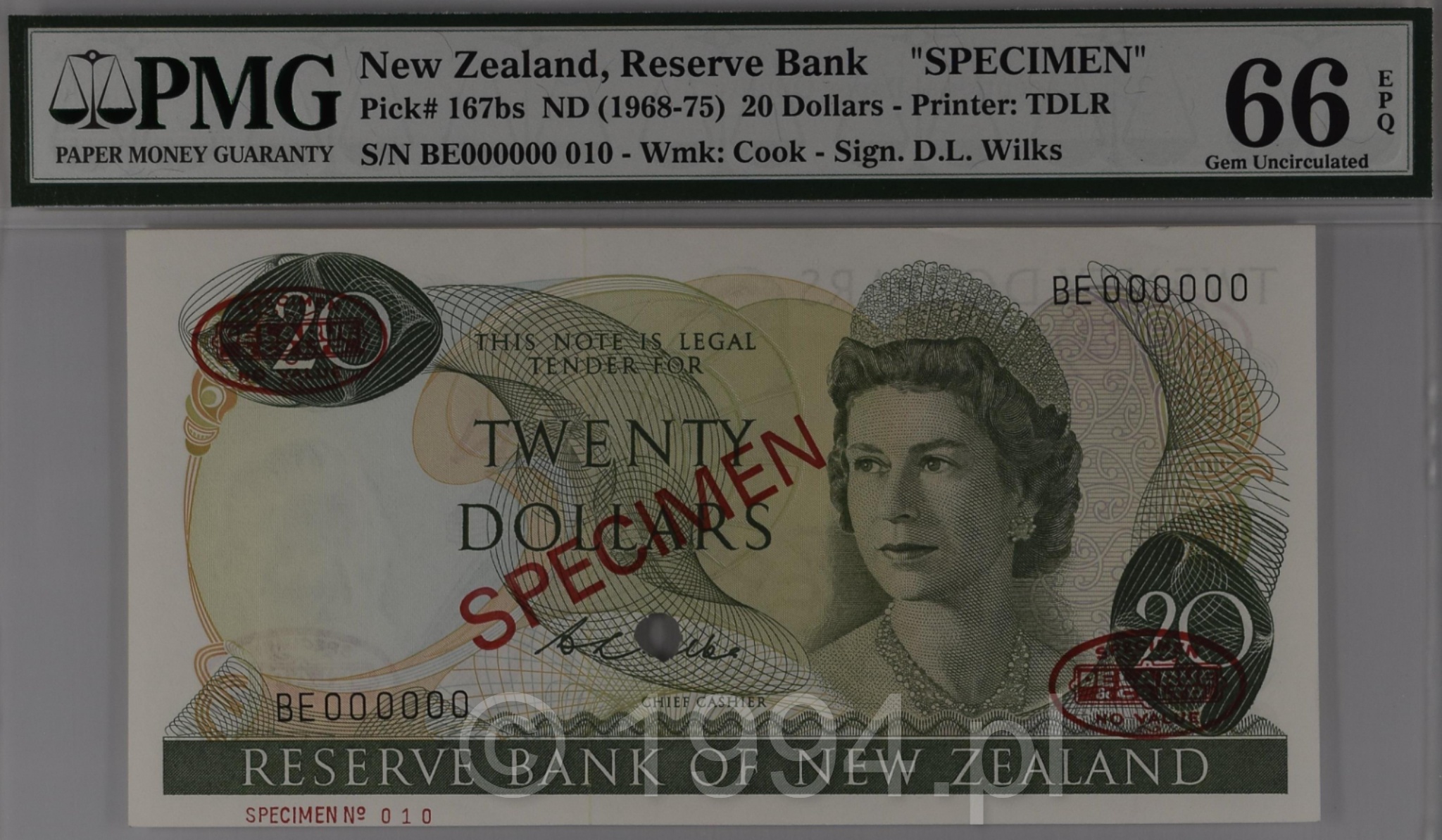
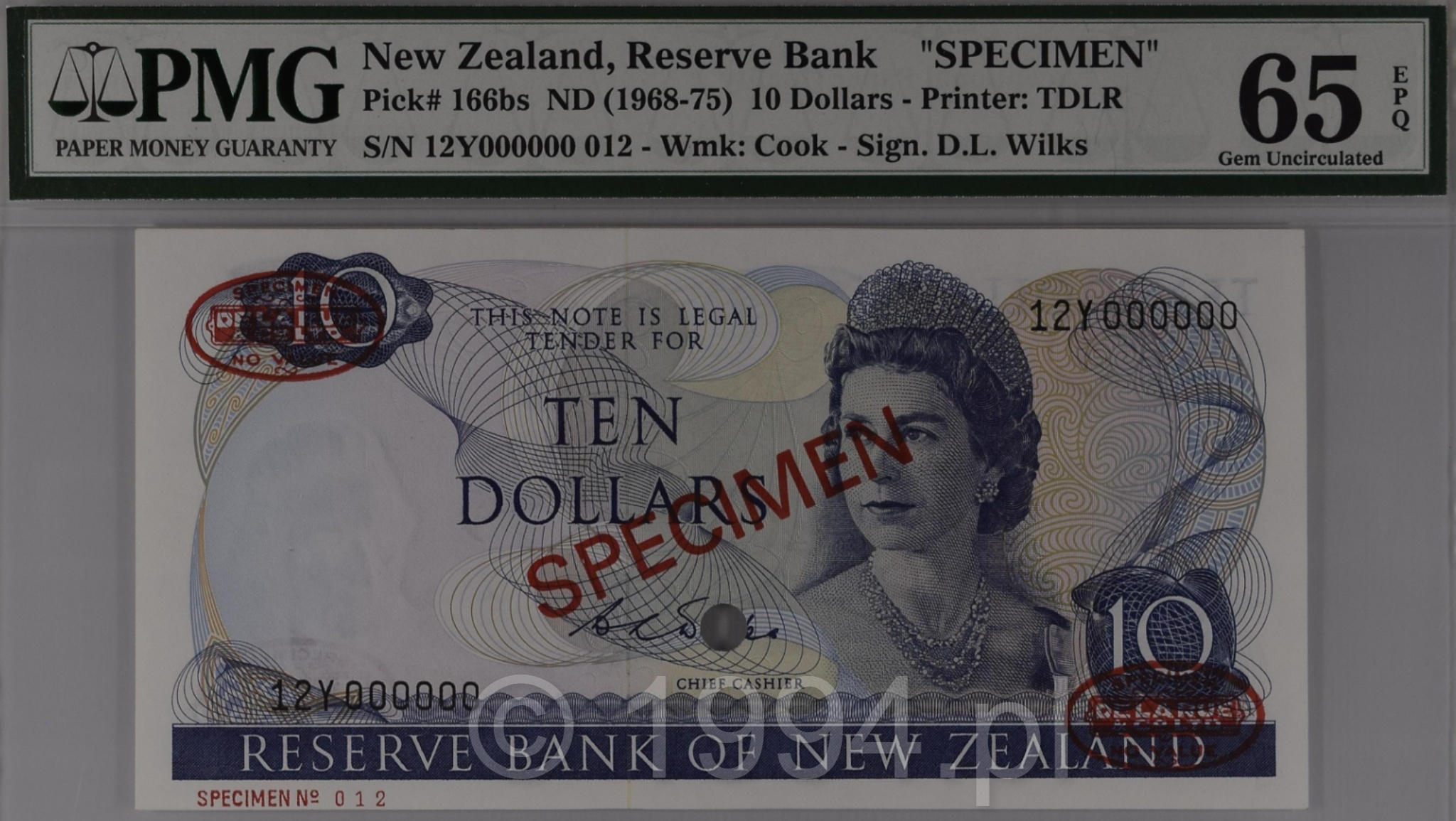
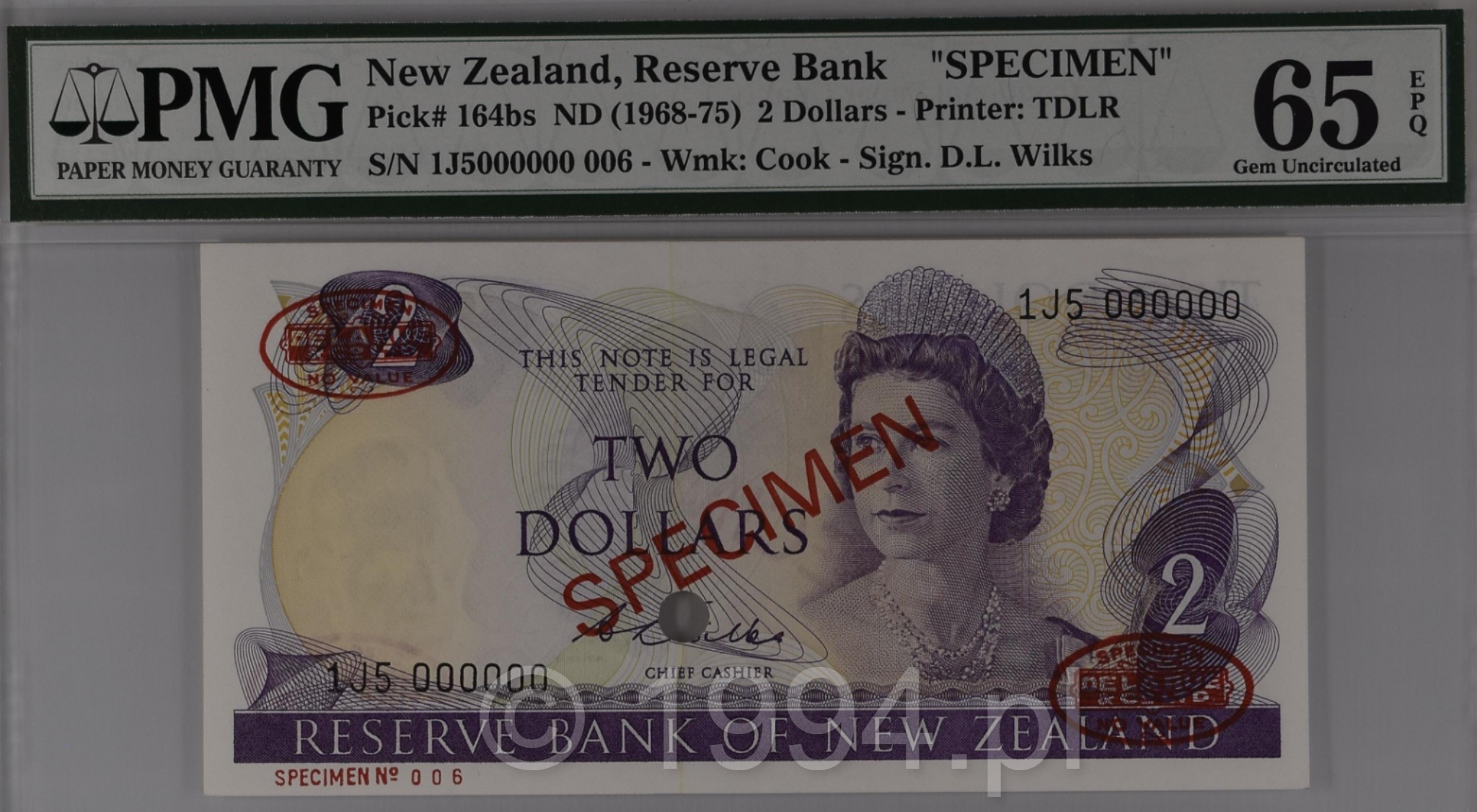
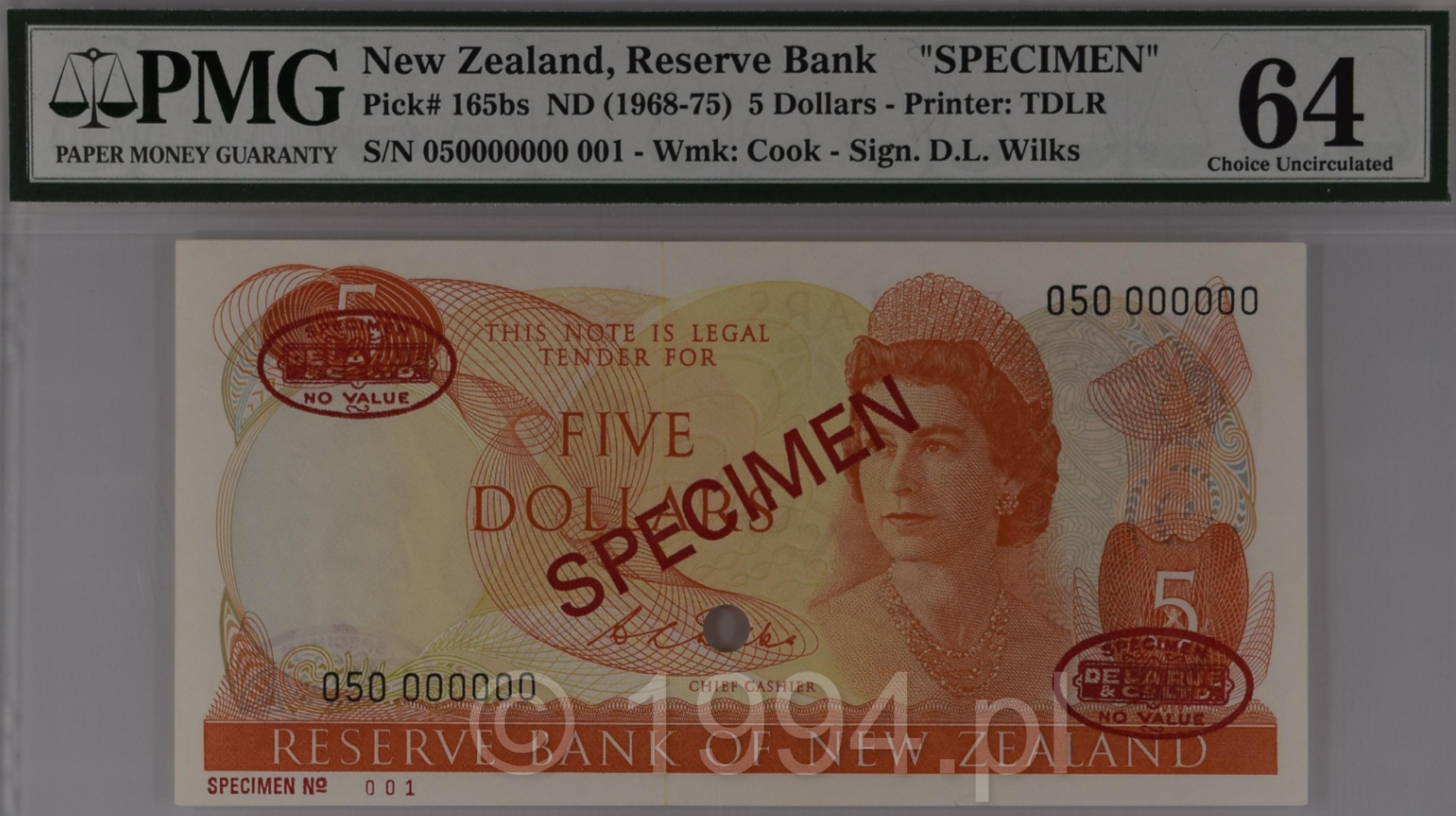
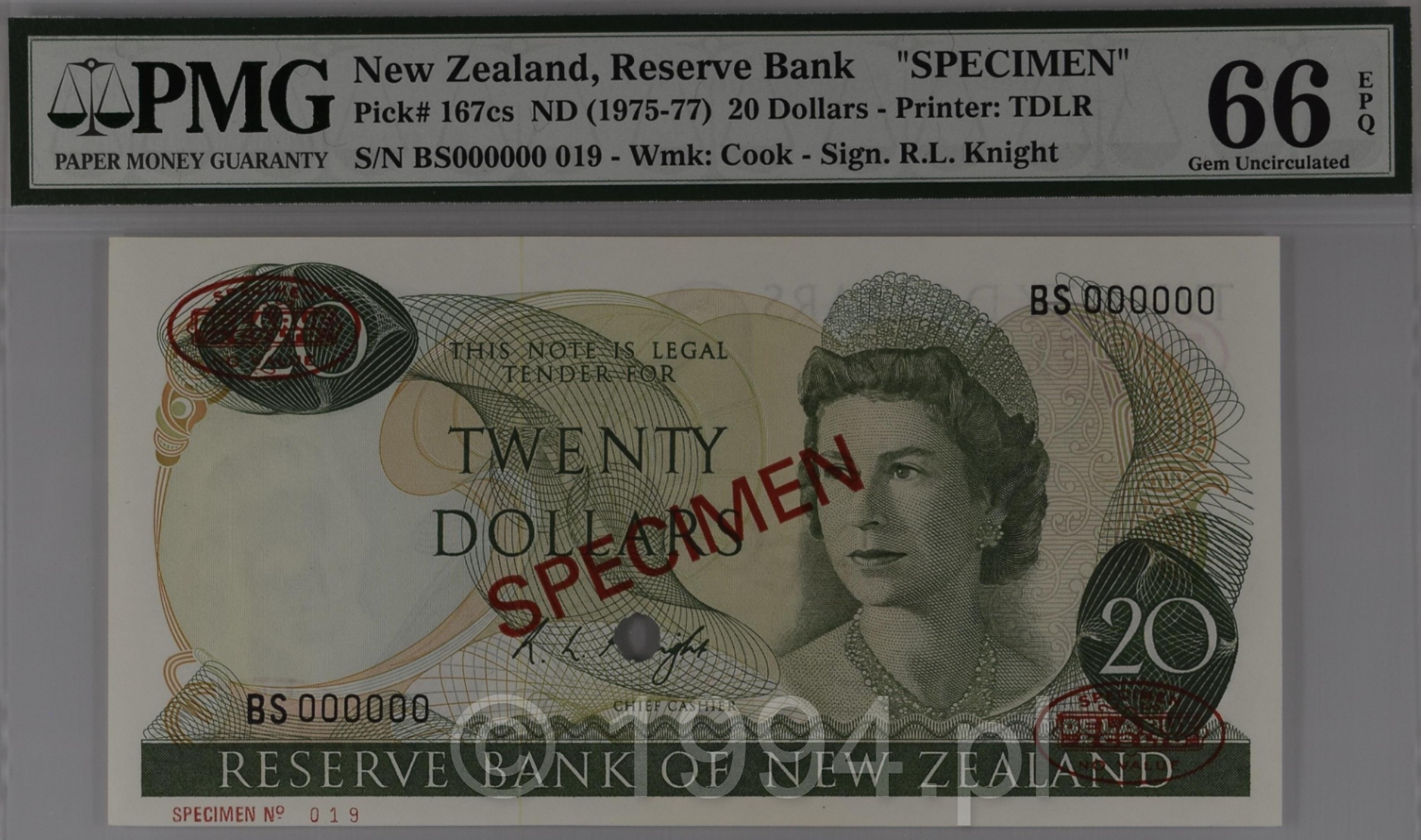
Printed by Thomas De La Rue & Company, London, this specimen follows the established external presentation format used for institutional distribution. It displays a bold red diagonal 'SPECIMEN' overprint, accompanied by two De La Rue oval control stamps and a single punch-hole cancellation. The note carries Serial BS0000000 and is marked as Specimen No. 019, confirming its placement within the controlled specimen allocation sequence prepared for official reference and distribution.
The design retains the defining characteristics of the first decimal series, with Queen Elizabeth II in engraved portrait form on the obverse and the New Zealand pigeon (kererū) depicted on the reverse, surrounded by native flora. The Captain James Cook watermark remains embedded within the paper, reinforcing continuity between New Zealand’s historical identity and its modern monetary system. The twenty-dollar denomination replaced the ten-pound note of the pre-decimal system, positioning it among the higher-value instruments within the decimal structure.
As a Knight-signed specimen from the 1975-1977 issue, this note reflects a mature phase of New Zealand’s decimal currency development. The complete De La Rue specimen format-overprint, dual oval stamps, and punch cancellation-confirms its role as a formal presentation piece prepared for institutional use, distinct from internally retained perforated specimens.
Graded PMG 66 EPQ Gem Uncirculated, the note retains full paper originality, strong embossing, and balanced color integrity. The sharp overprint, well-defined oval control stamps, and intact punch cancellation together present a technically complete and visually refined specimen from the Knight signature period.