Description and research notes
The 1981 one-dollar specimen represents the later phase of New Zealand’s second decimal design series, issued during the ND (1981–1985) period under the signature of H.R. Hardie as Chief Cashier. While Hardie’s name also appears on the earlier ND (1977–1981) issues, this note belongs to the subsequent design revision distinguished by the updated portrait of Queen Elizabeth II, reflecting a more mature likeness compared to the earlier youthful depiction. This visual transition marks a clear generational shift within the same signature authority, separating the two Hardie periods into distinct catalog identities.
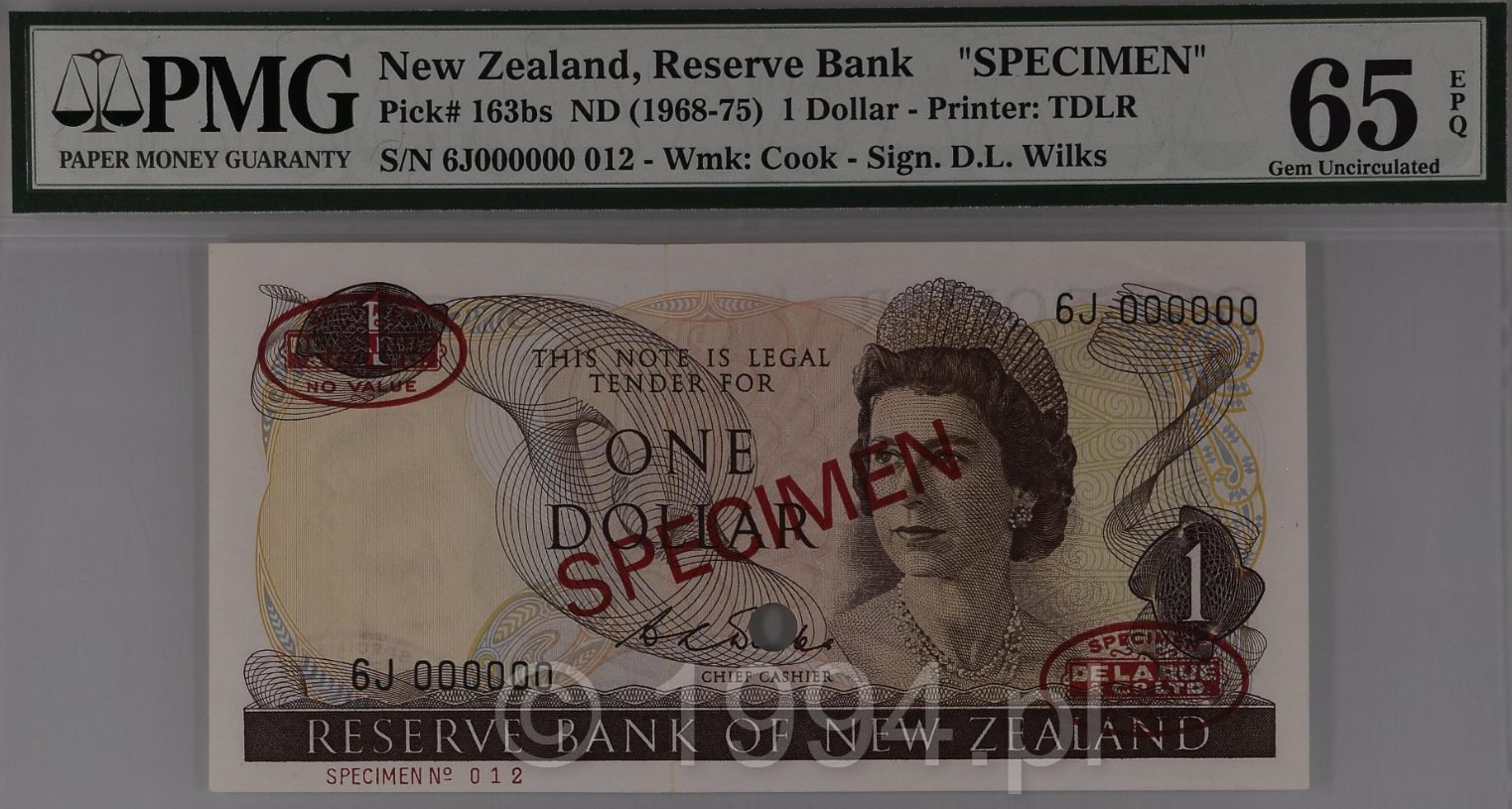
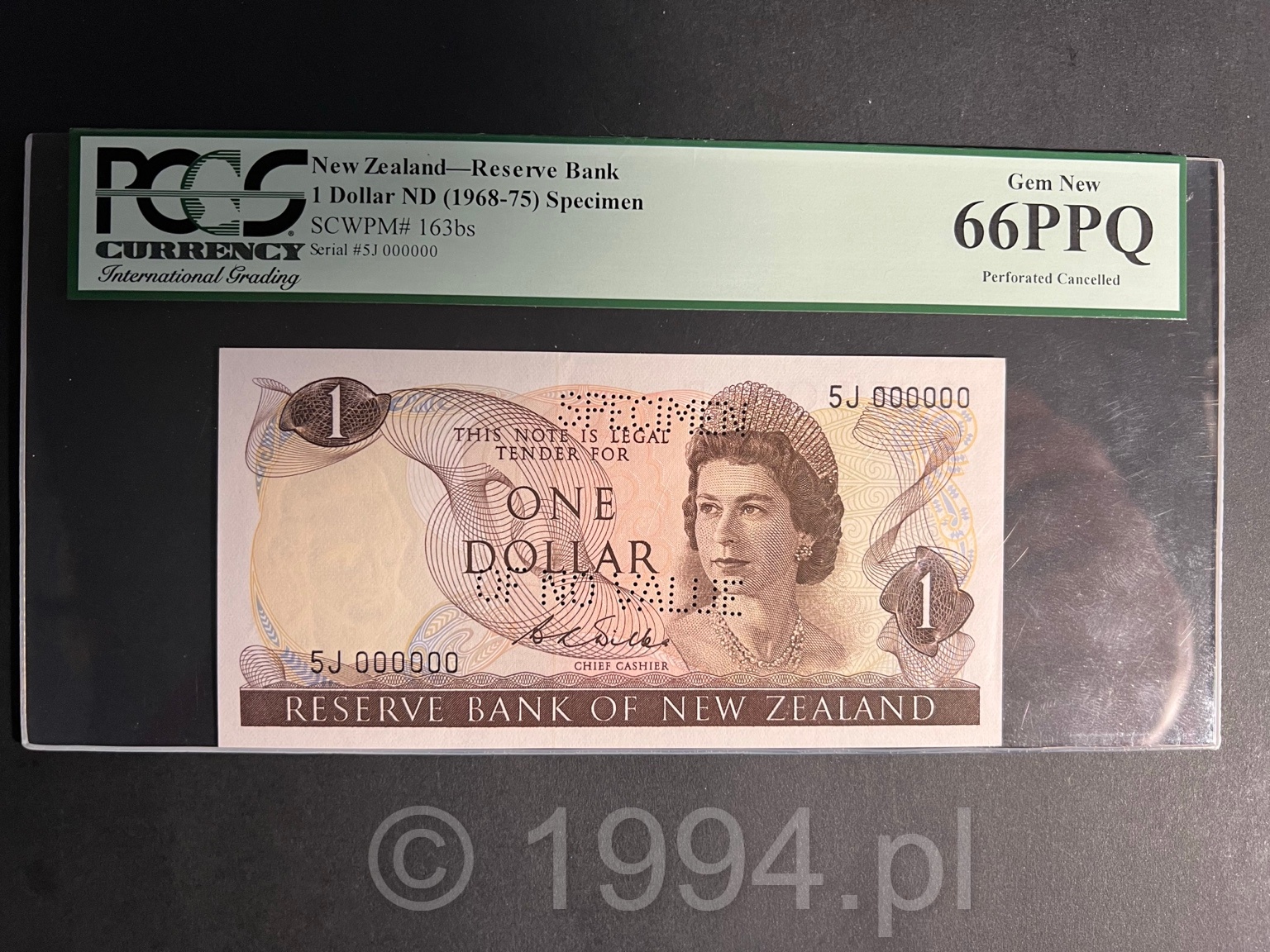
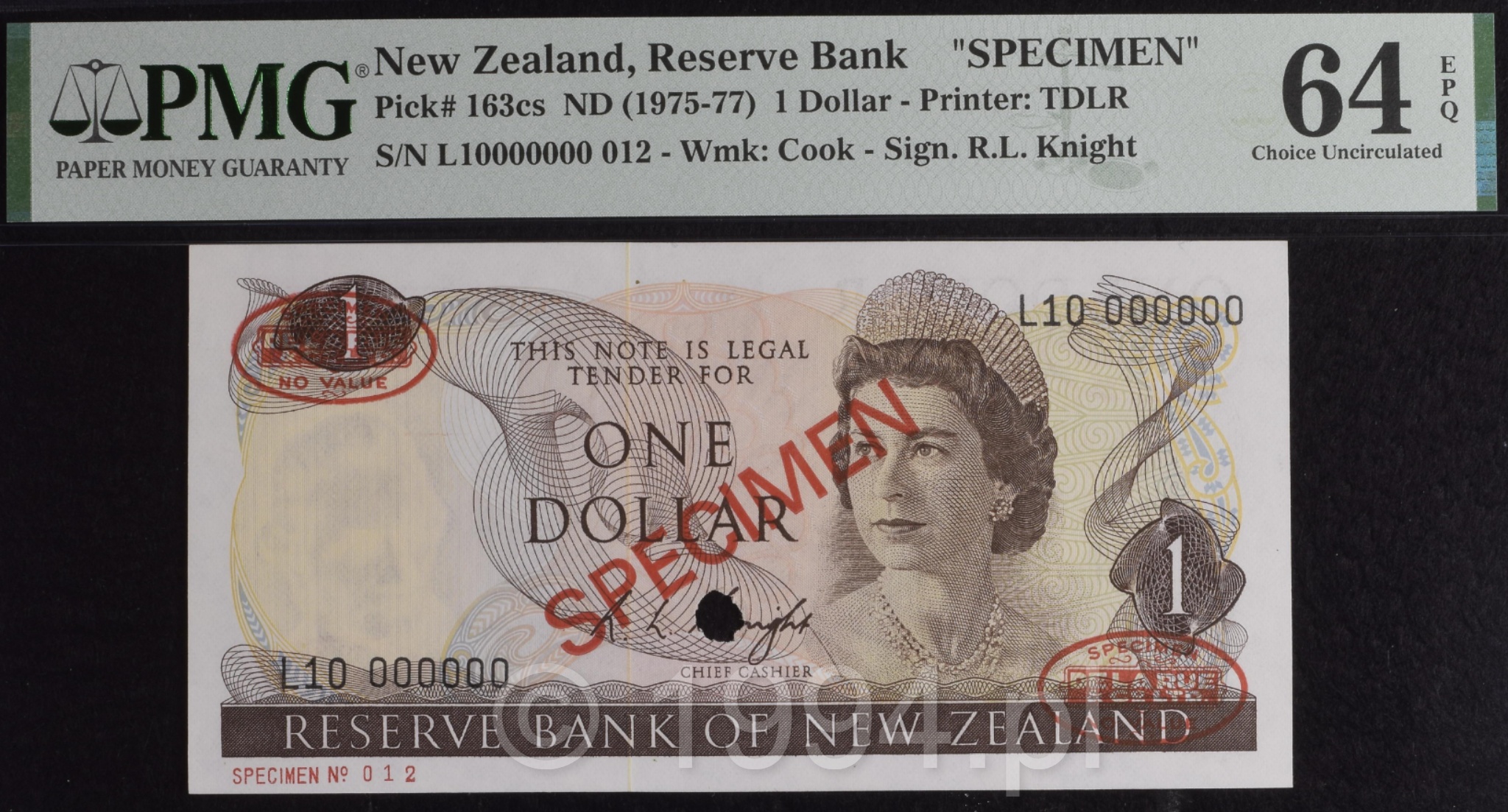
Printed by Thomas De La Rue & Company, London, this specimen departs significantly from the earlier TDLR presentation formats used in the Fleming and Wilks periods. Instead of diagonal overprints and punch-hole cancellations, this example employs a vertical perforation system along both margins spelling 'SPECIMEN'. These perforations function as the primary cancellation method and represent a different internal control approach within De La Rue’s specimen production practices during the early 1980s.
In addition to the perforated cancellation, the note carries a red 'SPECIMEN' overprint applied horizontally across the central design, rather than the earlier diagonal cross format. Notably, this specimen lacks both the De La Rue oval control stamp and any punch-hole cancellation, further reinforcing its classification within a distinct specimen production method. The note bears Serial AAA000000, a standardized specimen serial format used for controlled distribution and archival identification.
The design features the revised portrait of Queen Elizabeth II on the obverse, paired with the Captain James Cook watermark, maintaining continuity with earlier decimal issues while updating the artistic execution. The reverse presents native flora and fauna consistent with the thematic direction of New Zealand’s currency design during this period.
As a specimen from the ND (1981–1985) Hardie issue, this note reflects a transitional stage in both design and specimen handling methodology. The shift from overprint-and-punch formats to perforation-based cancellation marks a notable evolution in production control techniques at Thomas De La Rue & Company.
Graded PMG 65 EPQ Gem Uncirculated, the note retains full originality, sharp embossing, and strong color integrity. The clarity of the horizontal overprint, the precision of the vertical perforated 'SPECIMEN' markings on both sides, and the absence of additional cancellation methods together define a clean and technically distinct specimen type within the New Zealand decimal series.