Description and research notes
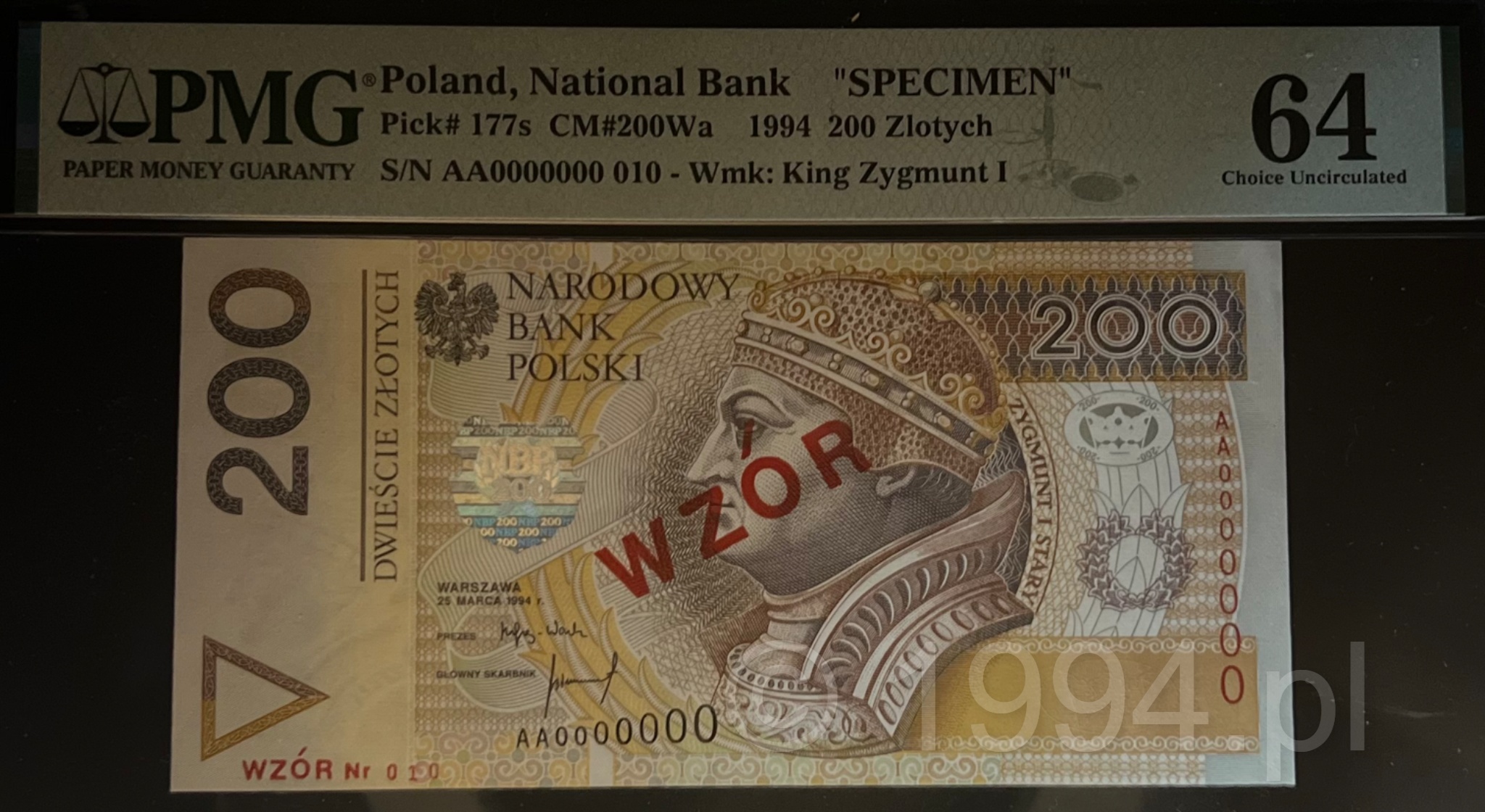
A WZÓR specimen banknote of the 200 Zlotych denomination from the 1994 Polish banknote series, prepared for the National Bank of Poland. The note bears serial number AA0000000 and the very low Polish specimen designation WZÓR No. 010.
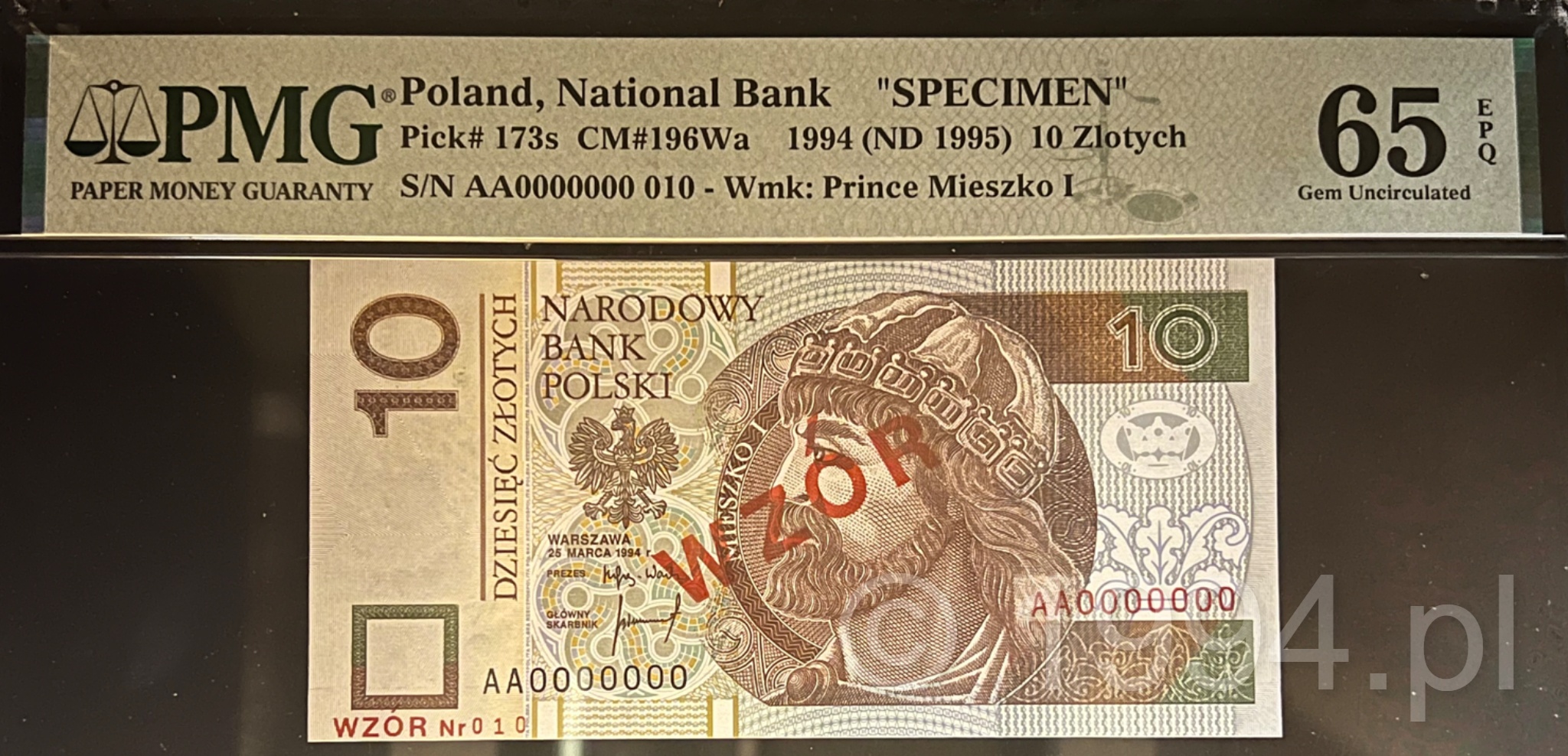
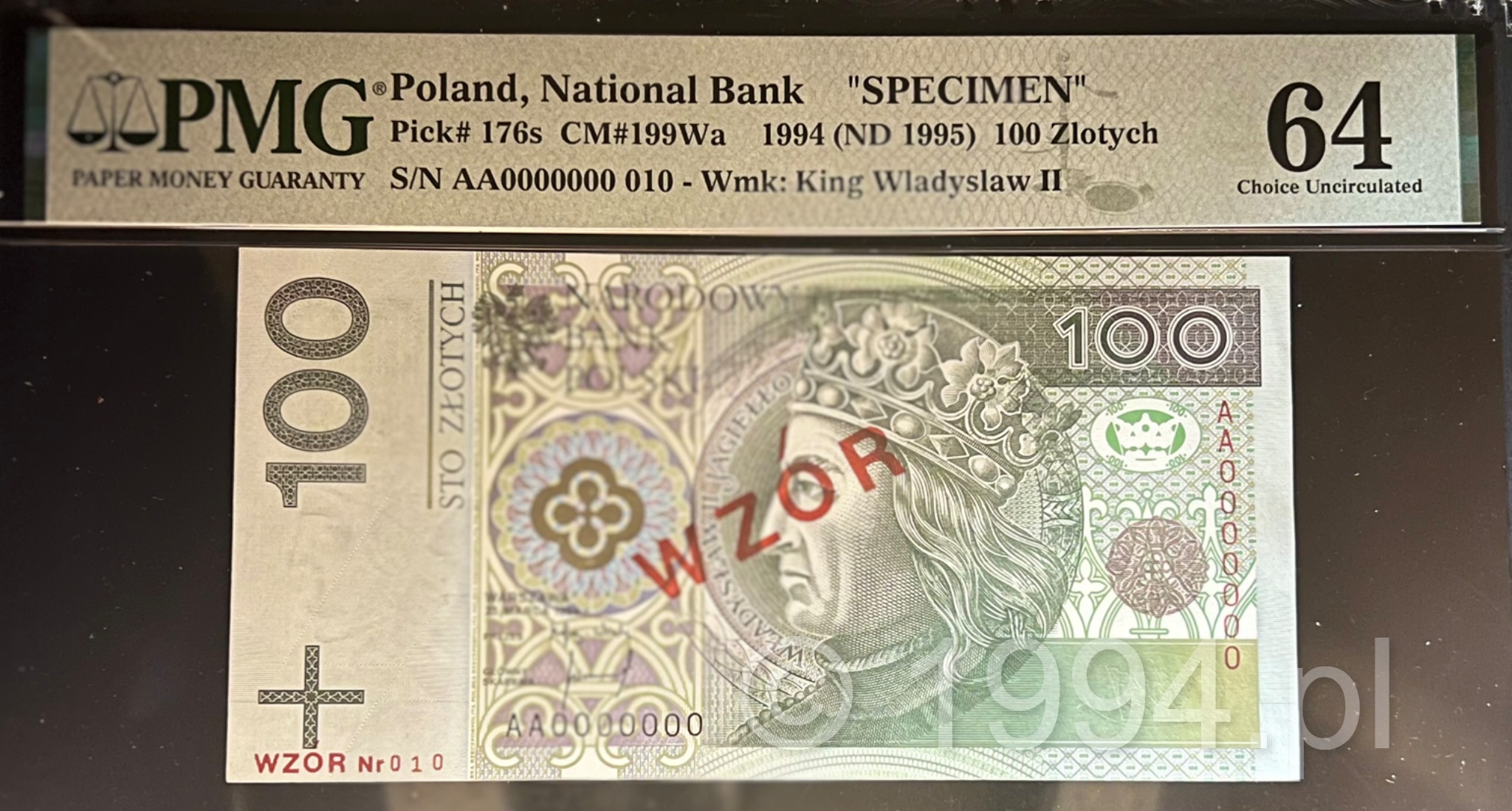
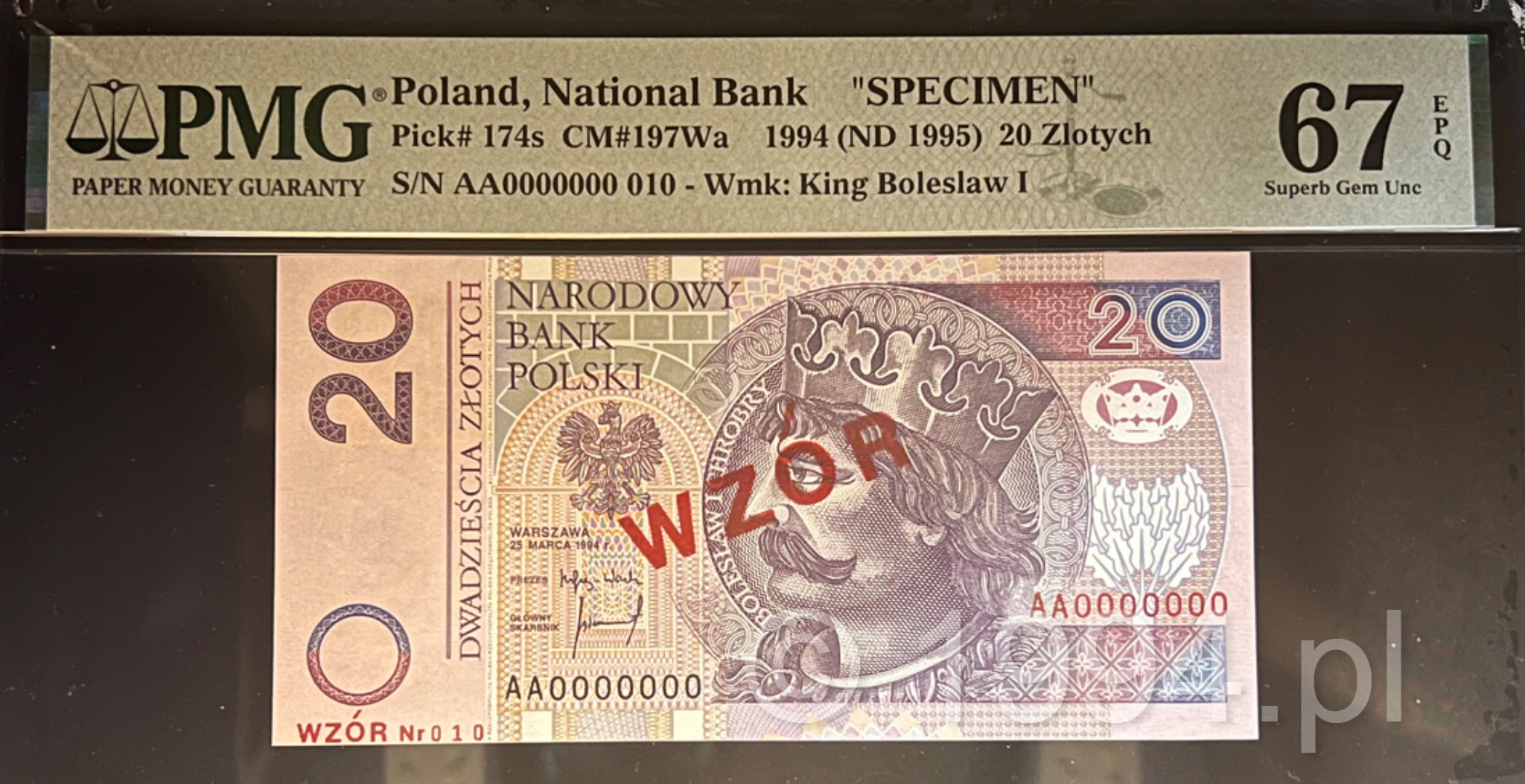
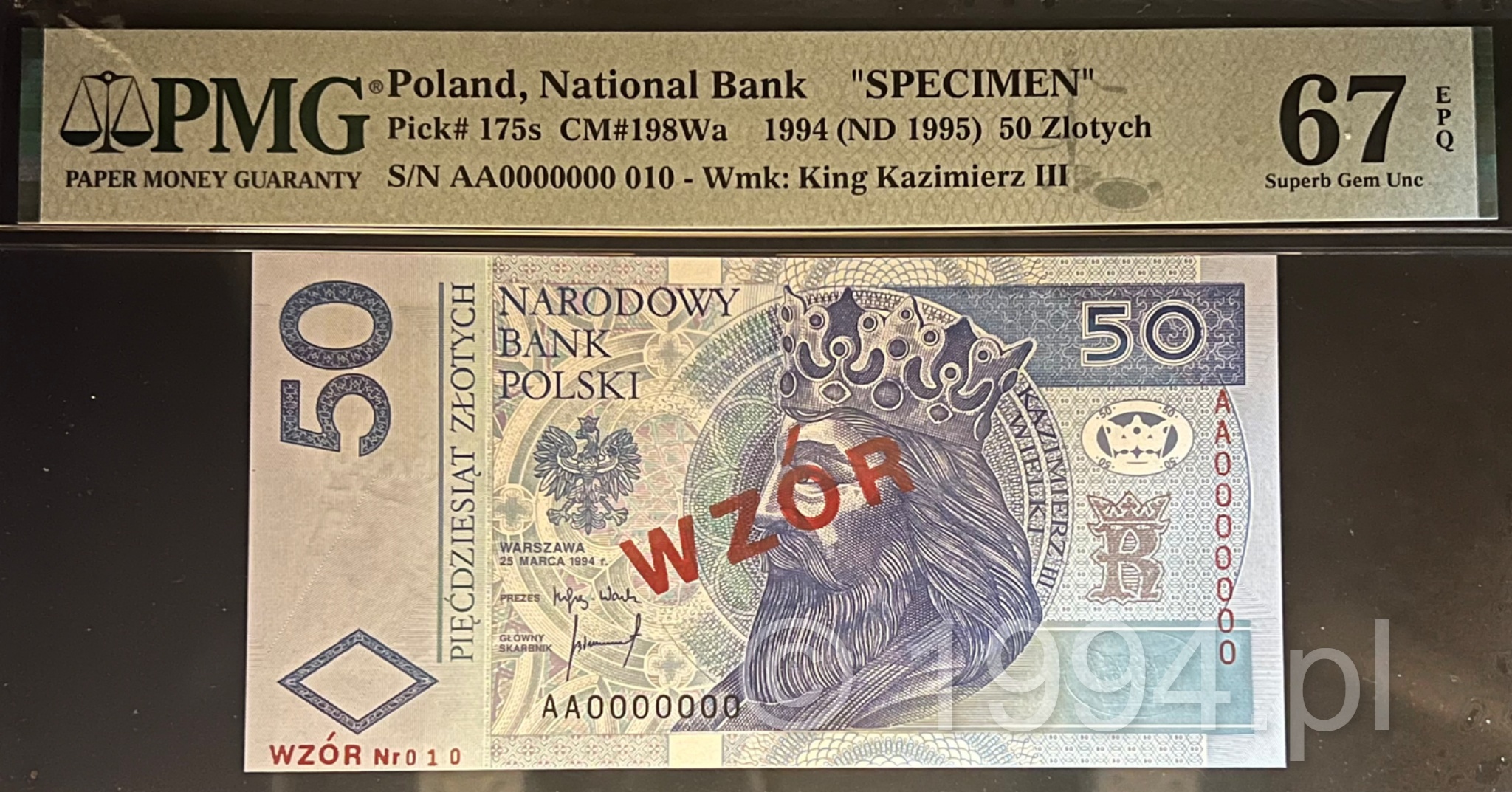
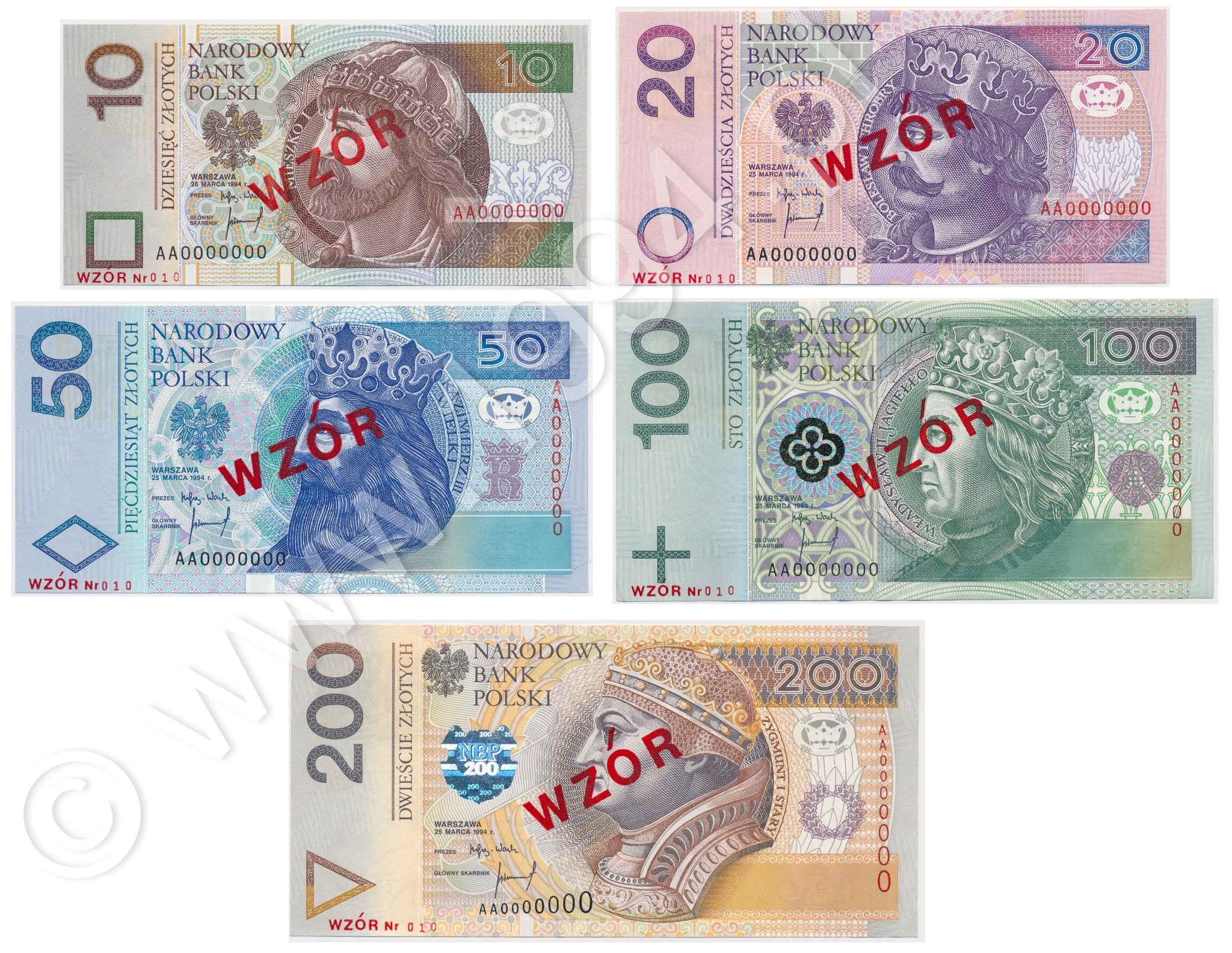
This denomination completes the matching-number WZÓR 010 group preserved in this collection. Its AA0000000 serial and shared specimen number place it within the same five-denomination reference sequence as the 10, 20, 50, and 100 Zlotych notes.
The obverse features King Sigismund I the Old, the Polish eagle, the denomination DWIEŚCIE ZŁOTYCH, the Warsaw date of 25 March 1994, and the printed signatures of Hanna Gronkiewicz-Waltz and Wiesław Biernatowicz. The red WZÓR overprint and WZÓR No. 010 marking identify the specimen status of the note.
The reverse features the Sigismund Chapel at Wawel in Krakow, directly connecting the denomination with the reign and cultural legacy of Sigismund I the Old. The note preserves the complete design and security structure of the 200 Zlotych issue, including guilloche work, denomination fields, ornamental security elements, and the Sigismund I watermark.
The banknote was designed by Andrzej Heidrich and printed by Thomas De La Rue in London for the National Bank of Poland.
This AA0000000, WZÓR No. 010 example completes the full five-denomination matching-number WZÓR 010 set preserved in this collection.