Description and research notes
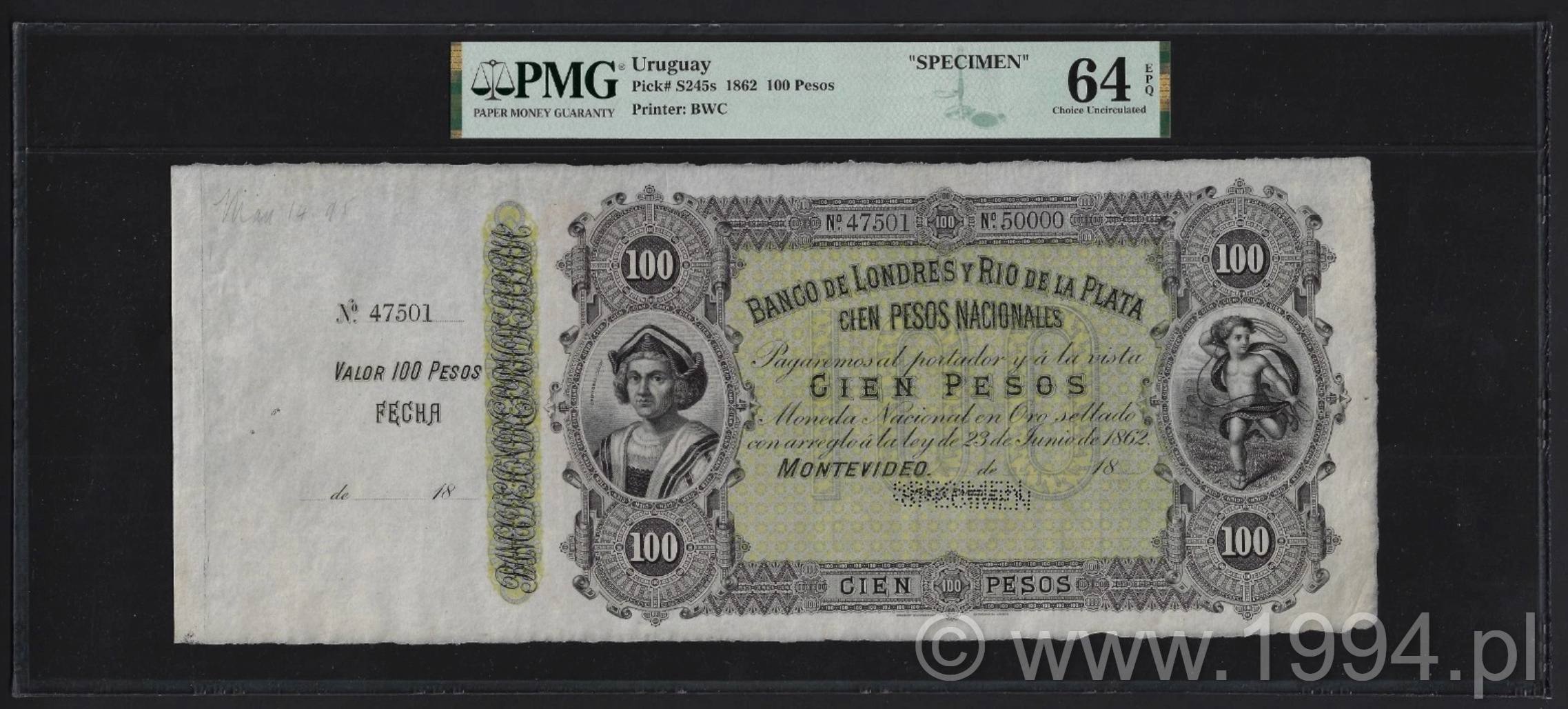
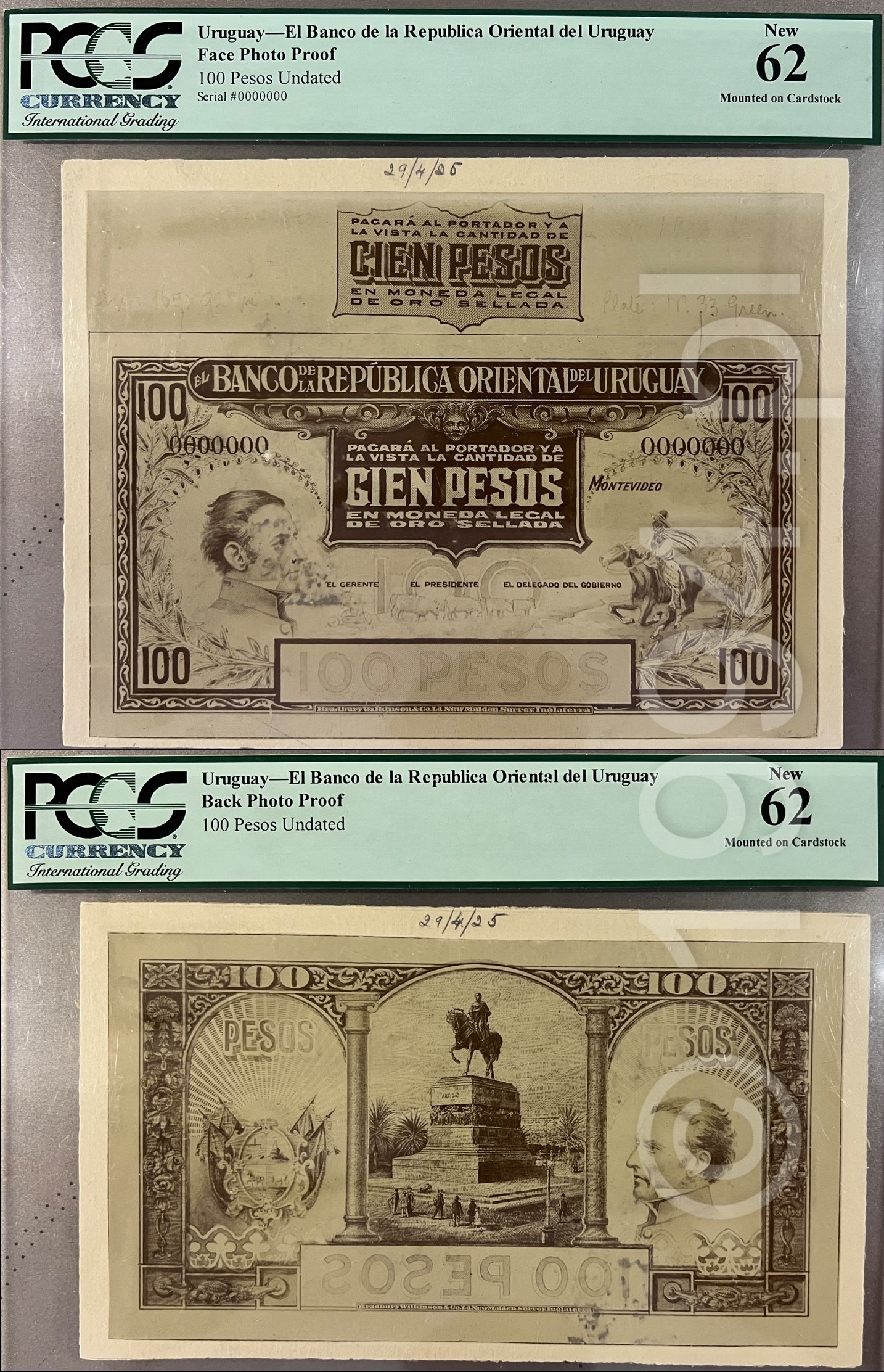
Few notes capture the working side of 19th-century banknote production like this 1862 100 Pesos remainder. Printed by Bradbury, Wilkinson & Co. for the Banco de Londres y Rio de la Plata but never signed or issued, it remains an untouched example of Uruguay’s first major British-engraved currency design. No cancellations, no serials-just the raw presswork as it left London more than 160 years ago.
Every detail of the engraving is intact, from the fine guilloché to the portraits of Mercury and Agriculture that framed Uruguay’s economic vision. These were not symbolic choices but direct references to the nation’s trade and export economy, which the bank helped finance. By the late 19th century, the institution was absorbed into Lloyds Bank, but these early remainders preserved the look and ambition of its founding years.
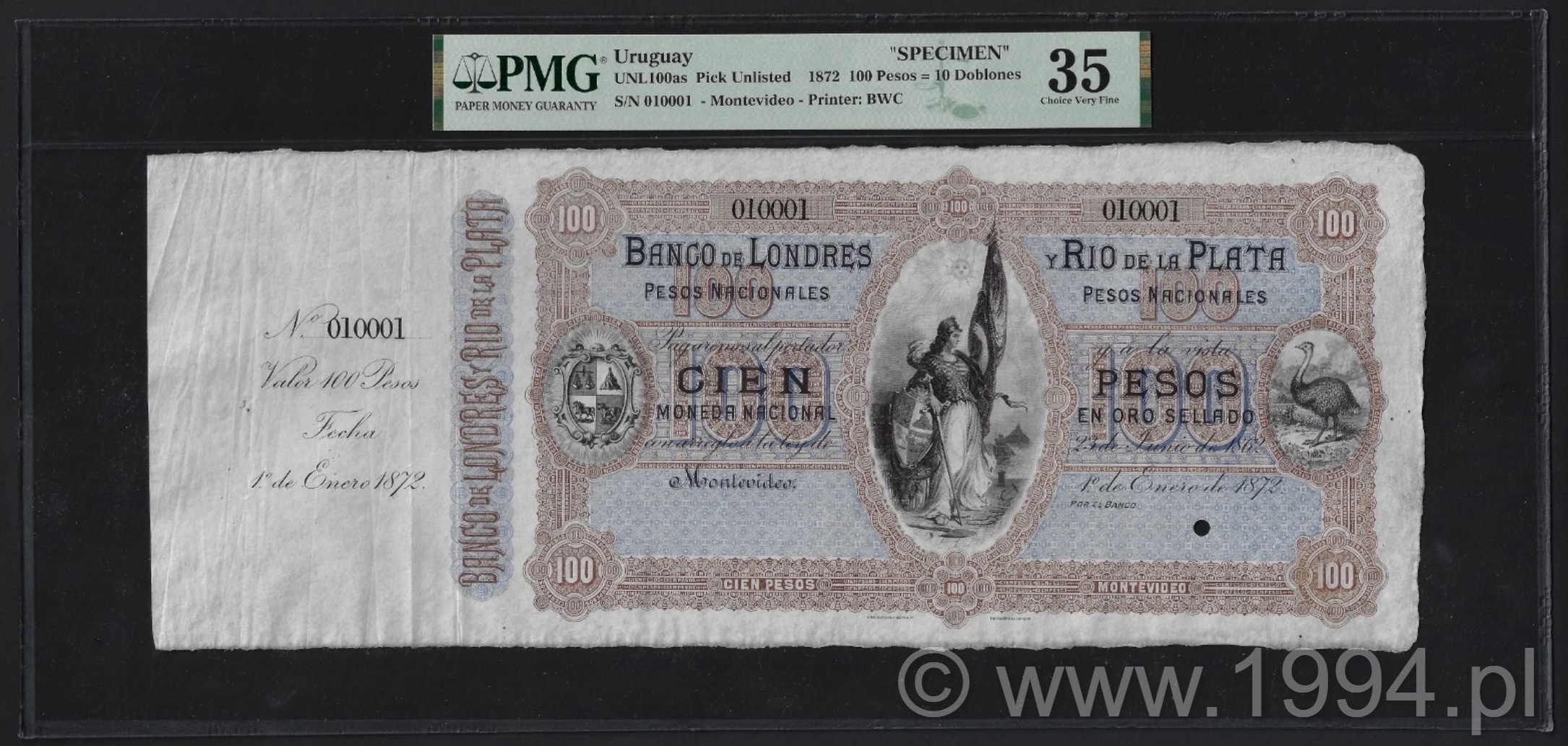
With fewer than five graded examples known, this PMG 63 Choice Uncirculated note stands among the rarest survivors. Placed beside the 1862 specimen, it completes the story-the specimen representing approval, the remainder preservation. Two different paths, one design, both critical to understanding how Uruguay’s first modern banknote was born and survived.