Description and research notes
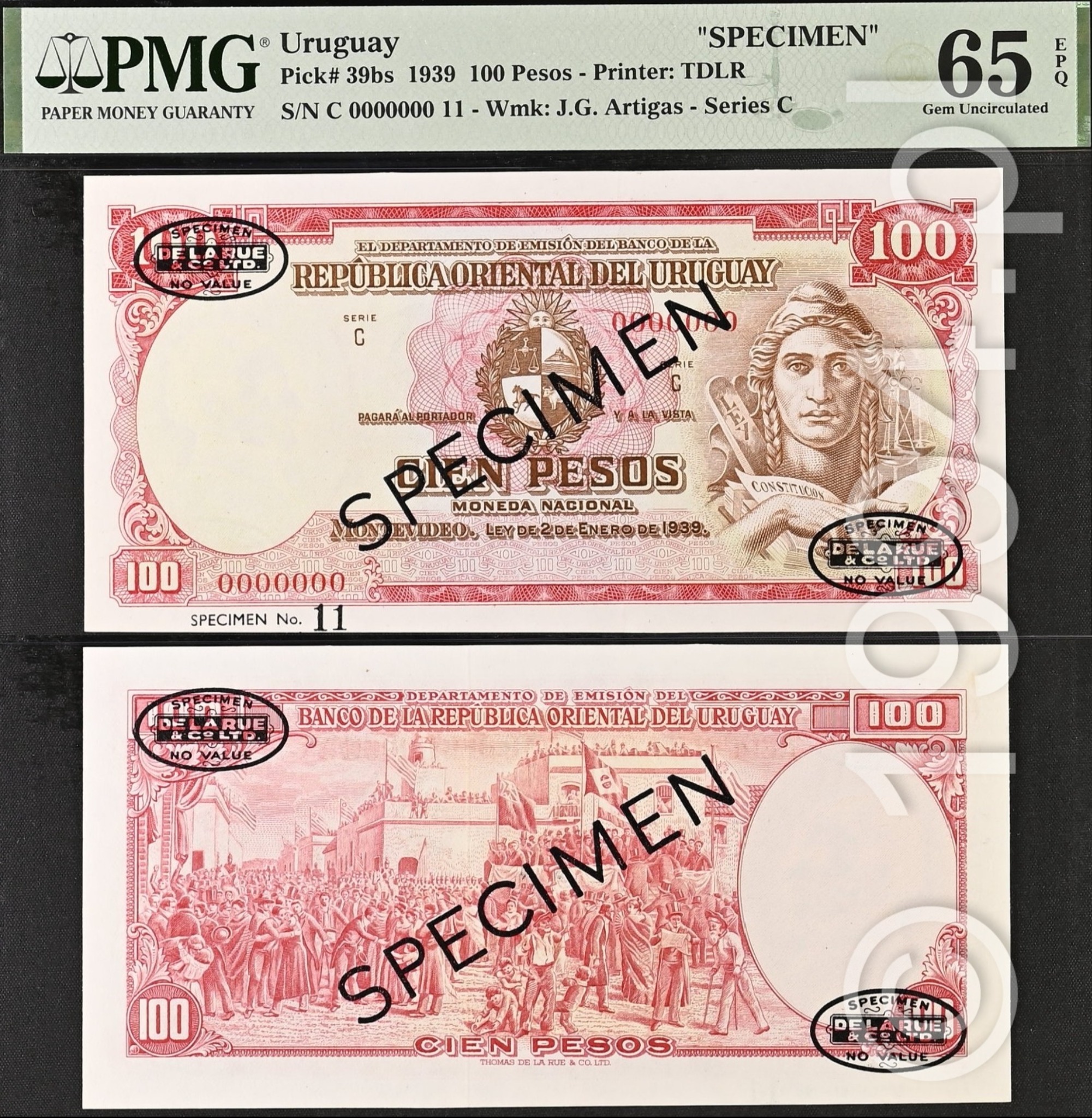
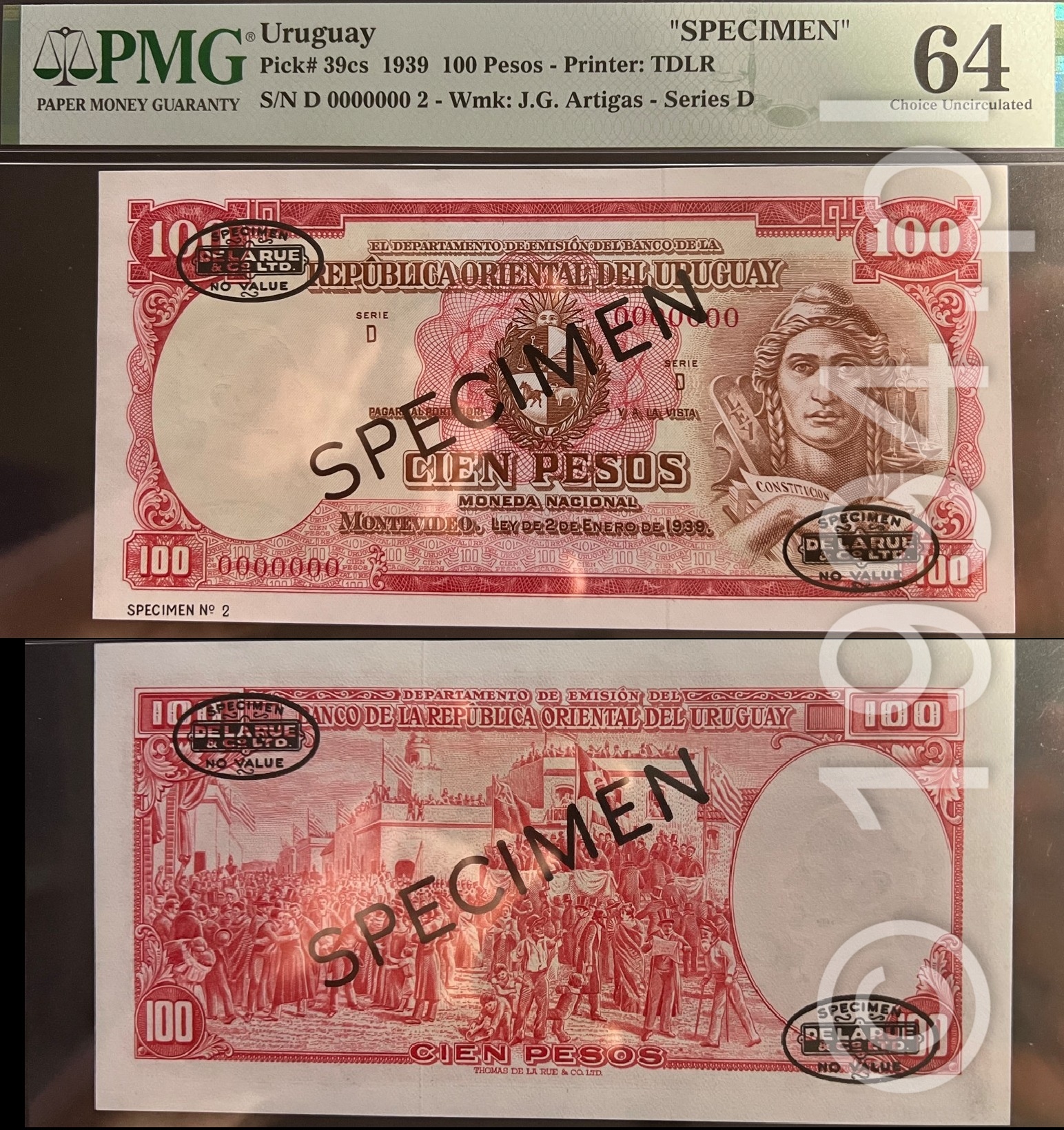
This Serie D one hundred pesos specimen of the Banco de la Republica Oriental del Uruguay is identified as Specimen No. 2 and forms the black-marked counterpart to a matching red specimen-control example. Both notes share the same Pick 39cs classification, Serie D designation, prefix D all-zero serial numbers, printed Specimen No. 2 identity, completed design, and certified grade. Their only major administrative distinction is the color of the diagonal specimen inscription and the oval printer control stamps.
The survival of both versions establishes that the black markings represent an intentional printer-controlled state rather than discoloration, fading, or variation caused by photography. Thomas De La Rue and Company Limited deliberately prepared separate red and black presentations of the same numbered Serie D reference note. The identical Specimen No. 2 inscription indicates that numbering was repeated within parallel specimen groups or handling channels, preserving the same reference position across more than one cancellation format.
The face is organized around the title of the Republica Oriental del Uruguay, the central national arms, and the denomination CIEN PESOS. MONEDA NACIONAL appears beneath the denomination, while dense guilloche patterns, ornamental borders, and repeated value devices create the security framework expected of a completed high-value banknote design.
The constitutional allegory at right provides the principal human and symbolic focus. Holding the Constitution, the female figure embodies legal continuity, civic authority, and the institutional foundation of the republic. Architectural and industrial elements surrounding her expand the message toward state organization, productive capacity, and modernization.
Across the obverse, a bold black SPECIMEN inscription cuts diagonally through the central design. Two black oval SPECIMEN DE LA RUE AND COMPANY LIMITED NO VALUE stamps appear at the upper left and lower right. The dark control layer integrates closely with the engraved linework, giving this version a visually different character from the red-marked companion while preserving the same underlying reference design.
The reverse depicts a large public gathering before monumental architecture, with flags and assembled figures forming a broad narrative of civic participation and national ceremony. The scene is engraved with remarkable density, allowing individual figures, architectural forms, and ceremonial details to remain visible within the wider panoramic composition.
Black specimen markings are repeated across the reverse, completing the two-sided control format. The diagonal inscription and oval stamps create a fully documented printer state corresponding directly to the red-marked version, rather than an unrelated specimen treatment.
Printed by Thomas De La Rue and Company Limited, this black Serie D, Specimen No. 2 note is a major documentary partner to the red-marked example. Viewed together, the pair demonstrates the existence of parallel specimen-control presentations using the same denomination, series, specimen number, serial format, and completed design. The two notes therefore preserve an unusually precise record of how Uruguay's 1939 one hundred pesos reference currency was prepared, differentiated, and managed at the printer level.