← Back to Collection

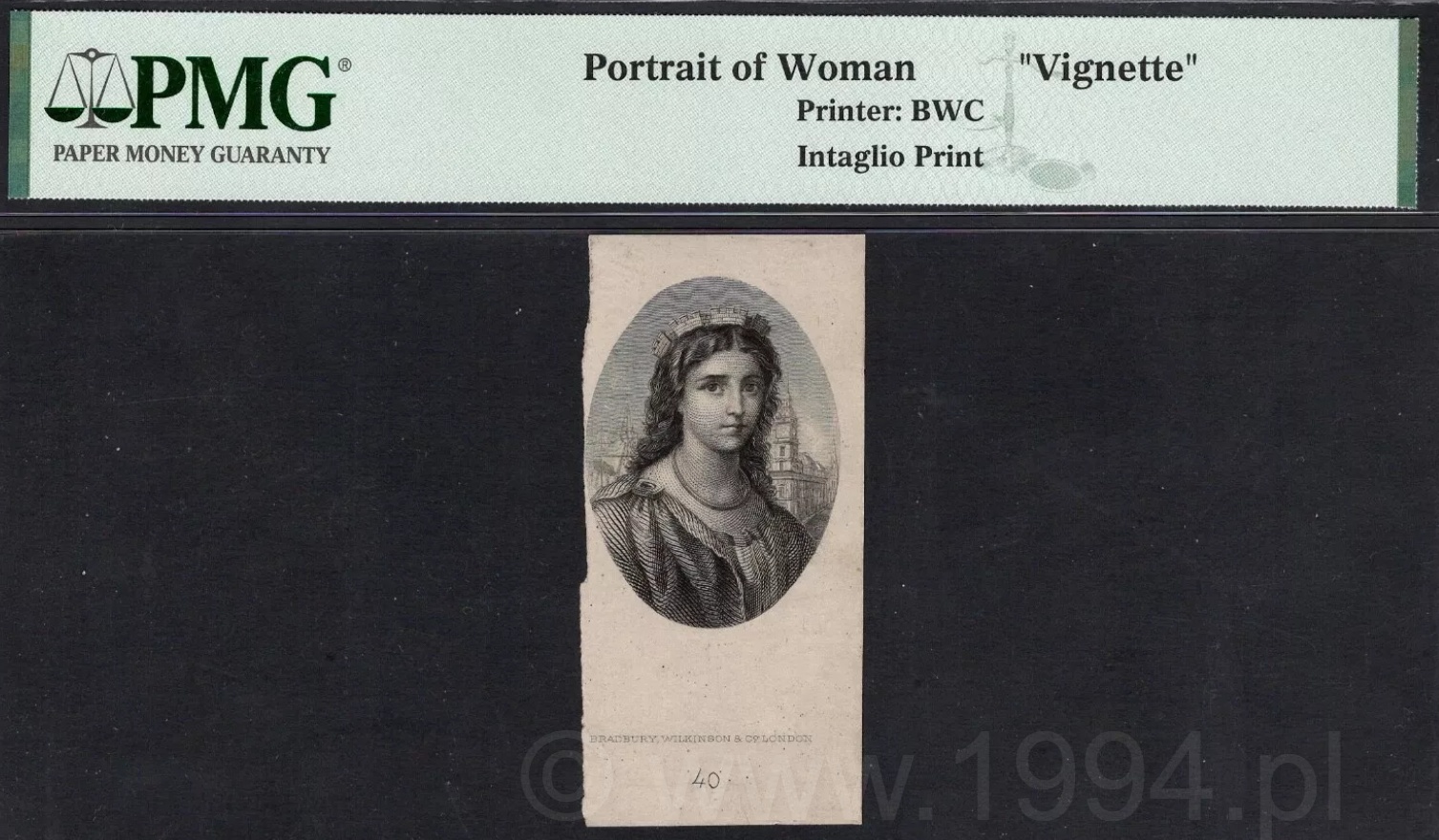
Australia 1877 Bradbury Wilkinson portrait of a woman intaglio vignette proof, printer’s library master engraving used for Australian private bank issues including the City of Melbourne Bank £20

At a glance

  • Country: Australia
  • Year: 1877
  • Denomination: Reference Vignette
  • Type: Vignette
  • Grade: Archival Intaglio Proof
  • Status: Held
  • Tags: Intaglio Vignette Proof; Engraver’s Master Portrait; Printer’s Library Element; Production Stage Artifact; Standalone Vignette; Bradbury Wilkinson; BWC; Victorian Era Engraving; Private Banknote Production; British Security Printing; Australia; Victoria; Pre Federation Australia; City of Melbourne Bank; 1877; Twenty Pounds Design Source; Museum Grade; R9 Extremely Rare; Unique

Description and research notes

This intaglio vignette proof represents an original portrait engraving produced by Bradbury, Wilkinson & Company in London in 1877, prepared as a master design element within the firm’s internal plate library. It depicts a classical female figure engraved as a stand-alone vignette, intended for later integration into complete banknote layouts commissioned by private banks across the British Empire, including Australian colonial institutions.

In the Bradbury Wilkinson production workflow of the late nineteenth century, portrait vignettes were engraved independently of any specific banknote. These master portraits were executed to the highest possible standard, then archived for reuse, resizing, re-tinting, and recomposition across multiple denominations, issuers, and geographic markets. This modular system allowed the firm to maintain consistent artistic quality while efficiently servicing clients from Melbourne to New Zealand and beyond.

The engraving exhibits hallmarks of late-Victorian intaglio portraiture: a three-quarter pose rendered with dense cross-hatching, controlled line tapering, and subtle stipple overlays that transition smoothly into open paper. Hair treatment, facial modeling, and drapery folds demonstrate deliberate burin direction changes designed to preserve tonal separation once the vignette was nested within surrounding guilloché frames. The proof impression reveals the plate’s full tonal range, including crisp keylines, feathered mid-tones, and luminous highlights that are often softened or partially obscured in issued notes.

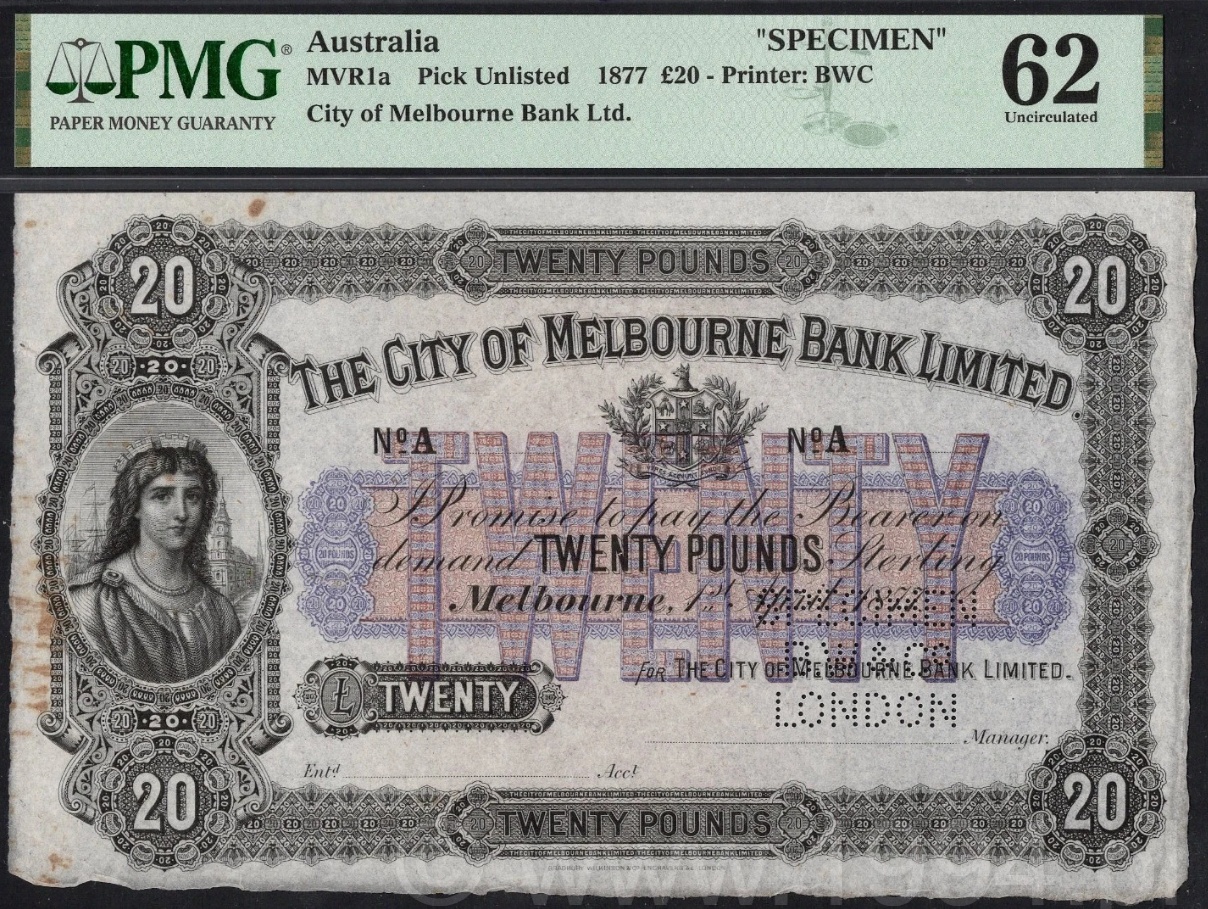
This vignette is directly associated with the portrait used on the City of Melbourne Bank £20 issue, serving as the engraving source from which the human focal point of that note was derived. Studied alongside the finished banknote, the vignette allows precise comparison between the engraver’s original intent and the compromises introduced during plate assembly, tint application, and high-speed production printing.

The ability to examine such a portrait in isolation is critical for understanding nineteenth-century security printing practice. It exposes engraving decisions that are otherwise masked by text, ornaments, and underprints, including cross-hatch densities, micro-line curvature, and relief depth calibrated for durability under repeated impressions. As such, this piece functions not merely as artwork but as a technical document of printer methodology.

This proof was never intended for circulation and was not part of any issued, remaindered, or specimen banknote stock. It exists solely as a production-stage artifact retained within the printer’s design archive. Once portraits were transferred to working plates and successfully deployed, original vignette proofs were typically discarded or lost, making survival highly exceptional.

At the time of cataloging, no second example of this specific Bradbury Wilkinson portrait vignette is documented in institutional collections, auction records, or reference literature. Its rarity derives from production-stage uniqueness rather than condition, and its significance lies in documenting the source material behind Australian pre-Federation private banknote design.

As a result, this vignette stands as a museum-grade reference artifact for the study of Bradbury Wilkinson’s engraving practices and the visual foundations of Australia’s nineteenth-century private banking currency.

Actions

Ask PMG Census

Tags and navigation

Australia 1877 Intaglio Vignette Proof Engraver’s Master Portrait Printer’s Library Element Production Stage Artifact Standalone Vignette Bradbury Wilkinson BWC Victorian Era Engraving Private Banknote Production British Security Printing Victoria Pre Federation Australia City of Melbourne Bank Twenty Pounds Design Source Museum Grade R9 Extremely Rare Unique

← Back to Collection