Description and research notes
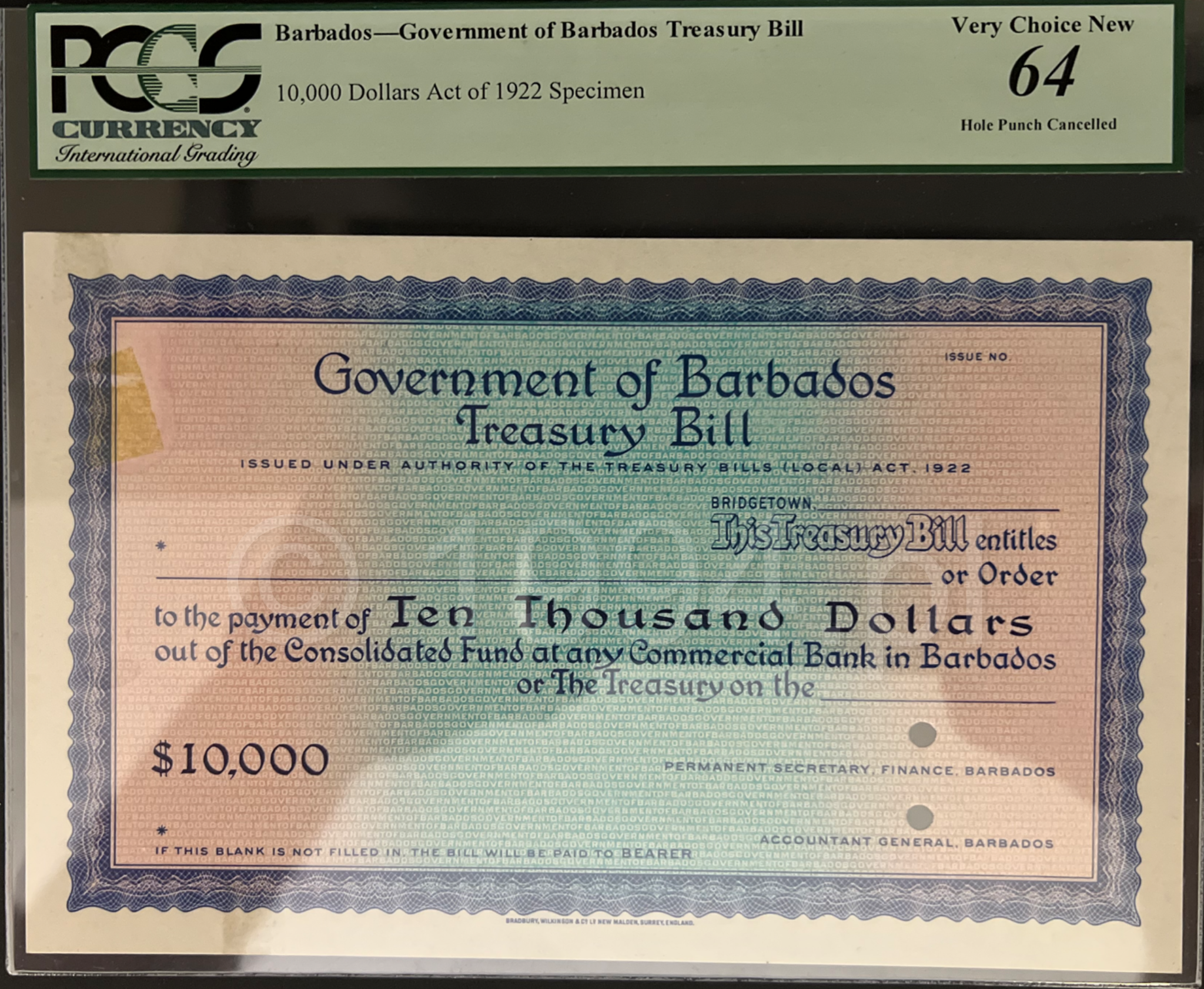
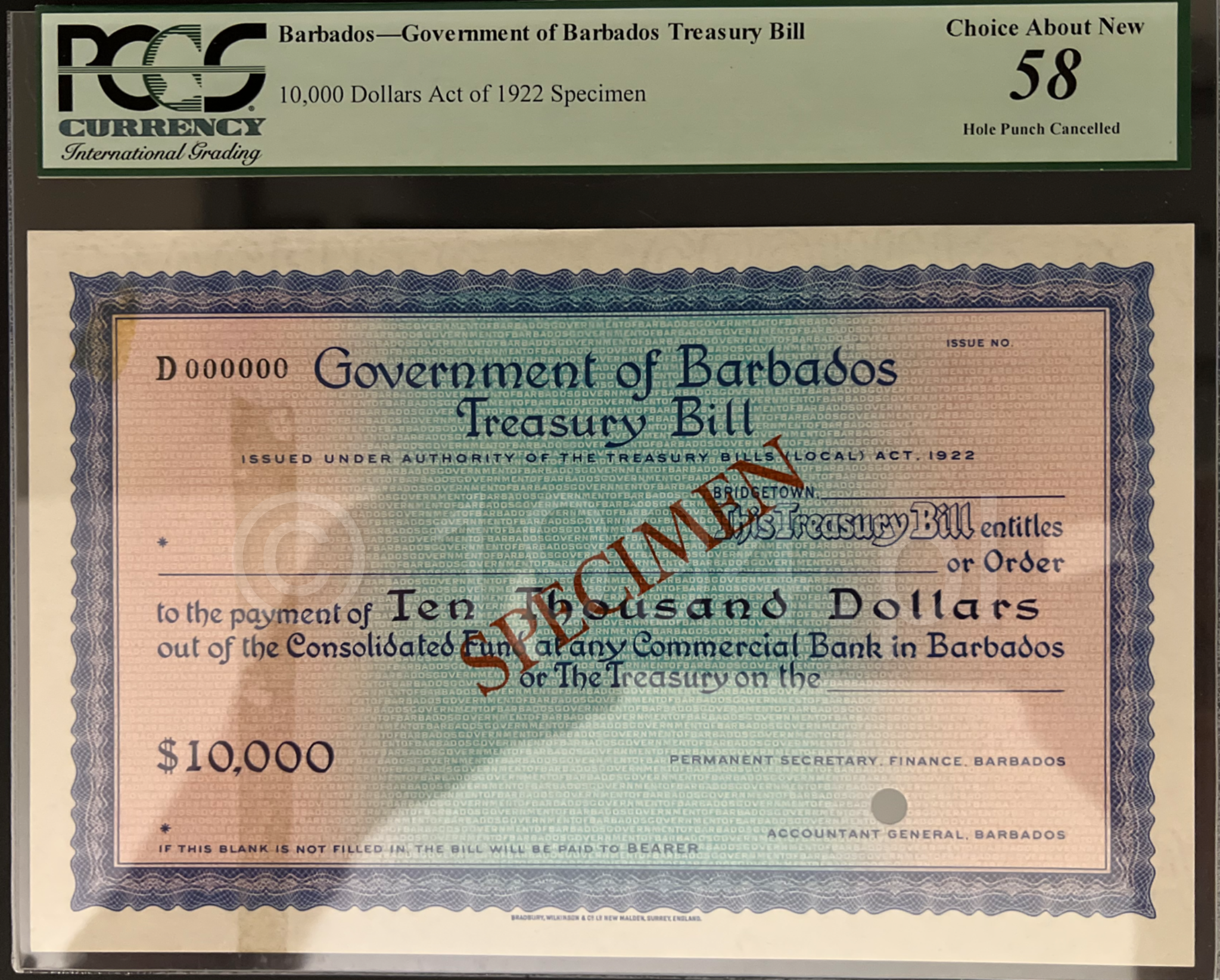
This specimen Treasury Bill was issued by the Government of Barbados under the authority of the Treasury Bills (Local) Act of 1922 and prepared as a non-circulating reference instrument for internal administrative, accounting, and archival use.
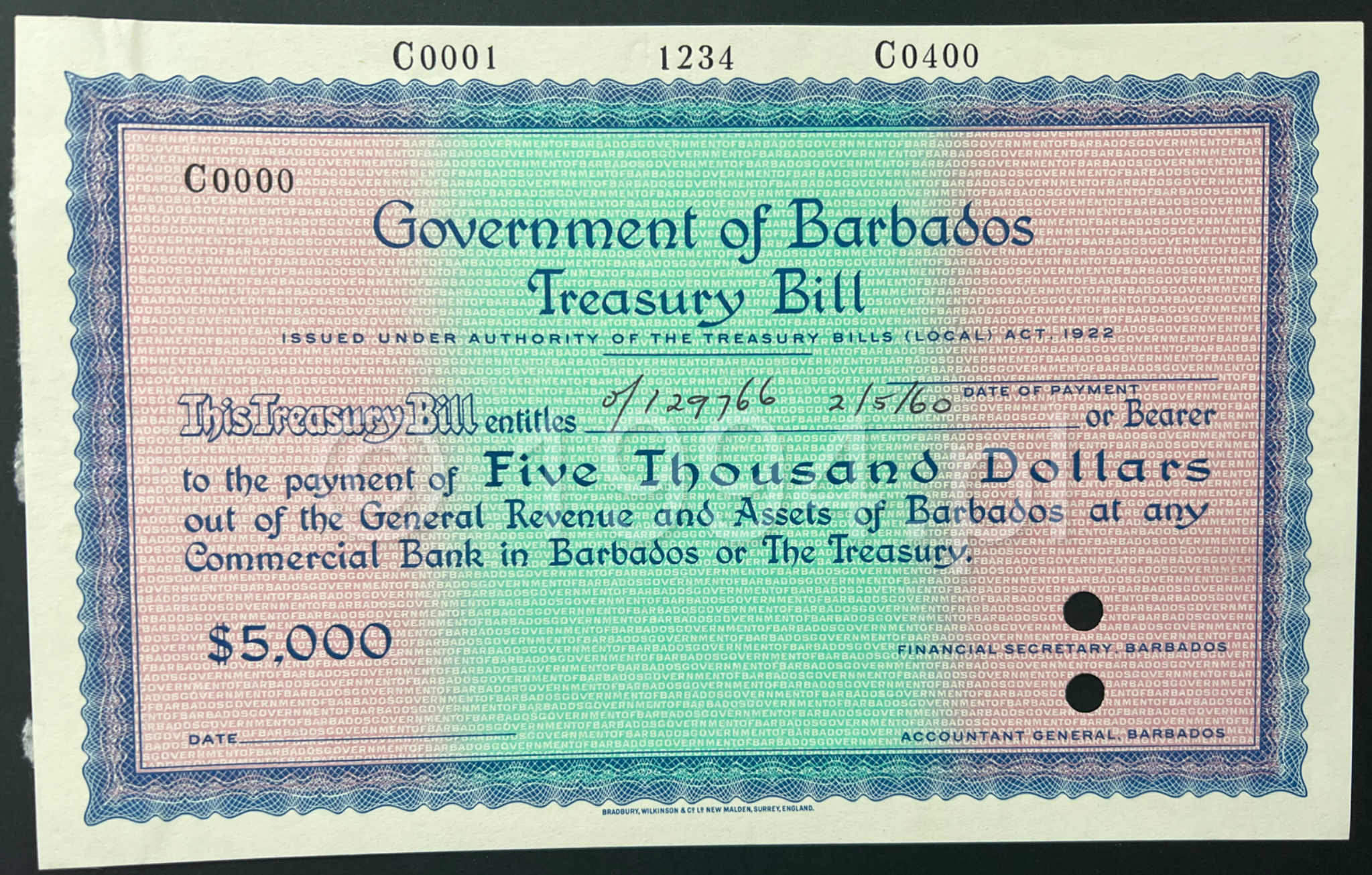
The bill is denominated at ten thousand dollars and sets out an obligation payable to bearer out of the General Revenue and Assets of Barbados. This bearer formulation reflects the earlier legal wording employed on Treasury Bills of this period and predates the later standardized “payable to order” language adopted on subsequent issues. The place of issue, Bridgetown, appears within the printed layout, confirming its origin within the central administrative framework of Barbados.
At the top margin of the note appears a printed numbering trial line consisting of the elements “D0001”, “1234”, and “D0400”. This line represents a serial and prefix configuration trial associated with numbering layout and spacing and is distinct from both issuance serials and handwritten archival annotations.
The primary prefix carried by the bill itself is the letter “D”, accompanied by a zero serial format. This configuration documents a specific reference format within the Treasury Bill production process and distinguishes this specimen from examples bearing other prefix structures.
Cancellation is effected by two large punch holes applied in the lower right portion of the note through the signature area. These punch holes constitute a physical method of invalidation, permanently preventing the document from being used for payment or settlement.
Additional handwritten administrative annotations are present within the body of the bill, including a handwritten date reading “2/5/60”. These markings record an internal handling or review event and provide a firm chronological anchor for the specimen.
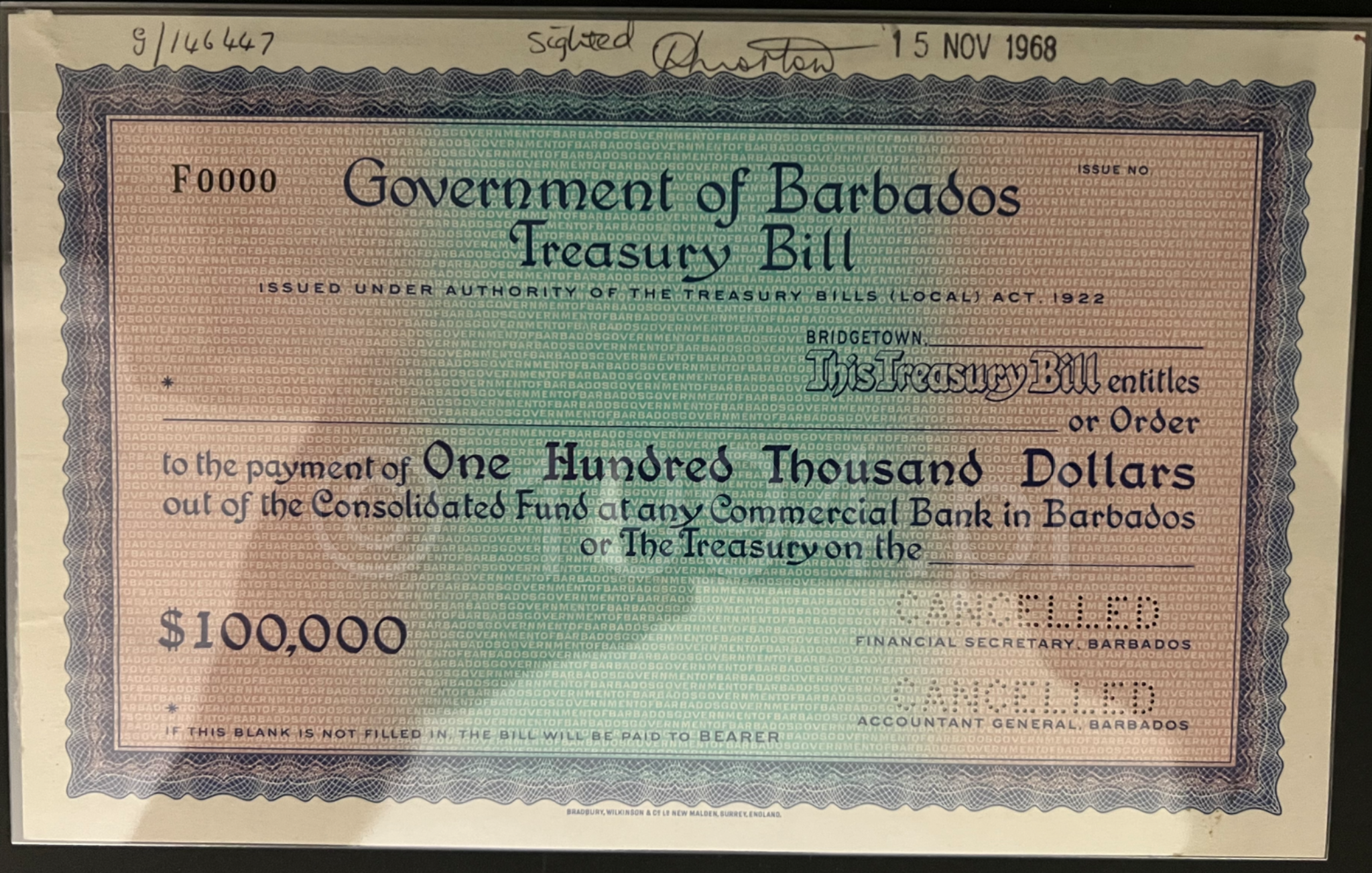
The background is formed by a dense multicolour security underprint composed of repeated “Government of Barbados” text, serving both issuer identification and anti-counterfeiting purposes. The design is enclosed within an engraved guilloche border consistent with British fiscal security printing practices of the mid-twentieth century.
Specimen Treasury Bills of this denomination were produced in limited quantities for government and printer files. Surviving examples combining bearer obligation wording, printed numbering trials, prefix-based serial format, punch cancellation, and dated handwritten annotations represent a distinct and rarely encountered configuration within Barbados fiscal material.