Description and research notes
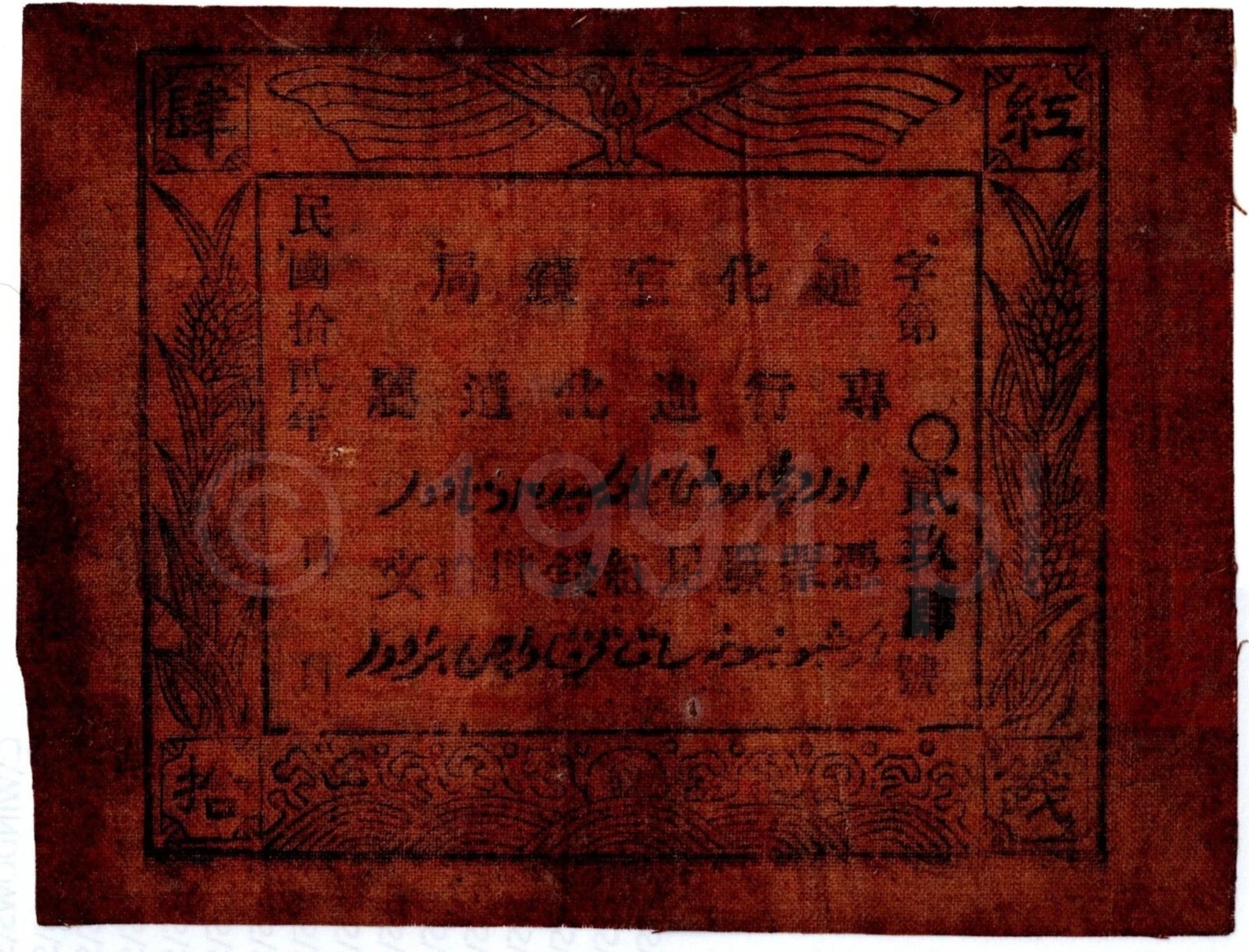
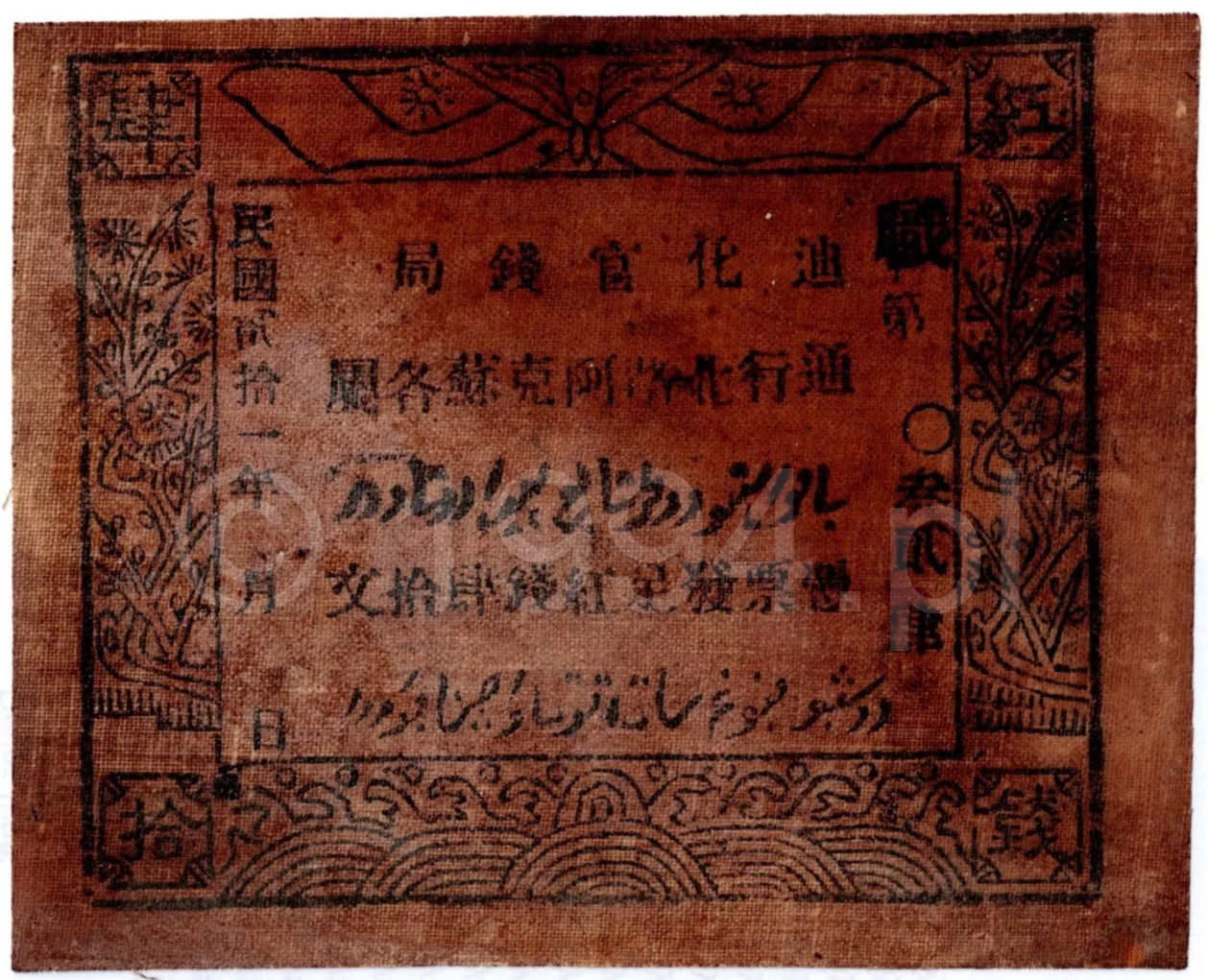
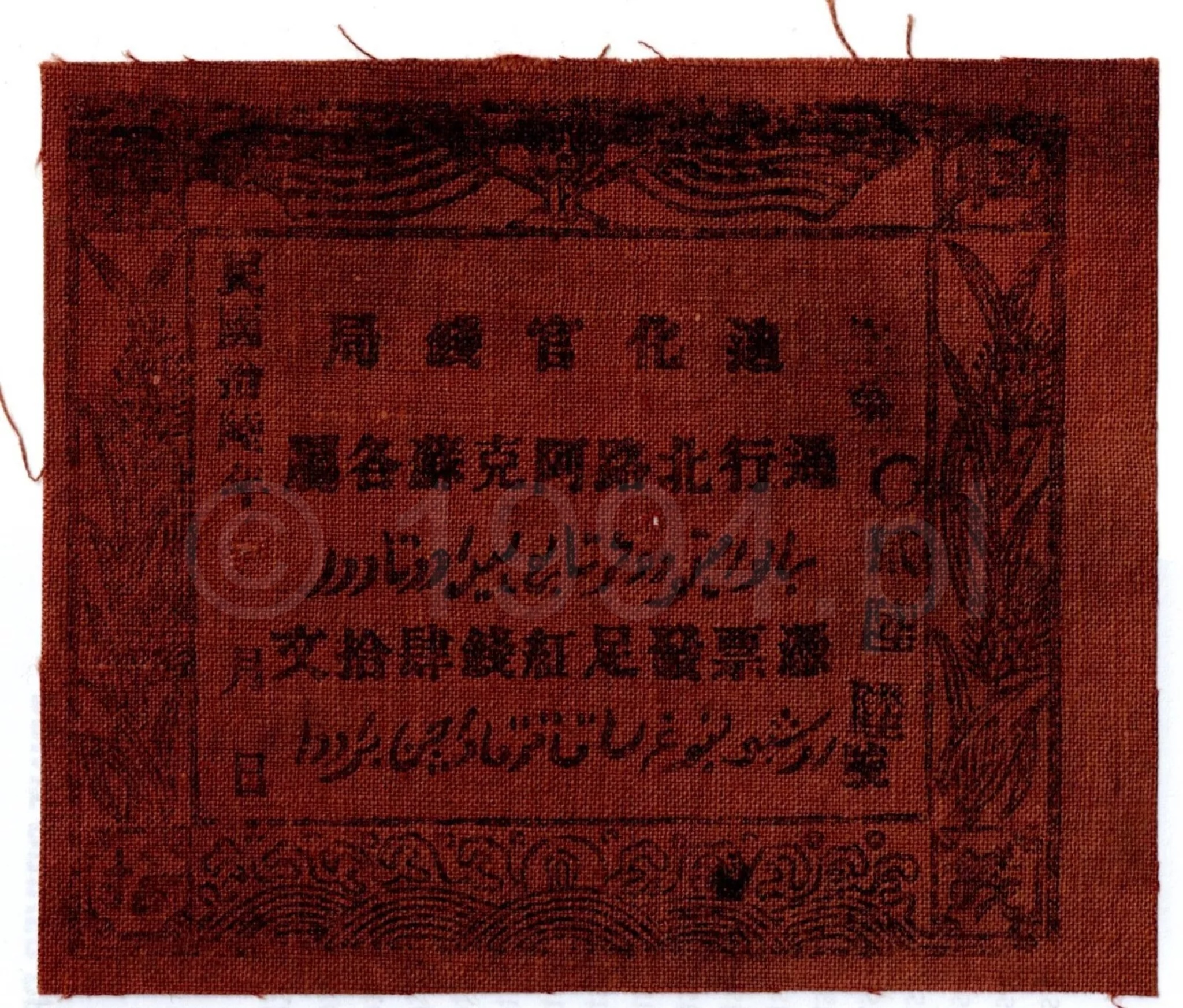
An issued textile emergency currency produced in Xinjiang (Sinkiang) in the early Republican period, printed by hand from woodblock onto coarse red-dyed cotton cloth. This note forms part of the broader tradition of frontier textile currency developed in western China under conditions of monetary instability, material shortage, and decentralized administrative control.
The design is executed in dark ink directly on fabric, with the weave of the cloth clearly visible through the printed impression. A framed central inscription panel is surrounded by ornamental borders incorporating vegetal motifs and a stylized wave band along the lower register. The printing exhibits uneven ink saturation and localized strike variation, consistent with hand-cut woodblocks and manual printing methods rather than mechanized presses.
While sharing certain stylistic elements with earlier Xinjiang textile issues, including the lower wave band motif, this note is distinct in its overall composition. The upper register employs a different emblematic form, the side panels are heavier and more vertically articulated, and the calligraphy is denser and more compact than that observed on known 1880 Sinkiang examples. The ink appears darker and more saturated, suggesting either re-cut blocks or a later workshop tradition.
These characteristics rule out attribution to the same plates or issuing authority as the 1880 Xinjiang textile currency and distinguish the note from later, more standardized issues such as the 1924 Dihua Coin Bureau emissions. Instead, the piece reflects a descended regional design vocabulary, typical of Xinjiang textile currency, in which blocks were copied, adapted, and reinterpreted across different local administrations without centralized control.
The note was issued as functional money, not as symbolic or ceremonial material. Textile currency of this type was intended for everyday transactions, provisioning, and local settlement in environments where paper currency was unavailable or impractical. Once monetary conditions stabilized, such notes were typically withdrawn and destroyed, resulting in extremely low survival rates.
On the basis of observable evidence, this specific textile issue has no documented catalog entry, institutional reference, or known parallel example. Under the collection’s evidence-based classification system, it is treated as a single known example at present and classified as R9.