Description and research notes
Photographic proof of the 5 Pounds Circular Note prepared for Thomas Cook and Son Limited in 1919, representing an alternate design approach within the firm's post First World War circular note production. Mounted on cardstock and identified by Professional Coin Grading Service as a 5 Pounds 19xx circular note proof from about 1919, this piece preserves a distinct proof-stage design for the same denomination and payment system as the companion 1919 photographic proof.
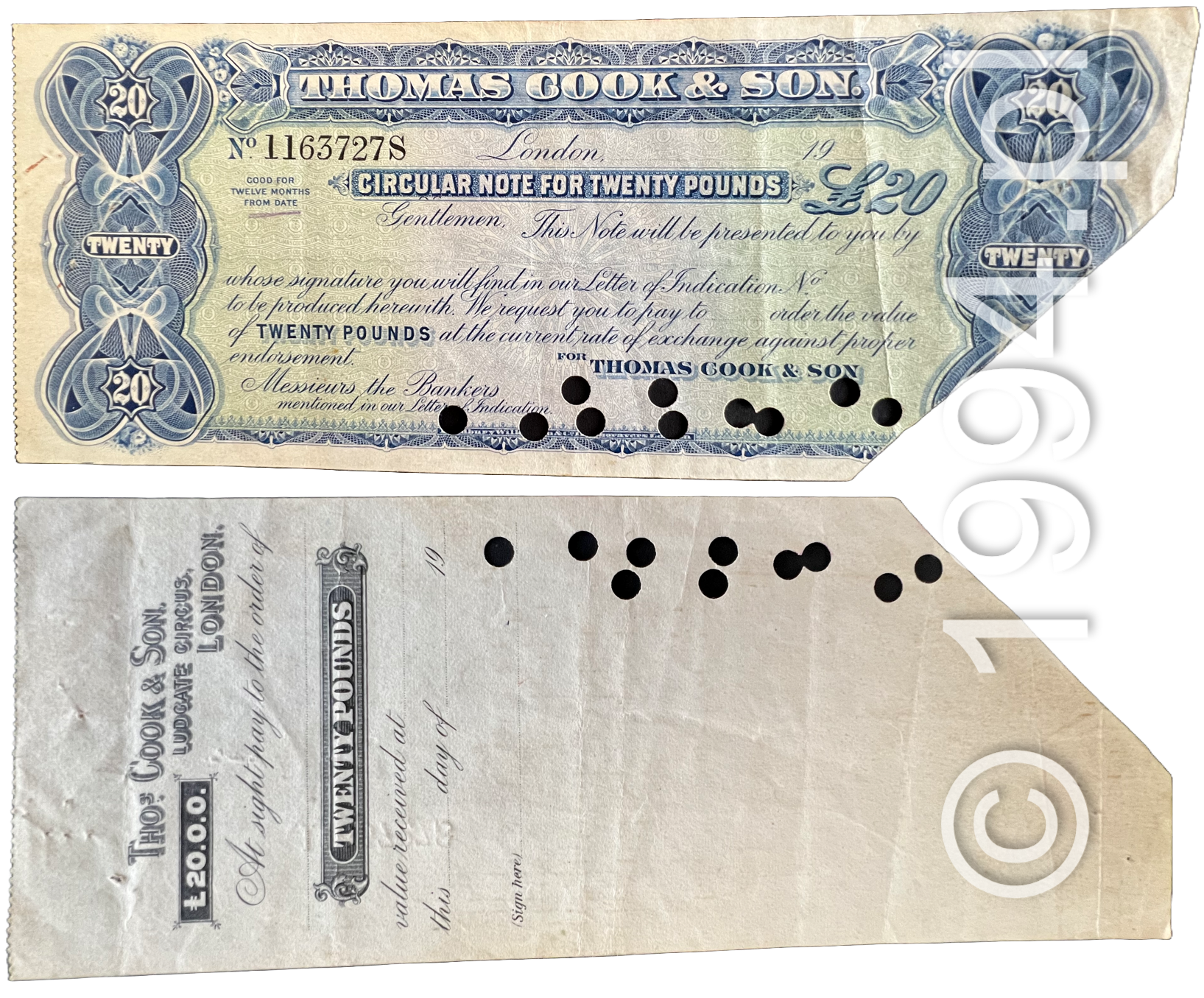
The design is built around a dense ornamental structure rather than the portrait-based layout seen on the companion proof. The Thomas Cook and Son name rises vertically at the side, while the central field is dominated by a large guilloche medallion, radiating linework, heavy security engraving, layered value panels, and prominent 5 Pounds denomination devices. The words "Circular Note for Five Pounds" are placed directly within the main security field, giving the instrument a compact and strongly centralized appearance.
This alternate design is important because it shows that Thomas Cook and Son was evaluating more than one visual solution for the 5 Pounds circular note during the same period. It relates directly to the companion 1919 Thomas Cook and Son 5 Pounds Circular Note photographic proof, which uses a right-side female portrait vignette and a design architecture that visually leads toward the later 5 Pounds traveller-payment material. The present proof follows a different path, emphasizing ornamental density, central symmetry, and value framing rather than portrait continuity.
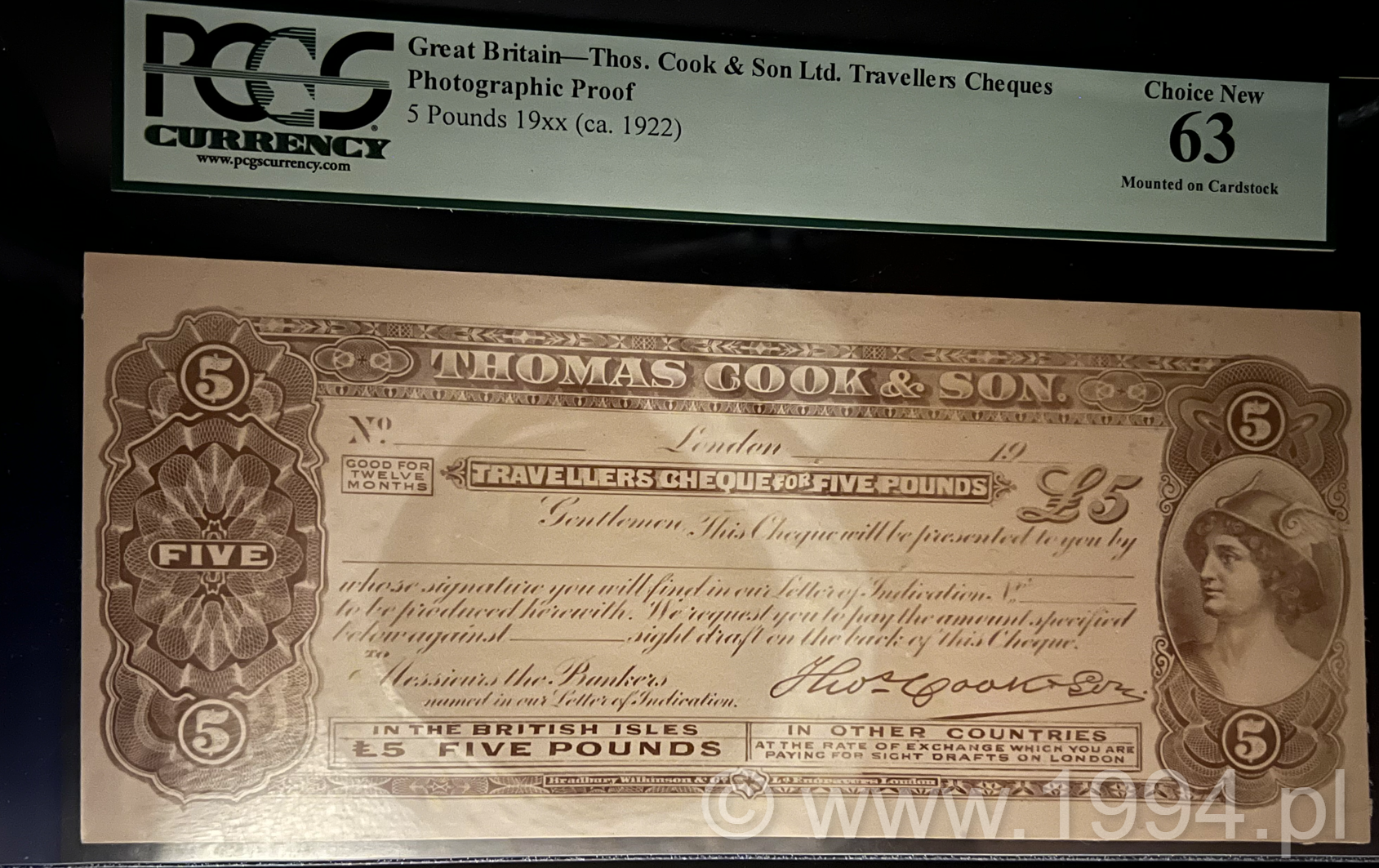
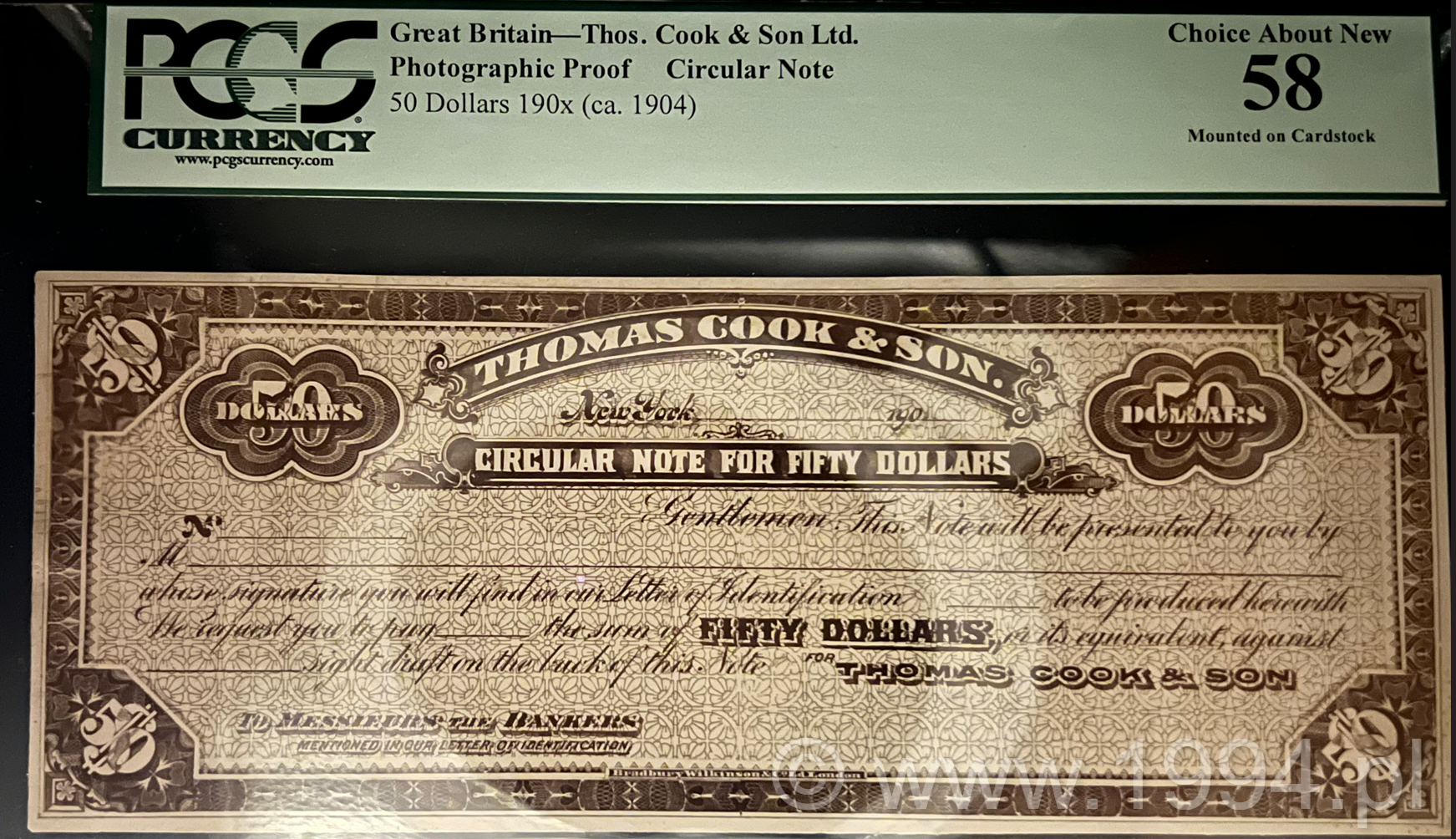
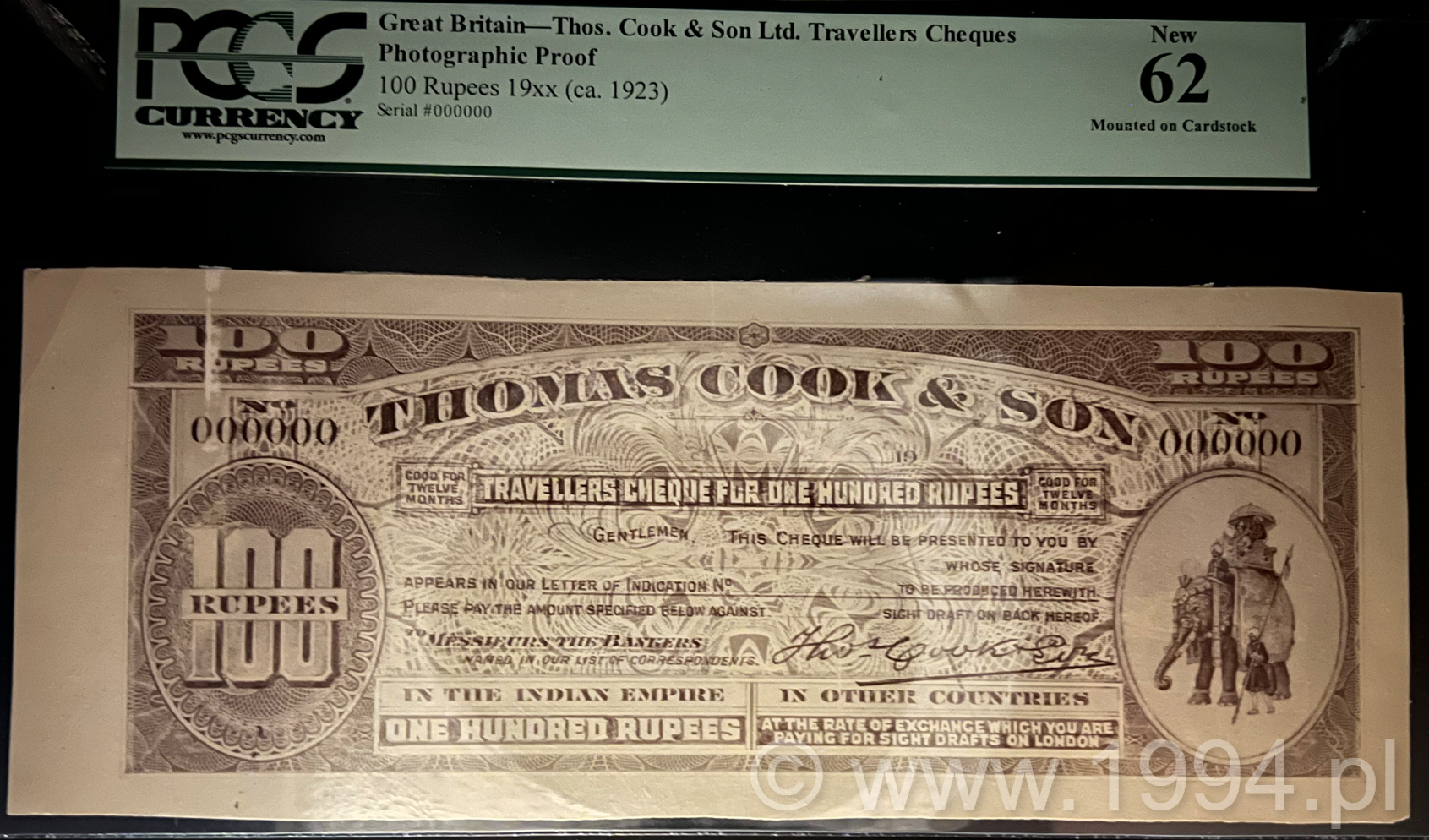
The broader sequence connects this proof backward to the earlier Thomas Cook and Son 50 Dollars Circular Note photographic proof and forward to the later Thomas Cook and Son 5 Pounds Travellers Cheque photographic proof. That relationship places the item within a documented evolution of Thomas Cook private payment instruments, from Edwardian circular notes through postwar design review and into the more standardized traveller-payment forms of the early 1920s.
As a photographic proof, this piece records the design as a production-review image mounted for archival or internal assessment. Its value lies in the way it preserves an alternate design direction that would otherwise be difficult to reconstruct from finished instruments alone. The proof captures the balance of text, denomination, ornament, security background, and institutional presentation before a final design path was selected or advanced.
Together with the companion 1919 5 Pounds Circular Note photographic proof, this alternate design creates an unusually strong paired record of Thomas Cook and Son's postwar proofing process. One design carries forward the portrait-and-denomination structure that visually connects with later 5 Pounds material, while this proof preserves a more centralized ornamental treatment rooted in the circular note tradition. The pair shows active design development rather than a single isolated proof image.
This 5 Pounds Circular Note alternate-design proof is a discovery-level archival survivor from the history of Thomas Cook and Son's private financial instruments. Its importance rests on its denomination, its photographic proof format, its mounted presentation, its connection to the companion 1919 proof, and its place within a wider sequence of circular note and later traveller-payment design development. As part of that linked group, it helps document the transformation of secure portable money for international travel during one of the most important transitional periods in private payment history.