Description and research notes
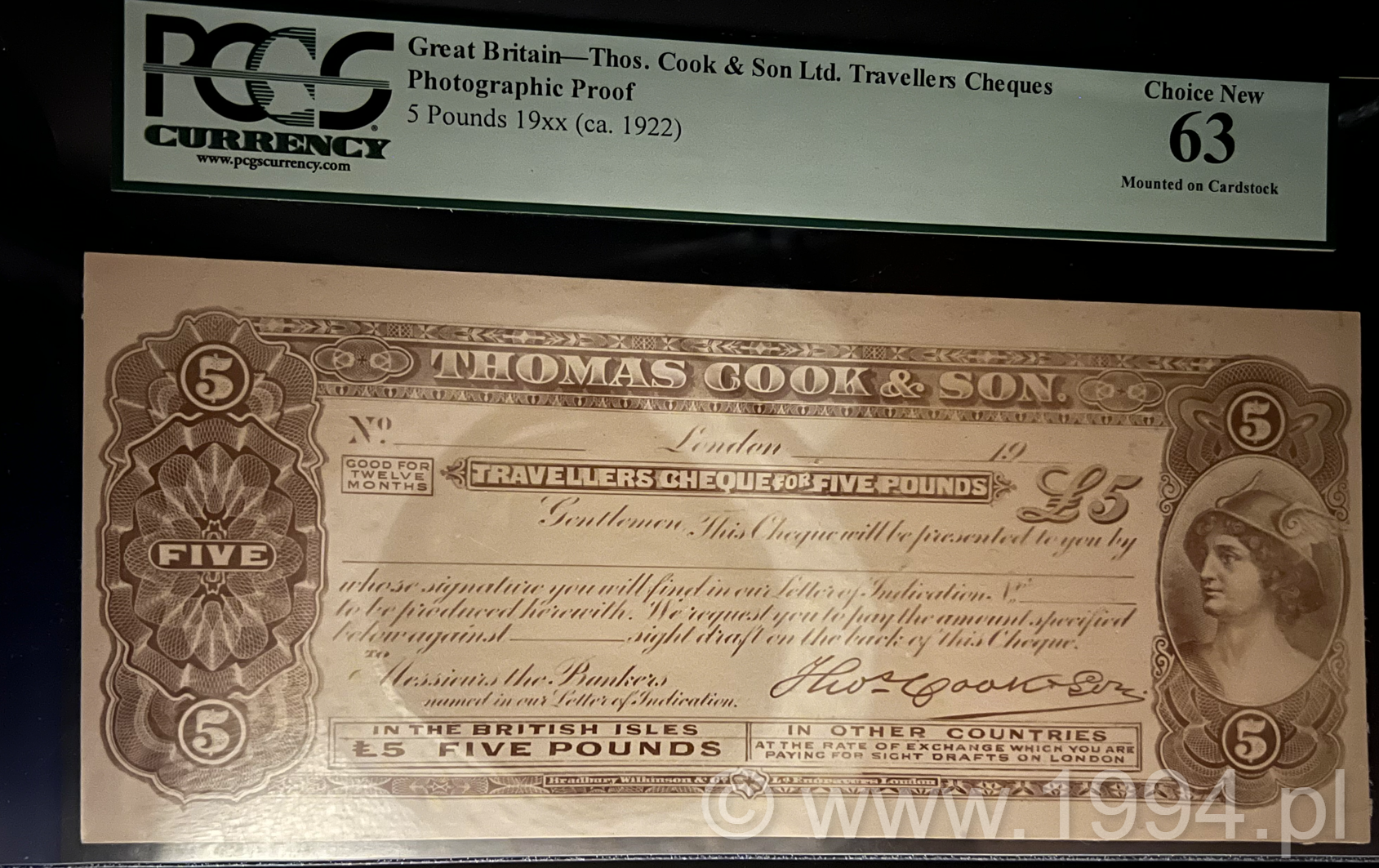
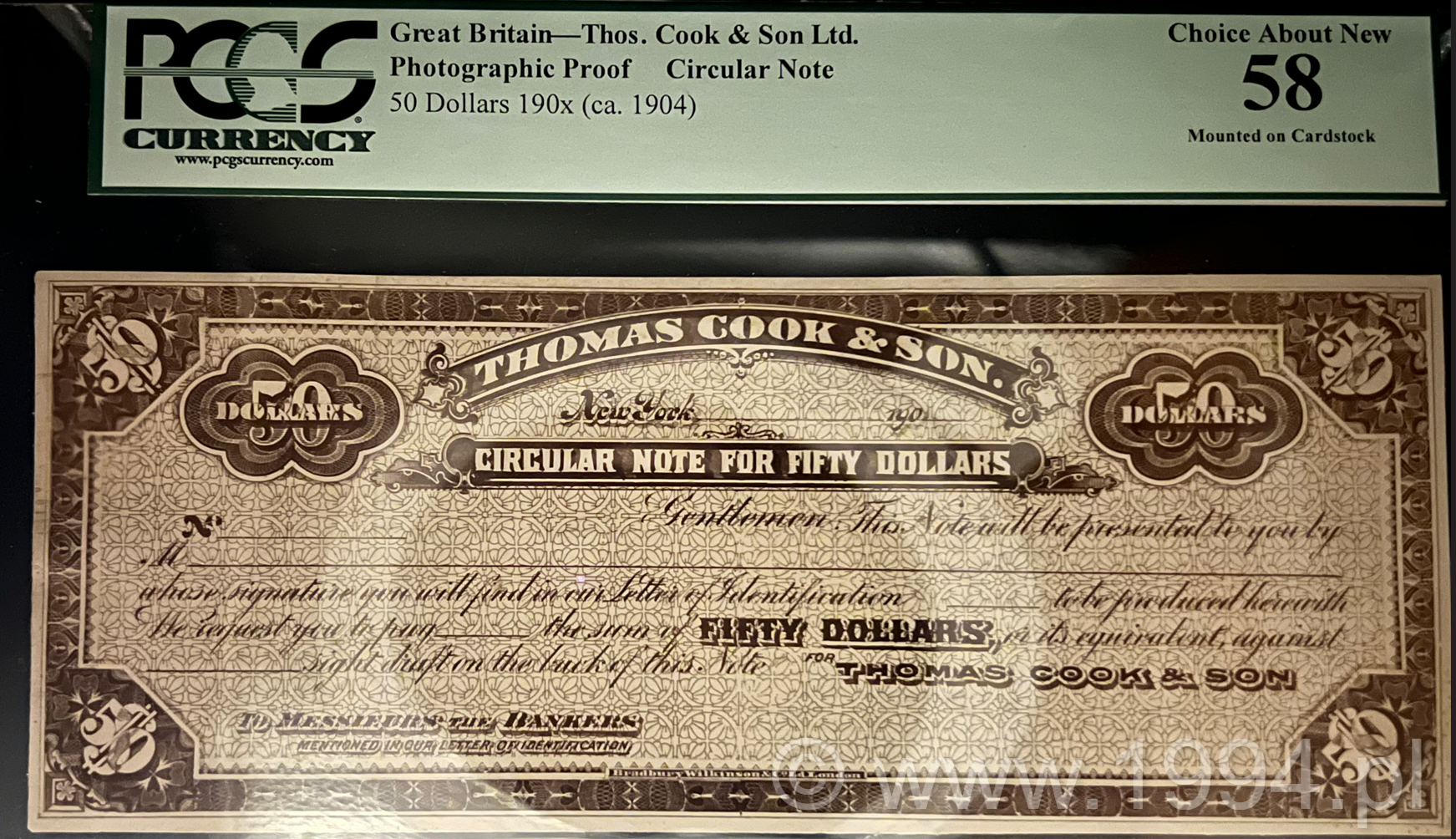
A photographic proof of the 50 Dollars Circular Note produced for Thomas Cook and Son circa 1904, representing a pre-issue production artifact created during the final design and approval phase of one of the earliest globally recognized private payment instruments. This proof predates finished circulation notes and preserves the engraved face as prepared for reproduction rather than for direct financial use. These instruments are directly related to what later became known as Travellers Cheque and Travelers Check systems and are often collected within the same category of early international payment instruments.
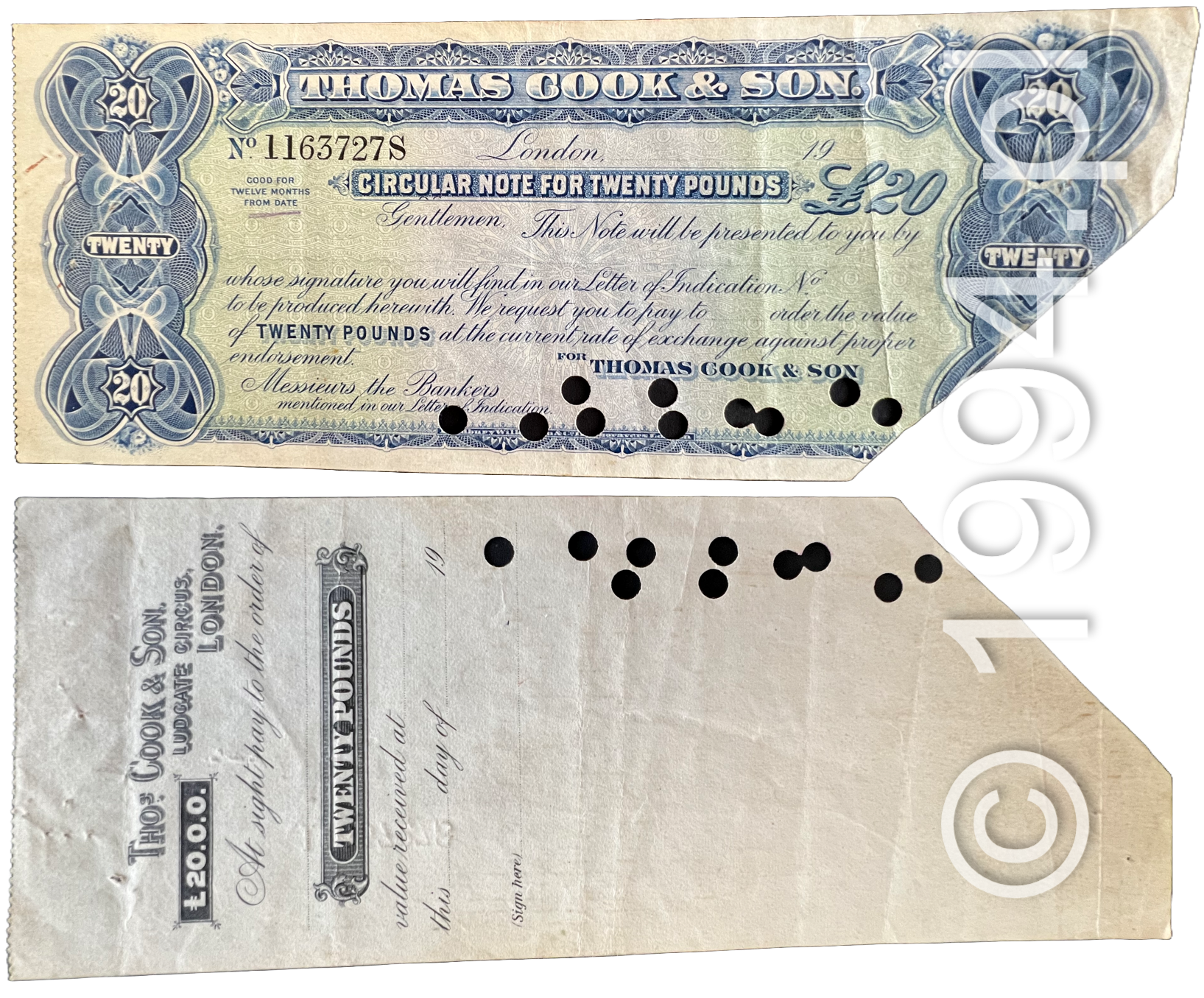
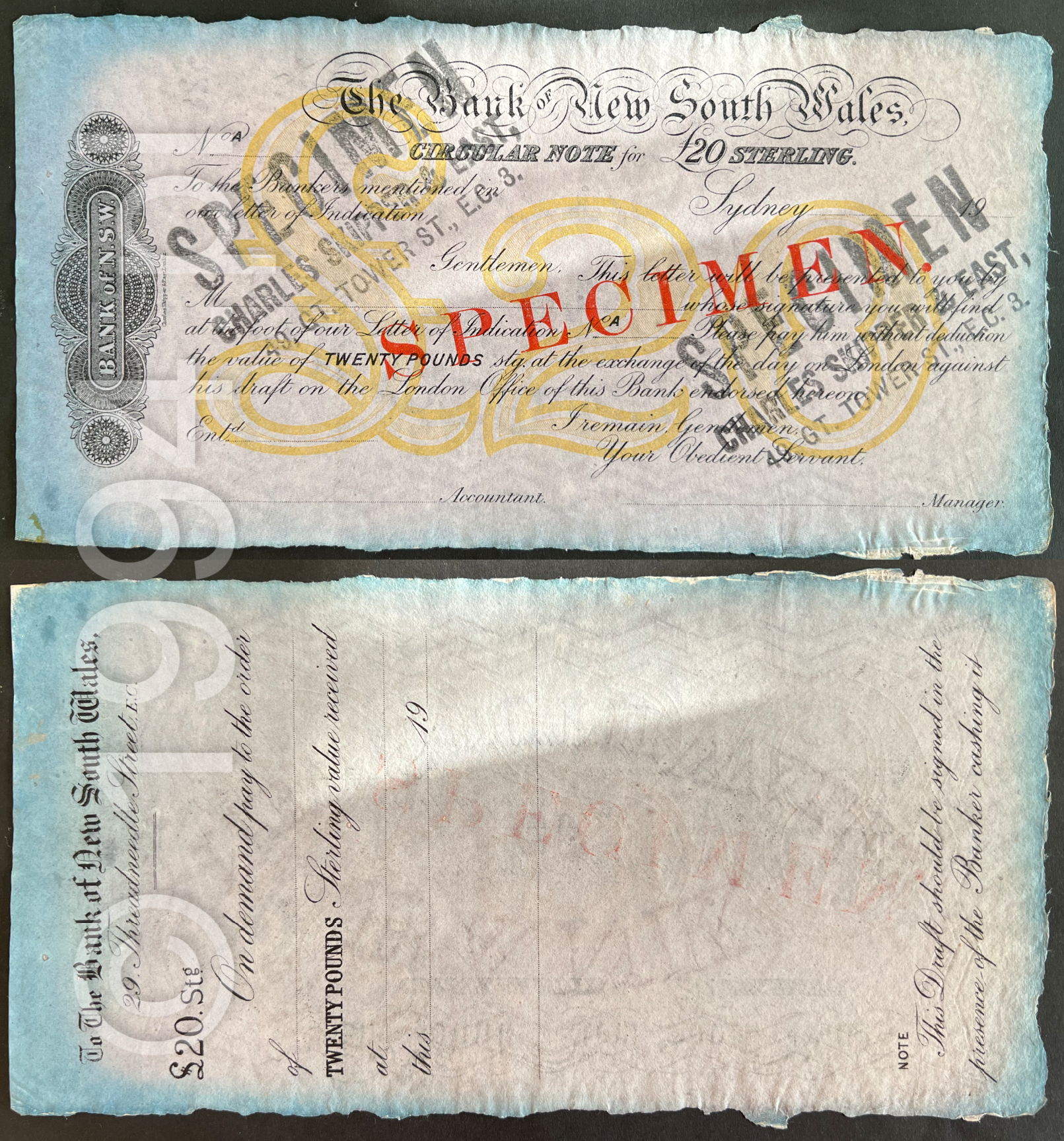
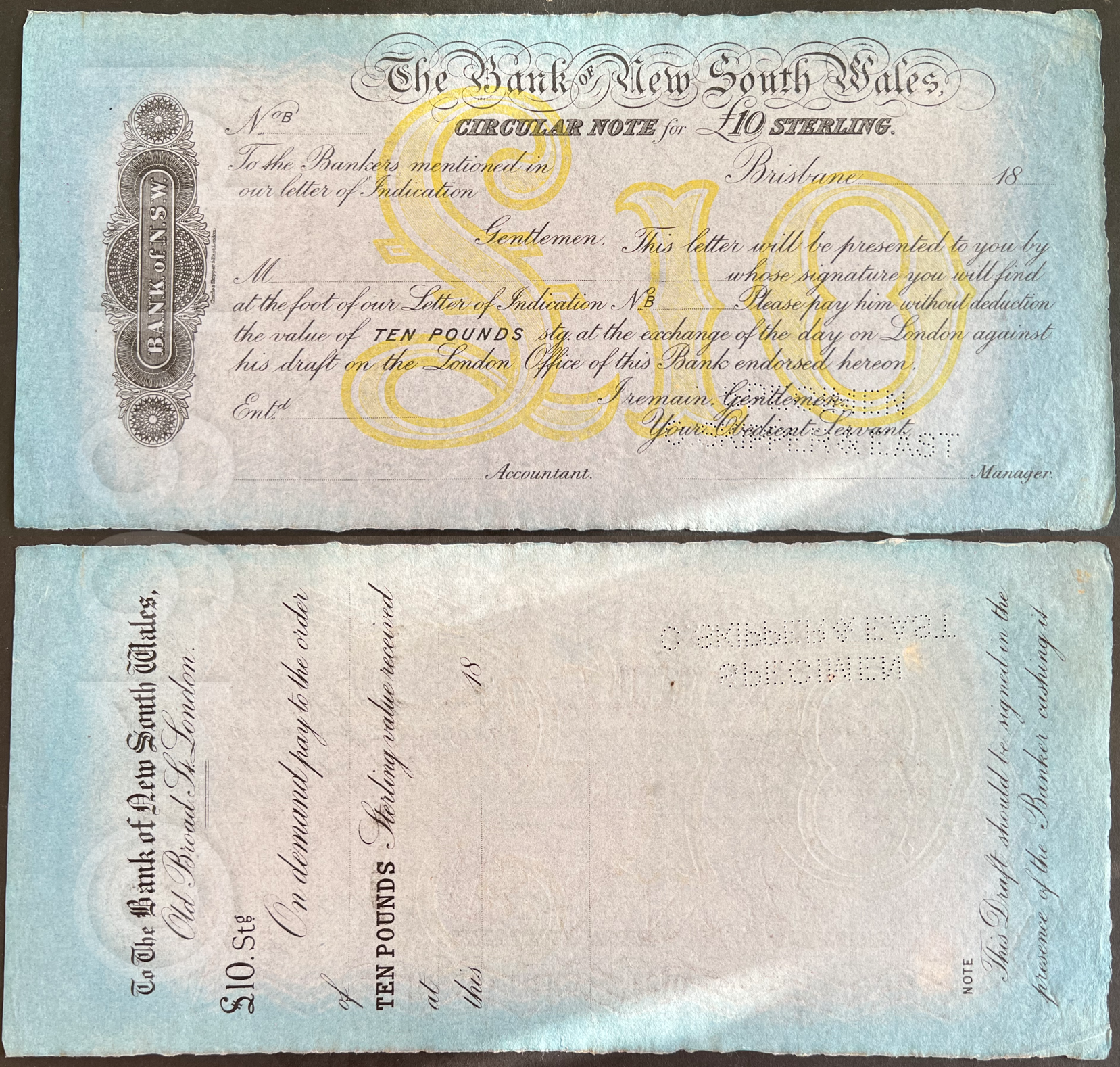
Circular Notes were developed by Thomas Cook and Son as an international payment system designed specifically for travelers. The instrument allowed a holder to pre-purchase value in one country and redeem it abroad through a network of authorized agents, banks, and correspondents. In practical use, the traveler would sign the note upon purchase and present it overseas, where identity would be verified before funds were paid out in local currency.
This built-in verification system is critical to understanding the instrument. It functioned as an early form of identity-linked financial access, ensuring that only the original purchaser could redeem the note. In this respect, Circular Notes represent a direct operational predecessor to both Travellers Cheque and Travelers Check systems that later dominated international travel finance throughout the twentieth century.
In modern terms, the same financial logic survives today in debit and credit card systems: pre-funded or credit-backed instruments, globally recognized, with identity verification performed electronically rather than by handwritten signature. The medium has changed, but the underlying concept of secure, portable purchasing power for international travel remains identical.
Unlike circulating banknotes, Circular Notes were not intended to pass from hand to hand as money. They were single-use financial documents tied to a specific holder, redeemed through controlled channels, and typically withdrawn or destroyed after payment. This functional distinction places them at the intersection of banknote design, financial instruments, and early global payment infrastructure.
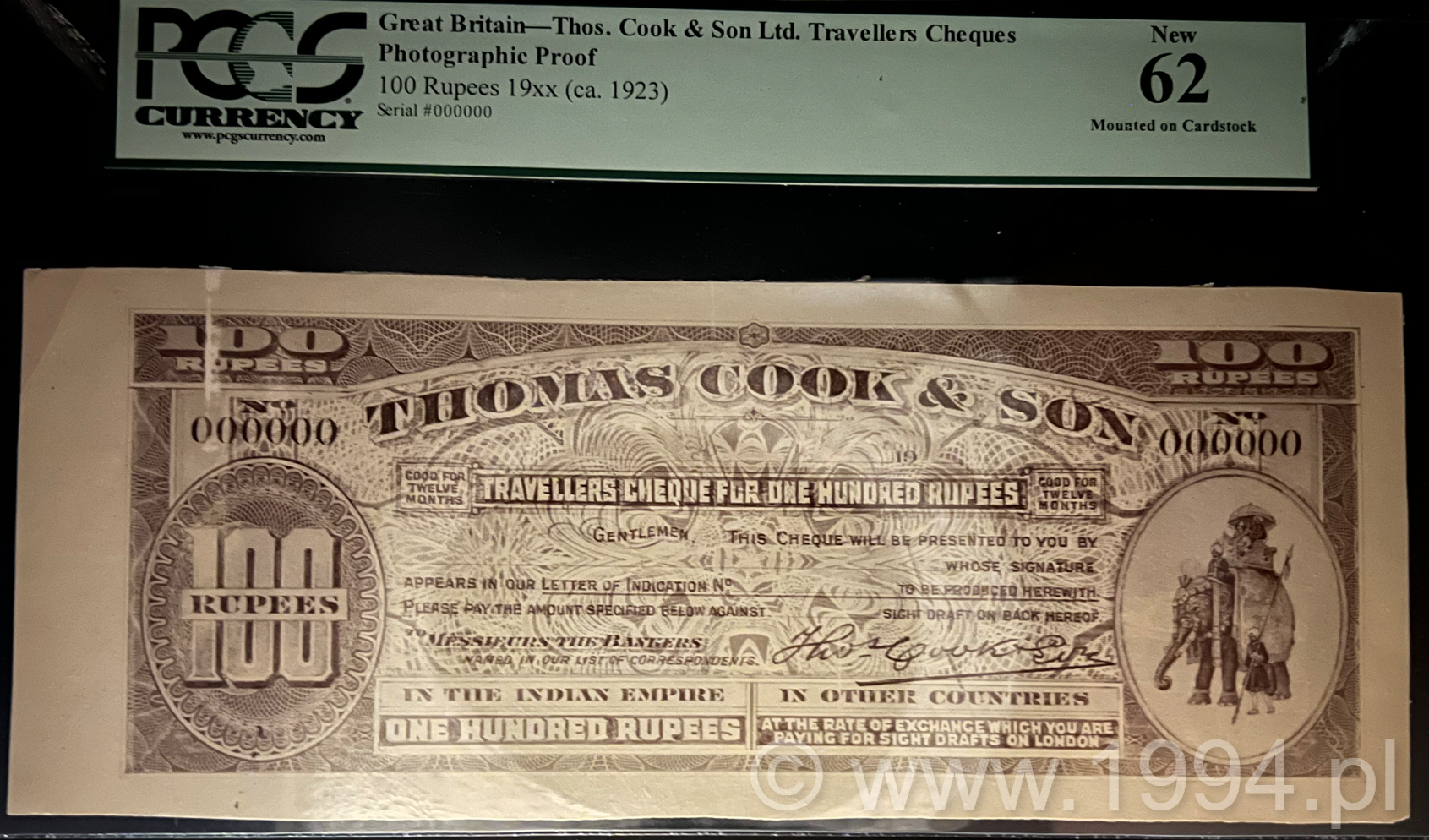
This example is a photographic proof, created to evaluate the engraved design prior to final plate preparation. Such proofs were used to assess engraving precision, ornamental density, and compositional balance without the interference of printing variables. They represent the purest record of the engraver’s work before production.
The piece is mounted on original card stock, consistent with internal archival or presentation formats used by printers and issuing firms. The dense geometric background, elaborate denomination cartouches, and prominent Thomas Cook and Son title reflect both the security requirements and the institutional authority the firm sought to convey within its global network.
No comparable photographic proofs of the 50 Dollars Thomas Cook Circular Note are presently documented in grading records, institutional collections, auction archives, or published references. This absence of parallels establishes the piece as a unique surviving example of its type and a primary reference artifact for the study of early international travel finance.
As such, this proof bridges three distinct eras of monetary evolution: engraved financial instruments of the nineteenth century, Travellers Cheque and Travelers Check systems of the twentieth century, and the electronic payment networks that define global travel today.