Description and research notes
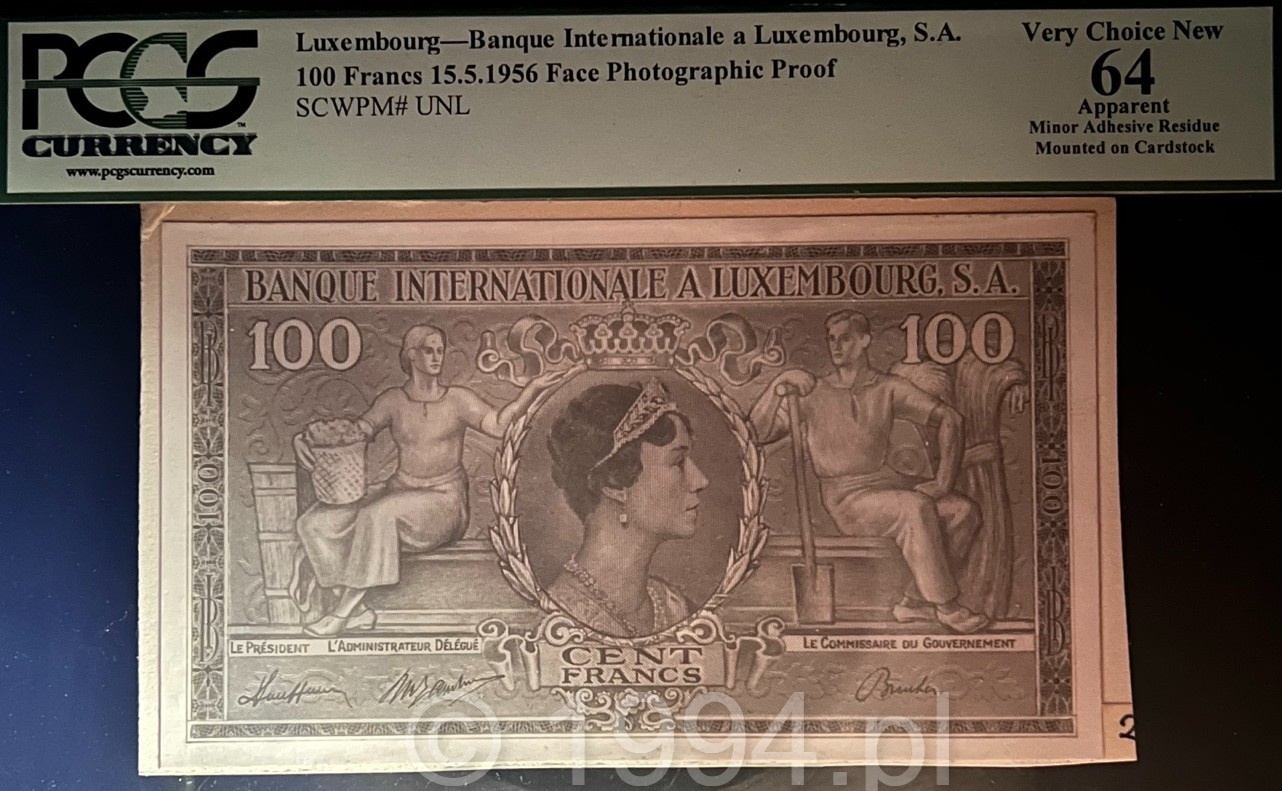
Photographic proof of the face of the one hundred francs note of Banque Internationale à Luxembourg S.A., representing the finalized obverse design stage prior to full production printing. Executed in monochrome, this proof preserves the complete engraved face layout with all principal visual and administrative elements already in place.
The composition centers on a classical female allegorical portrait enclosed within a laurel-framed oval, surrounded by finely engraved guilloche structures and flanked by symbolic figures representing labor, production, and national economic strength. The line work is fully resolved, with controlled tonal modeling and balanced ornamental density, confirming that this is not a preliminary concept study but an advanced production-stage photographic proof.
The full issuer inscription, denomination structure, and framing architecture are already integrated into the design. Three engraved signatures appear on the face, positioned within the lower portion of the composition as part of the finalized administrative layout. Their presence confirms that the face had reached a production-ready state at the time this proof was prepared.
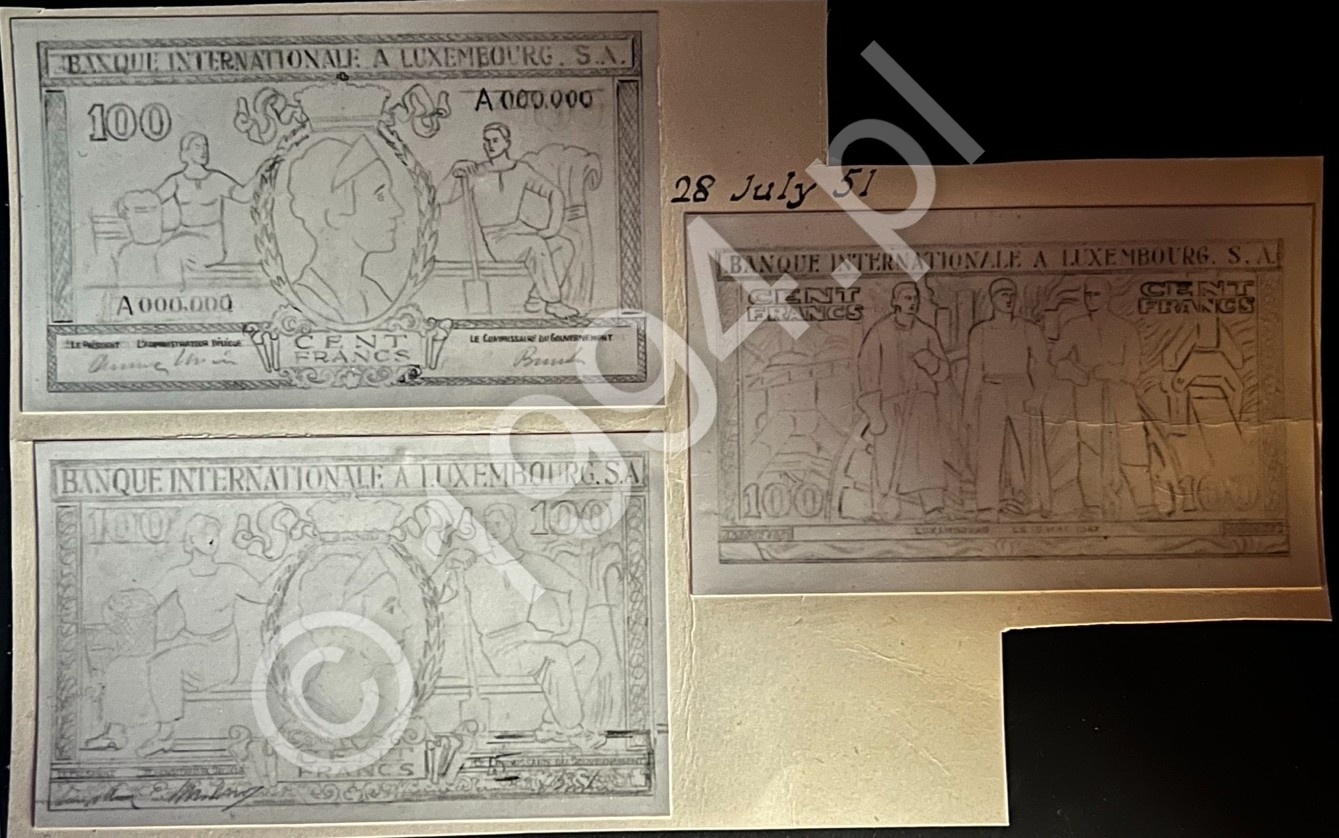
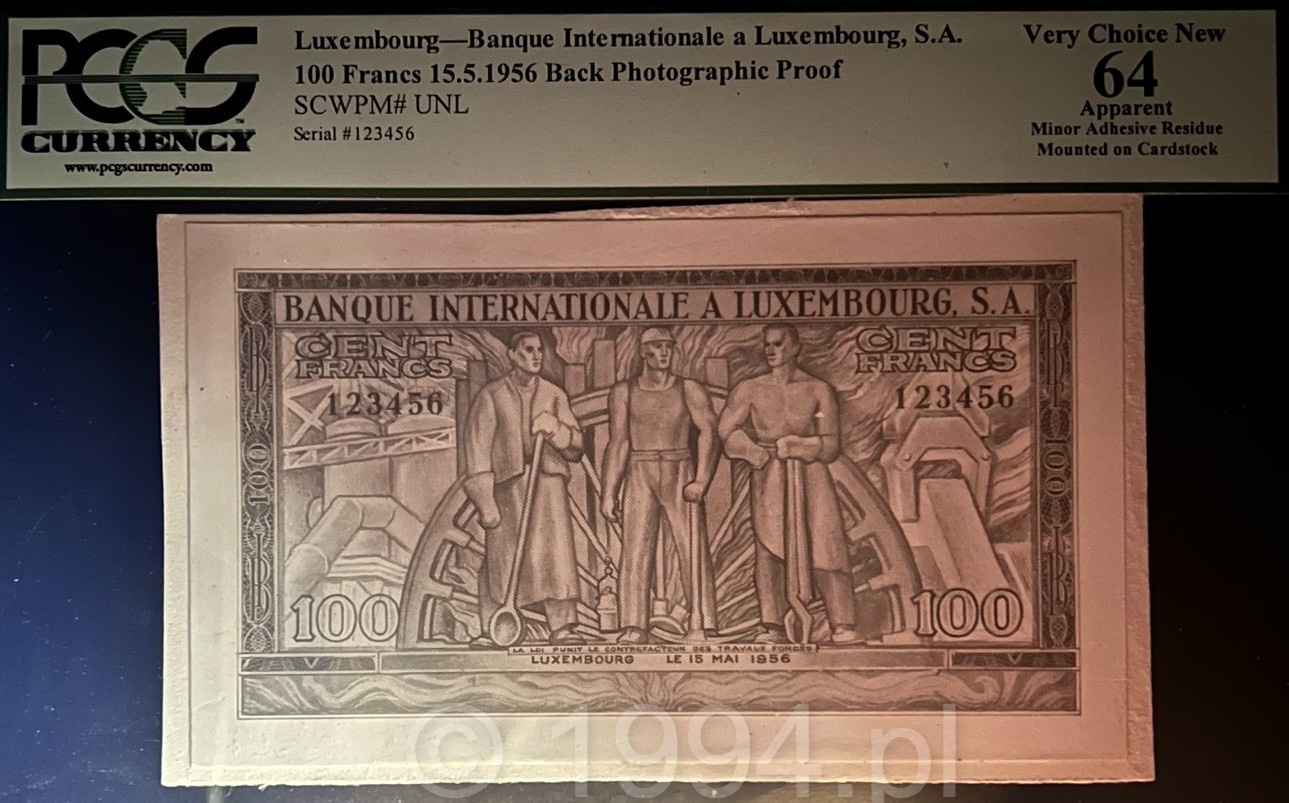
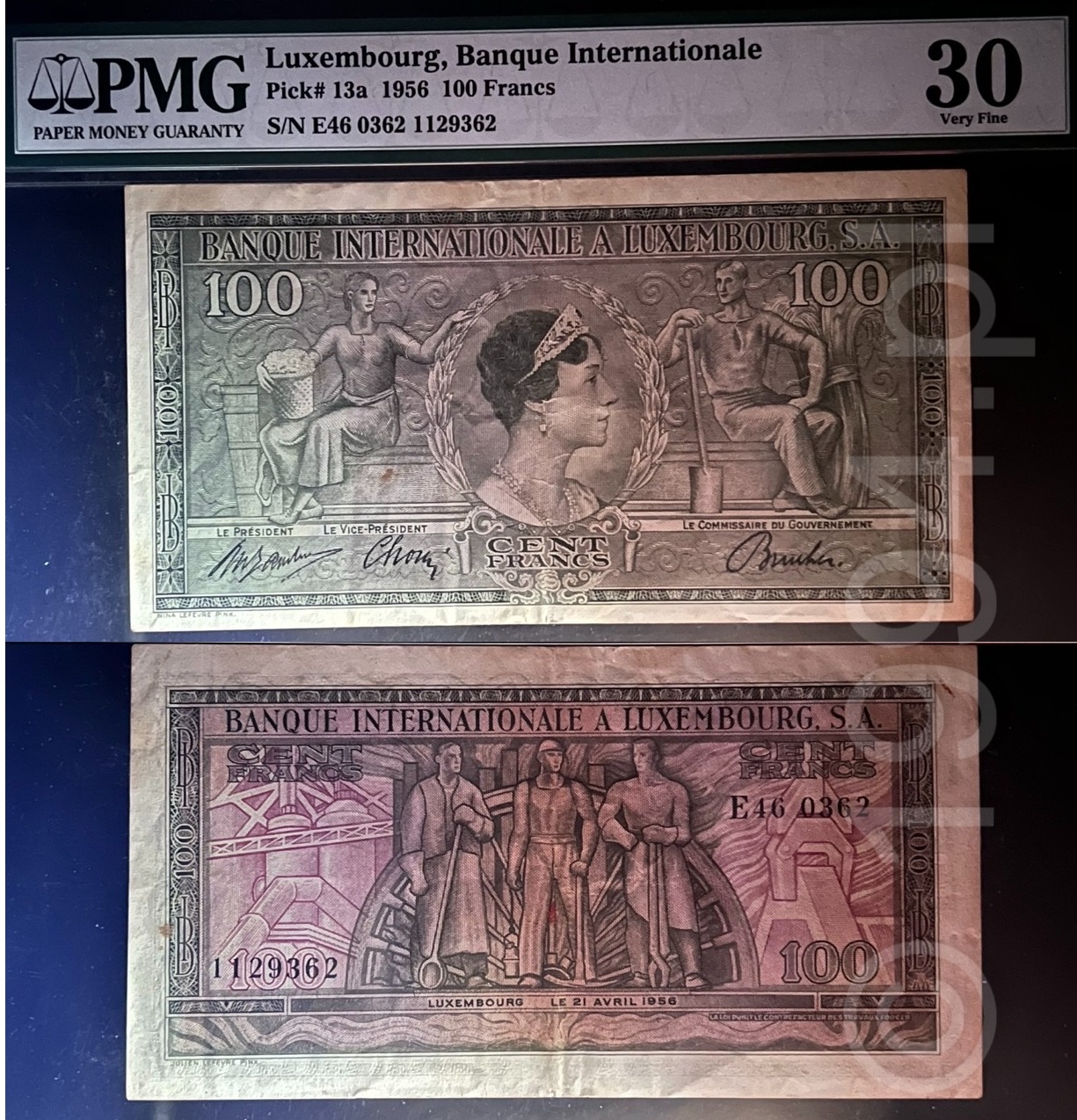
No serial numbers appear on the face, consistent with the issued format of this note, where numbering is carried exclusively on the reverse. This reflects a finalized structural decision within the series, differing from the earlier 1951 design stage in which serial numbering was still placed on the obverse.
This stage follows the earlier multi-stage design development recorded on the dated 1951 proof assembly, where the face evolved from a softer and less resolved state into the mature engraved form seen here, while also transitioning from front-based to reverse-based serial numbering. By 1956, the obverse composition had been fully stabilized and prepared for printing transfer.
As a photographic proof, this piece was created for internal production review, archival reference, and final verification rather than circulation. Such proofs were never intended for public use and survive only in very limited numbers, preserving a critical but normally unseen stage between design development and issued currency.