Description and research notes
The 1967 one-dollar specimen represents the inaugural issue of New Zealand’s decimal currency system and carries the signature of Roderick Ninian Fleming, the first Chief Cashier to appear on the new dollar series. Issued during the ND (1967–1968) period, Fleming’s tenure covered only the opening phase of decimalization-from the introduction of the currency in July 1967 until his retirement in 1969-making his signature scarce across all denominations and particularly significant on early specimen formats.
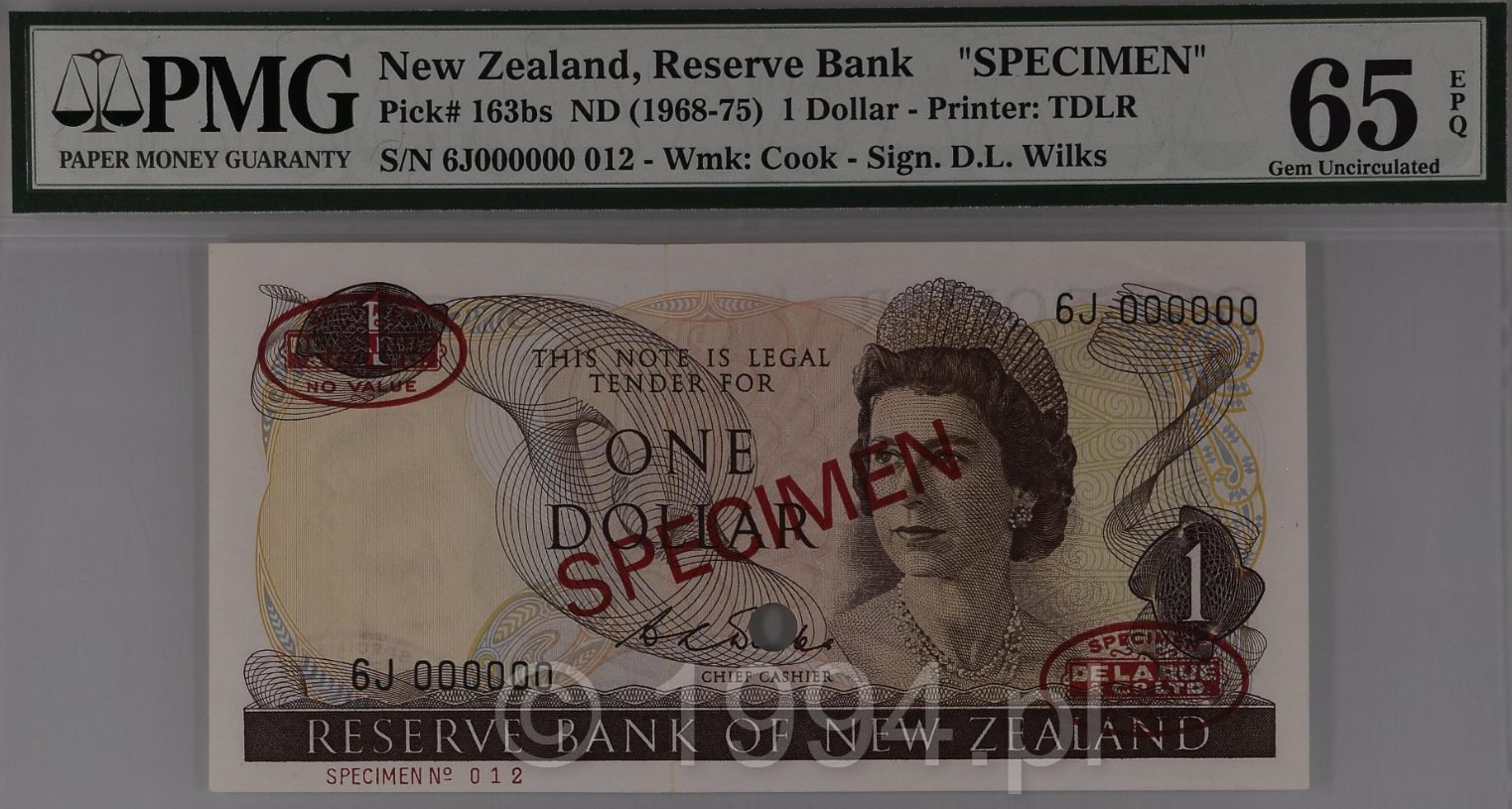
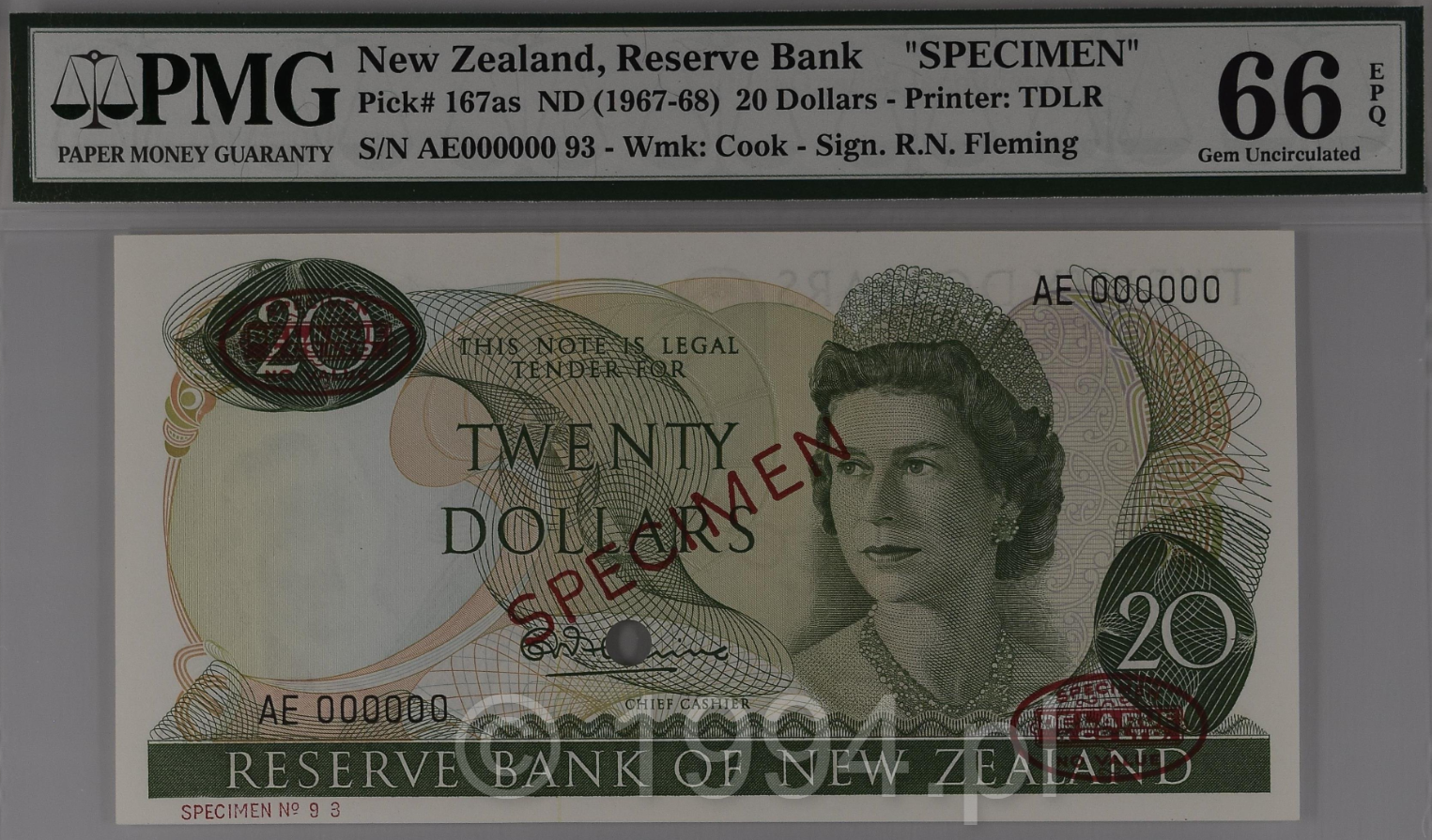
Printed by Thomas De La Rue & Company, London, this specimen was produced as part of the initial reference and presentation group prepared for institutional distribution. It displays the characteristic red diagonal 'SPECIMEN' overprint, accompanied by two De La Rue oval control stamps and a single punch-hole cancellation. This combination reflects the formal presentation style used for external distribution to central banks and official archives, distinct from internally retained perforated specimens. The note carries Serial 2A000000 and is individually marked as Specimen No. 35, confirming its controlled placement within the De La Rue specimen allocation sequence.
The design introduces Queen Elizabeth II on the obverse, rendered in refined intaglio engraving, paired with the Captain James Cook watermark-linking New Zealand’s modern monetary system with both its constitutional framework and its historical exploration narrative. The one-dollar denomination formed the cornerstone of everyday decimal circulation, replacing the ten-shilling note of the pre-decimal system.
As part of the first decimal issue authorized under Fleming during the ND (1967–1968) period, this specimen captures a moment of structural transformation in New Zealand’s monetary history. The controlled specimen production by De La Rue, combined with the limited duration of Fleming’s signature, results in a narrow survival base for this specific configuration.
Graded PMG 66 EPQ Gem Uncirculated, the note exhibits exceptional paper originality, sharp embossing, and full color integrity. The clarity of the overprint, the precision of the oval control stamps, and the intact punch cancellation together define a technically complete and visually balanced specimen of the inaugural decimal series.