Description and research notes
The 1967 five-dollar specimen belongs to the inaugural decimal currency series issued by the Reserve Bank of New Zealand, representing the transition from the sterling-based system to the modern dollar structure introduced in July 1967. This example bears the signature of Roderick Ninian Fleming, issued during the ND (1967–1968) period, whose brief tenure as Chief Cashier defined the earliest phase of decimal issuance and makes his signed notes among the first outputs of the new monetary system.
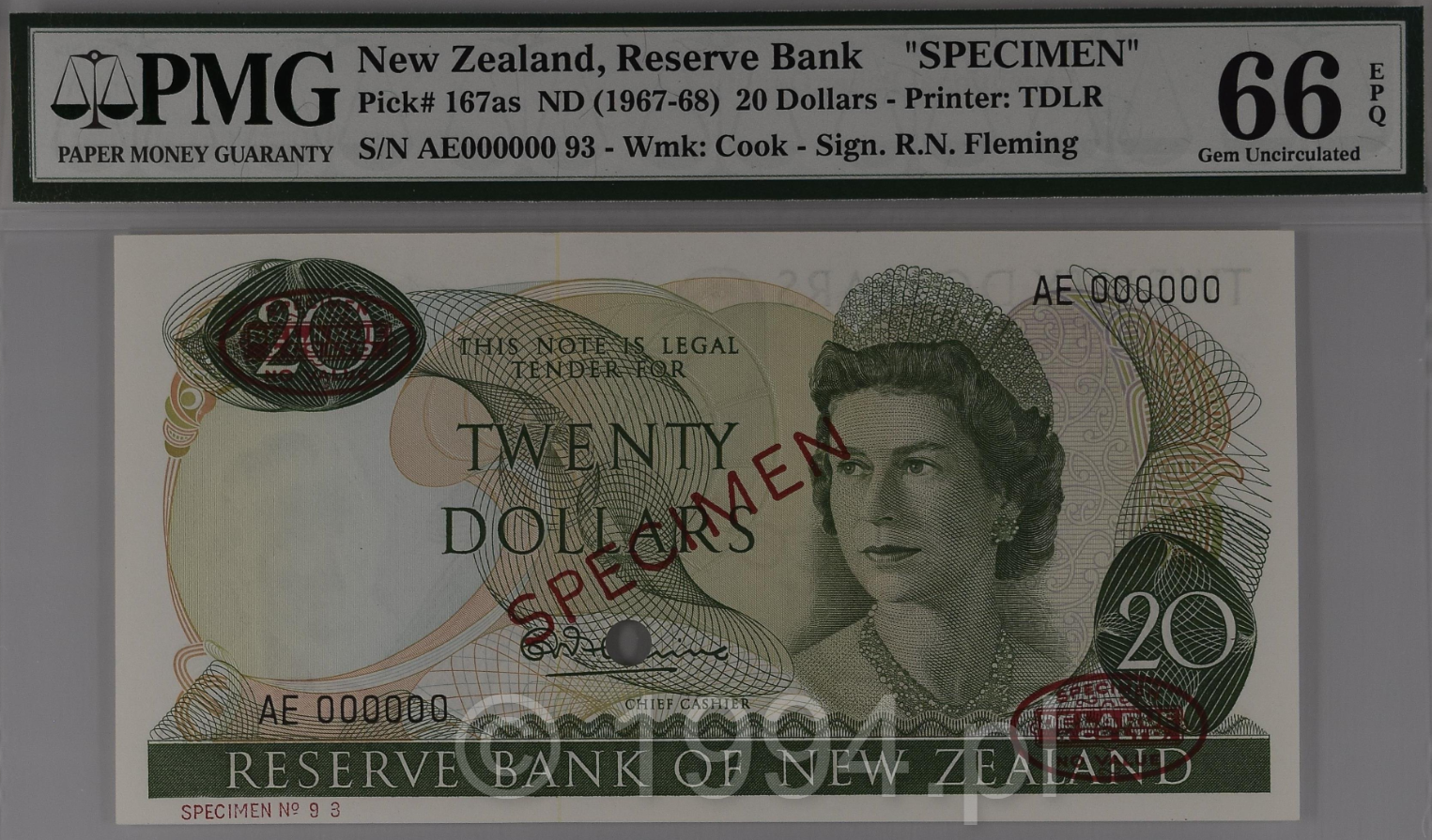
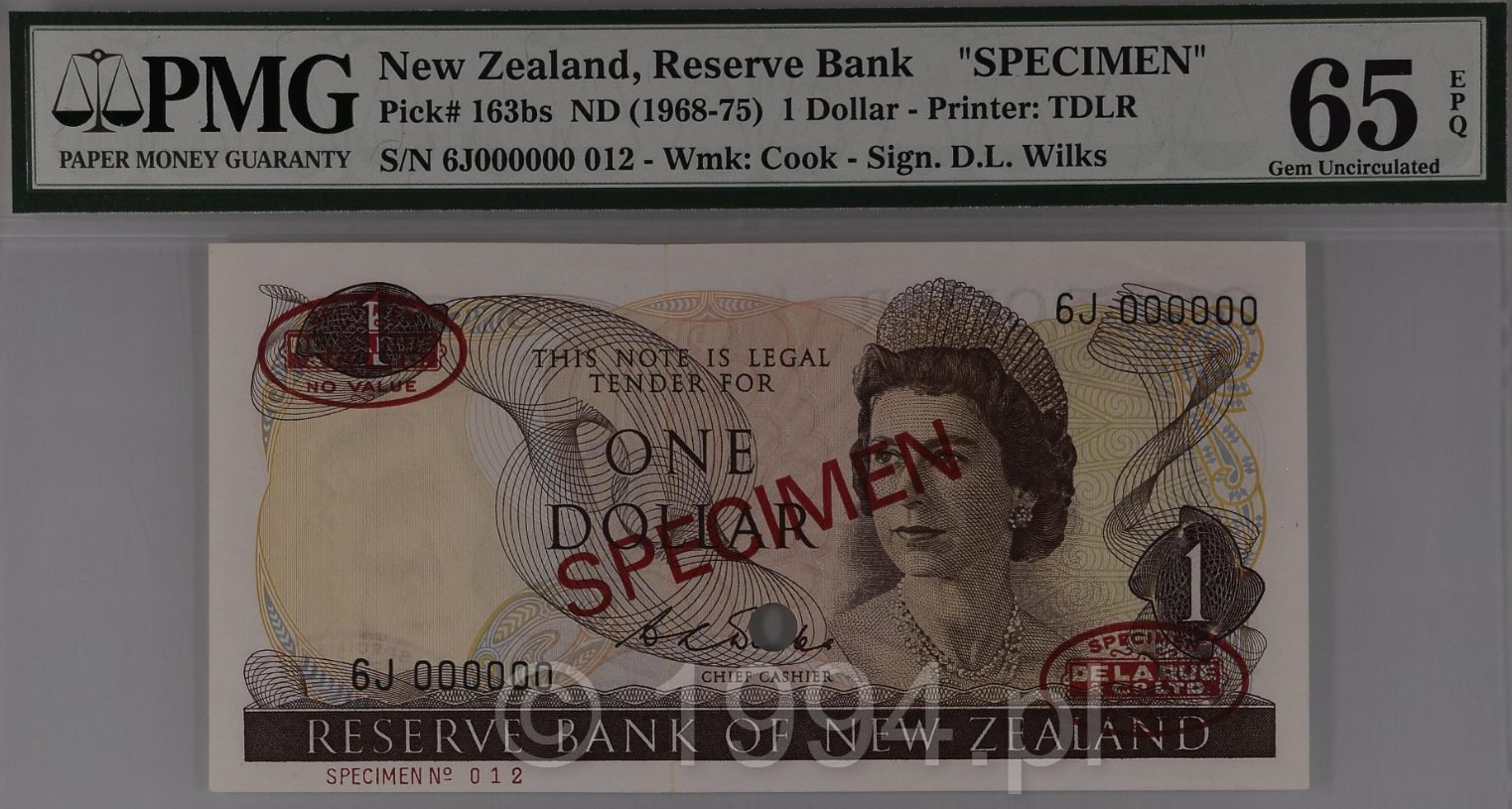
Printed by Thomas De La Rue & Company, London, the specimen was prepared for official distribution to central banks and institutional collections. It displays the complete De La Rue presentation format: a bold red diagonal 'SPECIMEN' overprint, two oval De La Rue control stamps, and a single punch-hole cancellation. The note carries Serial 001000000 and is marked as Specimen No. 75, confirming its position within the controlled specimen allocation sequence produced for external reference.
The design features Queen Elizabeth II in an engraved portrait on the obverse, with the Captain James Cook watermark integrated into the paper, maintaining continuity between New Zealand’s historical identity and its modernized monetary system. The five-dollar denomination replaced the two-pound note of the pre-decimal system, positioning it within the higher-value tier of early decimal circulation.
As a Fleming-signed specimen from the ND (1967–1968) issue, this note reflects both institutional transformation and production precision at the moment of currency reform. The combination of limited specimen distribution, short signature period, and complete cancellation format defines it as a representative example of Thomas De La Rue & Company specimen practices during the late 1960s.
Graded PMG 66 EPQ Gem Uncirculated, the note retains full originality, strong embossing, and vivid color integrity. The sharp definition of the overprint, the clarity of both oval control stamps, and the intact punch cancellation together present a technically complete and visually balanced specimen of the inaugural decimal series.