Description and research notes
The 1981 one hundred dollars printer annotation specimen represents a working-stage production artifact from New Zealand’s decimal currency series, issued within the ND (1981–1985) period under the signature of H.R. Hardie as Chief Cashier. This note belongs to the later Hardie design phase, identified by the revised portrait of Queen Elizabeth II, reflecting the mature visual update of the series.
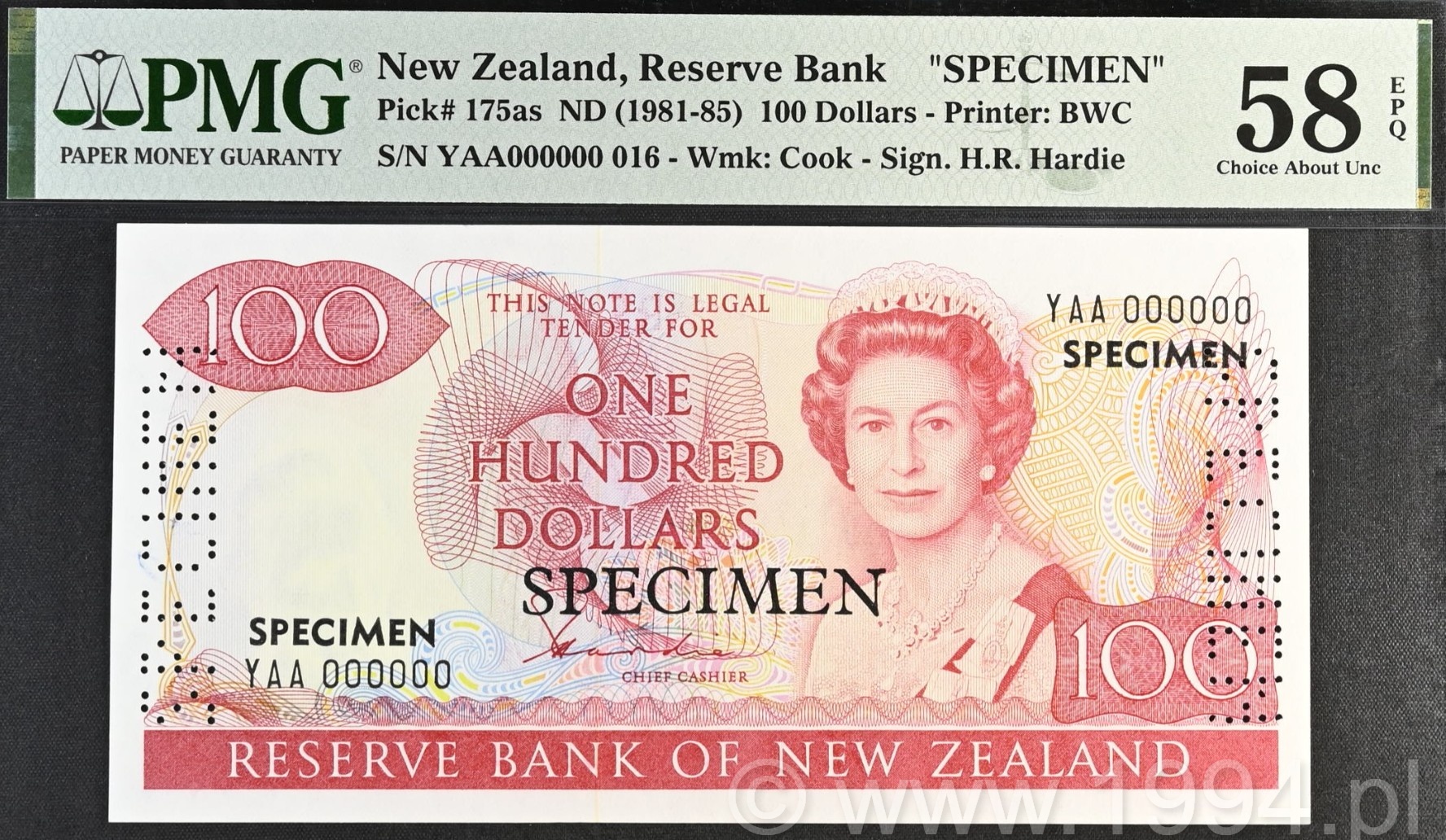
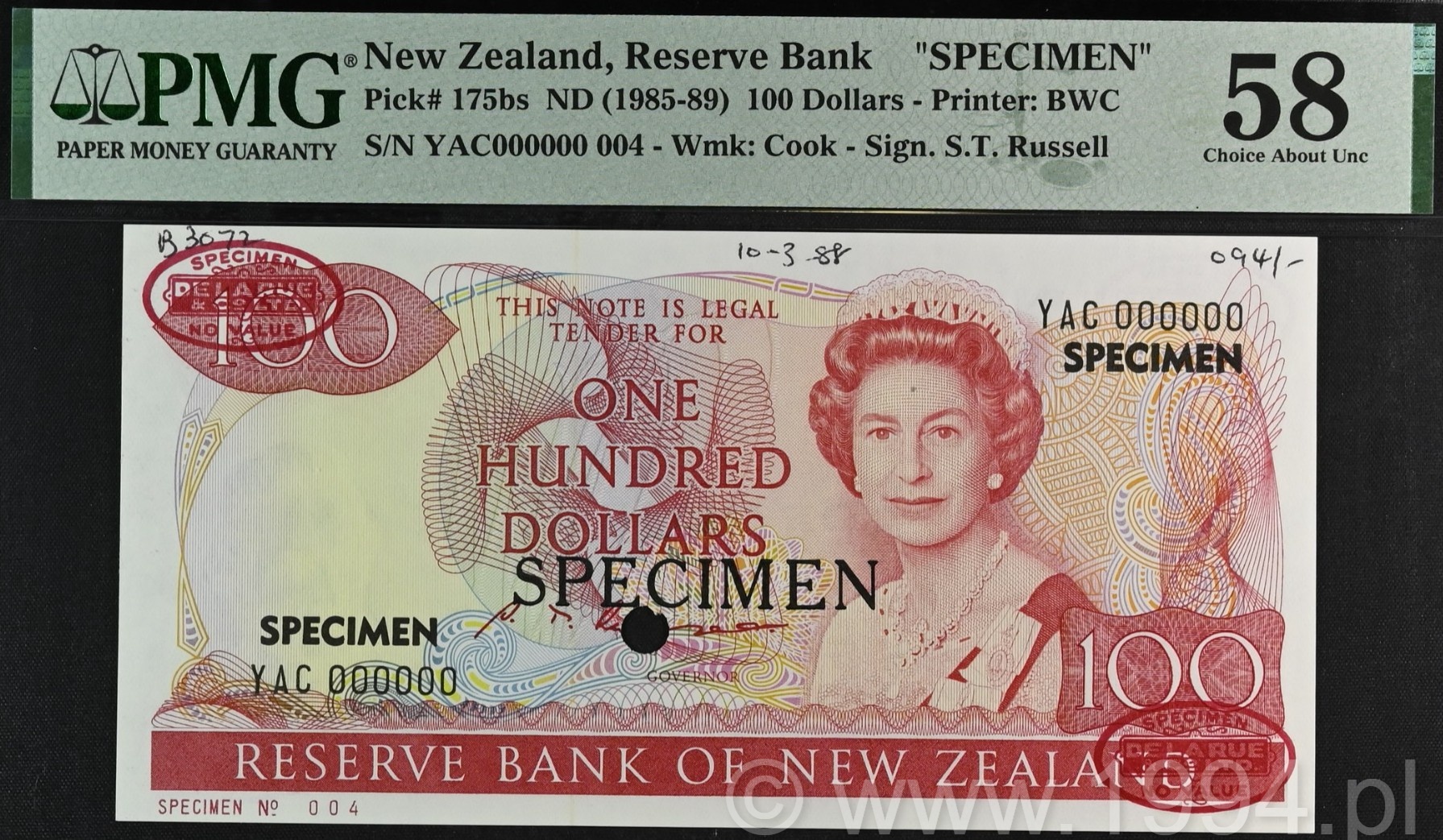
Printed by Bradbury, Wilkinson & Company, Limited, this specimen is not part of the formal specimen distribution formats. It carries no red overprint, no perforated specimen wording, and no oval control stamp. Instead, it represents an internal control and approval-stage piece used during production evaluation.
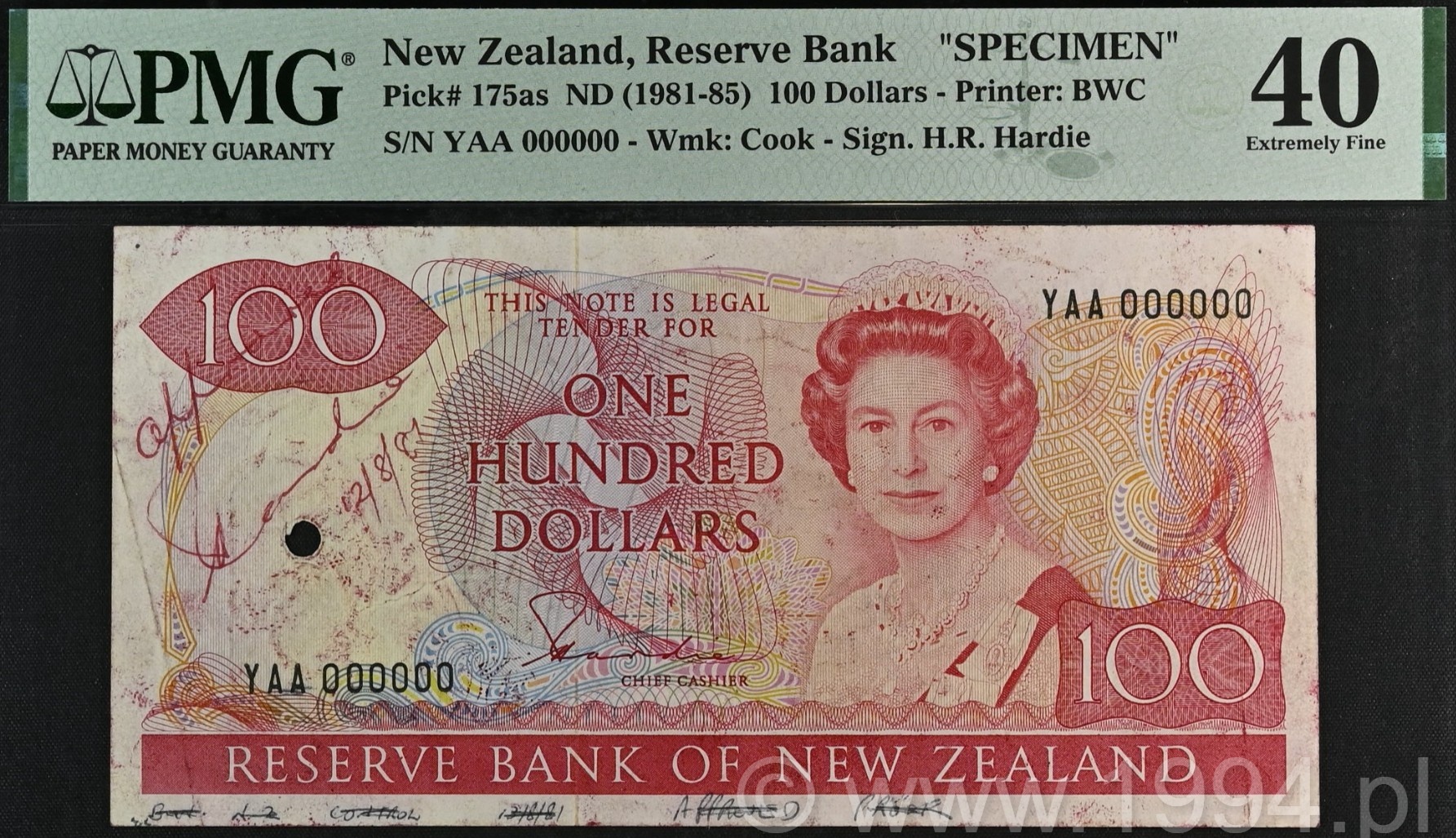
The note bears Serial YAA000000, a structured control serial used for internal reference. A single punch-hole cancellation is applied through the left portion of the design, functioning as a basic invalidation method.
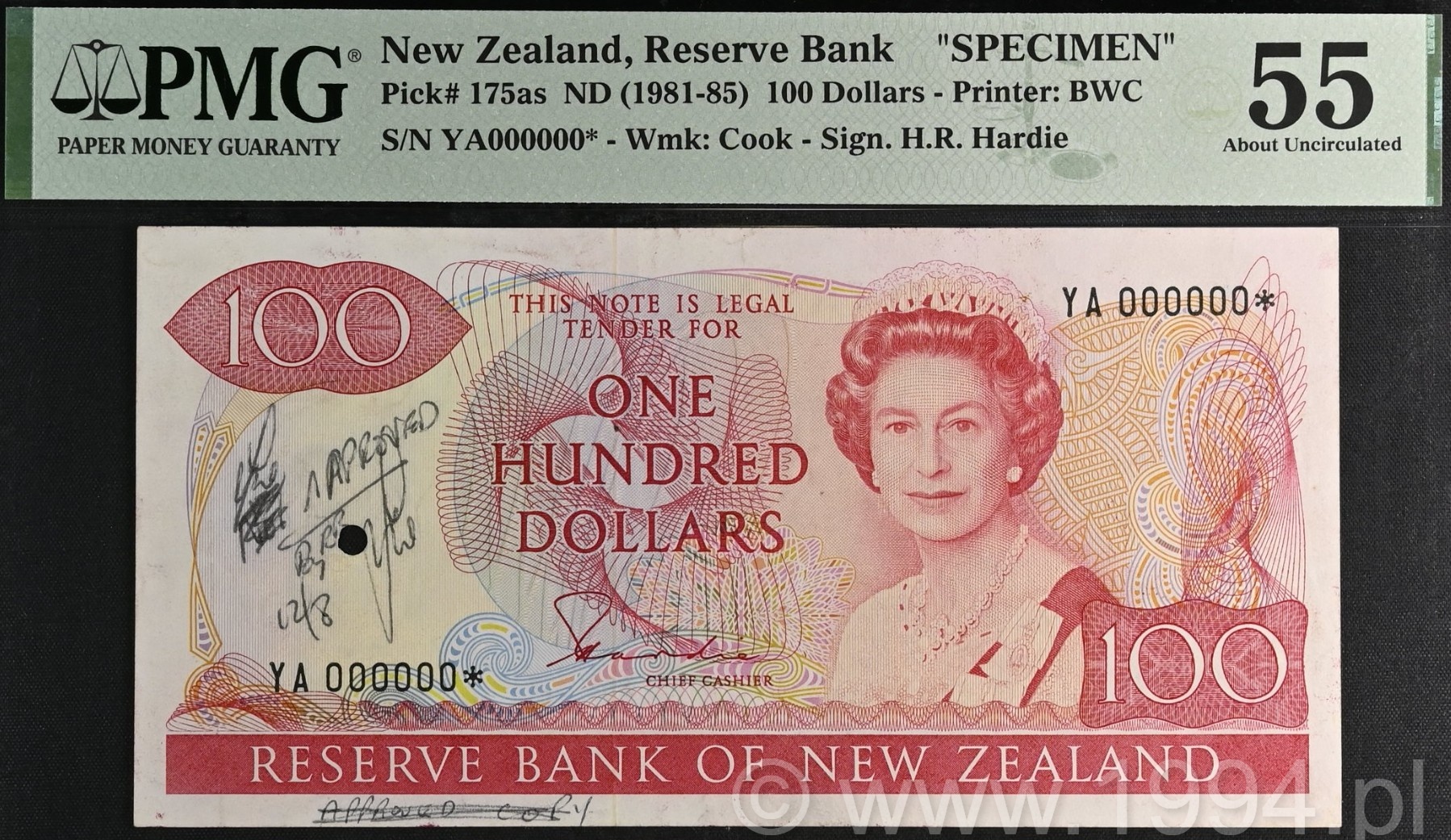
A defining feature of this specimen is the presence of extensive handwritten printer annotations across the surface. The word 'approved' is clearly visible within the left field, accompanied by additional handwritten markings, numeric notations, and initials. Further writing appears along the lower margin, indicating multiple stages of internal review and verification. These markings document the progression of the note through approval checkpoints within the production workflow.
The design retains the full issued layout, including the engraved portrait of Queen Elizabeth II and the Captain James Cook watermark, alongside the multitone guilloche structure characteristic of Bradbury Wilkinson’s early 1980s production.
As a printer annotation specimen without any formal specimen marking system, this note represents a rare internal reference format. Such pieces were used for evaluation, correction, and approval, and were typically not intended for preservation outside institutional or printer archives.
Graded PMG 40 Extremely Fine with Printer’s Annotations noted on the holder, the note maintains full design visibility and structural integrity. The combination of handwritten approval markings, control serial, and single punch-hole cancellation defines it as a distinct archival artifact of the production and approval process.