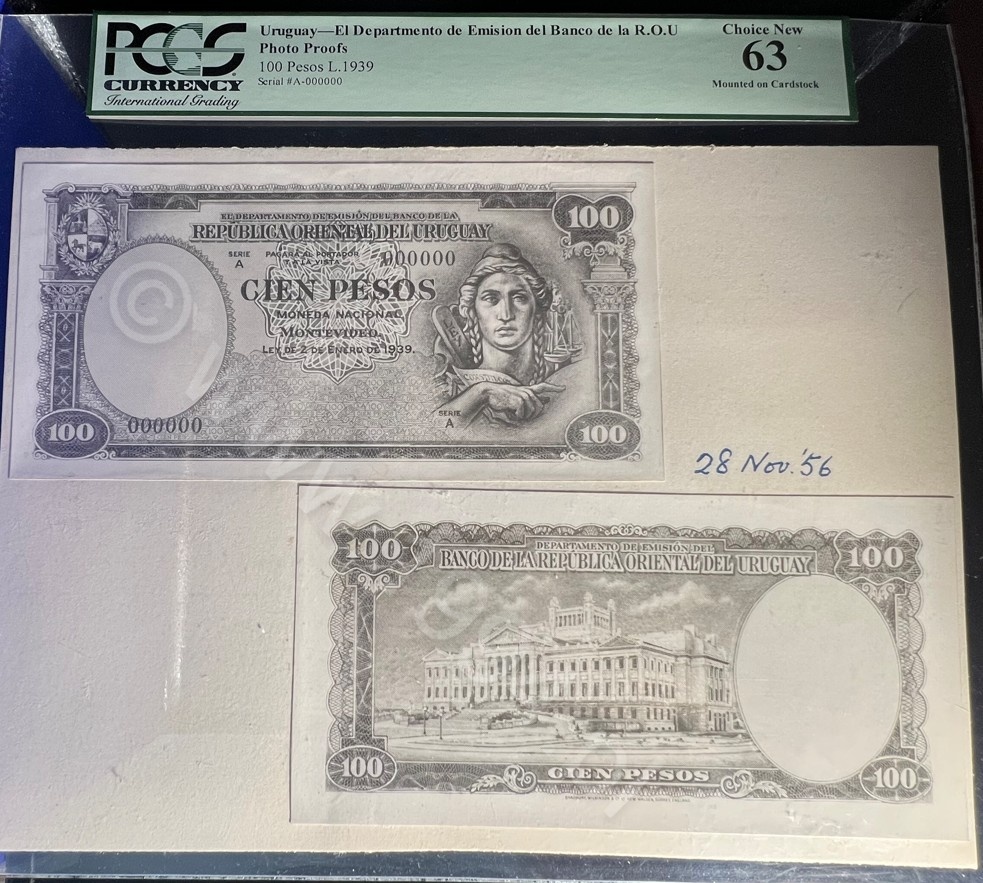
Uruguay 1939 - Departamento de Emisión del Banco de la Republica Oriental del Uruguay 100 Pesos Photographic Proof Pair (Pick Unlisted)
The reverse depicts the Palacio Legislativo in Montevideo, presented in precise architectural perspective. The choice of subject underscores institutional stability and civic order, translating national identity into architectural form rather than allegorical abstraction. Read more →
UruguayPhotographic Proof Pair1939100 PesosPCGS 63 Choice New (Face and Back) Photographic Proof PairFace Photo ProofBack Photo ProofUnissued Design ProofMounted on CardstockArchival Presentation ProofAll Zero Serial Numbers100 PesosDepartamento de Emisión del Banco de la Republica Oriental del UruguayInterwar Currency DesignUruguayan Monetary HistoryState Authority and National IdentityArchitectural Banknote ImageryUruguay1939Pick 39PCGSPCGS 63R9 Extremely RareMuseum Grade