Collection PL

About
148 results · Page 1 of 13
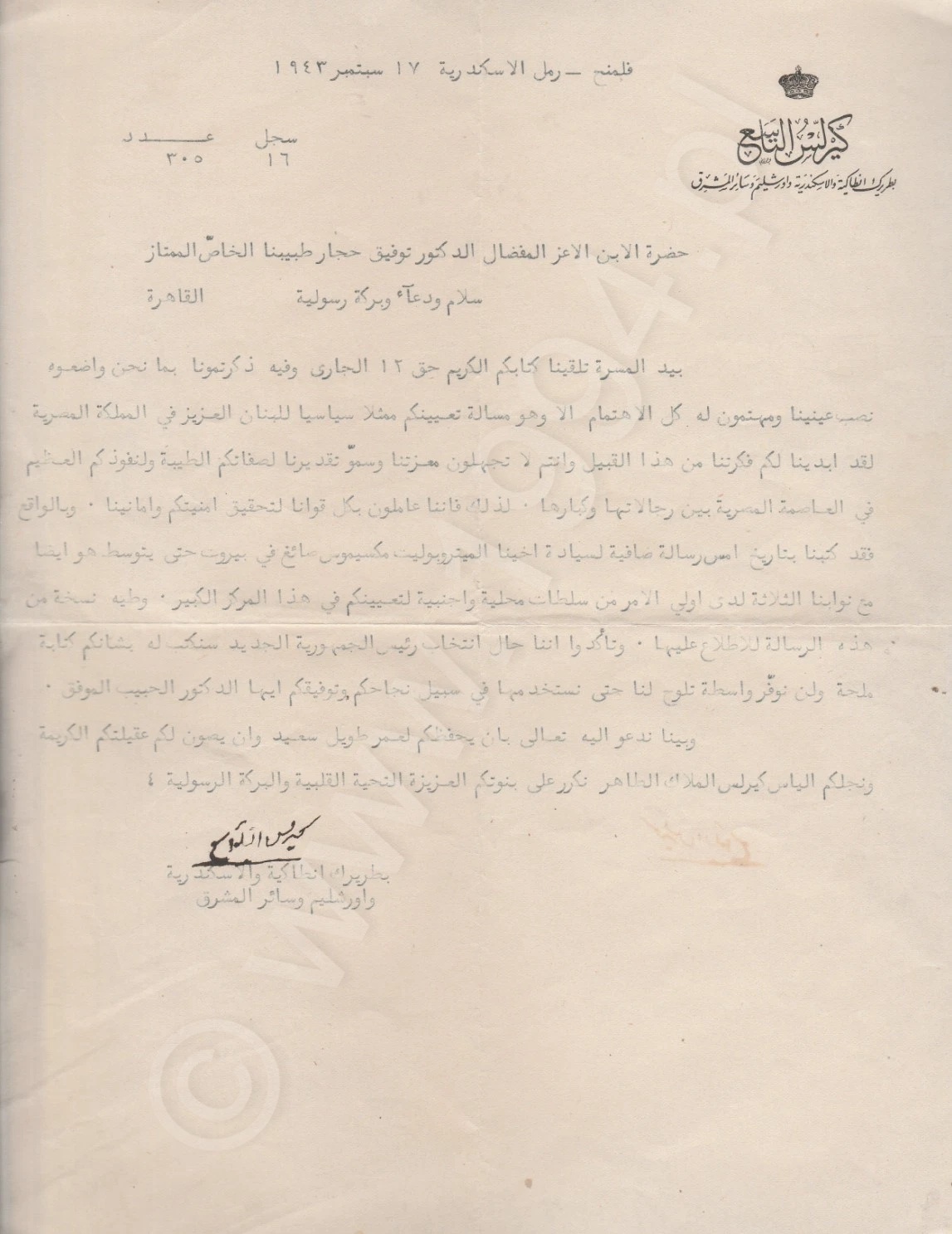
1943 Patriarchal letter signed by Cyril IX Moghabghab, Melkite Greek Catholic Patriarch, issued in Alexandria

Egypt 1943 — Cyril IX Moghabghab, Melkite Greek Catholic Patriarch (Signed Patriarchal Letter, Alexandria)

Official Patriarchal letter dated 17 September 1943 and issued from the Melkite Greek Catholic Patriarchate residence in Fleming–Ramleh, Alexandria. Typed on cream chancery paper with faint laid lines and bearing the crowned Patriarchal emblem at upper right, the document is internally registered as 'عدد 305' and 'سجل 16,' confirming it as an authenticated in-period chancery file copy. Addressed to Dr. ... Read more →

EgyptEcclesiastical Document1943N/A (Patriarchal Correspondence)Uncertified (VF, Strong Signature, Full Text Intact) Ecclesiastical DocumentPolitical CorrespondenceMelkite Greek Catholic ChurchPatriarch of Antioch Alexandria JerusalemCyril IX MoghabghabSigned LetterPatriarchal ChanceryReligious LeadershipChristian EgyptLevantine ChristianityMiddle Eastern ChristianityLebanese RepresentationChurch and StateWWII EgyptClerical InfluenceEgyptAlexandria1943Museum GradeR9 Extremely RareUnique
Held
New Zealand 1907–1926 Bank of New Zealand £20 Blue audit-range serial-prefix specimen with dual control numbers, Bradbury Wilkinson & Co., PMG 55 AU, Pop 1/1, R9 Extremely Rare

New Zealand 1907–1926 — Bank of New Zealand £20 Blue Serial-Prefix Audit Specimen (Pick S194s)

A unique high-denomination Bradbury Wilkinson audit-range specimen and the rarest surviving document from New Zealand’s private-banknote era, the £20 Blue (Pick S194s) represents the apex of BNZ’s color-coded denomination hierarchy. This specimen is not a generic zero-serial example: it carries dual live serials (No. 061001 and No. ... Read more →

New ZealandSpecimen190720 PoundsPMG 55 About Uncirculated (Pop 1/1) Specimen20 PoundsBlueBNZ Color LineageHigh Denomination Color TierHigh DenominationAudit-Range SpecimenSerial PrefixDual Serial NumbersPerforated SpecimenBradbury WilkinsonPick S194sBank of New ZealandPrivate Banknote EraPre-Reserve BankNew Zealand Banking HistoryBritish Engraved NotesMāori Portrait VignettesSecurity Printing HistoryHigh-Value NotesAudit Control SheetNew Zealand190719261907–1926PMG 58Pop 1Top PopMuseum GradeR9 Extremely RareUnique
Held
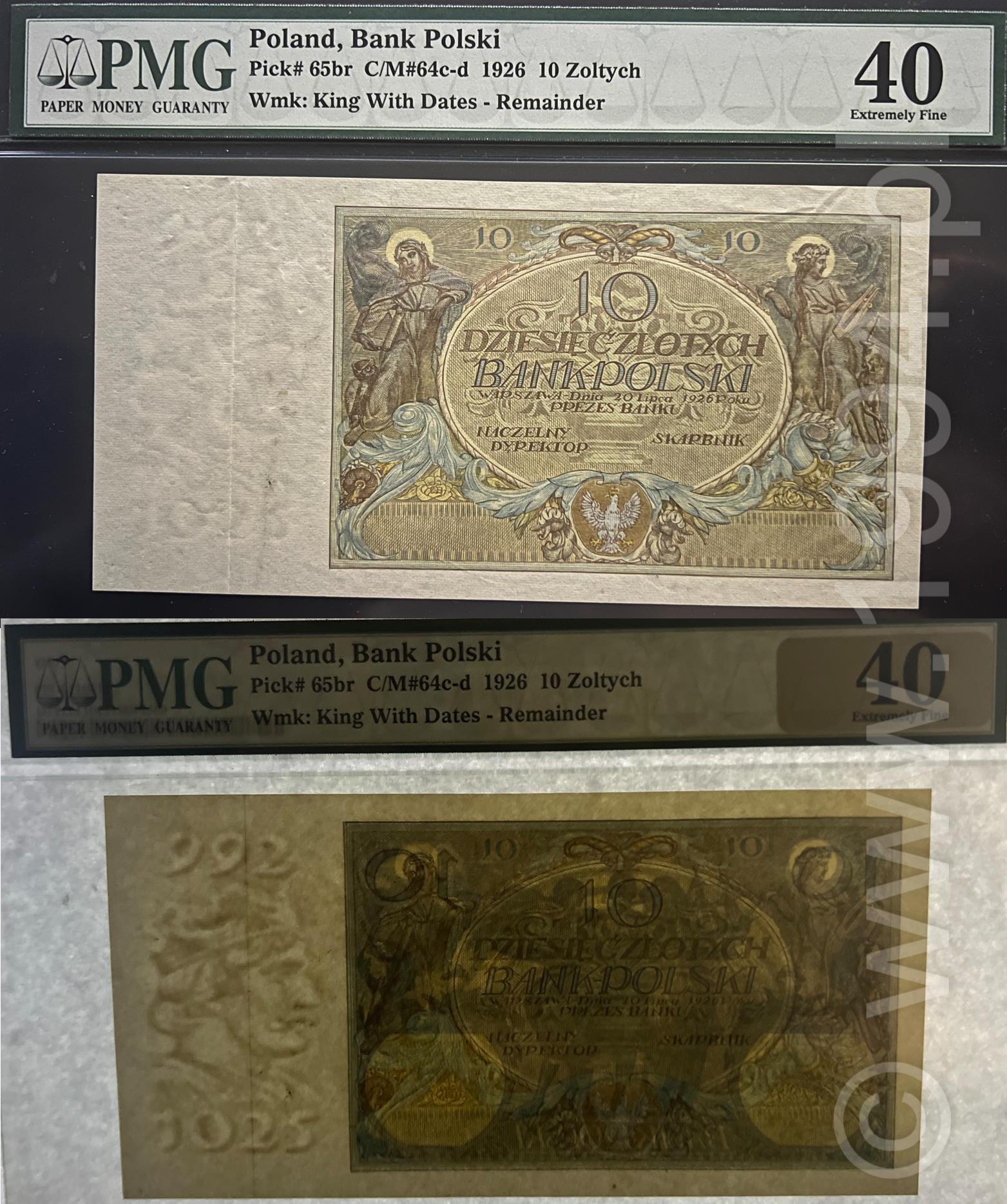
Poland 1926 10 Złotych remainder Pick 65br with Bolesław Chrobry 992–1025 portrait watermark, PMG 40 Extremely Fine

Poland 1926 — 10 Złotych Remainder Bolesław Chrobry 992–1025 Watermark (Pick 65br CM#64c–d)

This banknote is a remainder from the 10 złotych issue of Bank Polski dated 20 July 1926, printed on paper carrying a portrait watermark of Bolesław Chrobry together with the dates of his reign, 992–1025. In standard catalog references, this material is recorded as Pick 65br and represents the remainder counterpart to the issued type Pick 65b, sharing the same paper and watermark characteristics. The portrait watermark featuring Poland’s first crowned king was introduced within a specific historical and symbolic framework. ... Read more →

PolandRemainder Banknote192610 złotychPMG 40 Extremely Fine RemainderBank Polski10 ZlotychPortrait WatermarkBoleslaw Chrobry992–10251926 Banknote IssueSecond Polish RepublicState SymbolismWatermark HistoryPoland1926Museum GradeR9 Extremely RareUniquePick 65brMilczak 64PMG 40
Held
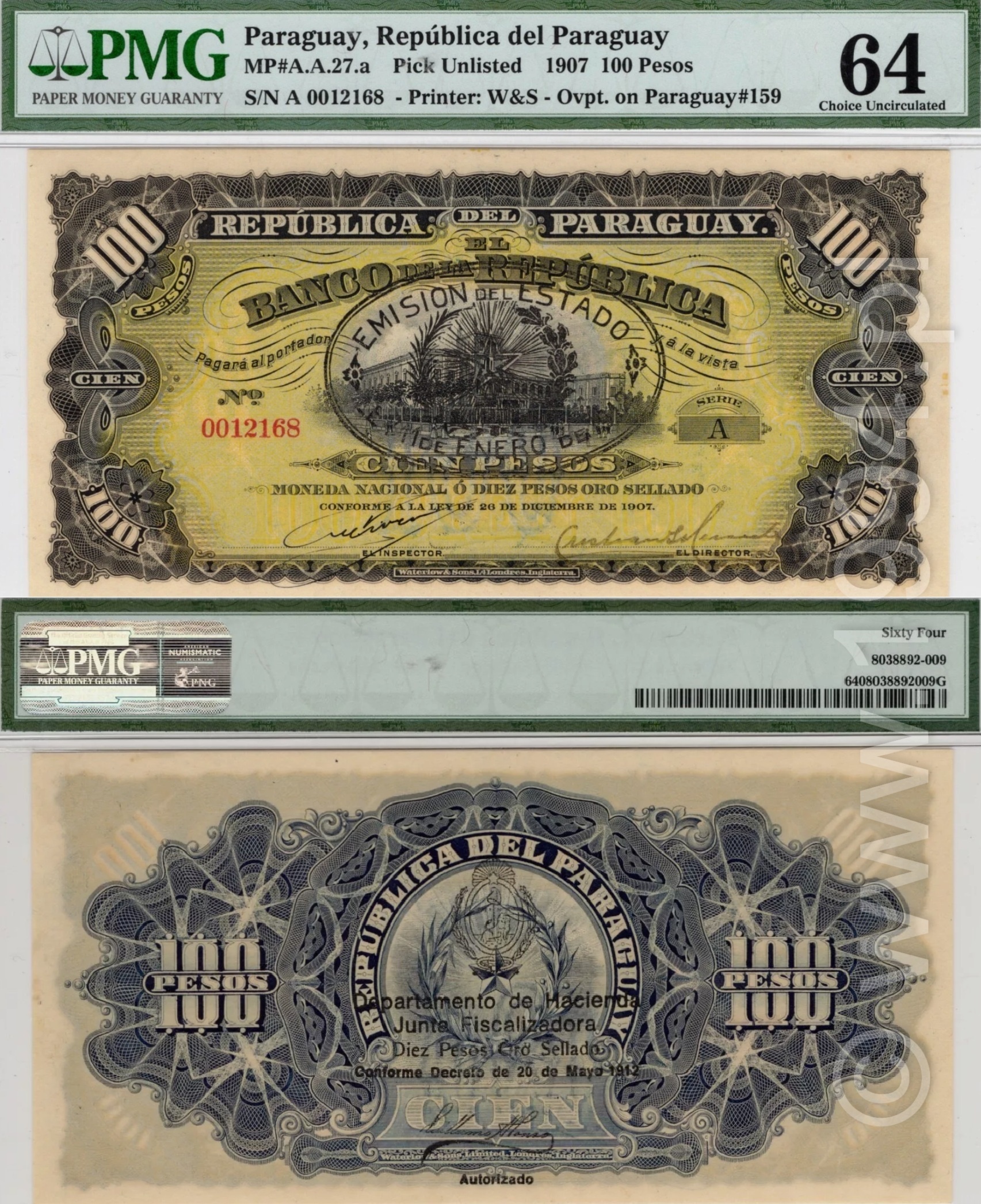
Paraguay 1907 100 Pesos Banco de la Republica specimen with 1912 dual-signature dual-side fiscal overprint, base Pick 159, PMG 64 Choice Uncirculated

Paraguay 1907 — 100 Pesos with 1912 Dual-Signature Dual-Side Overprint Specimen (Pick Unlisted)

Archival specimen of the 1907 Banco de la Republica 100 Pesos (base Pick 159) bearing the emergency overprint 'Emisión del Estado – 11 de Enero de 1912' applied to both face and reverse — a dual-side validation highly unusual for Paraguay’s fiscal issues. Additionally, the note carries the departmental counterstamp 'Departamento de Hacienda – Junta Fiscalizadora' in heavy black ink, confirming its dual-signature fiscal authorization per the decree of 20 May 1912. This overprint configuration diverges from the standard 1912 state revalidations (Pick 134) by combining both governmental and fiscal signatures on opposite sides, creating one of the rarest identifiable archival variants of the period. ... Read more →

ParaguayOverprint Specimen1907100 PesosPMG 64 Choice Uncirculated Specimen100 PesosPick UnlistedPick 159OverprintDual-Signature OverprintDual-Side OverprintProvisionalFiscal RevalidationParaguayan Emergency Issues1912 ReformBanco de la RepublicaDepartamento de HaciendaWaterlow & SonsSouth American Monetary HistoryEarly 20th Century FinanceGovernment RevalidationOverprint VarietiesParaguay19071912PMG 64Museum GradeR9 Extremely RareUnique
Held
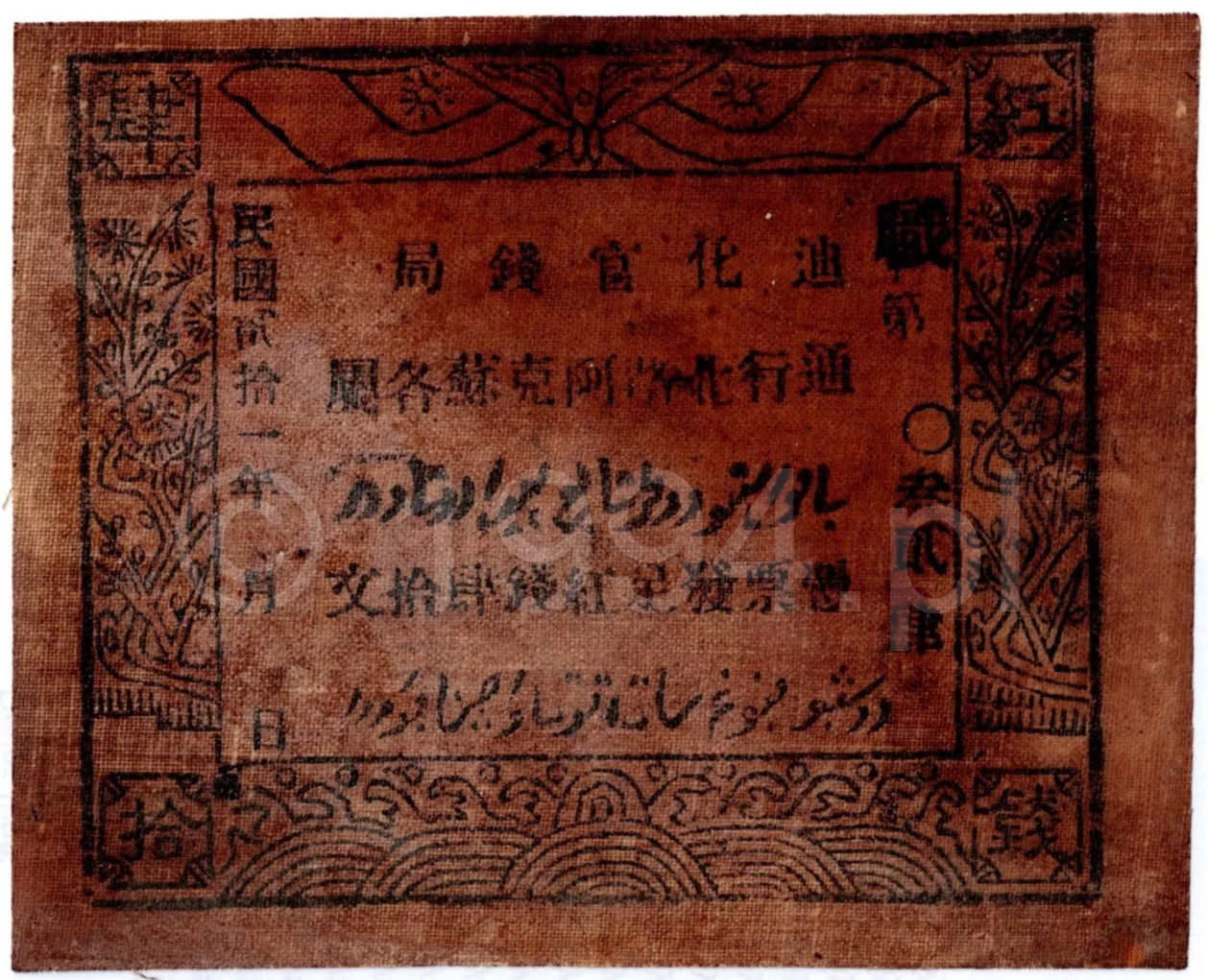
China 1915 South Sinkiang Border Defence Headquarters 1 tael textile emergency banknote printed on woven cloth with red overprint and bilingual inscriptions

China 1915 — South Sinkiang Border Defence Headquarters 1 Tael Textile Emergency Issue (Pick Unlisted)

This 1 tael textile banknote represents a formally authorized military emergency issue produced in 1915 by the South Sinkiang Border Defence Headquarters during a period of severe administrative and monetary fragmentation in western China. Issued within the southern frontier zone encompassing Khotan, Yarkand, and Karghalik, the note reflects a localized system of fiscal control exercised by military authorities operating with substantial autonomy from central government structures. The banknote is printed on hand-woven textile rather than paper, a deliberate and practical choice dictated by frontier conditions. ... Read more →

ChinaTextile Banknote19151 TaelFine (Textile Issue) Textile BanknoteTextile Emergency CurrencyCloth CurrencyMilitary Emergency Issue1 TaelWoodblock PrintingRed OverprintSouth Sinkiang Border Defence HeadquartersFrontier Military AdministrationRegional Monetary SystemUyghur-Chinese Bilingual IssueCentral Asian Frontier FinanceSecurity Printing HistoryChinaSinkiangSouth Sinkiang1915R9 Extremely RareUniqueMuseum GradePick Unlisted
Held
China 1918 Xinjiang textile emergency currency printed on red cloth by woodblock, with framed inscription panel, vegetal side borders, winged emblem, and wave-pattern lower band

China 1918 — Xinjiang Textile Emergency Currency Printed on Red Cloth, Local Authority Issue (Pick Unlisted)

An issued textile emergency currency produced in Xinjiang (Sinkiang) during the early Republican period, printed by hand from carved woodblocks onto red-dyed cotton cloth. This note represents a locally authorized substitute currency created for circulation under conditions of monetary instability, material shortage, and fragmented administrative control in China’s western frontier. The design is printed directly onto fabric in dark ink, with the textile weave clearly visible through the impression. ... Read more →

ChinaTextile Emergency Currency1918UnspecifiedIssued (Textile Emergency Currency) Textile BanknoteTextile Emergency CurrencyCloth BanknoteIssued Emergency MoneyWoodblock PrintingFrontier CurrencyXinjiangSinkiangLocal Authority IssueEarly Republican PeriodRegional Monetary SystemChina1918Museum GradeR9 Extremely RareUniquePick Unlisted
Held
China 1920 Xinjiang textile emergency currency printed on red cloth by woodblock, showing framed inscription panel and ornamental borders

China 1920 — Xinjiang Textile Emergency Currency Printed on Red Cloth, Local Authority Issue (Pick Unlisted)

An issued textile emergency currency produced in Xinjiang (Sinkiang) in the early Republican period, printed by hand from woodblock onto coarse red-dyed cotton cloth. This note forms part of the broader tradition of frontier textile currency developed in western China under conditions of monetary instability, material shortage, and decentralized administrative control. The design is executed in dark ink directly on fabric, with the weave of the cloth clearly visible through the printed impression. ... Read more →

ChinaTextile Emergency Currency1920UnspecifiedIssued (Textile Emergency Currency) Textile BanknoteTextile Emergency CurrencyCloth BanknoteIssued Emergency MoneyWoodblock PrintingFrontier CurrencyXinjiangSinkiangLocal Authority IssueEarly Republican PeriodRegional Monetary SystemChina1920Museum GradeR9 Extremely RareUniquePick Unlisted
Held
China 1921 Xinjiang textile emergency currency printed on red cloth by woodblock, featuring a winged emblem with sun motif and framed inscription panel

China 1921 — Xinjiang Textile Emergency Currency Printed on Red Cloth with Sun Emblem (Pick Unlisted)

An issued textile emergency currency produced in Xinjiang (Sinkiang) during the early Republican period, printed by hand from carved woodblocks onto red-dyed cotton cloth. This note represents a distinct local issue within the Xinjiang textile tradition, created for circulation under conditions of monetary instability, limited access to paper currency, and decentralized administrative control in China’s western frontier. The design is printed directly onto coarse textile in dark ink, with the weave of the fabric clearly visible through the impression. ... Read more →

ChinaTextile Emergency Currency1921UnspecifiedIssued (Textile Emergency Currency) Textile BanknoteTextile Emergency CurrencyCloth BanknoteIssued Emergency MoneyWoodblock PrintingFrontier CurrencyXinjiangSinkiangLocal Authority IssueEarly Republican PeriodSun EmblemChina1921Museum GradeR9 Extremely RareUniquePick Unlisted
Held
China 1922 Xinjiang textile emergency currency printed on red cloth by woodblock, with framed inscription panel, vegetal borders, and wave-pattern lower band

China 1922 — Xinjiang Textile Emergency Currency Printed on Red Cloth, Local Authority Issue (Pick Unlisted)

An issued textile emergency currency produced in Xinjiang (Sinkiang) during the early Republican period and printed by hand from carved woodblocks onto coarse red-dyed cotton cloth. This note represents a locally authorized substitute currency created for circulation under conditions of monetary disruption, limited access to paper stock, and fragmented administrative control in China’s western frontier. The design is executed directly onto fabric in dark ink, with the textile weave clearly visible through the printed impression. ... Read more →

ChinaTextile Emergency Currency1922UnspecifiedIssued (Textile Emergency Currency) Textile BanknoteTextile Emergency CurrencyCloth BanknoteIssued Emergency MoneyWoodblock PrintingFrontier CurrencyXinjiangSinkiangLocal Authority IssueEarly Republican PeriodRegional Monetary SystemChina1922Museum GradeR9 Extremely RareUniquePick Unlisted
Held
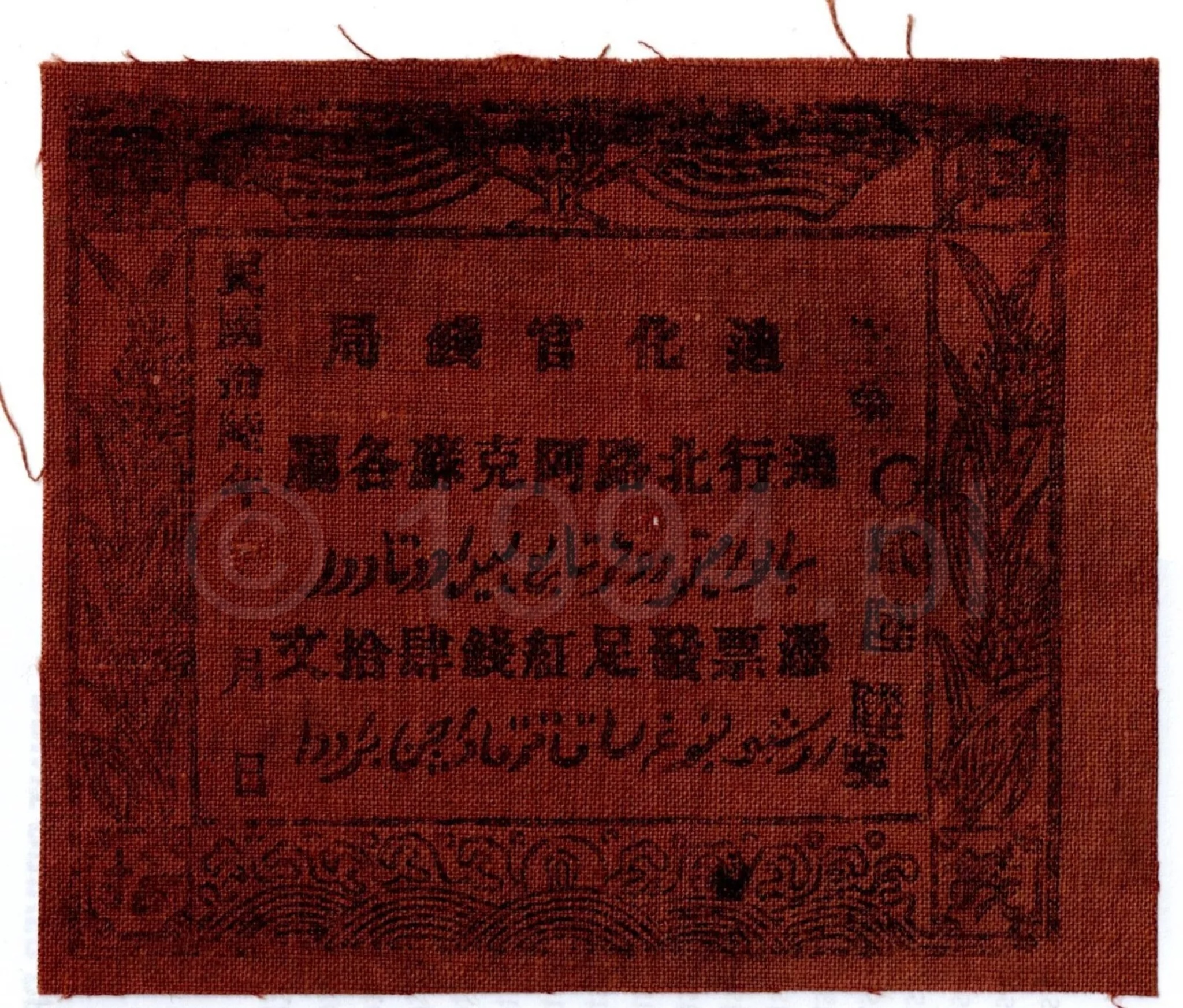
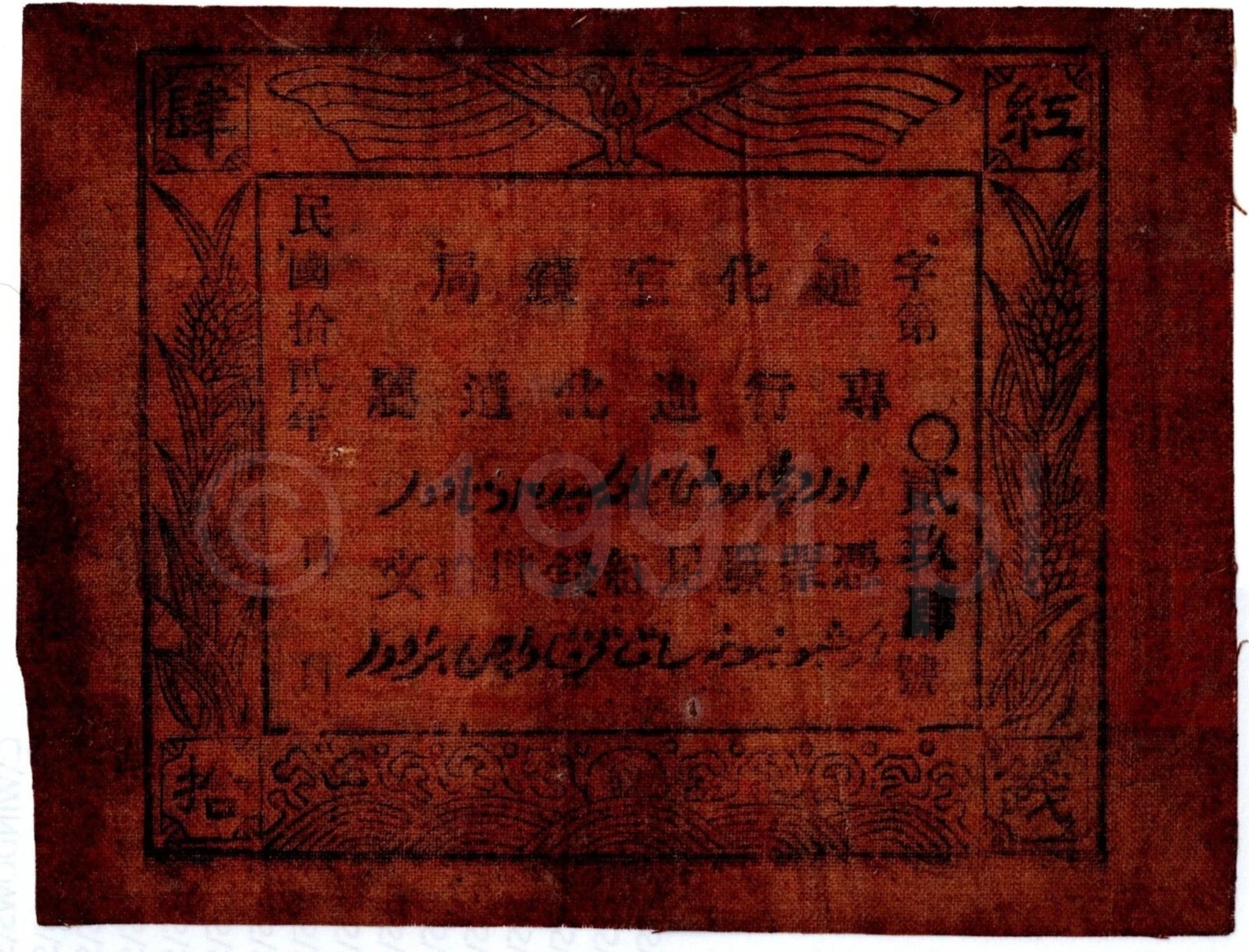
China 1924 Dihua Official Coin Bureau 40 wen textile emergency banknote printed on red cotton with Chinese and Uyghur inscriptions

China 1924 — Dihua Official Coin Bureau 40 Wen Textile Emergency Issue (Pick Unlisted)

This 40 wen textile banknote represents a formally authorized emergency issue produced in 1924 by the Dihua Official Coin Bureau during a period of acute monetary disruption in Xinjiang. Faced with shortages of paper currency, disrupted transport routes, and limited access to centralized printing facilities, local authorities adopted cloth as an alternative monetary substrate to sustain everyday economic activity. The note was printed on coarse red cotton using traditional woodblock techniques, a method well suited to decentralized production and durable circulation under harsh regional conditions. ... Read more →

ChinaTextile Banknote192440 WenCirculated (Textile Issue) Textile BanknoteTextile Emergency CurrencyCloth CurrencyEmergency Issue40 WenWoodblock PrintingDihua Official Coin BureauXinjiangRepublican ChinaRegional Monetary SystemMultilingual CurrencyProvisional FinanceChina1924R8 Extremely RareMuseum GradePick Unlisted
Held
New Zealand 1916–1920 Bank of New Zealand £5 Red-Rose wartime specimen from the BNZ orange lineage, Pick S227s, serial prefix 7/180001–7/220000, PMG 65 EPQ Top Pop

New Zealand 1916–1920 — Bank of New Zealand £5 Red-Rose (Orange Lineage) Specimen with Serial Number Prefix (Pick S227s)

The finest preserved £5 specimen of New Zealand’s wartime private-banknote era and the highest-graded example recorded for Pick S227s. Printed in London by Bradbury, Wilkinson & Co. during the 1916–1920 wartime production cycle, this specimen represents an internal audit and approval piece retained from a numbered print run rather than a zero-serial display copy. ... Read more →

New ZealandSpecimen with Serial Number Prefix19165 PoundsPMG 65 EPQ Gem Uncirculated (Top Pop) Specimen5 PoundsRed-RoseBNZ Color LineageOrange LineageWith Serial PrefixPrinter AnnotationCANCELLED PerforationHigh DenominationBradbury WilkinsonPick S227sBank of New ZealandPrivate Banknote EraPre-Reserve BankWartime IssueNew Zealand Banking HistoryMāori Portrait SeriesMaritime Economy NotesSecurity Printing HistoryNew Zealand191619201916–1920Top PopPMG 65 EPQMuseum GradeR8 Extremely Rare
Held
New Zealand 1913 Bank of New Zealand £5 Orange multi-serial approval specimen Pick S192ms with serials 286901 and 296900, Bradbury Wilkinson & Co., PMG 63 Choice Uncirculated

New Zealand 1913 — Bank of New Zealand £5 Orange Multi-Serial Approval Specimen (Pick S192ms)

A numbered approval specimen of the Bank of New Zealand £5 Orange design, printed by Bradbury Wilkinson & Co., London, circa 1913. Though derived from the original 1895 S192 plate, this example bears two distinct serial numbers (286901 and 296900), identifying it as a multi-serial approval specimen drawn from the opening and closing positions of a controlled production range. Such pieces were created for printer audit, plate verification, and contractual record-keeping rather than circulation. ... Read more →

New ZealandSpecimen19135 PoundsPMG 63 Choice Uncirculated (Top Pop) Specimen5 PoundsOrangeBNZ Color LineageMulti-Serial ApprovalBradbury WilkinsonPick S192msBank of New ZealandPrivate Banknote EraPre-Reserve BankNew Zealand Banking HistoryWWI-Era ProductionVictorian-Edwardian TransitionMāori Portrait SeriesMaritime Economy NotesSecurity Printing HistoryOceania NumismaticsNew Zealand1913PMG 63Museum GradeR8 Extremely Rare
Held
↑ Top