El Salvador 1999 - 25 Colones Issued Note (Pick 155)
Catalogued as Pick 155 and graded PMG 65 EPQ Gem Uncirculated, this issue represents the terminal stage in the 1996–1999 series that began with the Pick 149a introduction. Read more →
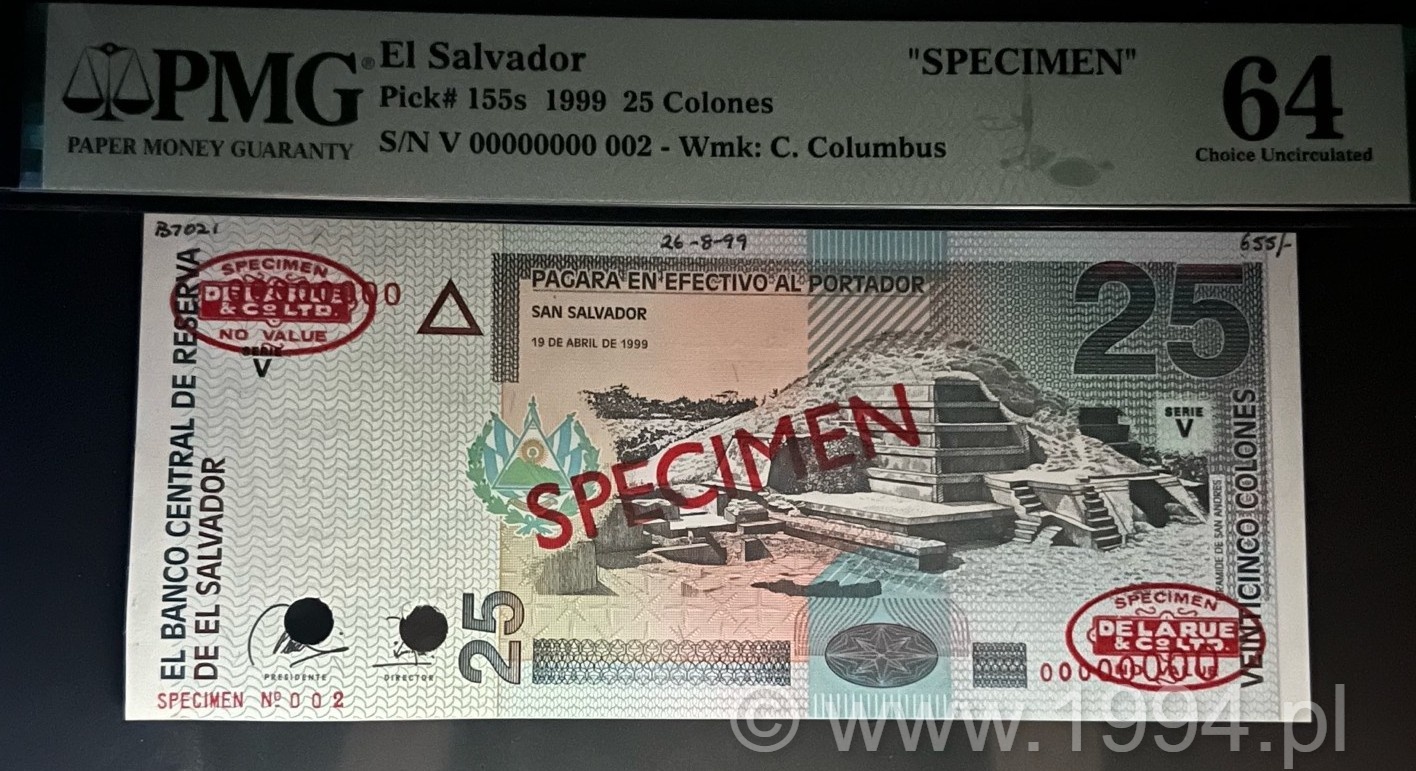
Specimen note of the 1999 25 Colones issue, catalogued as Pick 155s. Printed by De La Rue with diagonal red SPECIMEN overprint, perforation cancels, and control stamps. Read more →
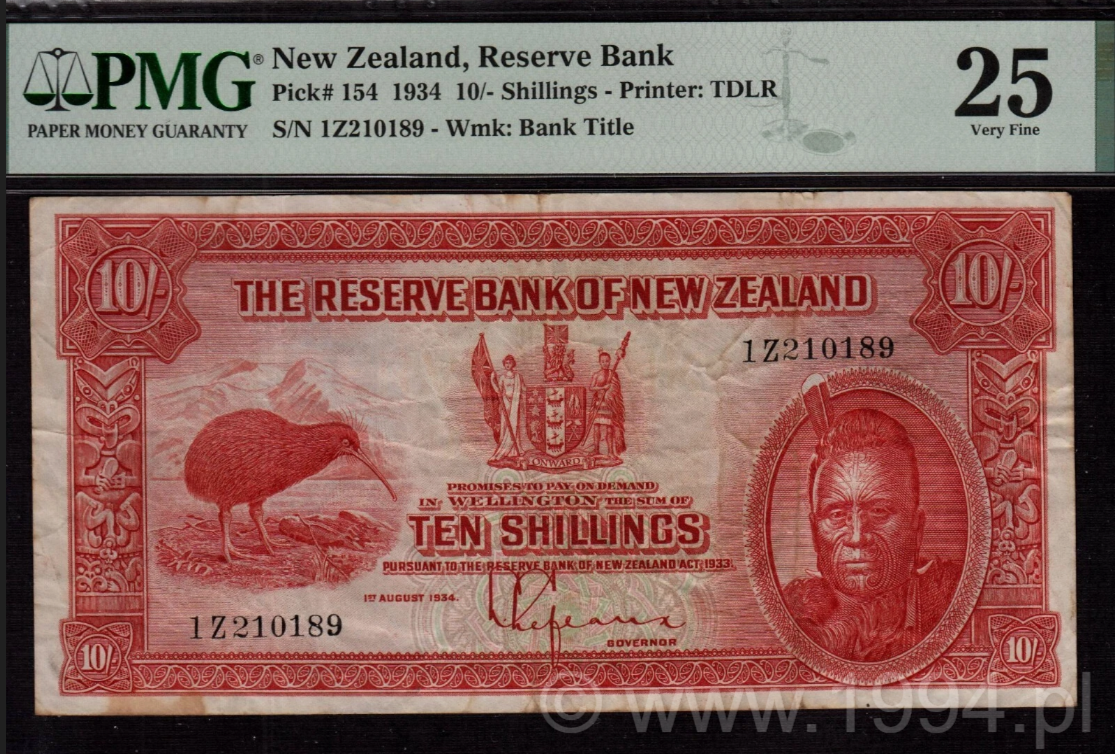
The note belongs to the inaugural Reserve Bank series commonly known as the "Lefeaux series", named for Leslie Lefeaux, the institution’s first Governor. Prior to 1934 New Zealand’s paper money had been issued by private trading banks. The establishment of the Reserve Bank introduced a unified national currency system, and the new banknotes were commissioned from Thomas De La Rue & Company Limited in London, one of the world’s leading security printers. Read more →
Although intended as the foundation of the country’s modern currency system, the 1934 series circulated for only a relatively short period before redesigned notes were introduced in 1940. As a result, surviving examples have become important artifacts documenting the formative years of the Reserve Bank of New Zealand. Read more →
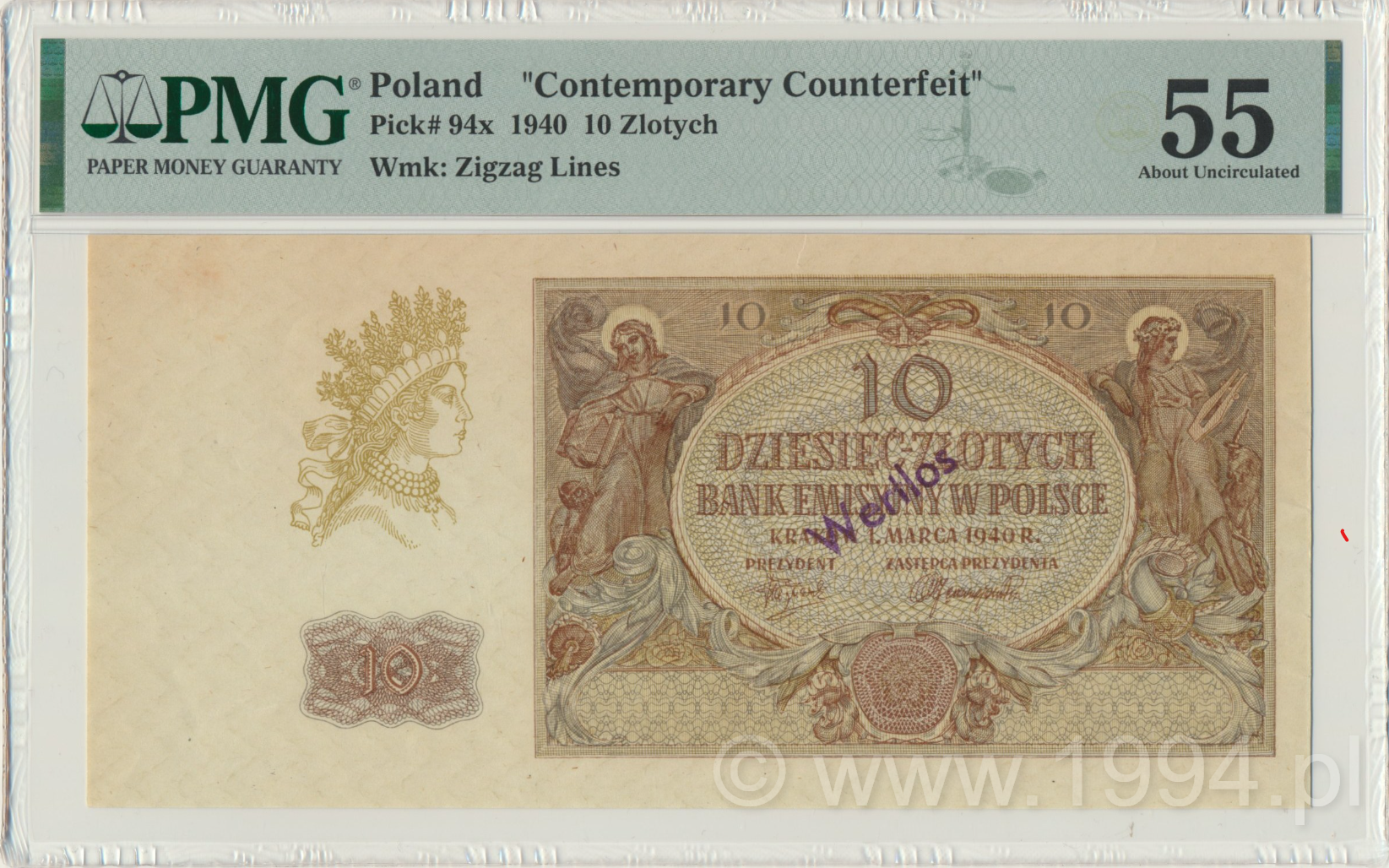
Referenced in Miłczak 94 and absent from the Lucow collection, it remains a rare survivor from the shadow economy of occupied Poland. Read more →
The obverse carries a finely executed portrait of Benjamin Franklin, a fitting tribute to Philadelphia’s most famous citizen, framed by ornate guilloche engraving and border work indistinguishable from contemporary financial instruments. Bold red overprints specify seating details-Gate 2, Section J, Row P, Seat 13-and the designation 'Upper Balcony, First Day Only.' At the lower margin, the facsimile signature of Carroll Reece, Republican National Committee chairman, anchors the design beside the printer’s imprint, 'E.A. Wright Bank Note Co., Phila.' Read more →
The obverse features allegorical female figures representing Industry and Agriculture within an ornate architectural composition, with a crowned female head at left. The reverse carries ornamental designs surrounding the denomination and central watermark area. The paper uses a zigzag-line watermark. Read more →
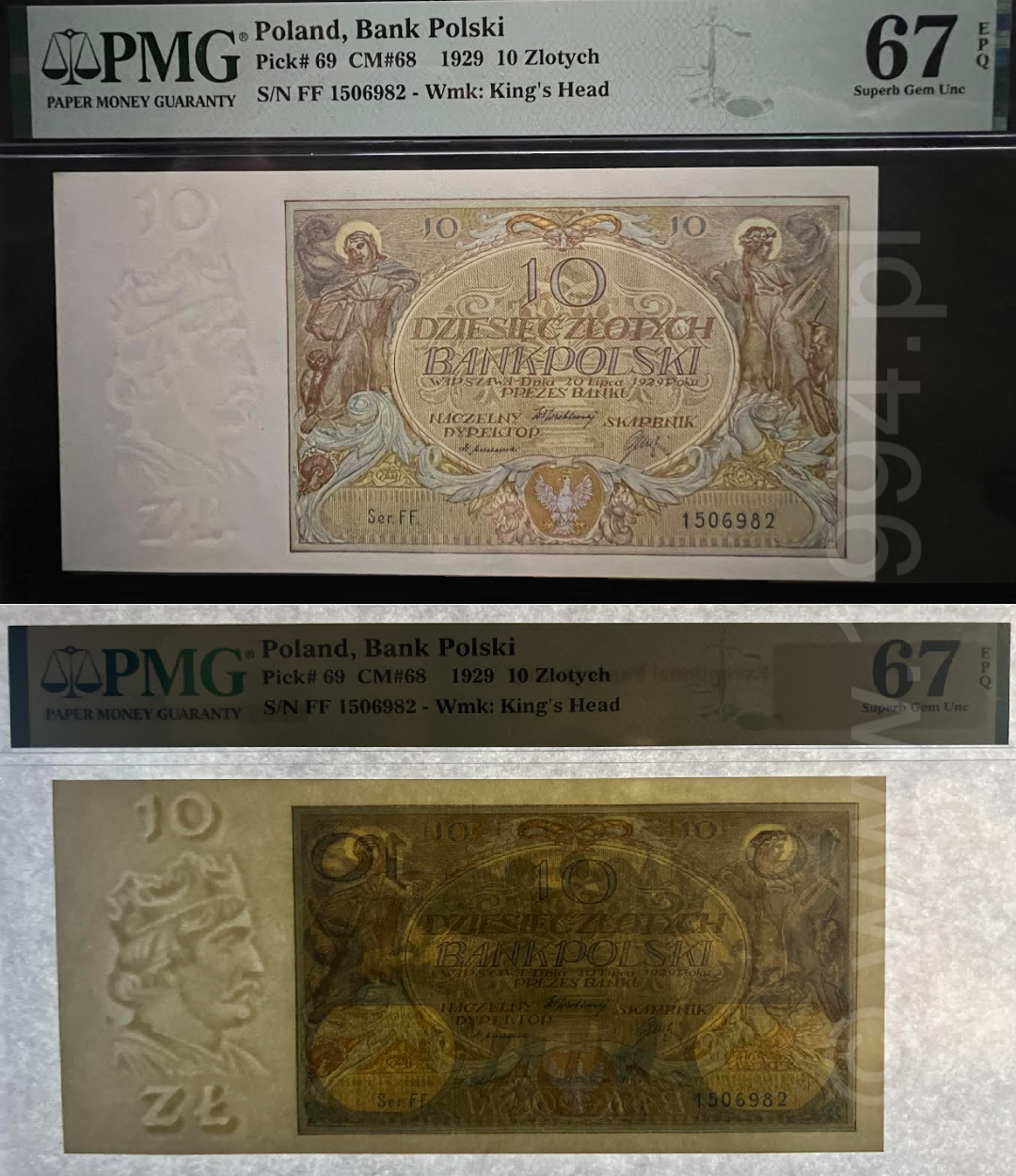
Most 10-zł notes circulated heavily; few survived unhandled. Certified PMG 67 EPQ Superb Gem Uncirculated, this example retains full embossing and natural sheen - an exceptional survivor of interwar Poland’s monetary renaissance and among the finest known for the type. Read more →
Surviving examples are scarce because most unprinted sheets were consumed or destroyed during printing tests at the Bank Polski’s security works in Warsaw. A handful were preserved as reference stock or acquired by collectors from institutional disposals in the 1930s. Today, these pieces offer direct insight into the technical process of watermark standardization in the Second Polish Republic. Read more →
Series S.B. was one of three regular issued series used for the denomination. All surviving issued notes carry seven-digit serial numbers printed on both the left and right sides of the obverse. This example, serial 5482263, preserves an individually identifiable note from the inaugural Bank Polski issue released during the 1924 Grabski monetary reform. Read more →
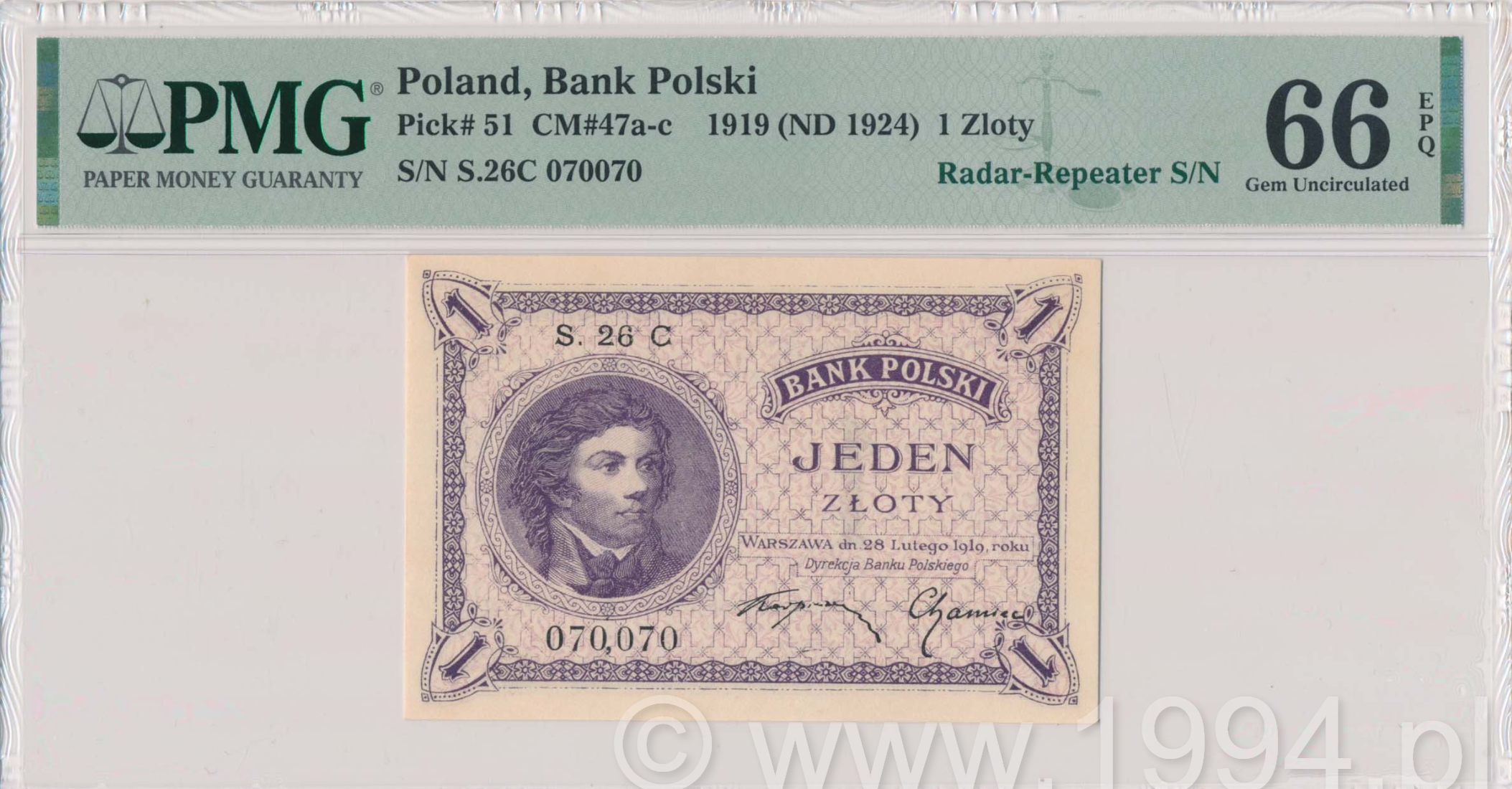
The note was printed by Imprimerie Benoit Arnaud in Lyon, France. Its engraved portraiture, fine-line borders, layered underprinting, and compact security design document the contribution of French security printing to the first paper-money series prepared for independent Poland. Read more →
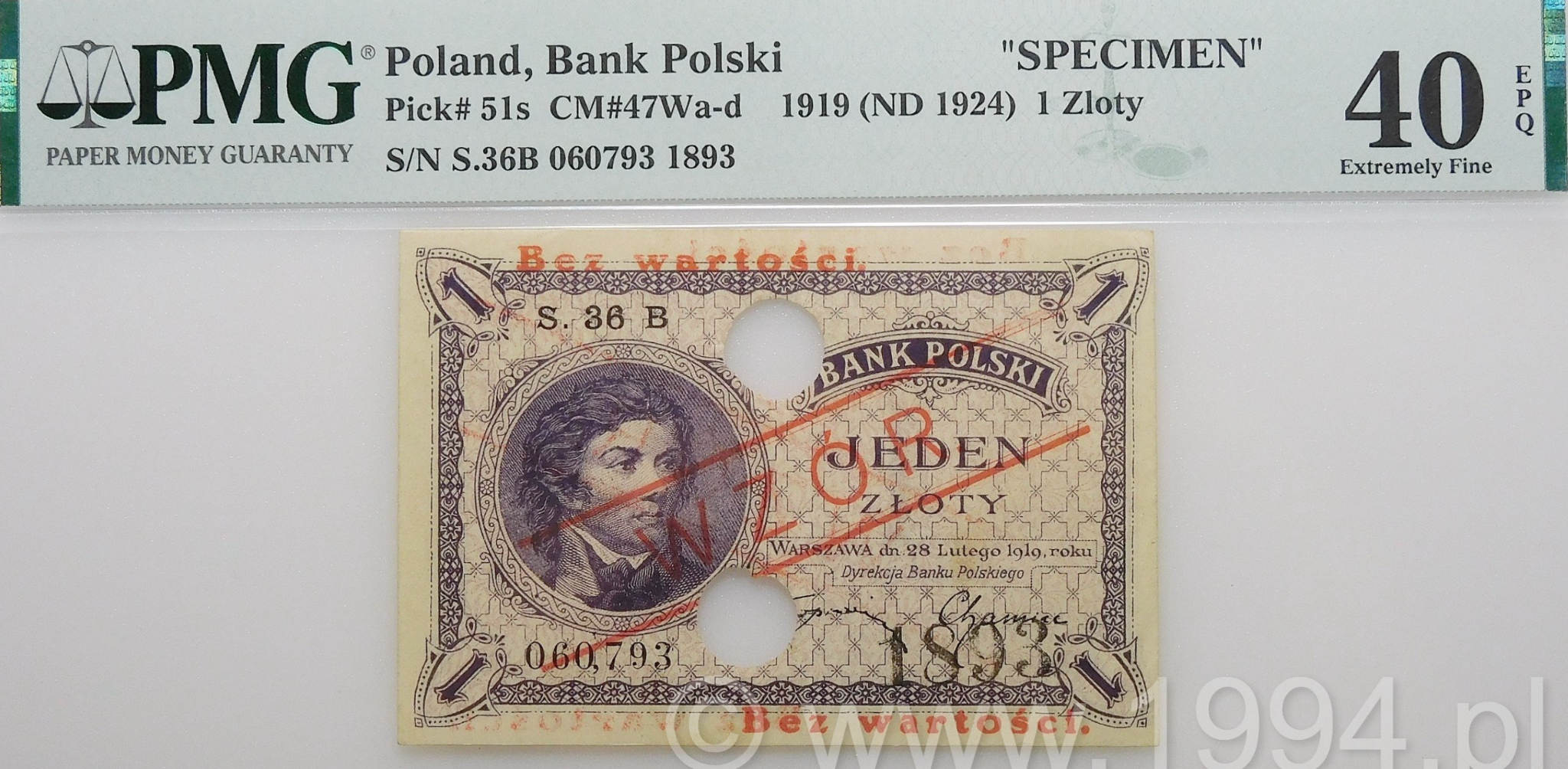
The specimen markings are applied in red across the printed design. WZÓR. appears diagonally across the face, while Bez wartości. is positioned along the upper and lower margins. The reverse carries corresponding specimen markings, establishing the note as a bilateral overprint specimen rather than a regular issued example. Read more →