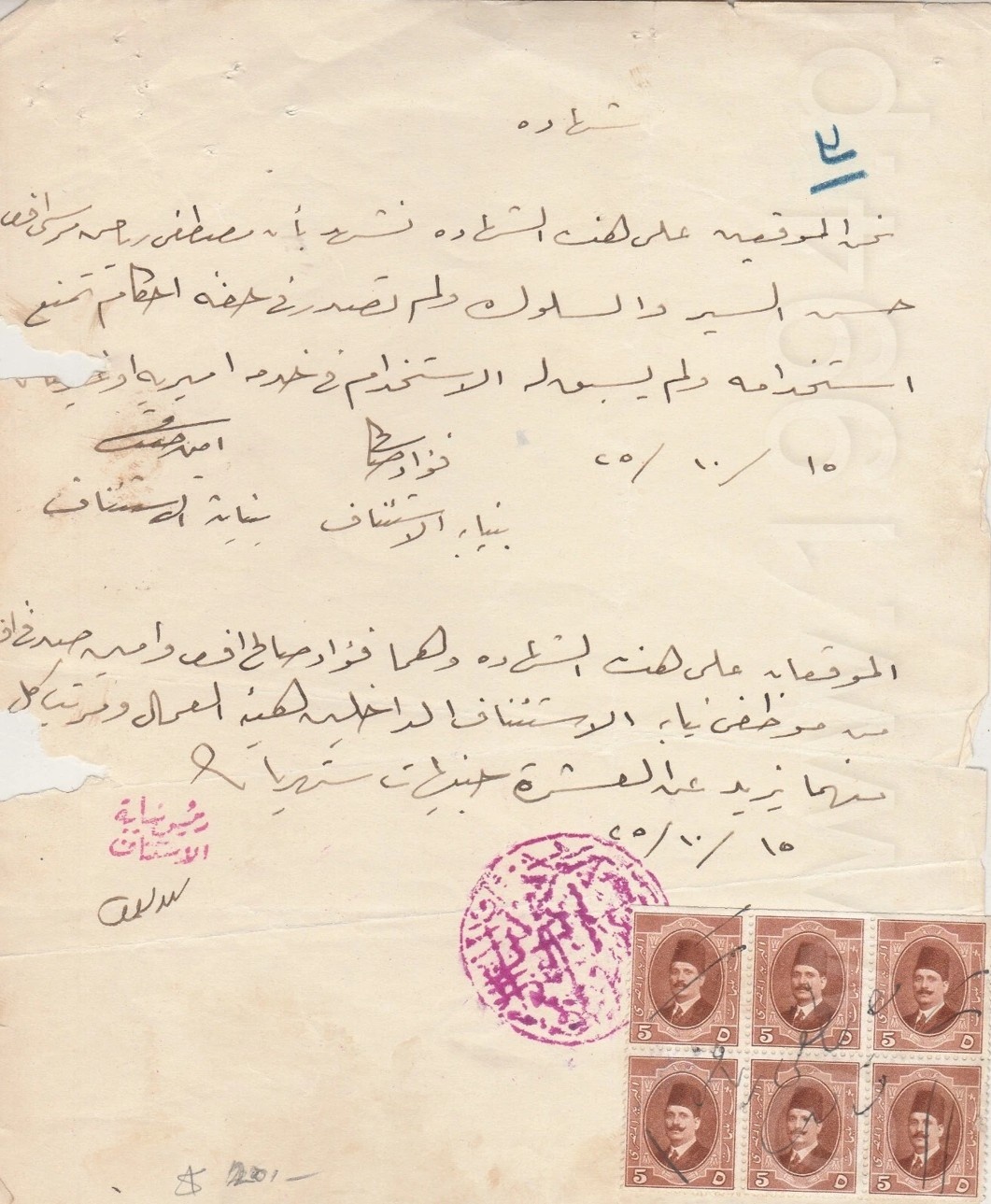
Egypt 1925 - Government Internal Fraud Certificate With Full Pane of Six King Fouad Five Milliemes Revenues
This document provides direct insight into the bureaucratic culture of 1920s Egypt. Under King Fouad I, ministries operated through highly formalized internal paperwork flows in which handwritten notes, certification stamps, and revenue adhesives played essential roles in validating processes and establishing audit trails. Before the creation of unified accounting offices and standardized printed forms, handwritten internal memoranda like this one formed the backbone of procedural oversight in education, taxation, customs, police, and civil-service departments. The affixed revenue pane represents not only the payment of a fee but also the ministry's adherence to internal financial controls, where fiscal adhesives served as a receipt mechanism for services, certifications, or case-handling steps. Read more →