Collection PL

About 1994.pl
Results for “civil war”
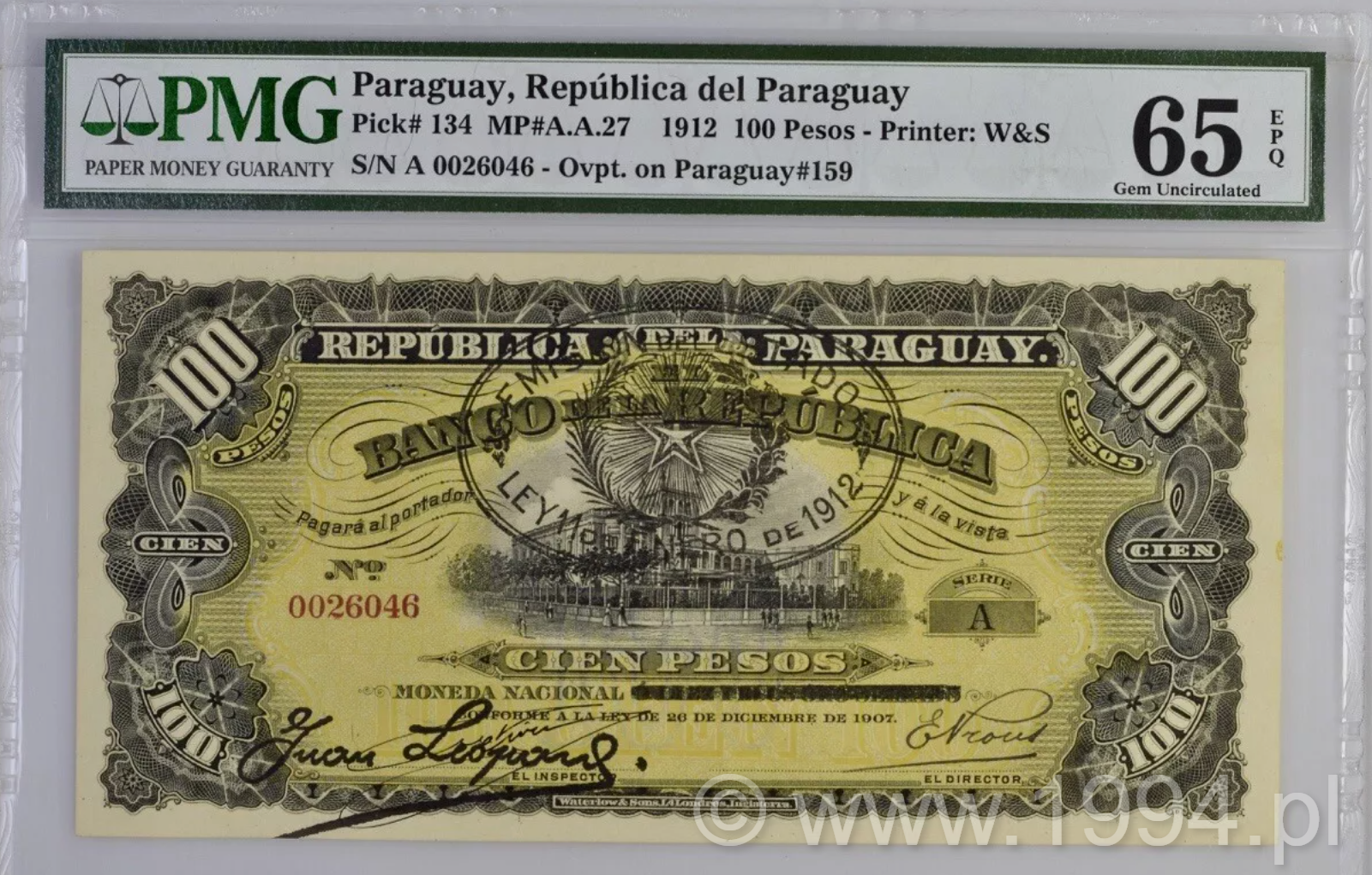
Paraguay 1907 100 Pesos Banco de la República note with 1912 Emisión del Estado state overprint on the face, Pick 134, base Pick 159, printed by Waterlow & Sons, London, PMG 65 EPQ Gem Uncirculated Top Pop

Paraguay 1907 - 100 Pesos with 1912 State Overprint (Pick 134, Base Pick 159)

The 1912 overprint was not a decorative or routine bank marking. It was an emergency act of monetary authority. Paraguay entered 1912 under severe political and fiscal pressure, with civil unrest, weakened banking confidence, and a shortage of reliable circulating paper. Rather than waiting for an entirely new currency series to be prepared, the government turned to existing Banco de la República stocks and converted them into state-recognized obligations by means of a direct overprint. The oval “Emisión del Estado” stamp announced that the note was no longer merely an earlier bank issue, but had been accepted into the emergency monetary structure of the state. Read more →

ParaguayOverprint Issue1907100 PesosPMG 65 EPQ Gem Uncirculated (Top Pop) Overprint Issue100 PesosPick 134Pick 159Base Pick 159State OverprintSingle-Side OverprintFace OverprintProvisionalEmergency State IssueFiscal RevalidationGovernment RevalidationWaterlow & SonsBanco de la RepúblicaEmisión del EstadoLey de 11 de Enero de 1912Moneda NacionalDiez Pesos Oro SelladoGold-Value ClauseSeries ARed Serial NumberBlack Oval OverprintArchitectural VignetteGuilloché Security DesignParaguayan Emergency Issues1912 ReformParaguayan Civil War PeriodSouth American Monetary HistoryEarly 20th Century FinanceEmergency CurrencyOverprint VarietiesState LiabilityCurrency RevalidationParaguayRepublic of Paraguay19071912PMG 65 EPQGem UncirculatedTop PopMuseum GradeR7 Extremely RareHistory
Held
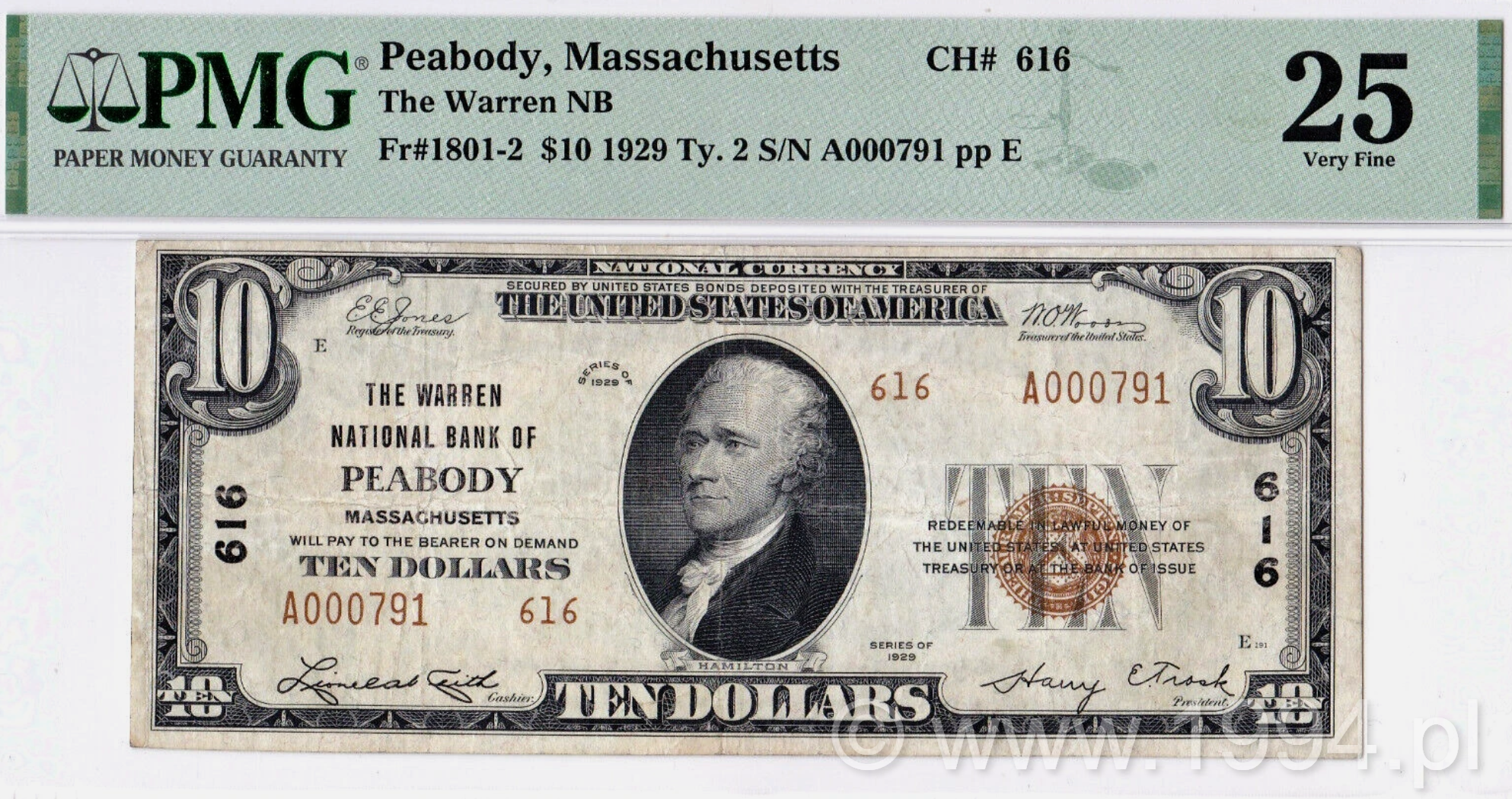
United States 1929 The Warren National Bank of Peabody Massachusetts 10 Dollars Type 2 National Bank Note, Charter 616, Friedberg 1801-2, serial number A000791, plate position E, brown seal National Currency note certified PMG 25 Very Fine.

United States 1929 - The Warren National Bank of Peabody, Massachusetts 10 Dollars Type 2 National Bank Note, Charter 616 (Fr. 1801-2)

The note belongs to the small-size National Currency series introduced in 1929, when United States paper money was reduced to the modern smaller format. National Bank Notes of this period retained the local bank identity that had defined the National Banking era since the Civil War, but presented it within a standardized federal currency design printed by the Bureau of Engraving and Printing. Read more →

United StatesNational Bank Note192910 DollarsPMG 25 Very Fine National Bank NoteNational CurrencySmall Size National Bank NoteSeries of 19291929 Type 2Type 2 National Bank Note10 DollarsTen DollarsBrown SealIssued NoteFederal CurrencyLocal BanknoteCharter Bank NoteCharter Number NoteThe Warren National Bank of PeabodyWarren National BankPeabody MassachusettsPeabodyMassachusettsEssex CountyCharter 616CH 616Serial A000791Plate Position EAlexander HamiltonHamilton PortraitBureau of Engraving and PrintingBEPUnited States TreasuryNational Banking EraSmall Size Currency1930s CurrencyPeabody Leather IndustryLeather IndustryNew England BankingMassachusetts Banking HistoryLocal Banking HistoryIndustrial Banking HistoryAmerican Financial HistoryFriedberg 1801-2Fr. 1801-2PMG 25 Very FinePMG 25 VFVery FineCertified NoteUnited StatesUnited States 1929
Held
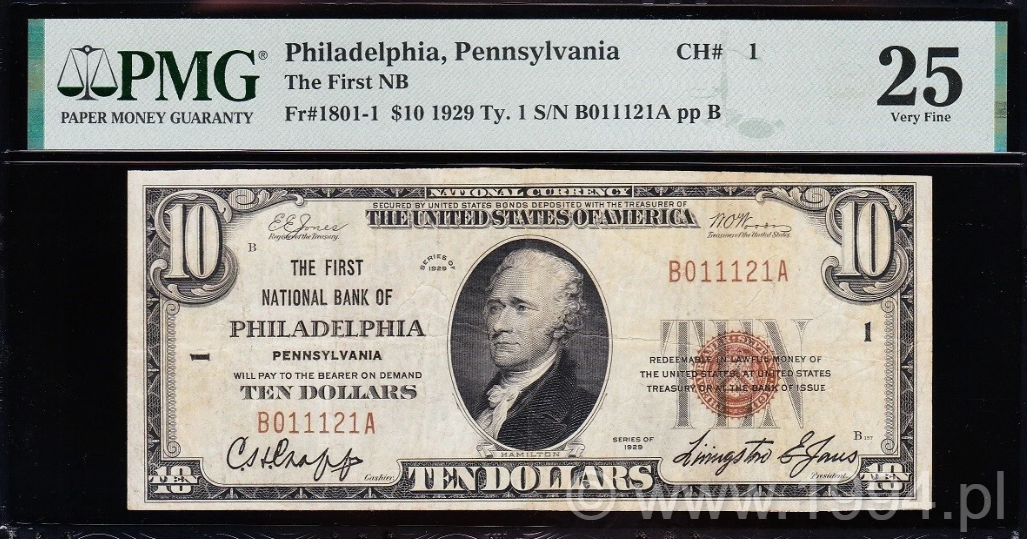
United States 1929 Type 1 - 10 Dollars National Bank Note The First National Bank of Philadelphia Pennsylvania Fr 1801-1 Charter 1 PMG 25 Very Fine

United States 1929 Type 1 - 10 Dollars National Bank Note - The First National Bank of Philadelphia, Pennsylvania Charter 1 (Fr. 1801-1)

Charter 1 anchored Philadelphia finance from the Civil War through the Great Depression. Early leadership included Morton McMichael Jr. as cashier with presidents Clarence H. Clark and George Philler, later followed by Kenton Warne, Thomas W. Andrew, Carl H. Chaffee, and Livingston E. Jones in the 1902 series to 1930s period. As the city industrialized and its capital markets expanded, the bank absorbed neighboring nationals and carried Charter 1 forward through multiple consolidations, keeping the lowest-numbered charter alive into the modern era. Read more →

United StatesNational Bank Note192910 DollarsPMG 25 Very Fine 10 DollarsNational Bank NoteIssued NoteType 1PhiladelphiaPennsylvaniaCharter 1Low CharterHamilton1929PMG 25 VFFederal Banking History
Held
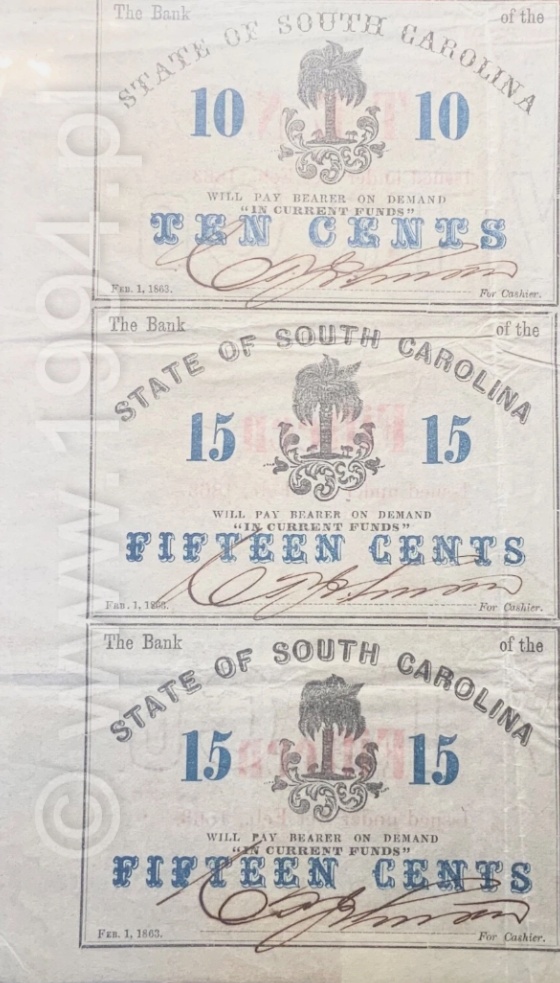
1863 Bank of the State of South Carolina uncut sheet with one 10c and two 15c notes

United States 1863 - Bank of the State of South Carolina 10c and 15c Uncut Sheet of 3

Uncut vertical sheet of three fractional notes from the Bank of the State of South Carolina in Charleston, dated February 1, 1863. The pane contains one 10 cents and two 15 cents notes. These pieces were issued during the Civil War coin shortage under the Act of February 1863 and were payable to bearer in current funds rather than in coin. Read more →

United StatesUncut Sheet186310c and 15c (Sheet of 3)Raw (VF est.) Civil WarObsolete CurrencyFractionalSouth CarolinaBank of the State of South CarolinaUncut Sheet10 cents15 centsWalker Evans and Cogswell1863
Held
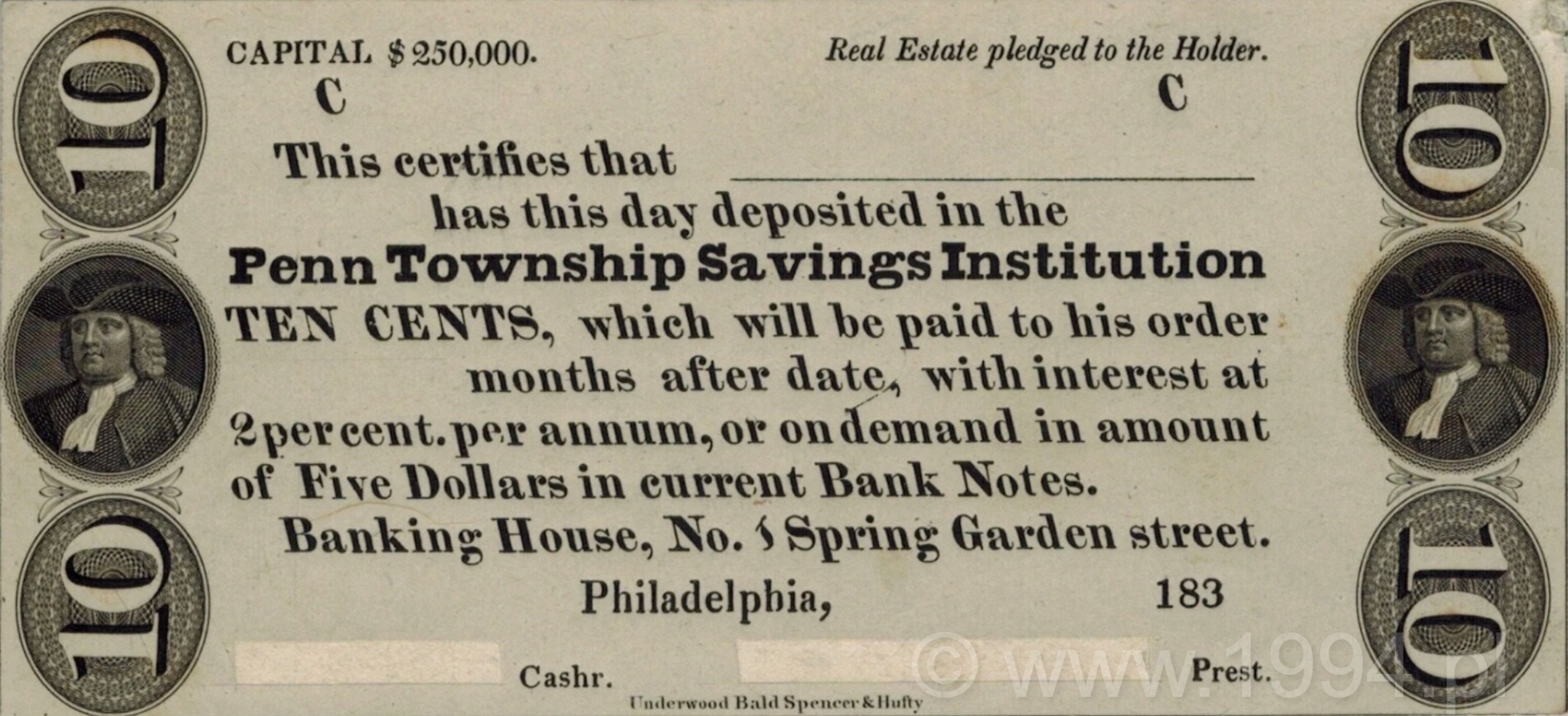
1830s Penn Township Savings Institution 10 Cents proof deposit certificate engraved by Underwood Bald Spencer & Hufty of Philadelphia

United States 1830s - Pennsylvania, Philadelphia - Penn Township Savings Institution 10 Cents Proof (Unlisted)

The engraving was executed by the Philadelphia firm Underwood, Bald, Spencer & Hufty, one of the prominent American security printers active before the later consolidation of major banknote engravers into the American Bank Note Company. Their work here demonstrates the refined steel engraving style characteristic of pre-Civil War American security printing, combining strong typographic layout with finely executed portrait vignettes. Read more →

United StatesObsolete Proof Note183010 CentsProof (Unissued) Obsolete ProofPick UnlistedUnlistedSavings Deposit CertificateFractional Savings NoteEarly Micro-SavingsMortgage Backed DepositWilliam Penn PortraitPenn Township Savings InstitutionPhiladelphia Banking HistoryMutual Savings BankUnderwood Bald Spencer & HuftyAmerican Security PrintingPre-American Bank Note Company Engraving19th Century EngravingUnited StatesPennsylvaniaPhiladelphia1830s10 CentsObsolete CurrencyEarly American BankingMuseum Grade
Held
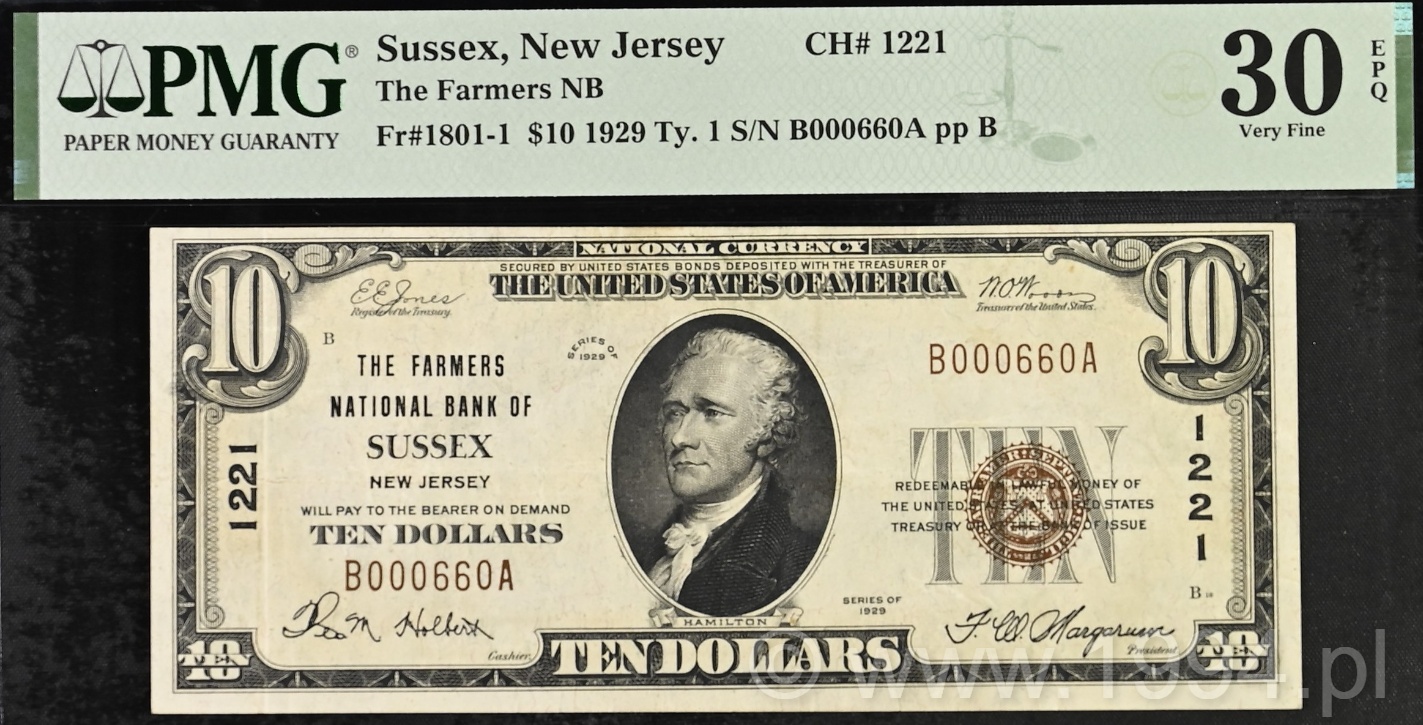
United States 1929 Type 1 - 10 Dollars National Bank Note The Farmers National Bank of Sussex New Jersey Fr 1801-1 CH 1221 PMG 30 EPQ

United States 1929 Type 1 - 10 Dollars National Bank Note - The Farmers National Bank of Sussex, New Jersey Charter 1221 (Fr. 1801-1)

The Farmers National Bank of Sussex, New Jersey, traces its charter to May 20 1865 when it opened in nearby Deckertown, a small agricultural hub in Sussex County. Chartered as number 1221, it succeeded the pre-existing Farmers Bank and quickly became the county’s central financial institution. The town adopted the name Sussex in 1903, prompting the bank’s title change the same year. For seventy years, the bank’s management remained a family affair: three generations of the Holbert and Margarum families served as cashiers and presidents, guiding the institution from the Civil War era through the Great Depression. Read more →

United StatesNational Bank Note192910 DollarsPMG 30 EPQ Very Fine 10 DollarsNational Bank NoteIssued NoteType 1SussexNew JerseyCharter 1221Hamilton1929PMG 30 EPQLocal Banking History
Held
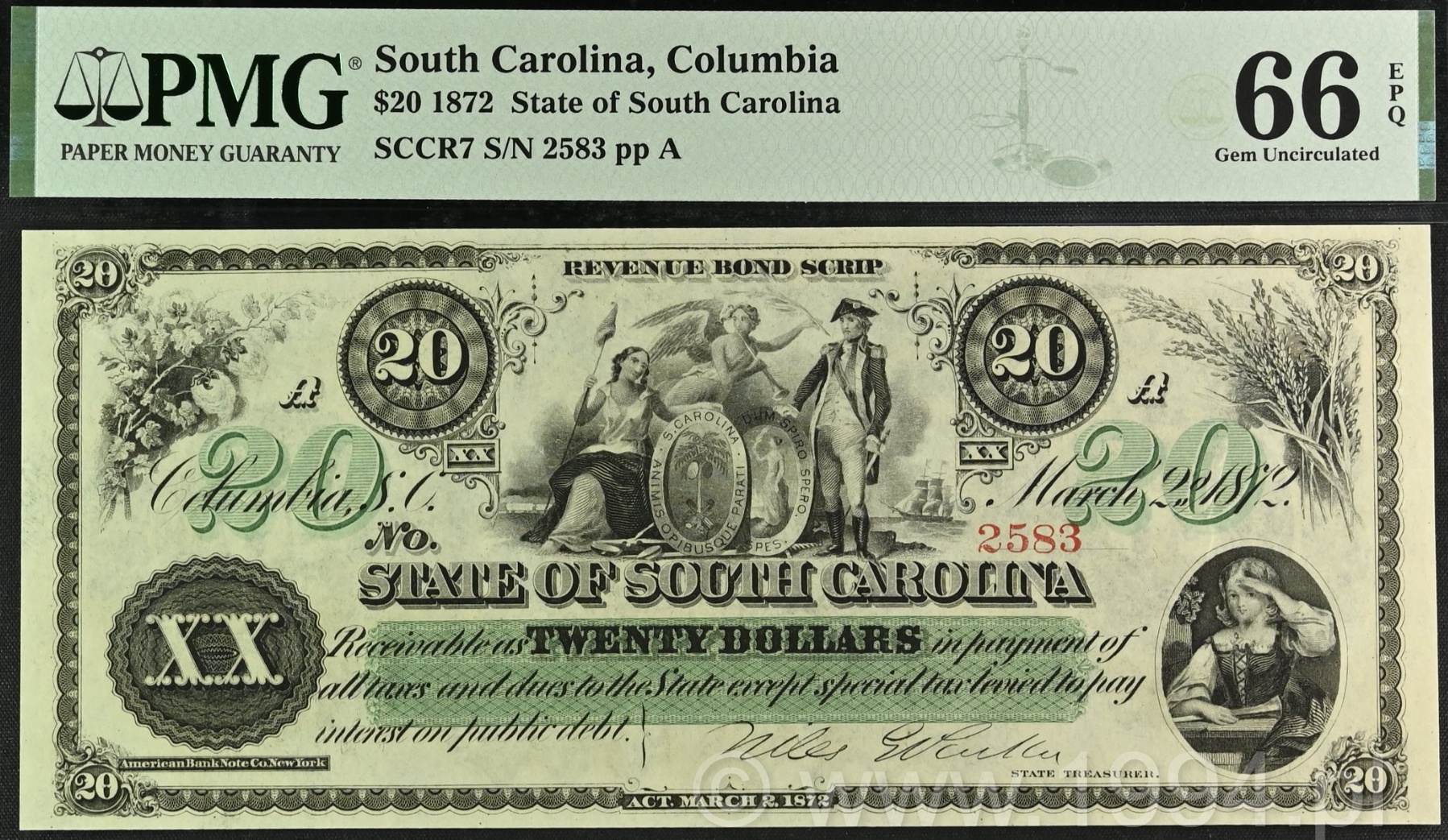
United States 1872 State of South Carolina 20 Dollars Revenue Bond Scrip Columbia Act March 2 1872 PMG 66 EPQ Gem Uncirculated

United States 1872 – State of South Carolina $20 Revenue Bond Scrip Act of March 2 1872 Columbia Issue

The $20 Revenue Bond Scrip of the State of South Carolina, dated March 2, 1872, represents one of the most ornate and historically revealing fiscal issues of the Reconstruction era. Authorized by the Act of March 2, 1872, these notes were used by the state government to pay outstanding obligations and to serve as tax receipts during a period of severe post–Civil War financial strain. Printed by the American Bank Note Company in New York, the scrip combined fine engraving, symbolic imagery, and the technical artistry characteristic of the firm’s early 1870s production. Read more →

United StatesState Issue187220 DollarsPMG 66 EPQ Gem Uncirculated United StatesSouth CarolinaColumbiaState IssueRevenue Bond Scrip1872ABNCAmerican Bank Note CompanyReconstruction EraPMG 66 EPQGem Uncirculated20 Dollars
Held
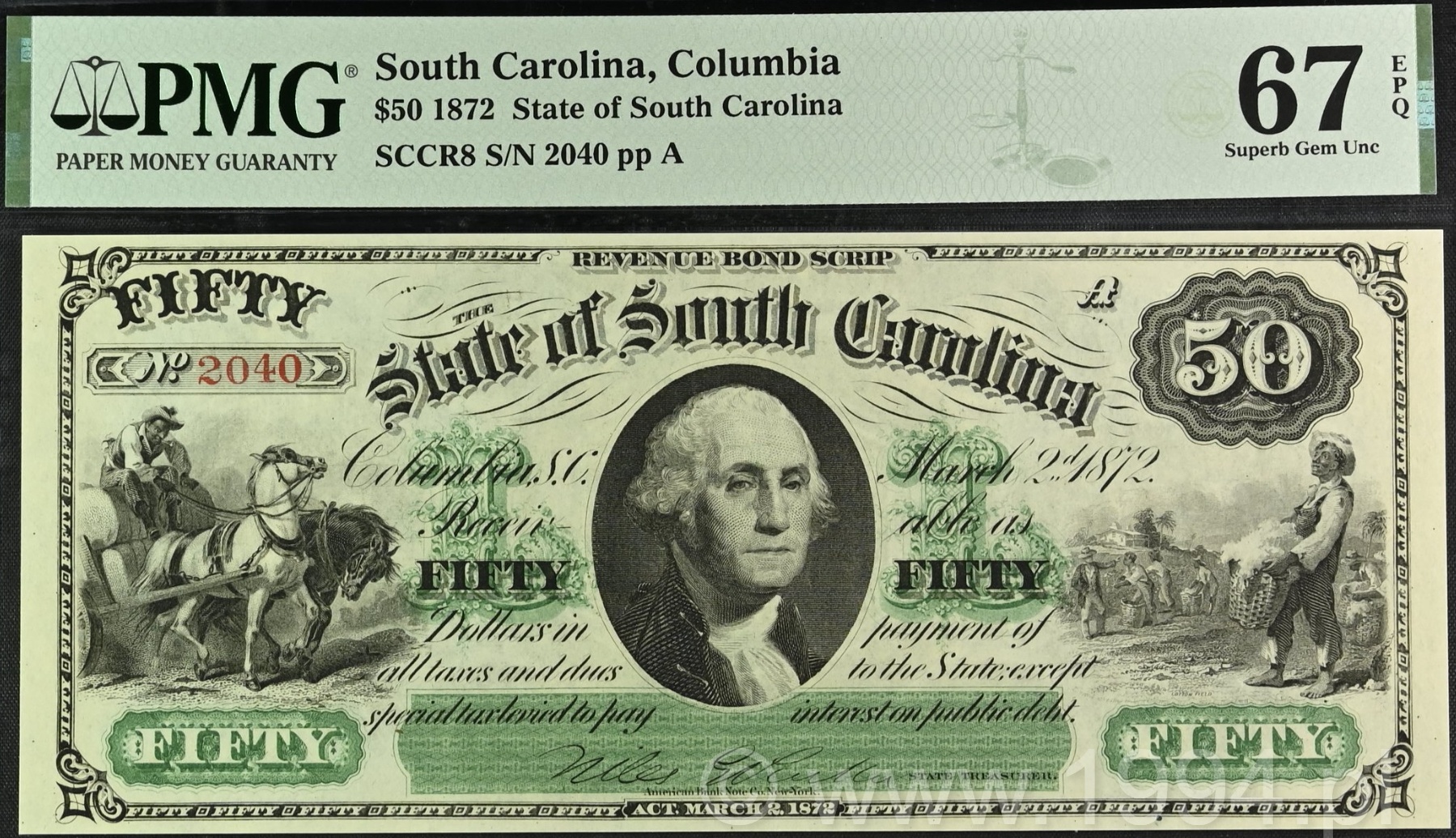
United States 1872 State of South Carolina 50 Dollars Revenue Bond Scrip Columbia Act March 2 1872 PMG 67 EPQ Superb Gem Uncirculated

United States 1872 – State of South Carolina $50 Revenue Bond Scrip Act of March 2 1872 Columbia Issue

Certified PMG 67 EPQ Superb Gem Uncirculated, this specimen exhibits perfect margins, deep ink contrast, and full original embossing. It survives as an exceptional artifact of post-Civil War American fiscal history and of the engraver’s art in its most confident, ornamental phase. Read more →

United StatesState Issue187250 DollarsPMG 67 EPQ Superb Gem Uncirculated United StatesSouth CarolinaColumbiaState IssueRevenue Bond Scrip1872ABNCAmerican Bank Note CompanyReconstruction EraPMG 67 EPQSuperb Gem Uncirculated50 Dollars
Held
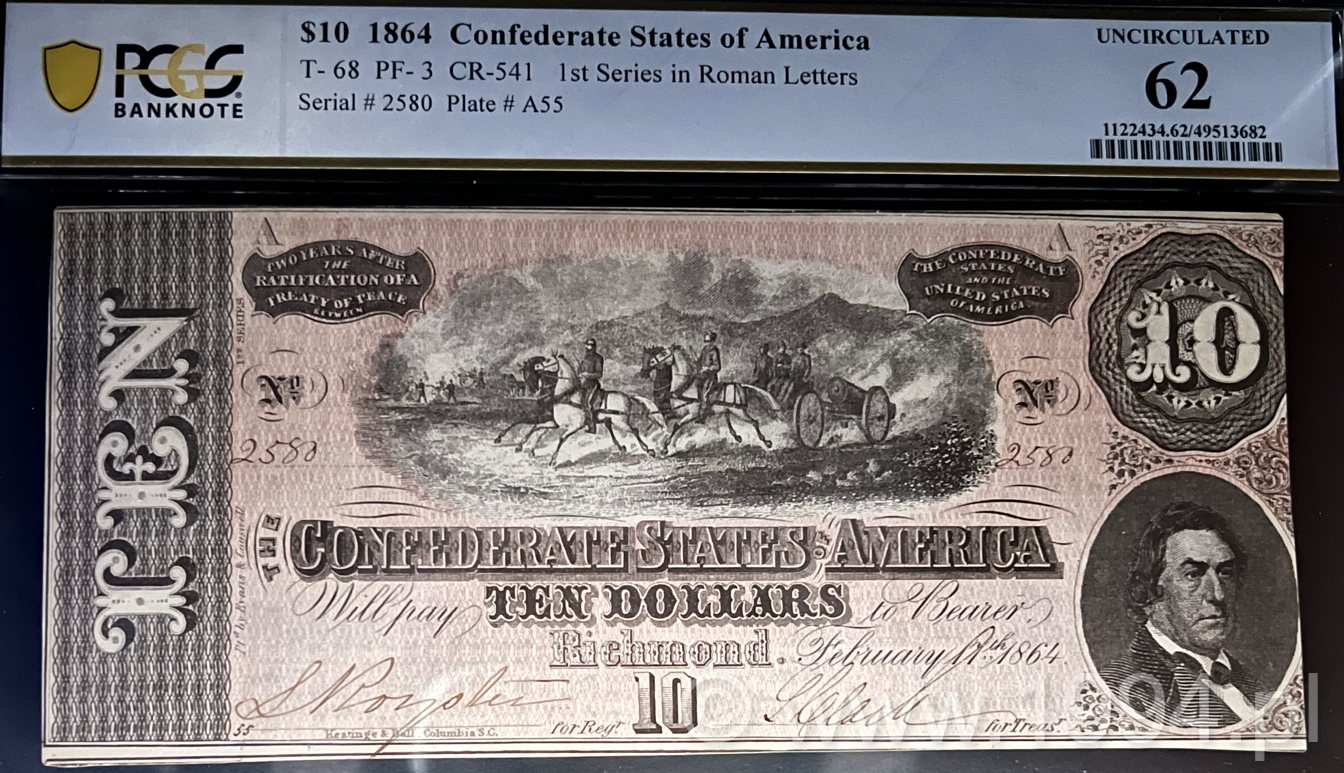
Confederate States of America 1864 10 Dollars T-68 PF-3 CR-541 First Series Roman Letters Richmond PCGS 62 Uncirculated with pink underprint.

Confederate States of America 1864 – 10 Dollars First Series in Roman Letters Richmond (T-68 PF-3 CR-541)

Serial 2580 and Plate A55 identify this example within its production sequence. Certified PCGS Banknote 62 Uncirculated, it retains crisp original paper, vivid pink tint, and bold hand signatures. As an artifact of Confederate finance, it bridges numismatic study with the broader economic realities of the Civil War. Read more →

Confederate States of AmericaTreasury Note186410 DollarsPCGS 62 Uncirculated Confederate Treasury NoteTreasury NoteCivil War CurrencyPink UnderprintFirst Series Roman Letters10 DollarsKeatinge & BallRichmond VirginiaT-68PF-3CR-541Plate A55Serial 2580Confederate monetary systemWartime emergency currencyHistoryConfederate States of America1864PCGS 62UncirculatedMuseum Grade
Held
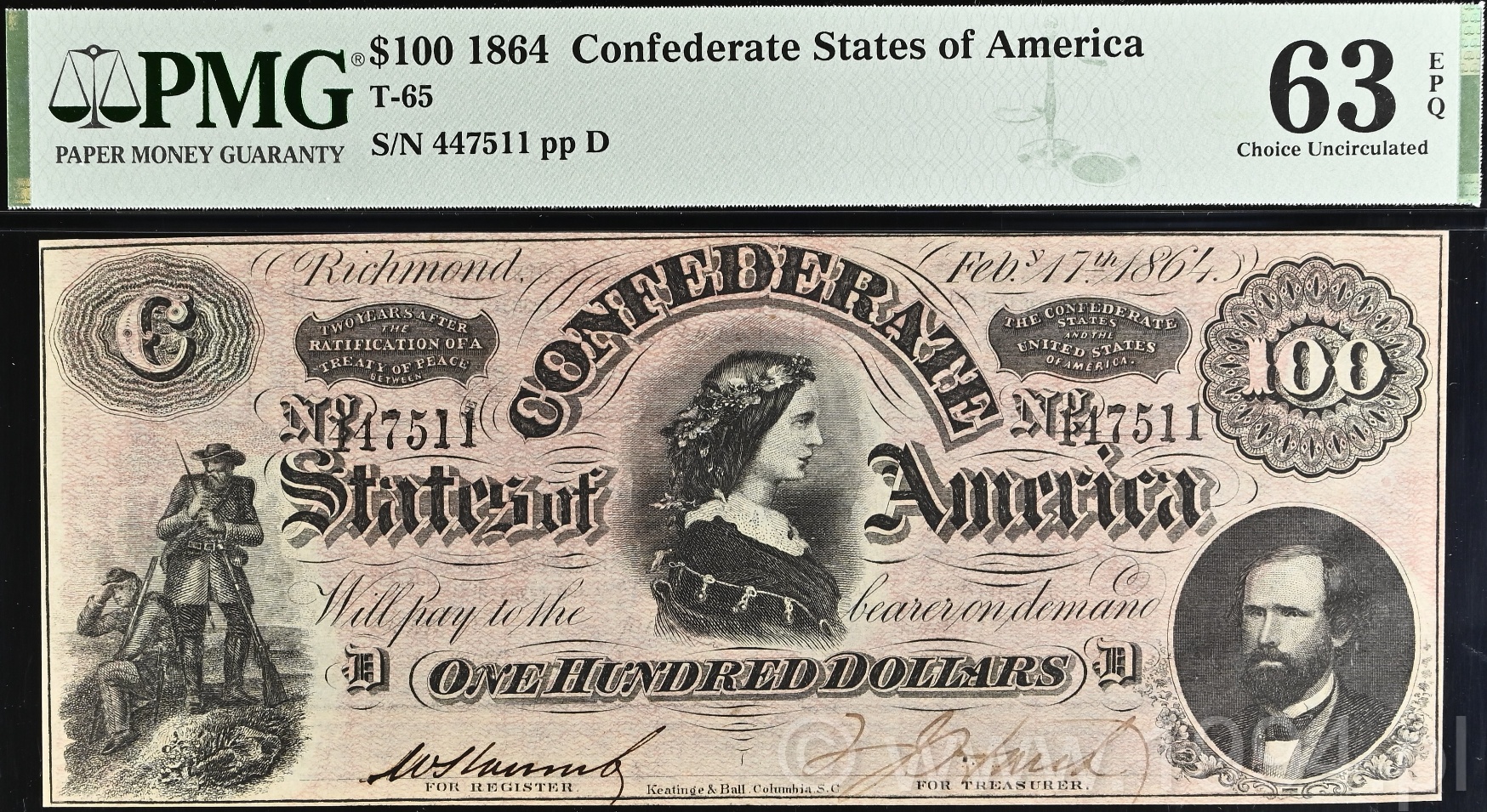
Confederate States of America 1864 100 Dollars T-65 CR-121 Pink Underprint Richmond PMG 63 EPQ Choice Uncirculated.

Confederate States of America 1864 – 100 Dollars Pink Underprint Richmond (T-65 CR-121)

The one-hundred-dollar note of the February 17, 1864 Confederate issue, cataloged as T-65 (Criswell 121), was the highest denomination of the Confederacy’s final paper-money series. Printed by Keatinge & Ball in Columbia, South Carolina, this design became one of the most recognizable icons of Confederate finance during the final year of the Civil War. Read more →

Confederate States of AmericaTreasury Note1864100 DollarsPMG 63 EPQ Choice Uncirculated Confederate Treasury NoteTreasury NoteCivil War CurrencyPink Underprint100 DollarsKeatinge & BallRichmond VirginiaT-65CR-121Plate DSerial 447511Confederate monetary systemWartime emergency currencyHistoryConfederate States of America1864PMG 63 EPQChoice UncirculatedMuseum Grade
Held
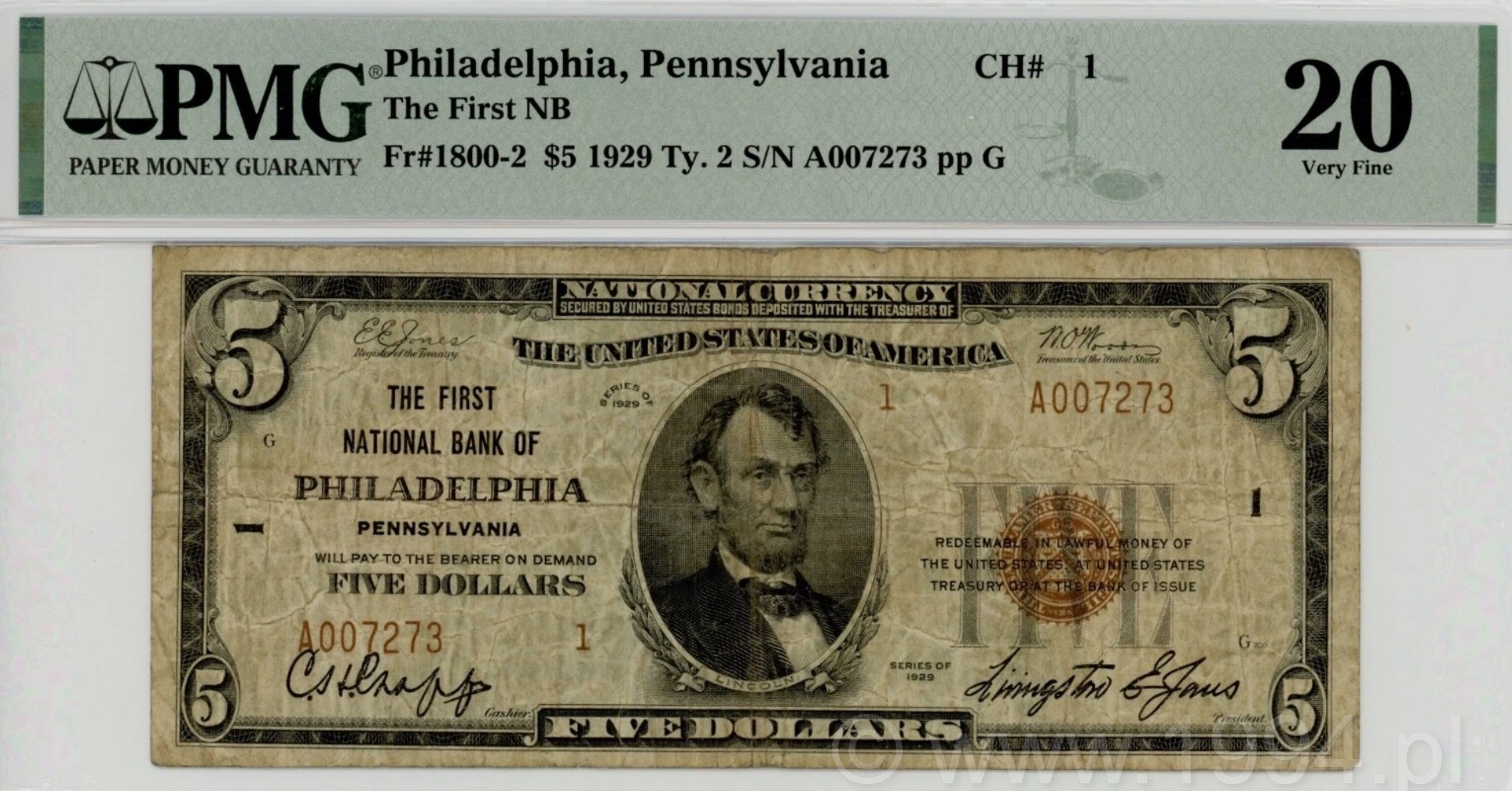
United States 1929 Type 2 - 5 Dollars National Bank Note The First National Bank of Philadelphia Pennsylvania Fr 1800-2 Charter 1 PMG 20 Very Fine

United States 1929 - 5 Dollars Type 2 National Bank Note - The First National Bank of Philadelphia, Pennsylvania Charter 1 (Fr. 1800-2)

Charter 1 defined the origin of federally chartered banking in the United States, anchoring Philadelphia’s financial network through multiple eras: Civil War greenbacks, Gilded Age expansion, and the economic transitions of the early twentieth century. Its officers, including C. H. Chaffee as cashier and Livingston E. Jones as president on this series, carried the institution’s legacy into the small-size note period. Read more →

United StatesNational Bank Note19295 DollarsPMG 20 Very Fine 5 DollarsNational Bank NoteIssued NoteType 2PhiladelphiaPennsylvaniaCharter 1Low CharterLincoln1929PMG 20 VFFederal Banking History
Held
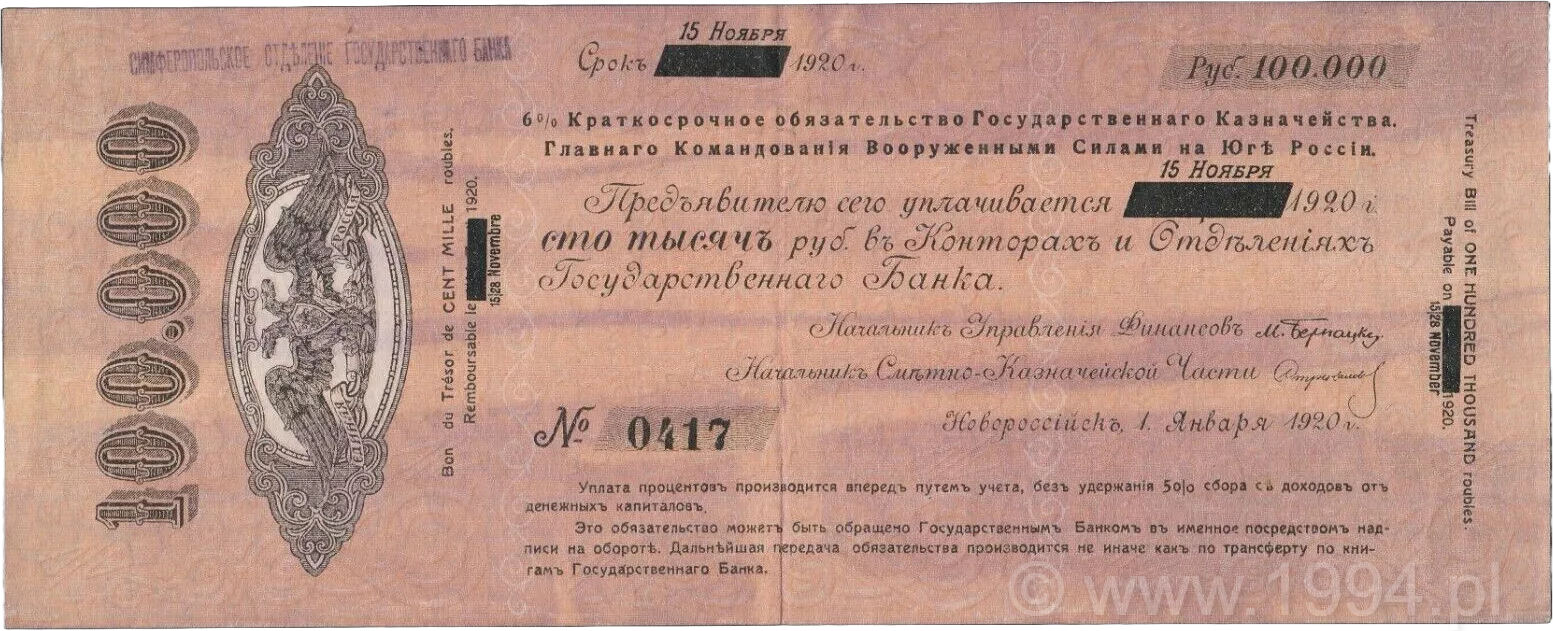
Armed Forces of South Russia 100,000 Rubles Treasury Bill, November 1920 (Pick S431c), Imperial eagle at left

Russia 1920 - Armed Forces of South Russia 100,000 Rubles Treasury Bill (November Issue, Pick S431c)

Six-percent short-term Treasury bill for 100,000 rubles issued by the Government Treasury of the Armed Forces of South Russia during the final phase of the Russian Civil War. This is the November 15, 1920 payable issue (Pick S431c), printed after General Pyotr Wrangel transferred the White administration to Crimea. The note follows the classical Imperial layout: bilingual Russian–French legends, the double-headed eagle in an ornate oval cartouche at left, and a formal typographic bond structure intended to signal continuity with pre-1917 state finance. Read more →

RussiaTreasury Bond Note1920100,000 Rubles- Treasury Bill100000 RublesFiscal DocumentHigh-Value DenominationGovernment ObligationBond IssueImperial EaglePick S431cRussian Civil WarWhite MovementArmed Forces of South RussiaWrangel GovernmentCrimea AdministrationCollapse of White RussiaEmergency FinanceExile Government HistoryTransitional Fiscal SystemsAnti-Bolshevik AdministrationRussiaCrimeaSimferopol1920Museum GradeR6 Extremely Rare
Held
↑ Top