Sorry, we couldn't find anything for “corneille bruck”. You're welcome to explore the collection below.
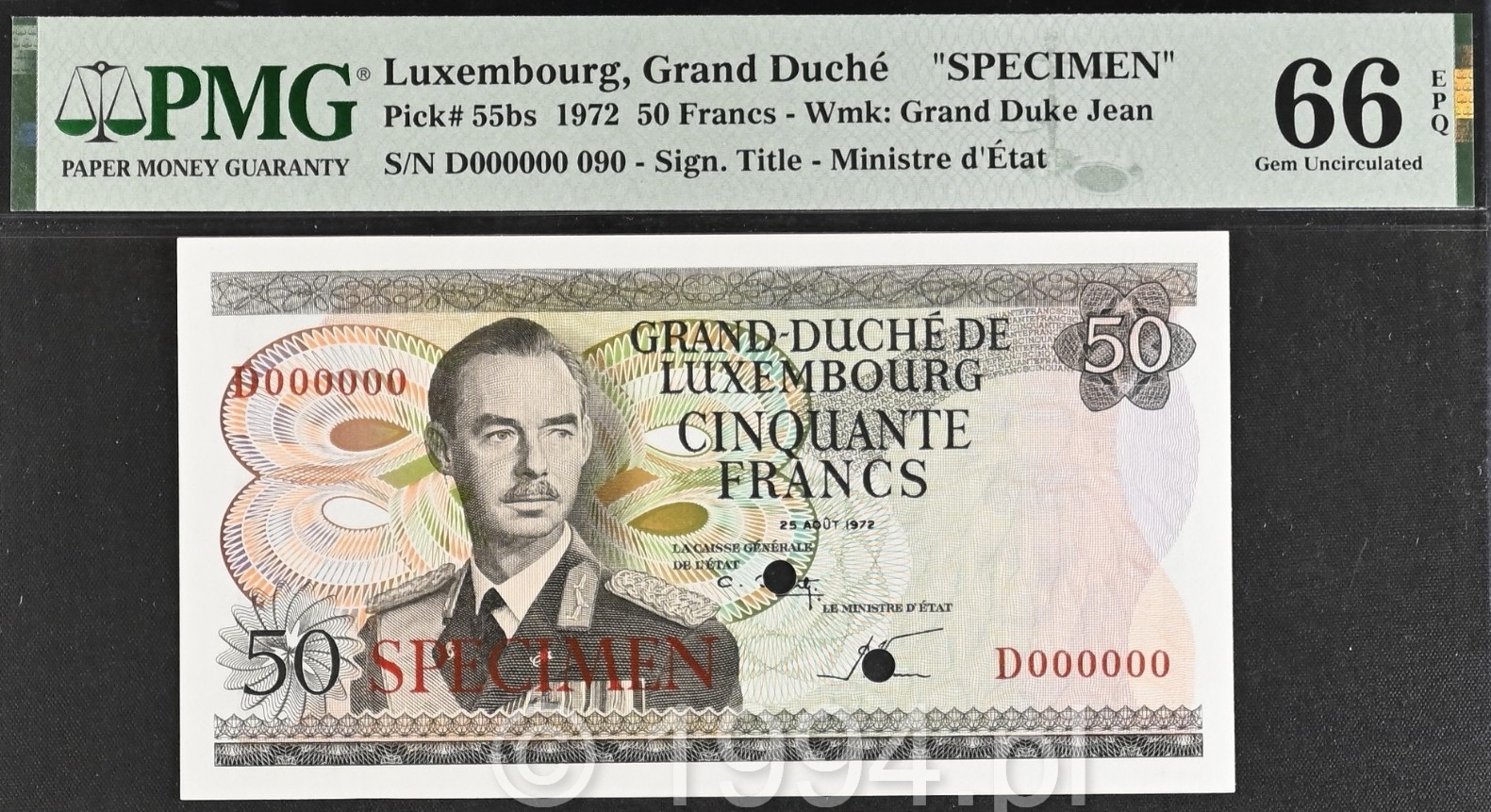
The note carries serial number D000000 in dual placement and is overprinted SPECIMEN in red across the face. Two circular punch holes are present across the central field, consistent with specimen handling and cancellation practices.
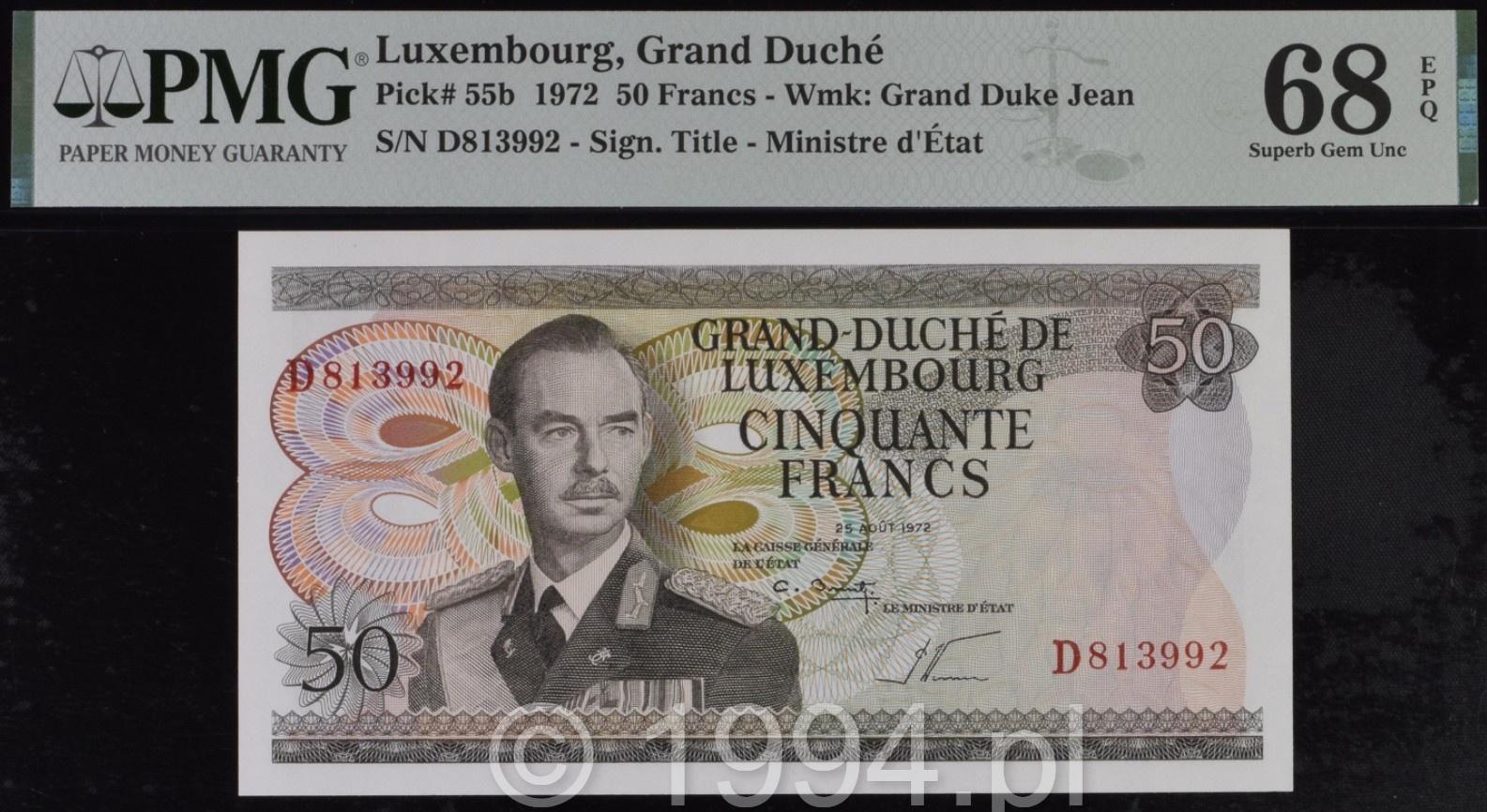
The obverse features the engraved portrait of Grand Duke Jean, positioned within an intricate multicolor guilloche structure composed of layered geometric forms in green, orange, and brown tones. The denomination CINQUANTE FRANCS is prominently centered, with the issuing authority LA CAISSE GÉNÉRALE DE L'ÉTAT printed below. Serial number D813992 appears in red at upper left and lower right, consistent with standard production layout.
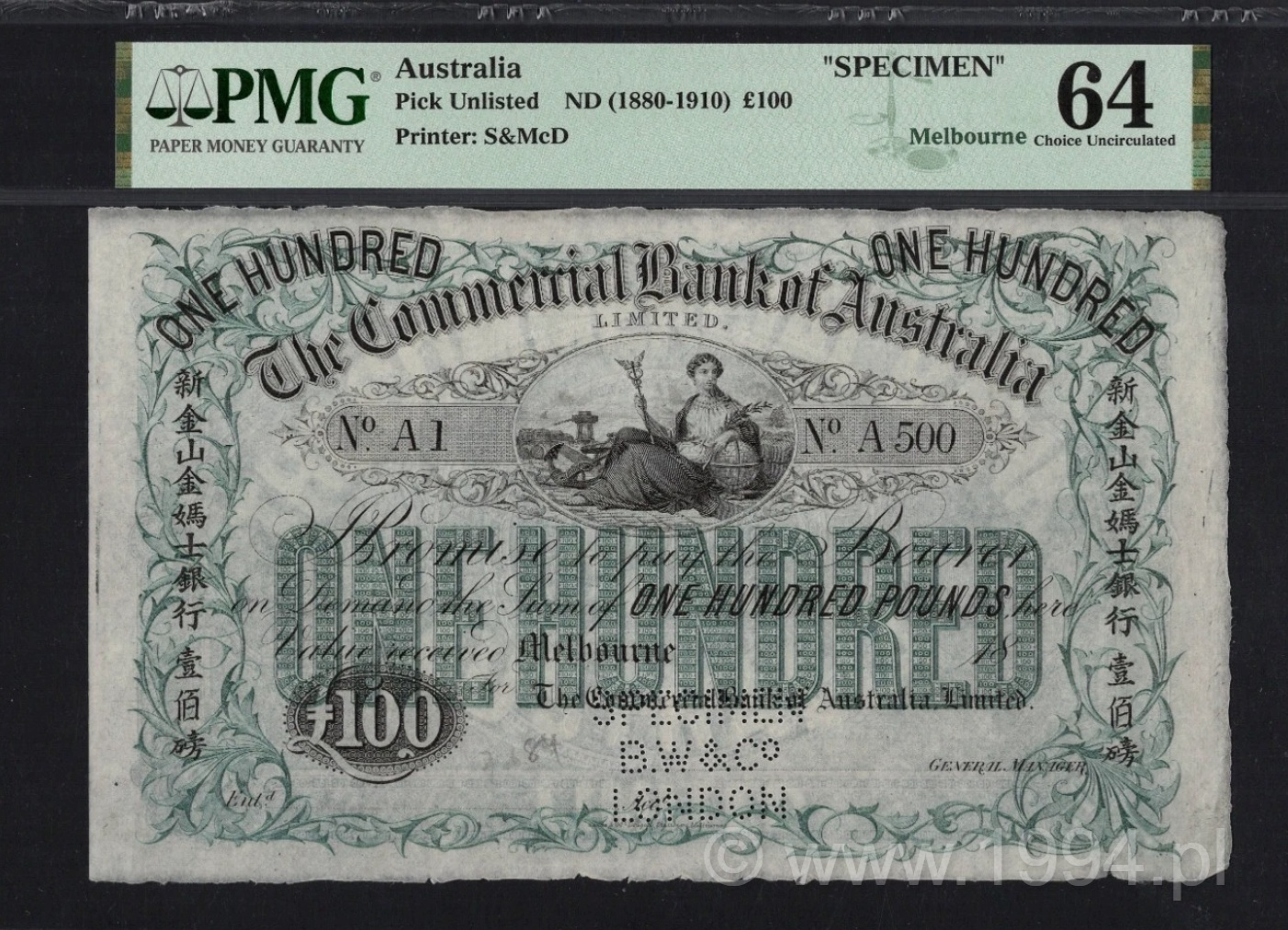
Engraved by Bradbury, Wilkinson & Co. in London and printed locally by Sands & McDougall in Melbourne, the note embodies the cooperative evolution of Australian banknote production. Bradbury, Wilkinson supplied the master plates, security devices, and engraving framework, while Sands & McDougall executed local printing to supply the bank's circulation demands across Victoria and the wider Australian colonies. The imprint 'Bradbury, Wilkinson & Co., Engravers, London' confirms its master-plate origin, while the local printer’s marks establish the dual-track production typical of the late colonial banking era.
The £20 denomination occupied the highest settlement tier within the BNZ system and was deliberately executed in a blue–slate color family reserved for upper-level clearing and interbank instruments. This chromatic choice followed Bradbury Wilkinson’s established BNZ color logic, progressing from £1 Green through £5 Red and £10 Brown to the subdued blue tones of the £20, visually signaling professional handling and high-value usage.