Results for “design transition”
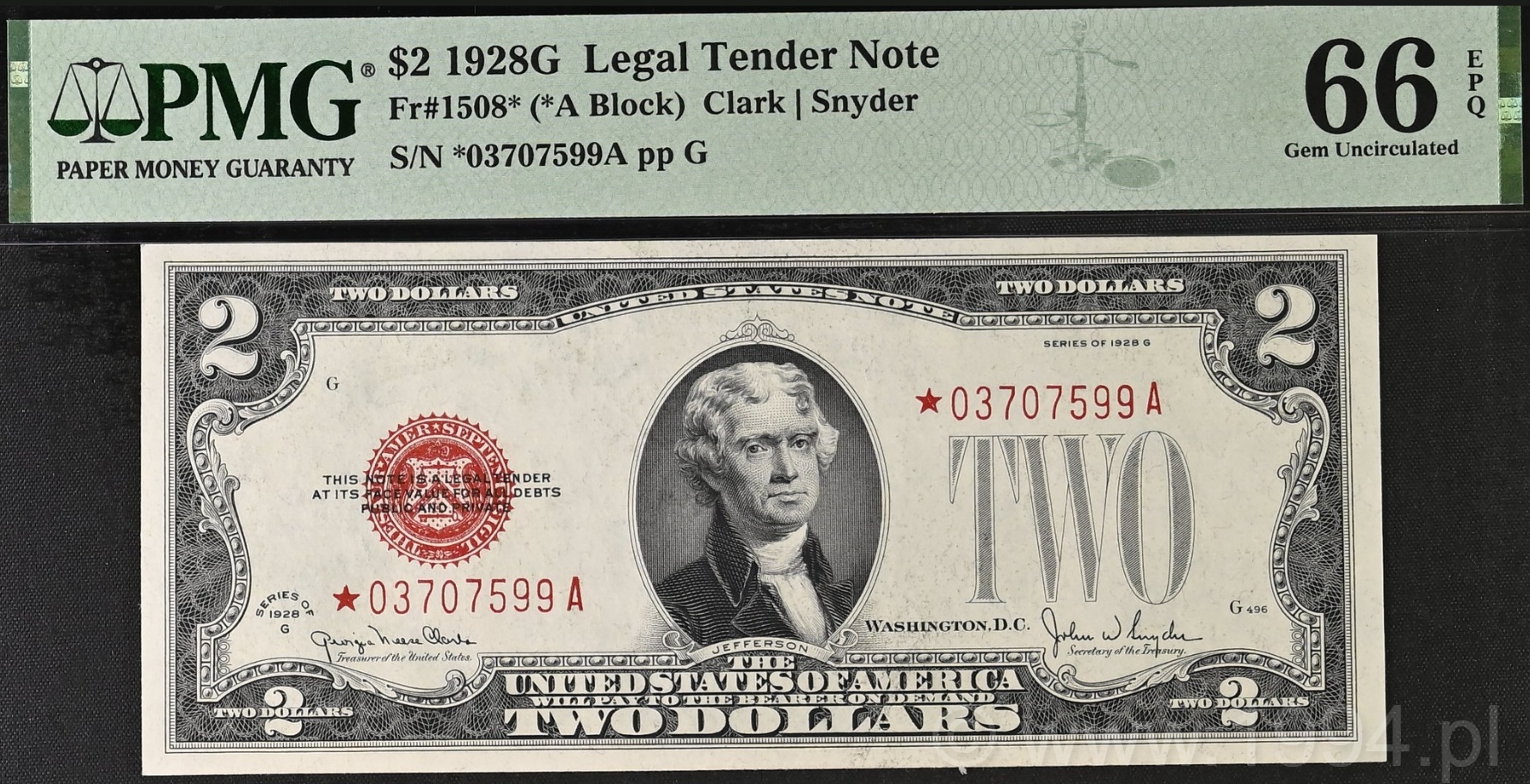
United States 1928G 2 Dollars Legal Tender Note with red seal and star replacement serial number *03707599A, PMG 66 EPQ Gem Uncirculated, featuring Thomas Jefferson portrait and vivid red overprints

United States 1928G - 2 Dollars Legal Tender Note Red Seal Star Replacement (Friedberg 1508*)

The 1928 series marked a pivotal design transition in American paper money. For the first time, the small-size format standardized dimensions across all denominations while preserving key artistic elements from the large-size issues. Thomas Jefferson’s engraved portrait, derived from Gilbert Stuart’s neoclassical rendering, dominates the face, flanked by intricate lathe-work and geometric scroll patterns. The bright red Treasury seal and serials create a dramatic contrast against the black intaglio engraving, establishing the iconic 'red seal' aesthetic that became synonymous with Legal Tender Notes for decades. Read more →

design transition
United StatesLegal Tender Note19282 DollarsPMG 66 EPQ Gem Uncirculated United StatesLegal Tender NoteIssued NoteStar ReplacementRed OverprintRed SealSmall Size1928G Series1928Thomas JeffersonFriedberg 1508*Clark–Snyder SignaturesBureau of Engraving and PrintingGem UncirculatedPMG 66 EPQEarly Small Size NoteUnited States CurrencyTwo Dollars
Held
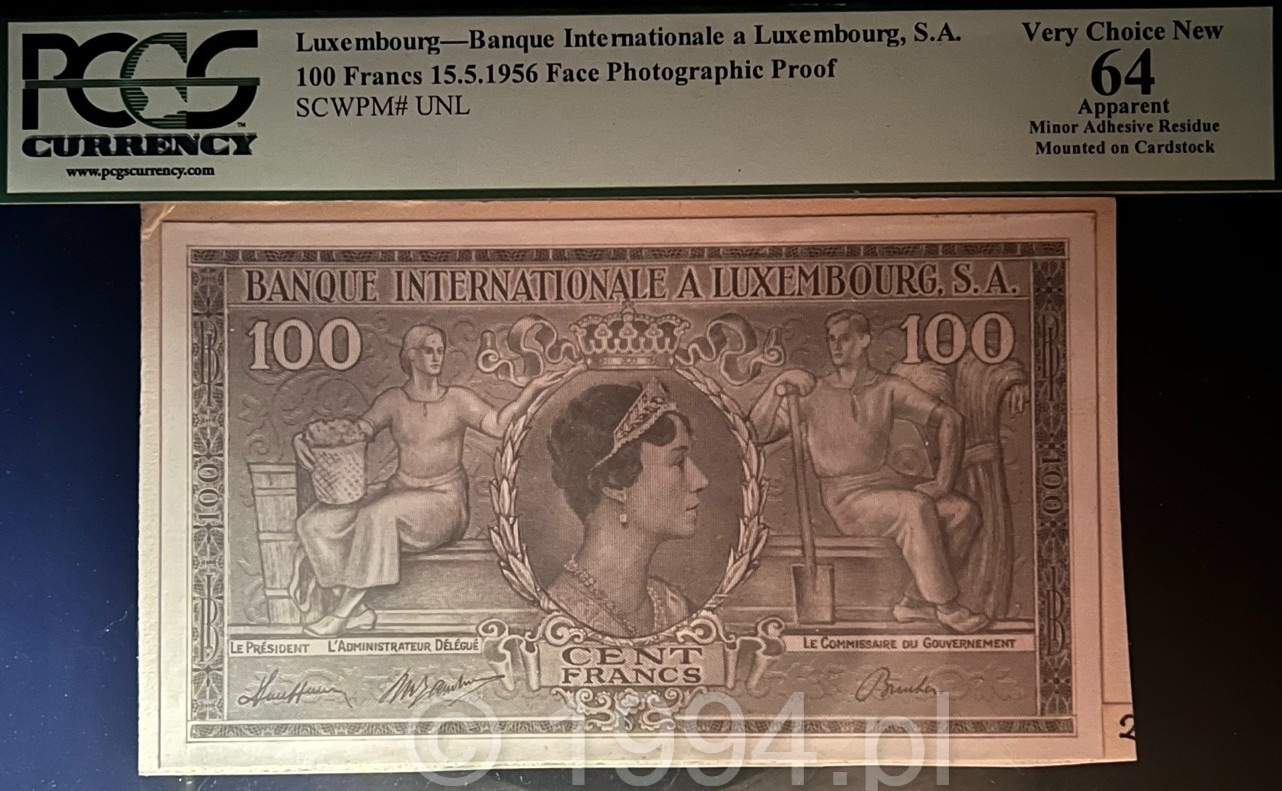
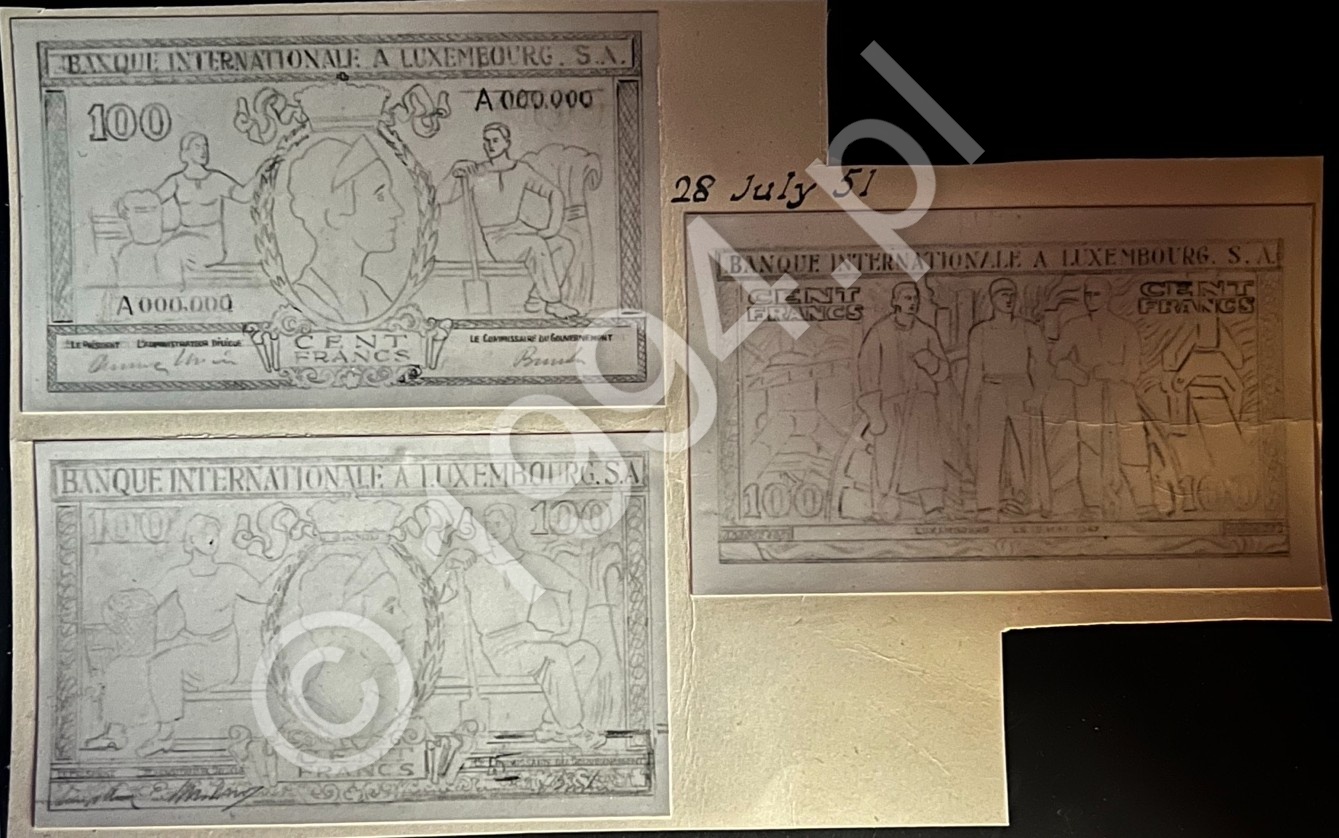
Luxembourg 1951 Banque Internationale a Luxembourg 100 Francs multi-stage photographic proof assembly showing early and advanced face designs with A000000 serial on front and reverse industrial vignette with dated annotations

Luxembourg 1951 Banque Internationale a Luxembourg 100 Francs Multi-Stage Photographic Proof Assembly (Pick Unlisted)

Notably, this advanced face retains a serial numbering system positioned on the front of the note, including a prefix and placeholder numbering in the form "A000000" placed above the signature area. This reflects a conventional banknote layout in which serial numbers are applied to the face. In contrast, the finalized 1956 issue and its corresponding photographic proofs relocate serial numbering entirely to the reverse, where it remains in the issued note. The presence of front-based numbering at this stage therefore documents a transitional design condition, demonstrating that the functional structure of the note had not yet reached its final configuration in 1951. Read more →

LuxembourgPhotographic Proof1951100 FrancsUncirculated Details 100 FrancsPick 13aPhotographic ProofMulti Stage ProofComposite Proof AssemblyFace ProofBack ProofEarly Design StageAdvanced Design StageSerial On FrontA000000 PlaceholderDesign TransitionSerial Placement EvolutionBanque Internationale a LuxembourgBanknote Design ProcessEngraving DevelopmentGuillocheIndustrial VignetteWorkers and MachineryLuxembourg1951Pick UnlistedR9 Extremely RareHistoryMuseum GradeAnnotationsHandwritten Annotations
Held
↑ Top