Results for “dual denomination”
Complete nine-note Stockholm Spinnhus pollett monetary system from circa 1785, including all denominations from one half öre to one daler, preserved in unissued condition and classified as R10 extremely rare.

Sweden 1785 - Stockholm Spinnhus Pollett System – Complete Nine-Denomination Institutional Currency Set:One Half Öre to One Daler (Pick Unlisted)

The monetary system consists of nine denominations: one half öre, one öre, two öre, five öre, six öre, seven öre, sixteen öre, twenty-four öre and one daler. Each note was engraved with a distinct ornamental frame and printed anopisthographically on eighteenth-century Swedish rag paper. All examples remain unissued and uncirculated, with several retaining archival tape residue from long-term institutional storage. Individual denominations are exceptionally rare, and the higher values-particularly seven öre, sixteen öre, twenty-four öre and one daler-are almost never encountered in private collections. Read more →

dual denomination
SwedenInstitutional Paper Currency Set1785Complete nine-note system: one half öre, one öre, two öre, five öre, six öre, seven öre, sixteen öre, twenty-four öre, one dalerUncirculated PollettInstitutional paper currencyEngraved copperplate noteEighteenth century rag paperAnopisthographic printingUnissuedUncirculatedStockholm engravingSwedish copperplate productionPre-industrial note manufactureStockholm SpinnhusLångholmen prison economyPenal labor currencyClosed economy tenderProto-fiat institutional moneyInternal monetary systemSweden1785One half öreOne öreTwo öreFive öreSix öreSeven öreSixteen öreTwenty-four öreOne dalerFull denomination setPick UnlistedR10 UniqueR10UniqueUnique Known ExampleUnique Set
Held
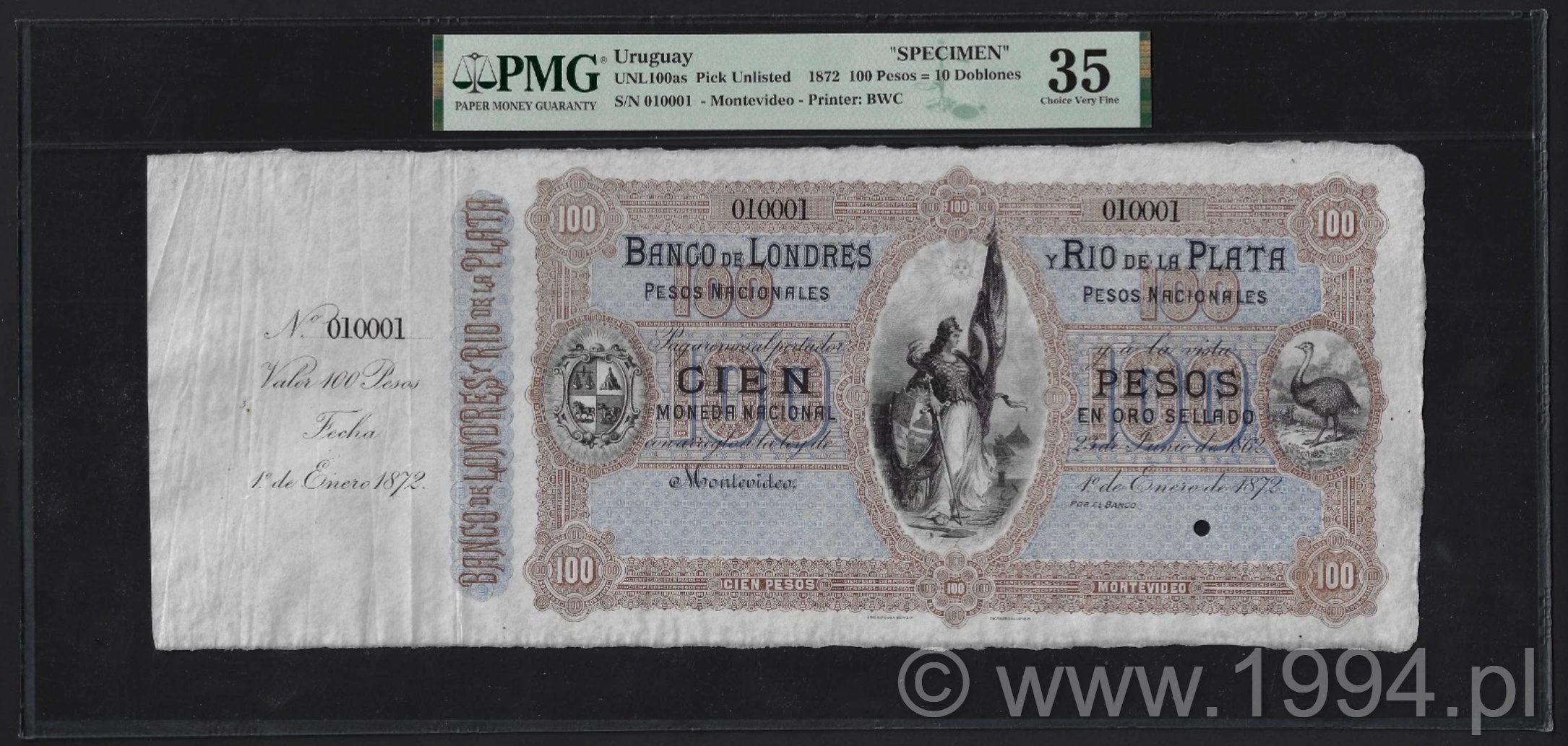
Uruguay 1872 100 Pesos equals 10 Doblones printer archival specimen, early serial number 010001, printed by Bradbury Wilkinson

Uruguay 1872 - Banco de Londres y Rio de la Plata 100 Pesos = 10 Doblones Specimen (Pick Unlisted)

A printer’s archival specimen of the 1872 issue of the Banco de Londres y Rio de la Plata, denominated 100 Pesos Nacionales with an explicit equivalence to 10 Doblones in gold. This dual-denomination construction represents one of the most ambitious monetary experiments undertaken in nineteenth-century Uruguay, attempting to anchor paper currency directly to a fixed gold value at a time of persistent instability and public distrust in fiduciary issues. Read more →

dual-denomination
UruguaySpecimen1872100 Pesos = 10 DoblonesPMG 35 Choice Very Fine SpecimenPrinter Archival SpecimenDual DenominationGold EquivalenceEarly Pull Serial 010001Oversized FormatBradbury WilkinsonBWCLondon Security PrintingNineteenth Century EngravingArchival Reference NoteGold Standard ExperimentPeso Doblone ParityBanco de Londres y Rio de la PlataLatin American Monetary HistoryNineteenth Century State FinanceUruguayMontevideo1872Pick UnlistedMuseum GradeR9 Extremely RareUnique
Held
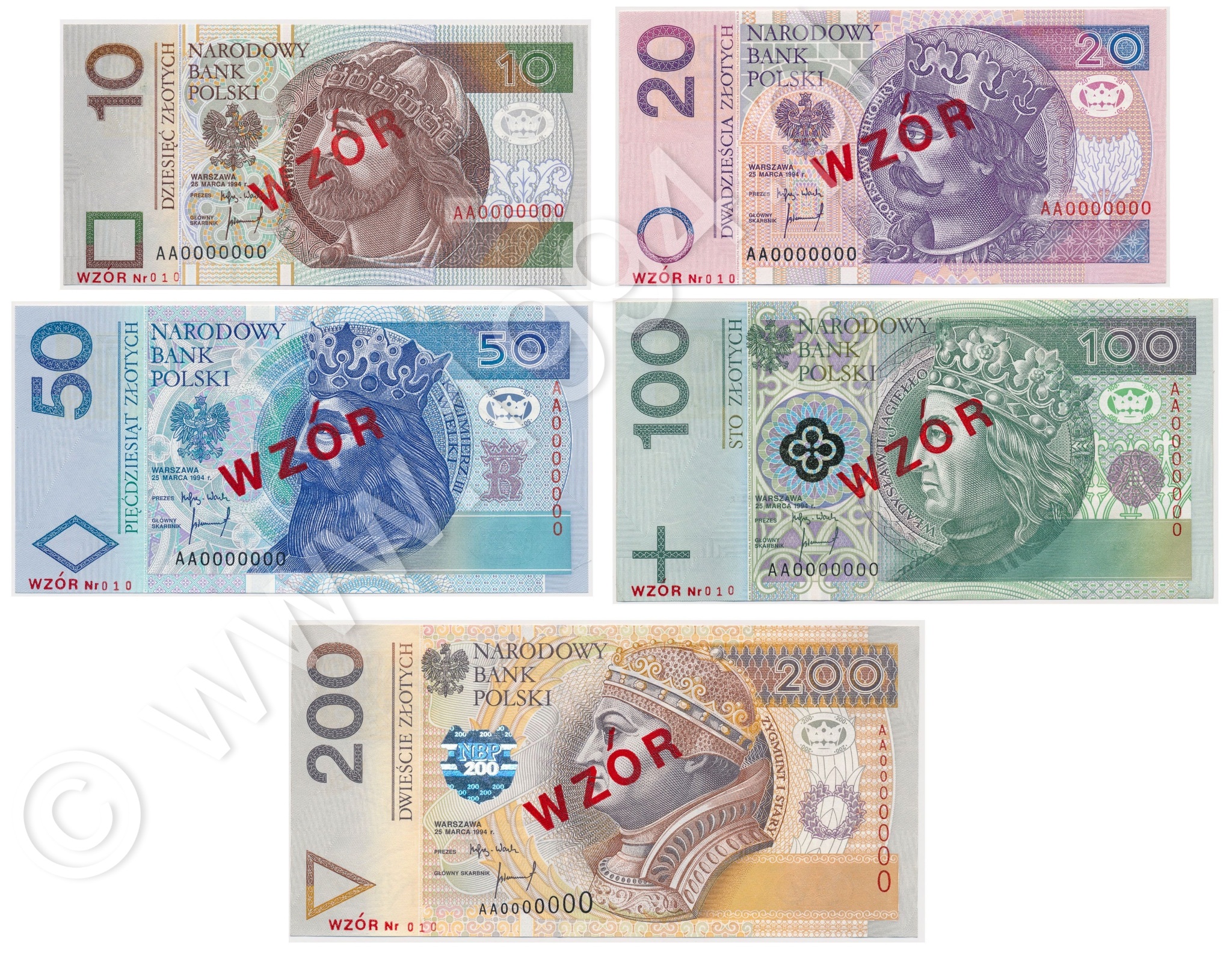
Poland 1994 Narodowy Bank Polski complete WZÓR specimen set showing all five denominations with identical specimen number 010 in original NBP presentation folder

Poland 1994 - Narodowy Bank Polski Complete Five-Denomination Series WZÓR Number 010 Specimen Set

A complete five-denomination WZÓR specimen set from the 1994 Polish banknote series, comprising 10, 20, 50, 100, and 200 Zlotych. All five notes bear the same very low official specimen number, WZÓR No. 010, together with serial number AA0000000. Read more →

Specimen configuration; individual denominations catalogued separately
PolandSpecimen Set199410 Złotych • 20 Złotych • 50 Złotych • 100 Złotych • 200 ZłotychSpecimen (WZÓR) Specimen SetWZOR SpecimenSpecimenWZORWZOR SetSpecimen Number 010WZOR Number 010Lowest Released WZOR NumberComplete Five-Denomination SetPost-Denomination Currency ReformNarodowy Bank PolskiModern Polish BanknotesPoland1994R9 Extremely RareUniqueUnique SetMuseum GradePick 173sPick 175sPick 176sPick 177sThomas De La Rue
Held
↑ Top