Collection PL

About 1994.pl
Results for “local currency”
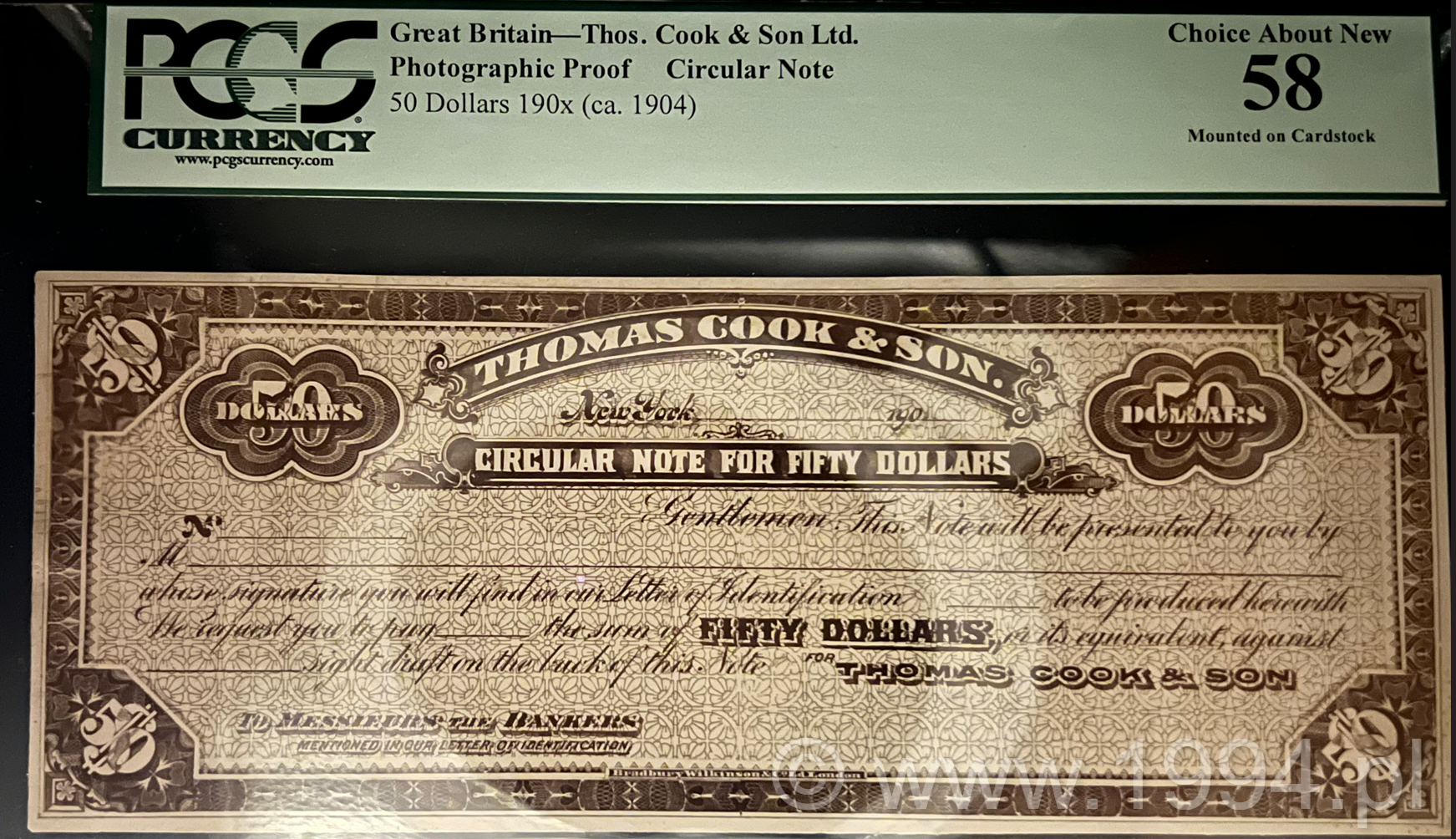
Great Britain ca. 1904 Thomas Cook and Son 50 Dollars Circular Note photographic proof mounted on card stock with signature field and engraved security background

Great Britain 1904 - Thomas Cook & Son $50 Circular Note Photographic Proof (Pick Unlisted)

Circular Notes were developed by Thomas Cook and Son as an international payment system designed specifically for travelers. The instrument allowed a holder to pre-purchase value in one country and redeem it abroad through a network of authorized agents, banks, and correspondents. In practical use, the traveler would sign the note upon purchase and present it overseas, where identity would be verified before funds were paid out in local currency. Read more →

Great BritainPhotographic Proof190450 DollarsPCGS 58 Choice About New Photographic Proof50 DollarsCircular NoteTravellers ChequeTravelers CheckSignature Verification InstrumentPrivate IssuePre Issue Production ProofMounted on Card StockThomas Cook and SonEarly Travellers Cheque SystemEarly Travelers Check SystemInternational Finance HistoryGlobal Payment SystemsEdwardian Security PrintingProofing and Plate ApprovalDesign Verification ArtifactGreat Britain1904Pick UnlistedMuseum GradeR9 Extremely RareUnique
Held
Great Britain ca. 1923 Thomas Cook & Son 100 Rupees Travellers Cheque photographic proof mounted on card stock, PCGS 62 New

Great Britain 1923 - Thomas Cook & Son Travellers Cheque 100 Rupees Photographic Proof (Pick Unlisted)

By the early 1920s, Thomas Cook & Son had fully transitioned from a travel agency into a global financial intermediary, operating one of the most extensive private payment networks in the world. Rupee-denominated travellers cheques were a key component of this system, allowing British and colonial travelers to draw local currency securely without transporting coin or bullion. The 100 Rupees denomination functioned as a high-value instrument within the Indian Empire, suited to extended travel and commercial expenditure. Read more →

Great BritainPhotographic Proof1923100 RupeesPCGS 62 New Photographic ProofTravellers ChequeTravelers CheckPrivate IssuePre Issue Production ProofMounted on Card StockThomas Cook and SonImperial Travel FinanceBritish India Monetary SystemPrivate Payment InstrumentsSecurity PrintingDesign Verification ArtifactProofing ProcessGreat BritainBritish India1923Pick UnlistedMuseum GradeR9 Extremely RareUnique
Held
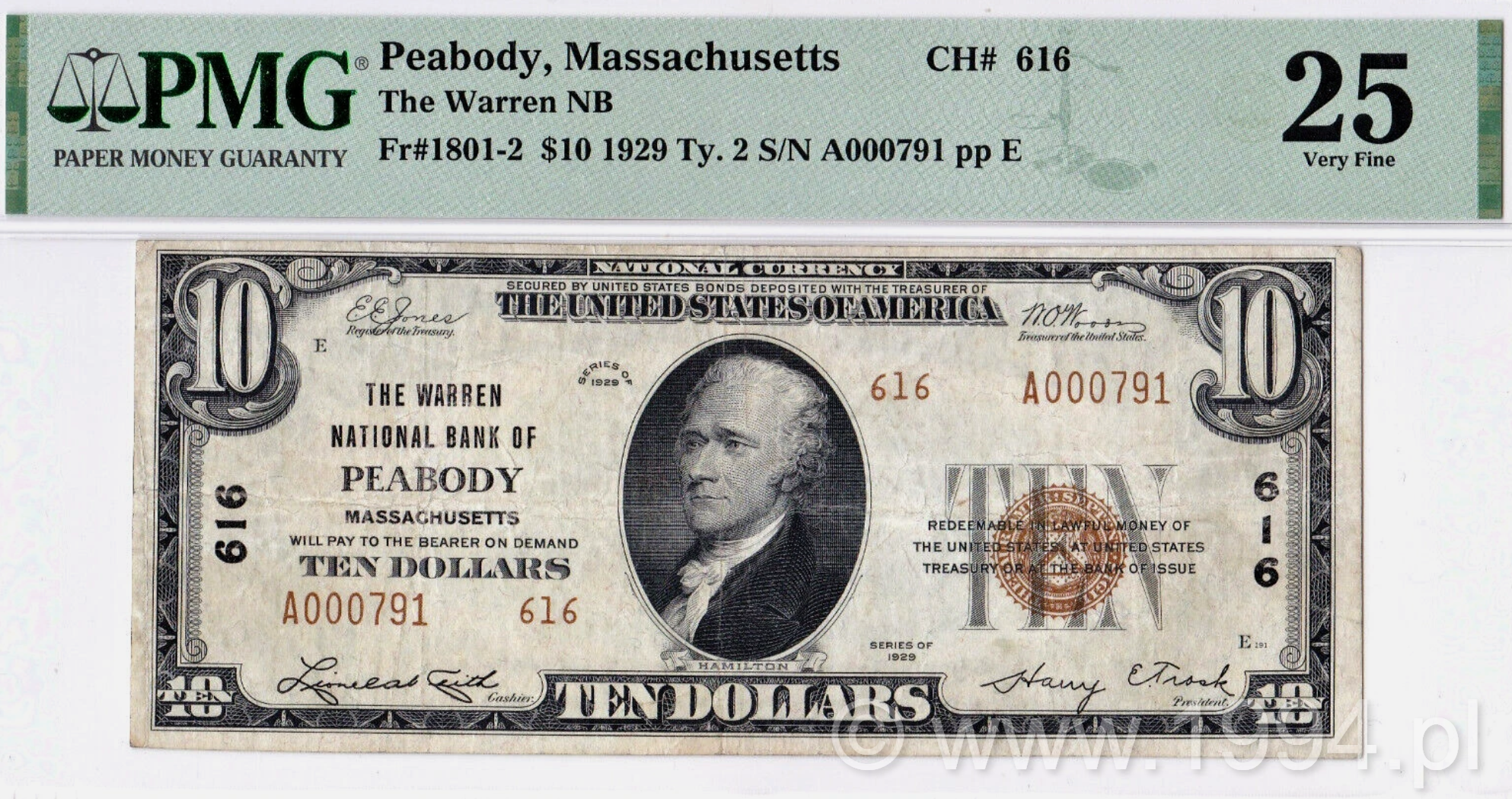
United States 1929 The Warren National Bank of Peabody Massachusetts 10 Dollars Type 2 National Bank Note, Charter 616, Friedberg 1801-2, serial number A000791, plate position E, brown seal National Currency note certified PMG 25 Very Fine.

United States 1929 - The Warren National Bank of Peabody, Massachusetts 10 Dollars Type 2 National Bank Note, Charter 616 (Fr. 1801-2)

The note belongs to the small-size National Currency series introduced in 1929, when United States paper money was reduced to the modern smaller format. National Bank Notes of this period retained the local bank identity that had defined the National Banking era since the Civil War, but presented it within a standardized federal currency design printed by the Bureau of Engraving and Printing. Read more →

United StatesNational Bank Note192910 DollarsPMG 25 Very Fine National Bank NoteNational CurrencySmall Size National Bank NoteSeries of 19291929 Type 2Type 2 National Bank Note10 DollarsTen DollarsBrown SealIssued NoteFederal CurrencyLocal BanknoteCharter Bank NoteCharter Number NoteThe Warren National Bank of PeabodyWarren National BankPeabody MassachusettsPeabodyMassachusettsEssex CountyCharter 616CH 616Serial A000791Plate Position EAlexander HamiltonHamilton PortraitBureau of Engraving and PrintingBEPUnited States TreasuryNational Banking EraSmall Size Currency1930s CurrencyPeabody Leather IndustryLeather IndustryNew England BankingMassachusetts Banking HistoryLocal Banking HistoryIndustrial Banking HistoryAmerican Financial HistoryFriedberg 1801-2Fr. 1801-2PMG 25 Very FinePMG 25 VFVery FineCertified NoteUnited StatesUnited States 1929
Held
Edo-period Japanese 5 Momme Silver hansatsu printed by woodblock on handmade washi paper, showing vertical kanji inscriptions, circular and boxed validation seals, an oil merchant seal, and a reverse design with Daikokuten, rice bale symbolism, and ornamental wave-pattern security carving.

Japan 1800 - Edo Period 5 Momme Silver Hansatsu with Daikokuten Reverse and Oil Merchant Validation Seal Woodblock Printed on Handmade Washi Paper

This Edo-period hansatsu is a striking survivor from the decentralized monetary world of Tokugawa Japan, when paper currency was not yet a national system but a local instrument of trust, exchange, and authority. Printed by hand-carved woodblock on handmade washi paper, the note belongs to the long, narrow format associated with feudal domain and regional exchange issues. These notes circulated within local commercial systems, where value was understood through seals, inscriptions, redemption practice, and the reputation of the issuing authority rather than through modern banknote conventions. Read more →

JapanHansatsu18005 Momme SilverFine to Very Fine estimated JapanJapan 1800Year 1800Edo PeriodLate Edo PeriodTokugawa EraTokugawa ShogunatePre-Meiji JapanHansatsuFeudal Domain NoteDomain-Issued Local NoteRegional Paper MoneyLocal CurrencyFive Momme Silver5 Momme SilverSilver Five MommeGin Go MonmeMomme Weight StandardSilver CurrencyCommodity CurrencyOil Merchant SealOil Commodity SealMerchant ScripRegional Exchange HouseCommodity-Linked CurrencyMerchant ExchangeRice CurrencyEdo Monetary SystemWoodblock Printed NoteHandmade Washi PaperVermilion SealCircular SealBoxed Validation SealCalligraphic Security TextWave Pattern ReverseAnti-Counterfeiting Woodblock DesignDaikokutenDeity of WealthDeity of AbundanceRice Bale MotifMallet of FortuneReligious MotifProsperity SymbolismHistoric CurrencyAsian Paper MoneyEighteenth CenturyNineteenth CenturyPick UnlistedNot Listed in PickRarityMuseum GradeHistory
Held
↑ Top