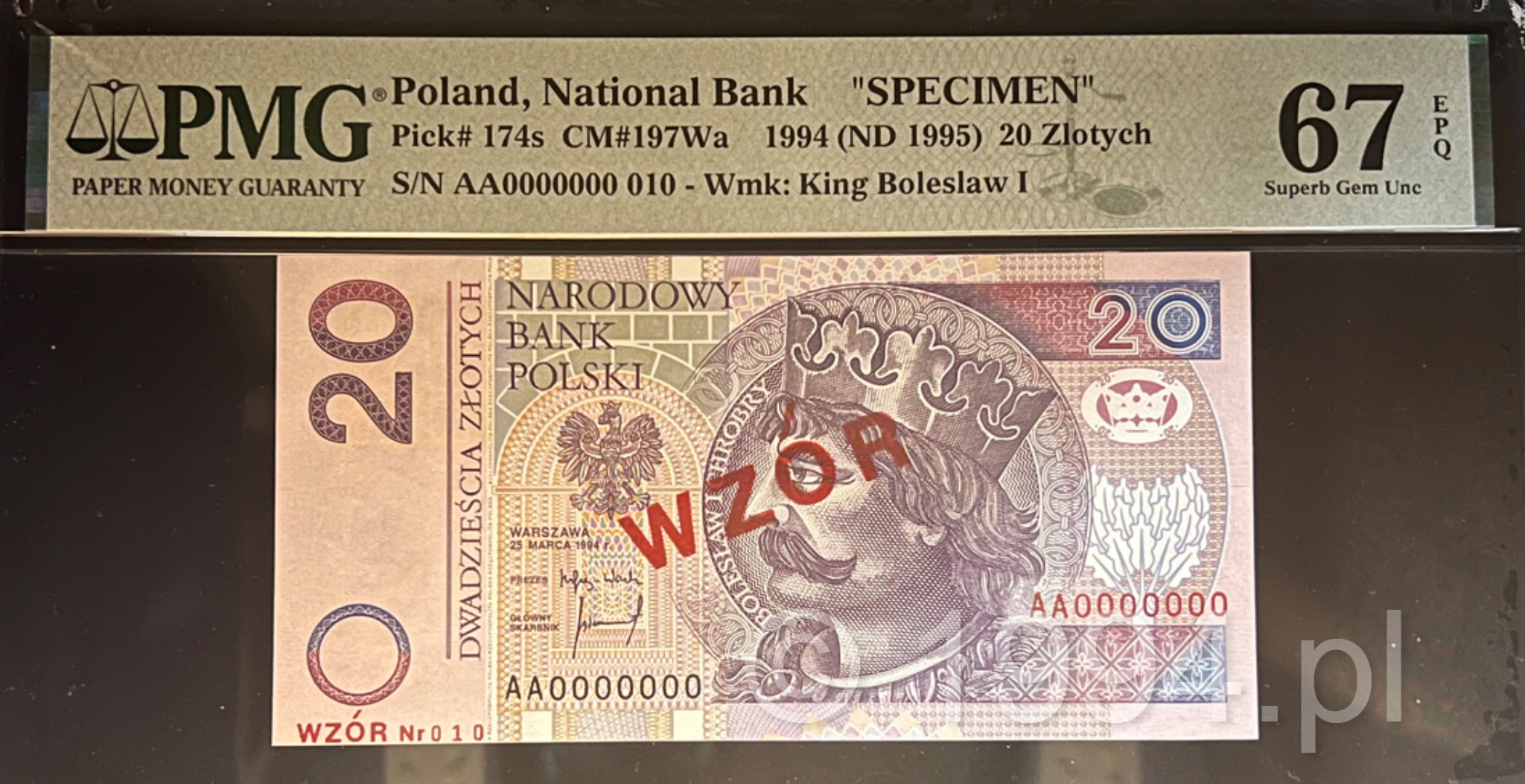
Poland 1994 - 20 Zlotych, Narodowy Bank Polski WZÓR Specimen Number 010 (Pick 174s)
The banknote was designed by Andrzej Heidrich and printed by Thomas De La Rue in London for the National Bank of Poland. Read more →
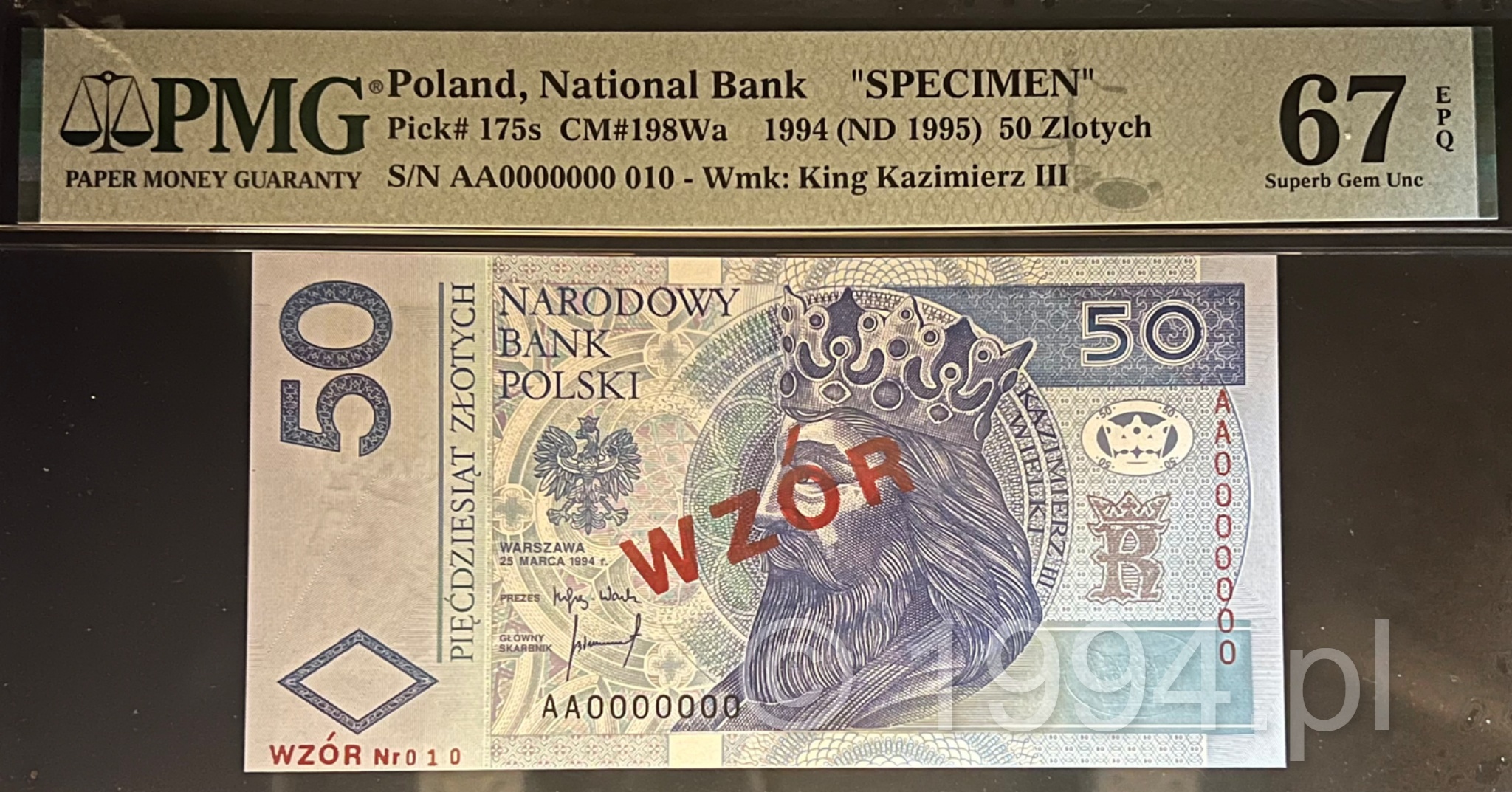
The obverse features King Casimir III the Great, the Polish eagle, the denomination PIĘĆDZIESIĄT ZŁOTYCH, the Warsaw date of 25 March 1994, and the printed signatures of Hanna Gronkiewicz-Waltz and Wiesław Biernatowicz. The red WZÓR overprint and WZÓR No. 010 marking remain prominent within the completed face design. Read more →
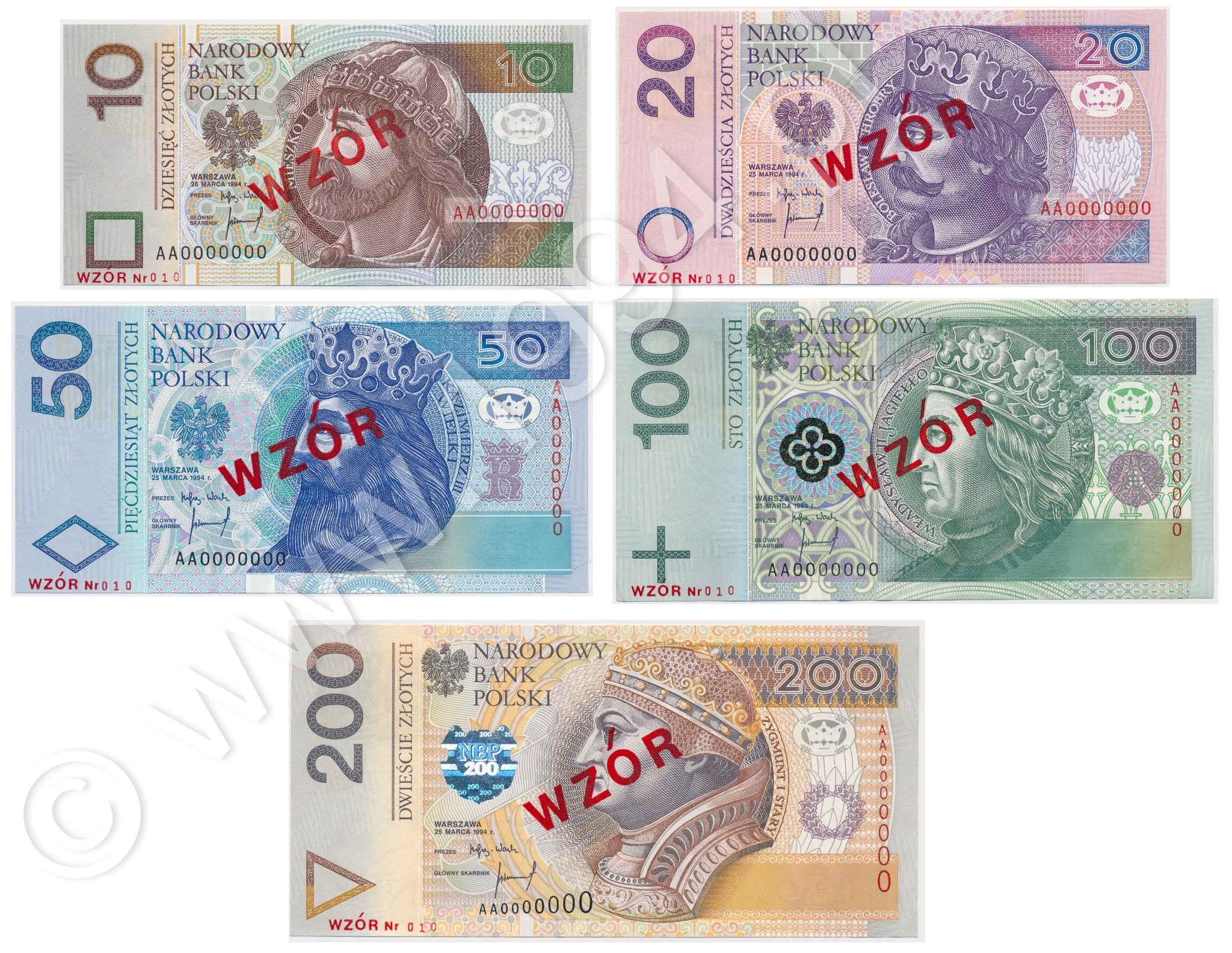
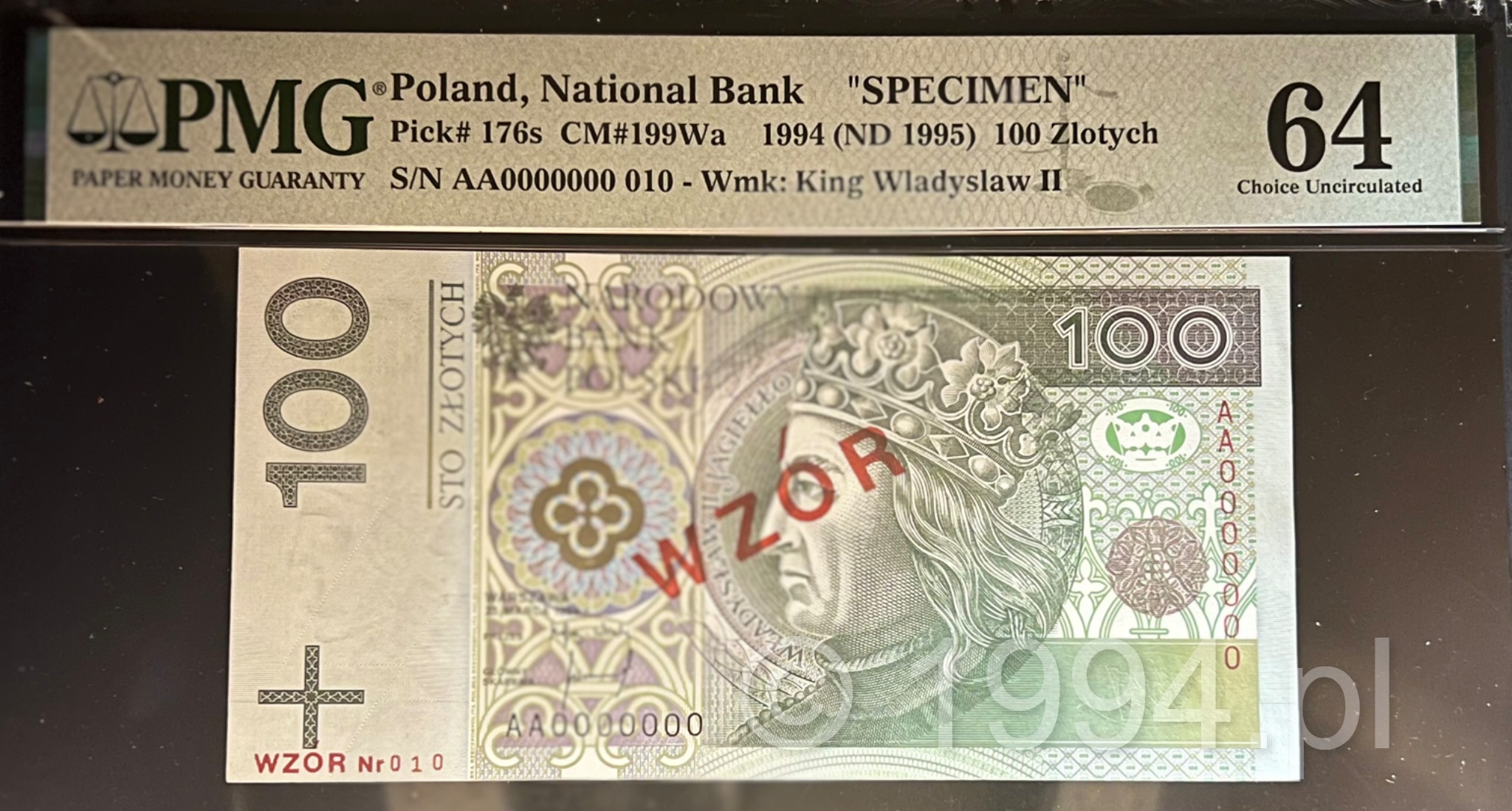
This AA0000000, WZÓR No. 010 example represents the 100 Zlotych component of the complete matching-number WZÓR 010 set preserved in this collection. Read more →
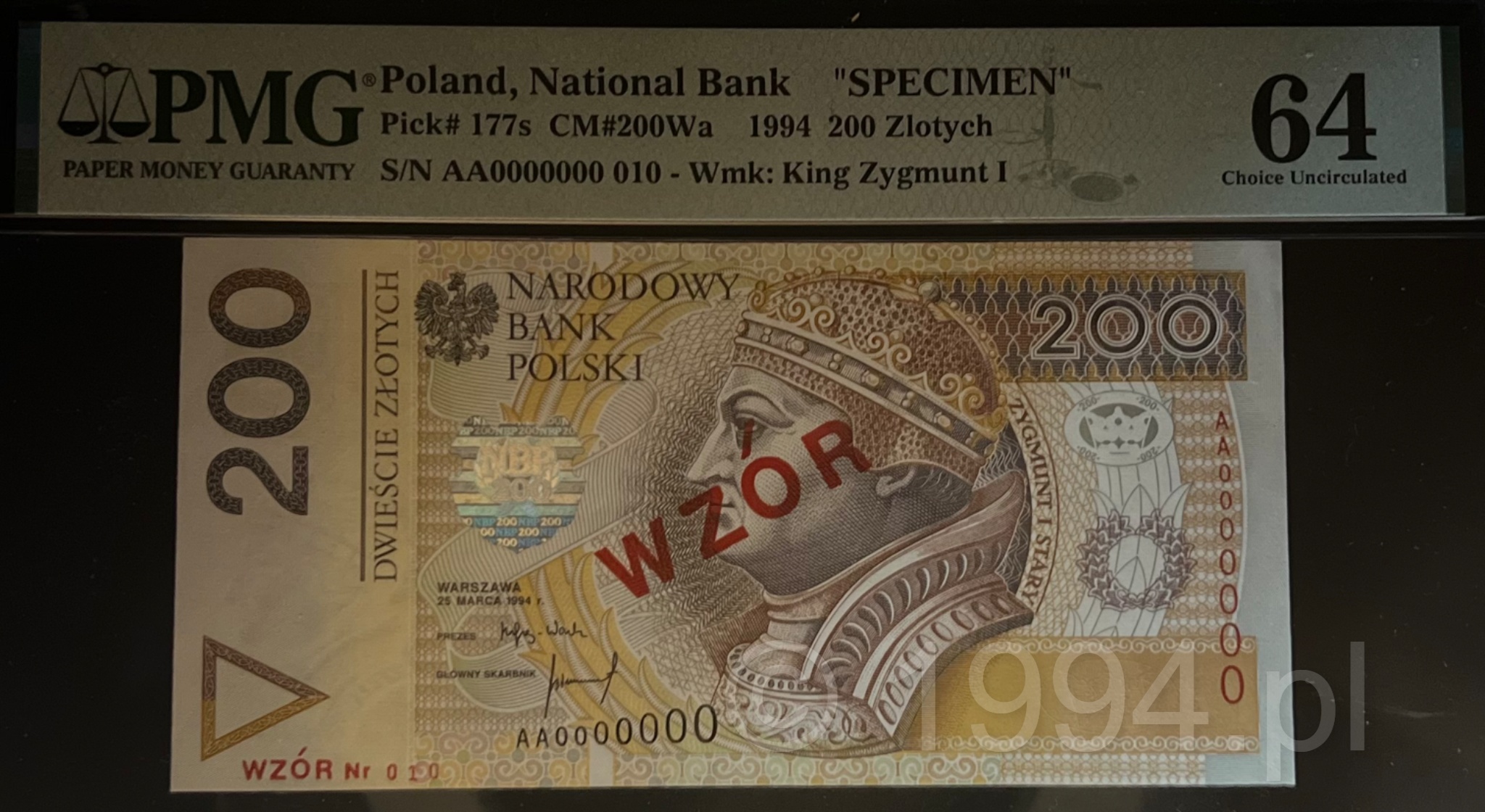
A WZÓR specimen banknote of the 200 Zlotych denomination from the 1994 Polish banknote series, prepared for the National Bank of Poland. The note bears serial number AA0000000 and the very low Polish specimen designation WZÓR No. 010. Read more →
In the Austrian partition of Poland (Galicia), the gulden circulated under the long-established accounting name Złoty Reński. This continuity of nomenclature and value allowed Banco-Zettel to integrate smoothly into local price systems, contracts, and bookkeeping practices. Rather than displacing existing economic habits, the 5 Gulden became embedded within them, reinforcing Austrian monetary authority through practical use rather than formal imposition. Read more →
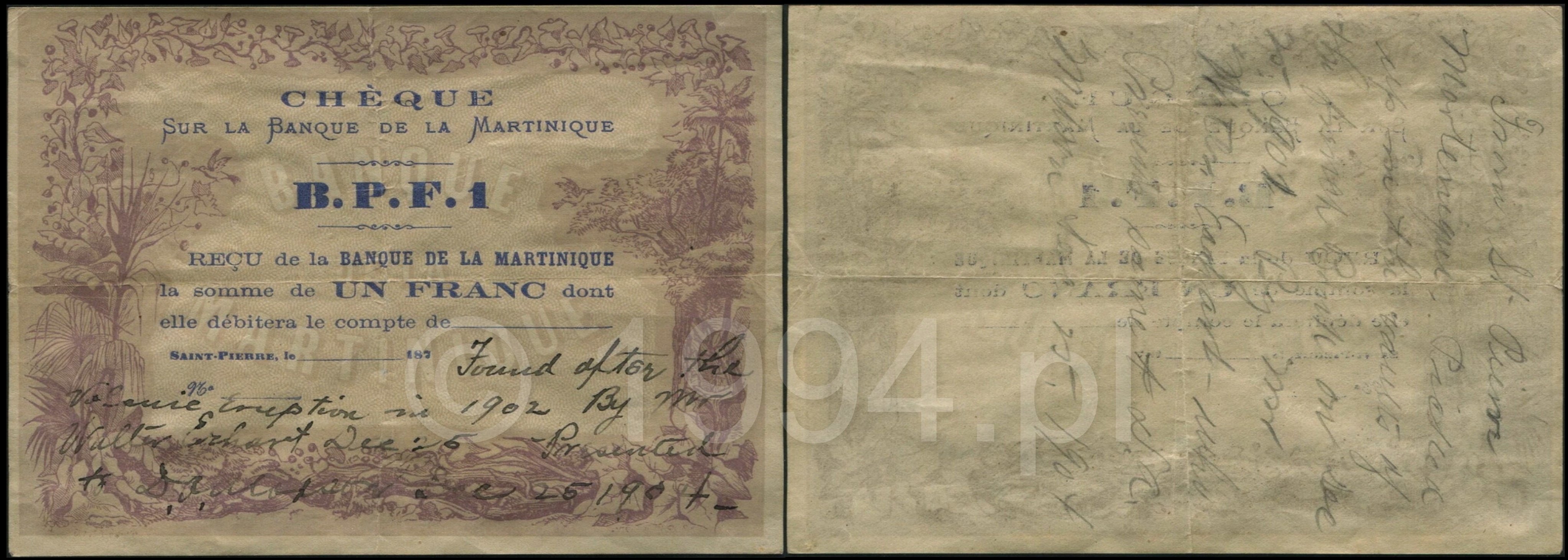
Printed by Claverie et Fils with engraved elements attributed to Reschérer, the cheque demonstrates the continued reliance on metropolitan French printers and engravers for colonial financial instruments. This practice ensured visual consistency, security quality, and institutional authority across France’s overseas territories. Read more →
This cheque therefore occupies a dual identity: it is both a nineteenth-century colonial banking instrument and a primary disaster relic from one of the deadliest volcanic eruptions in recorded history. Its significance lies not in monetary function but in documentary survival, direct event association, and contemporaneous human testimony preserved in ink. Within French colonial numismatics and disaster-related financial ephemera, this example stands as a museum-grade reference piece whose historical value is inseparable from its catastrophic provenance. Read more →
This example belongs to the original issue phase of Portuguese treasury apólices and predates the period commonly associated with the War of the Brothers. It is not a later emergency, provisional, or conflict-era emission, but rather a product of the established pre-war fiscal system operating under stable royal administration. This distinction is structurally important, as later conflict-period instruments frequently exhibit different validation practices, heavier fiscal markings, and systematic overprinting linked to wartime controls. Read more →
According to current publicly available PMG population data, this is the only EPQ-designated example recorded for the Pick A231x contemporary counterfeit type. While multiple examples of this counterfeit are known and graded, none approach this level of preservation or paper quality. Its significance therefore lies not in type rarity alone, but in its status as a condition outlier preserving the physical characteristics of a circulating nineteenth-century forgery in near-original state. Read more →
As the presently unique documented face proof of Pick S239p, this piece occupies a reference-level position within the study of Banco de Londres y Rio de la Plata banknote production. It preserves the approved engraved face of the 10 Pesos issue at a critical stage of manufacture and provides a direct record of nineteenth-century Bradbury Wilkinson security printing for Uruguay. Its type-level uniqueness, technical function, retained counterfoil, and connection to the later 1883 10 Pesos specimen establish it as an R9 Extremely Rare museum-grade artifact within the history of Uruguayan private-bank paper money. Read more →
The obverse is executed in dense brown engraved line work, incorporating wave-pattern security engraving, dual ornamental SCRIP cartouches, and a recessed central denomination panel reading FIVE DOLLARS. The lower margin carries the serial number No. 0000 and is overprinted SPECIMEN, confirming its status as a non-circulating printer-issued reference piece. The reverse is dominated by a large, highly complex radial guilloche medallion, reflecting professional security printing standards consistent with established banknote production rather than improvised emergency printing. Read more →
No other specimen example of this County of Atlantic school scrip issue is documented in institutional collections, auction records, certification census data, or standard reference literature. Based strictly on observed and recorded evidence, this piece stands as a unique surviving specimen and serves as a definitive documentary artifact of Depression-era county-level school finance in the United States. Read more →