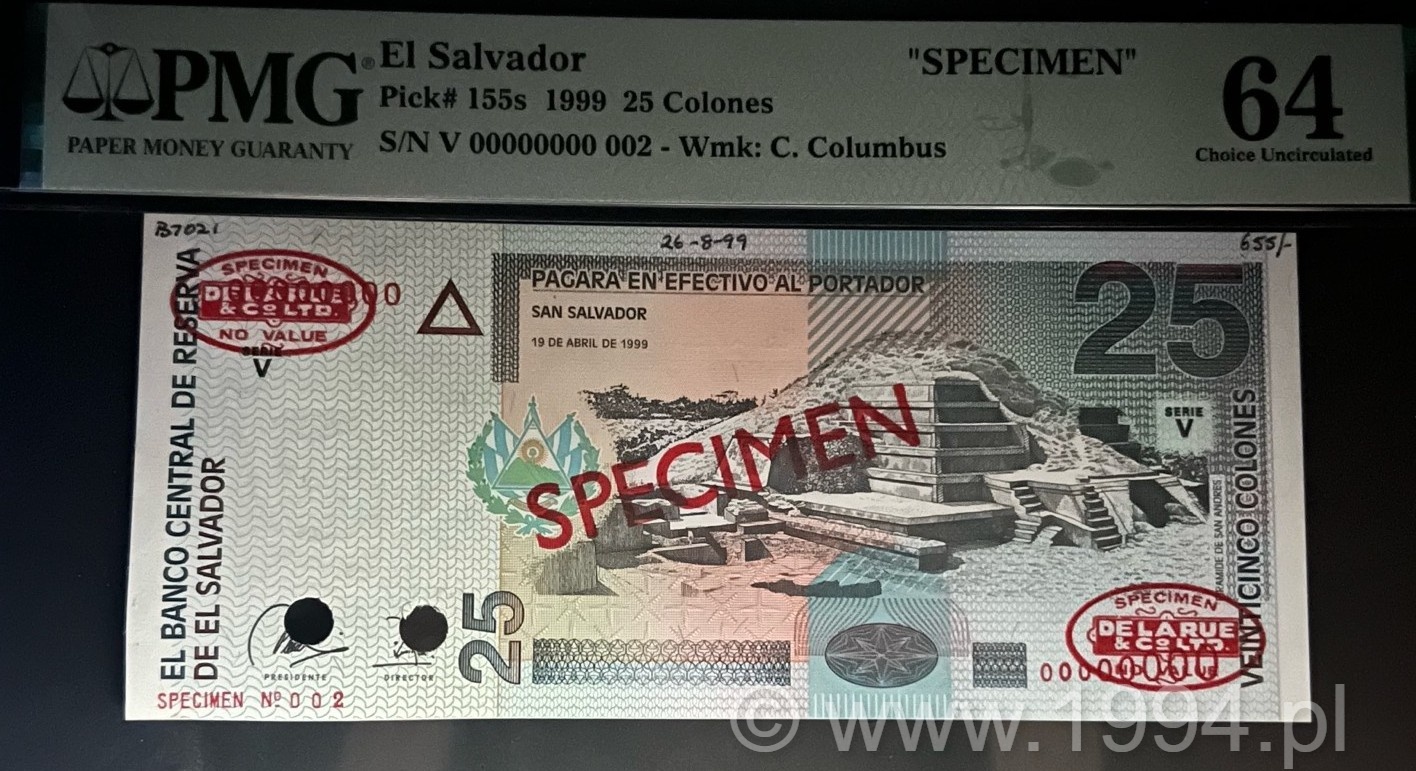
El Salvador 1999 - 25 Colones Specimen (Pick 155s)
Specimen note of the 1999 25 Colones issue, catalogued as Pick 155s. Printed by De La Rue with diagonal red SPECIMEN overprint, perforation cancels, and control stamps. Read more →
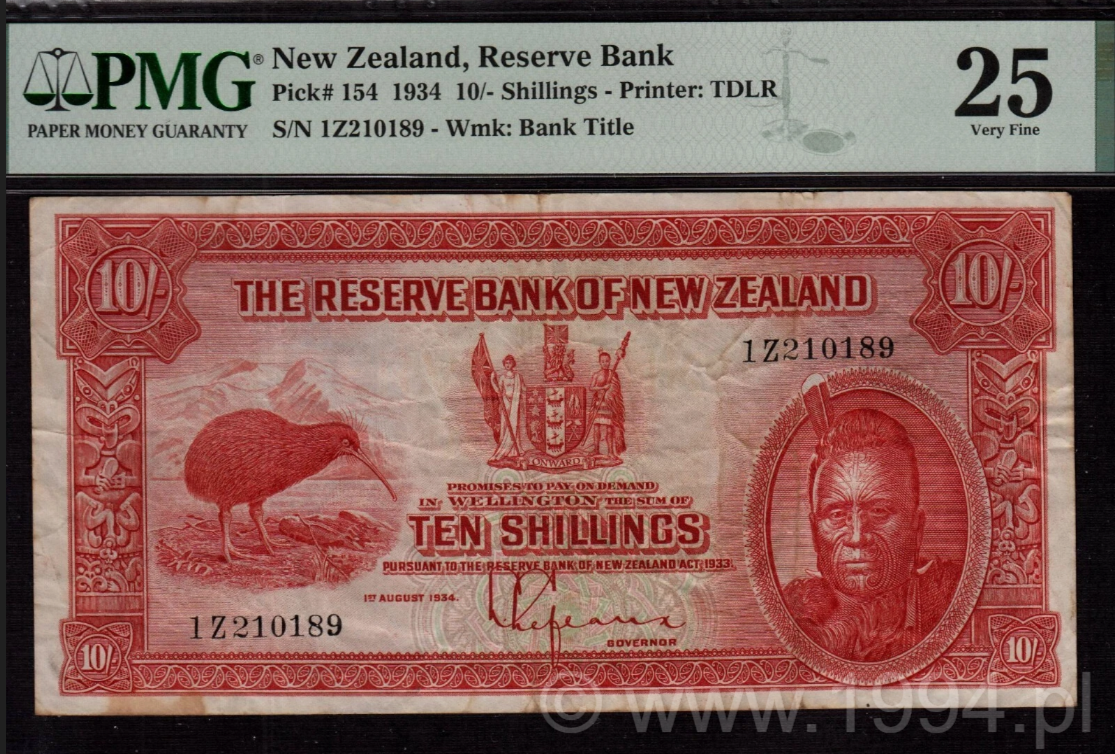
This photographic face proof preserves the engraved design prepared for the first 10 Shillings banknote issued by the Reserve Bank of New Zealand following the creation of the central bank under the Reserve Bank Act of 1933. The proof represents the pre-press stage of the denomination, recording the completed engraving before the design was transferred to printing plates for circulation production. Read more →
Although intended as the foundation of the country’s modern currency system, the 1934 series circulated for only a relatively short period before redesigned notes were introduced in 1940. As a result, surviving examples have become important artifacts documenting the formative years of the Reserve Bank of New Zealand. Read more →
The obverse carries a finely executed portrait of Benjamin Franklin, a fitting tribute to Philadelphia’s most famous citizen, framed by ornate guilloche engraving and border work indistinguishable from contemporary financial instruments. Bold red overprints specify seating details-Gate 2, Section J, Row P, Seat 13-and the designation 'Upper Balcony, First Day Only.' At the lower margin, the facsimile signature of Carroll Reece, Republican National Committee chairman, anchors the design beside the printer’s imprint, 'E.A. Wright Bank Note Co., Phila.' Read more →
The 10 Złotych dated 1 March 1940 was among the first banknotes issued by Bank Emisyjny w Polsce, the German-controlled issuing bank established in the General Government during the occupation of Poland. Printed by Giesecke & Devrient in Leipzig, the issue entered circulation in 1940 as part of the currency system introduced for the occupied territory. Read more →
Blank paper stock prepared for the 1926 10 Zlotych issue, classified by PMG as Watermarked Paper. Read more →
Bank Polski 100 Zlotych note dated 28 February 1919, bearing series S.B. and serial number 5482263. It belongs to the inaugural zloty issue prepared for the restored Polish state and later introduced as part of the monetary reconstruction led by Wladyslaw Grabski. Read more →
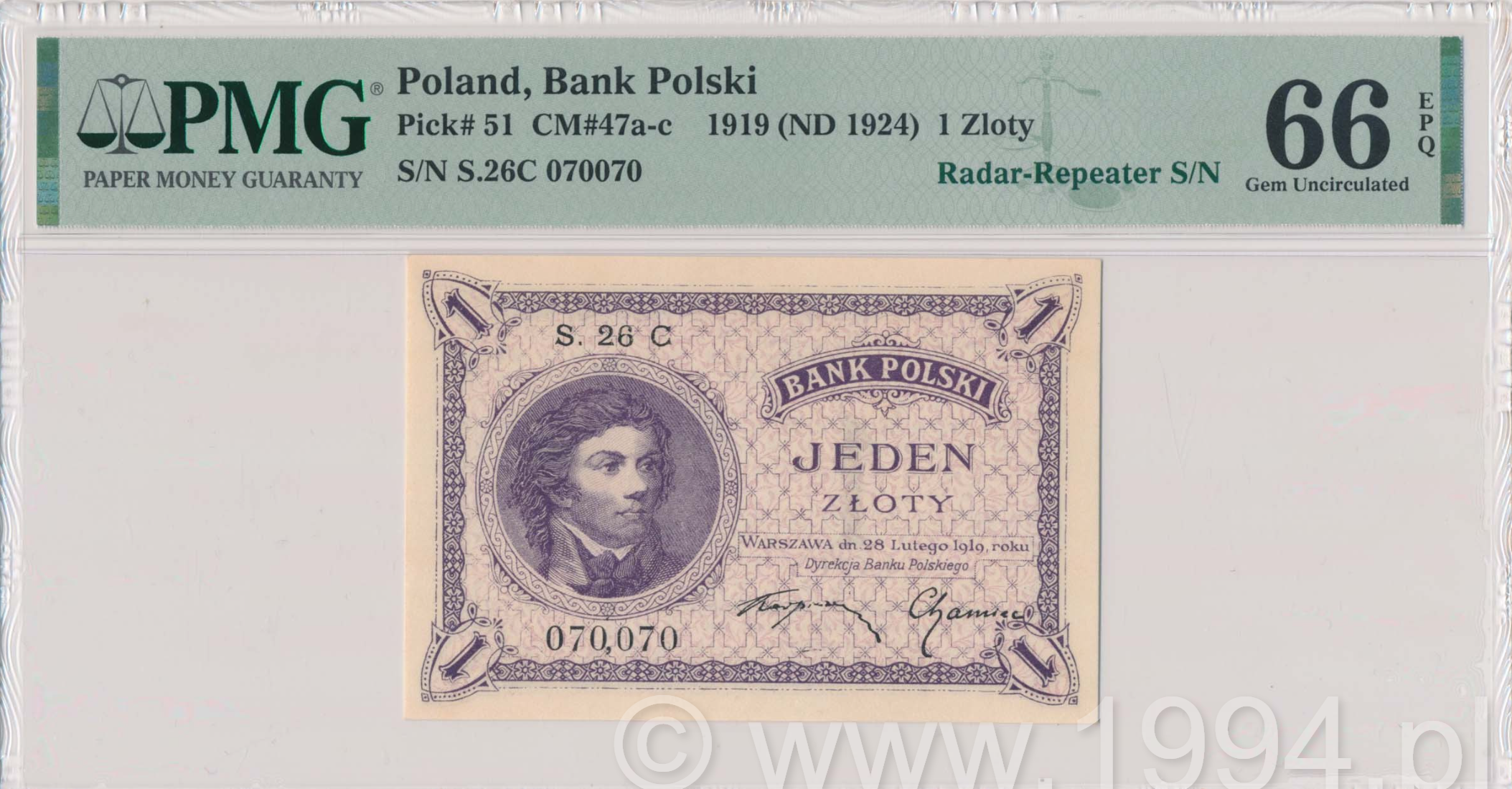
The Bank Polski 1 Zloty note dated 28 February 1919 formed part of the first zloty issue prepared for the restored Polish state shortly after independence was regained. Read more →
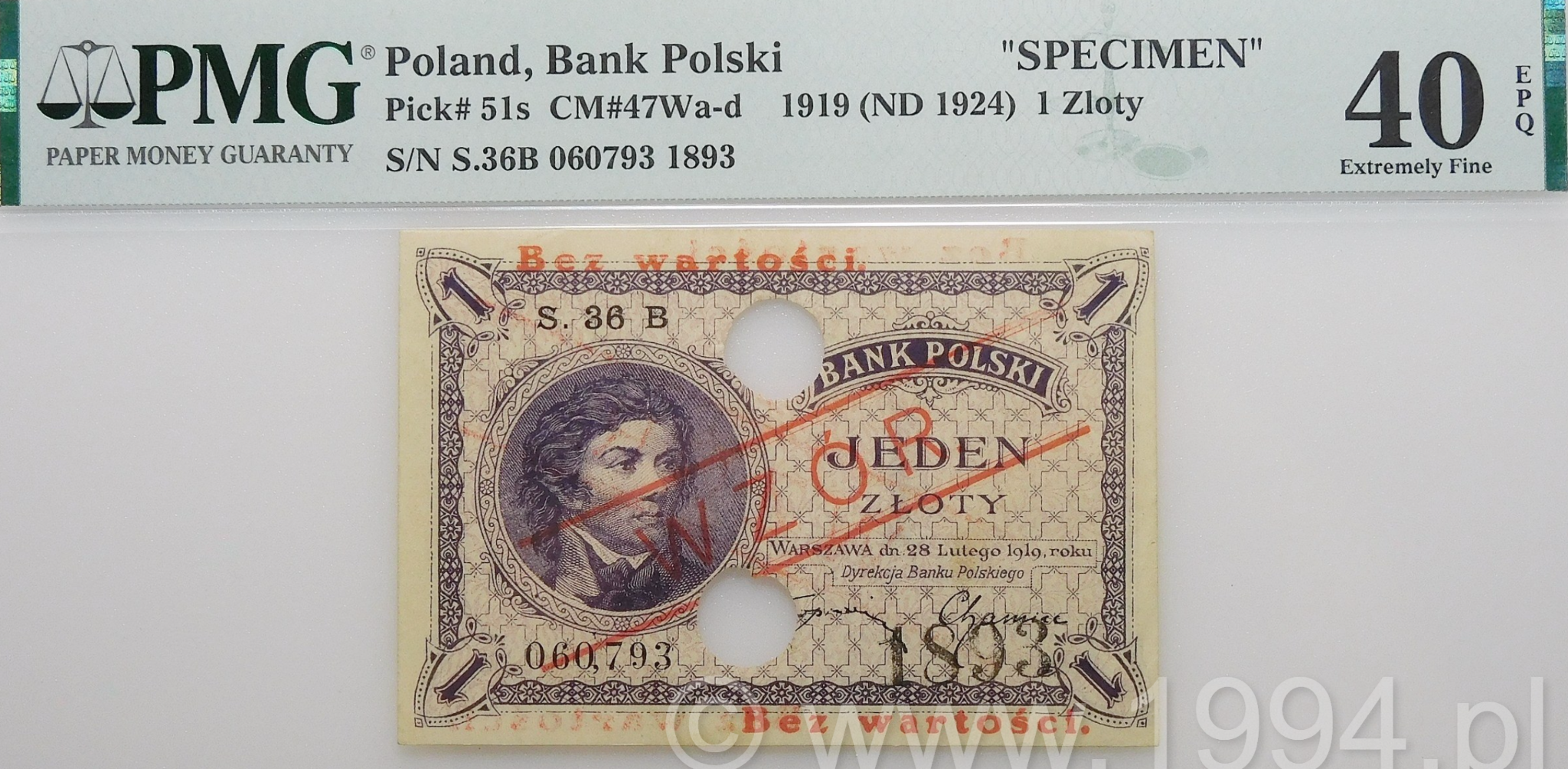
Bank Polski 1 Zloty specimen dated 28 February 1919, bearing series S.36B, serial number 060793, and specimen control number 1893. The note carries red WZÓR. and Bez wartości. overprints on both sides, together with two large circular perforations arranged vertically through the central field. Read more →
The 1000 zlotych of the 1919 reform series, printed by Waterlow & Sons in London, is one of the largest and most ornate denominations prepared for the new złoty. Intended as part of the first złoty issue of the Second Republic, it was never officially released into circulation in 1924 due to its very high value. Some researchers suggest that a portion of the stock may have been used informally during the September Campaign of 1939 to pay Polish military officers, though no formal documentation confirms this. Read more →
Fascinating semi-finished product from a wartime forgery workshop, connected with the 10 złotych 1940 issue (Miłczak 94). The piece is printed only with the underprint of the obverse design - background guilloches and the female allegorical portrait at left - without the main face value, overprints, or full intaglio elements. Trimmed to the correct banknote format, it represents an intermediate stage in the counterfeiting process. Read more →
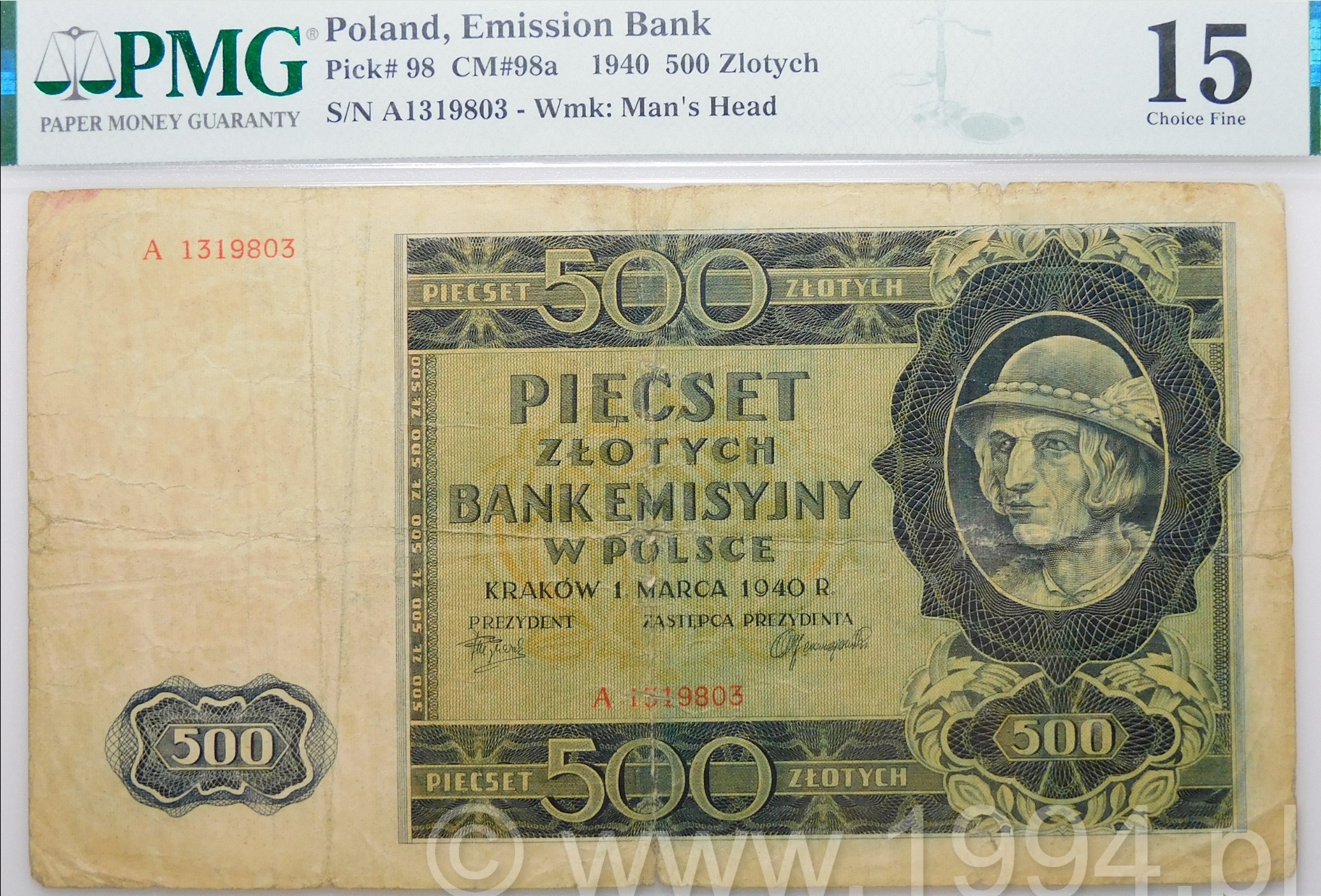
During the German occupation, forged 500 złotych notes were produced in Britain for the Polish resistance and introduced into occupied Poland as part of a diversionary operation. The counterfeit currency provided funds that could be used within the occupation economy while simultaneously undermining confidence in German-controlled money. Once the affected numbering was identified, Series A notes in the 12xxxxx and 13xxxxx ranges were ordered withdrawn regardless of whether individual examples were genuine or counterfeit. The measure removed authentic notes alongside the forgeries and explains the exceptional scarcity of genuine survivors carrying these serials. Read more →