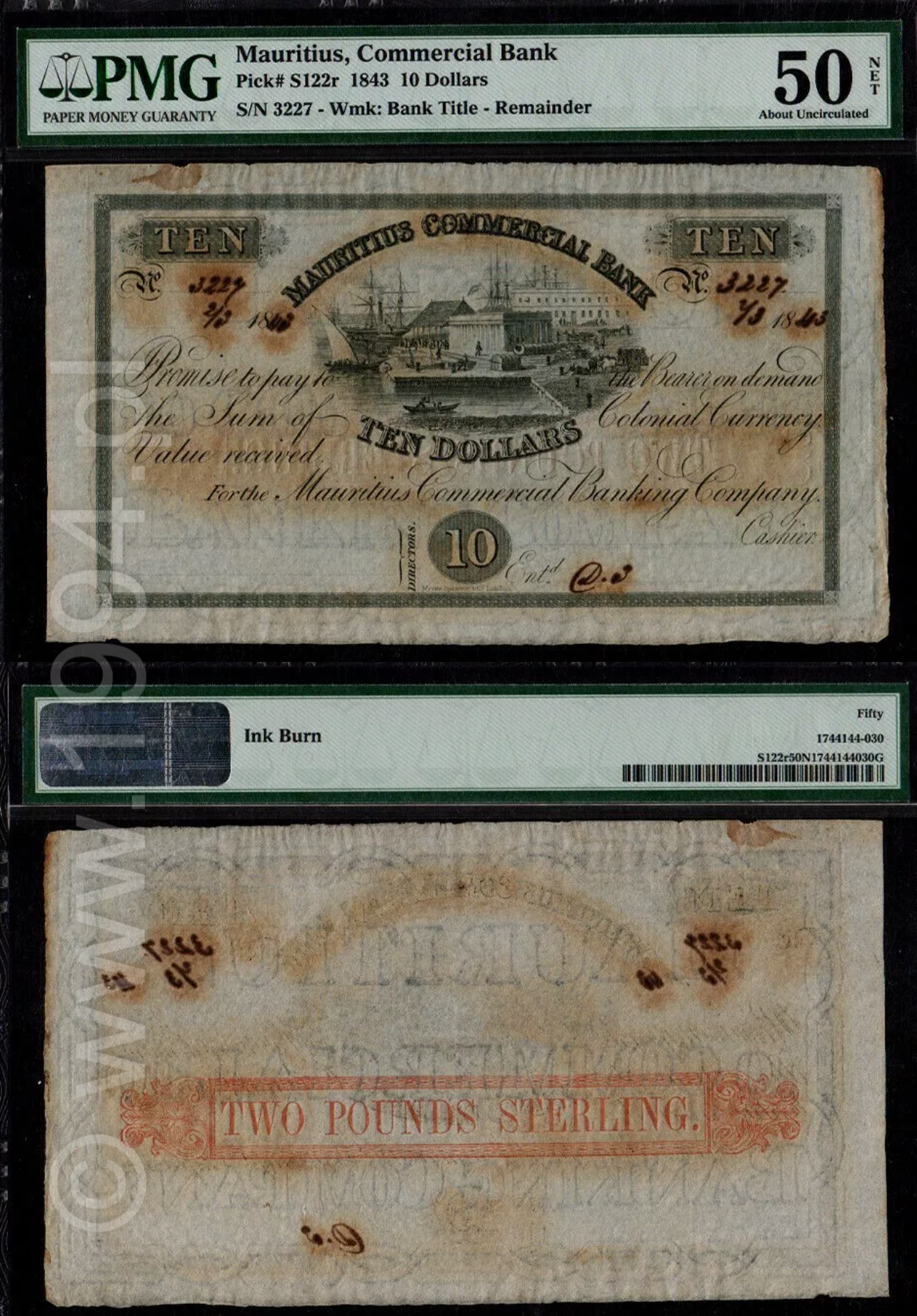
Mauritius 1843 - Mauritius Commercial Bank 10 Dollars / 2 Pounds Sterling Remainder (Pick S122r)
Unissued remainder from the earliest Mauritius Commercial Bank dual-currency series, printed by Myers Frs. & Co., London. Read more →
Specimen of the 1982 one thousand francs issue of the Grand Duchy of Luxembourg, representing the highest denomination prepared within this short-lived contingency series featuring Grand Duchess Charlotte. As the apex denomination, the 1000 Francs defines the full technical and visual ambition of the issue, combining the most complex engraving, the highest value tier, and the most advanced security layout of the set. Read more →
This example carries the Series F prefix, a significantly scarcer prefix of the 10 Złotych issue and cataloged as Milczak 94aF. Read more →
Featuring the portrait of Sir Samuel Cleland Davidson (1846–1921), inventor and industrialist, the design celebrates Northern Ireland’s engineering legacy. The Sirocco Works turbine engraving appears at left, representing Davidson’s innovations in ventilation and power systems. The complex guilloche patterns, raised intaglio text, and multi-tone palette of violet and copper were devised to prevent counterfeiting and distinguish the reissued series from the compromised pre-robbery notes. Read more →
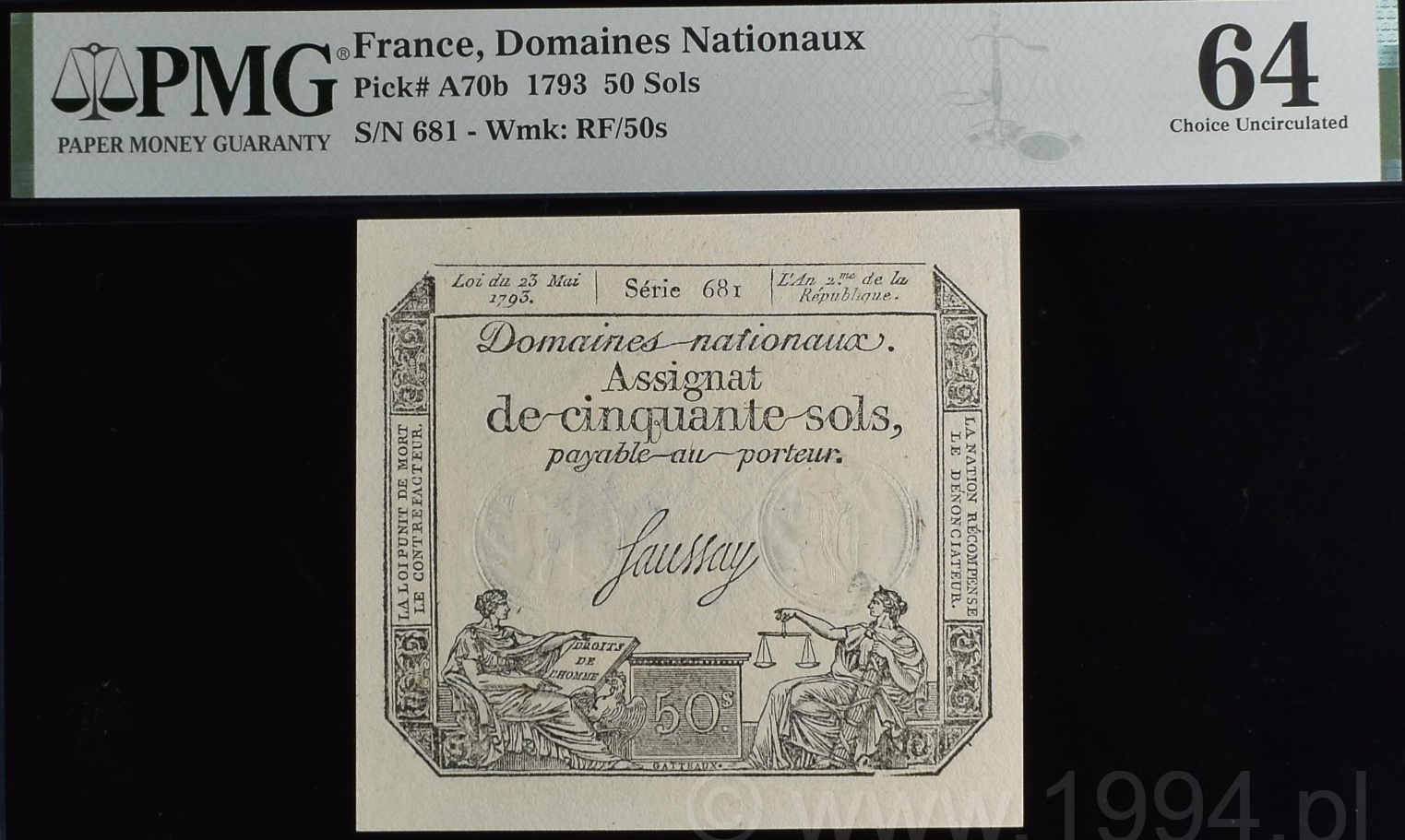
Fifty‑sols assignat from the 'Domaines Nationaux' series-fractional Revolutionary paper keyed to sales and rents of nationalized property but used broadly as transactional money. The denomination sits in a classical pediment supported by allegorical figures of Economy and Justice, a visual program meant to legitimize paper credit in a time of fiscal emergency. Read more →
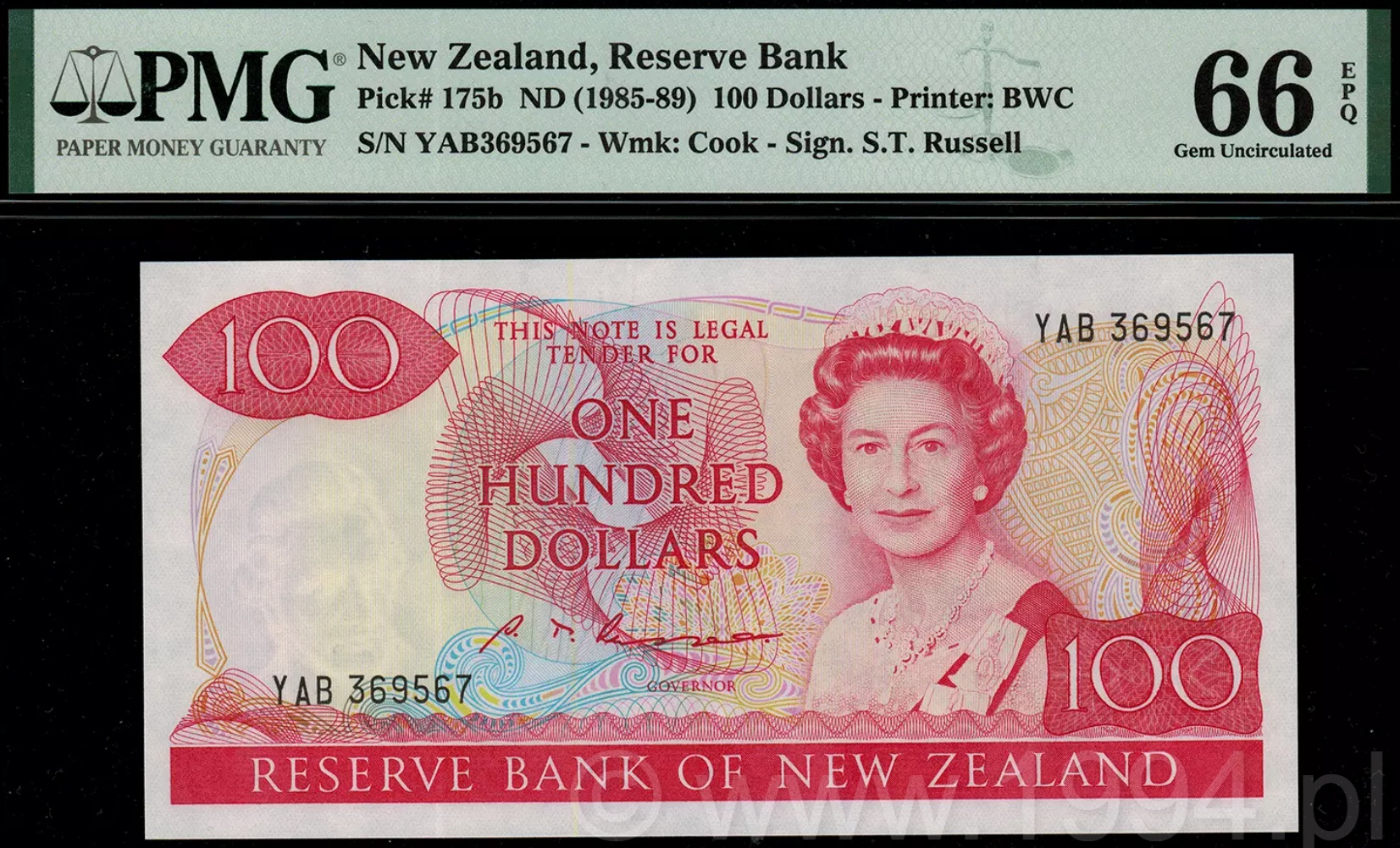
The 1985 one hundred dollars note represents the final chapter of New Zealand’s traditional paper currency for its highest denomination, issued within the ND (1985–1989) period under the authority of the Reserve Bank of New Zealand and bearing the signature of S.T. Russell as Chief Cashier. This series marks the last fully developed paper format before the transition to polymer, preserving the culmination of decades of engraving, layout refinement, and security evolution. Read more →
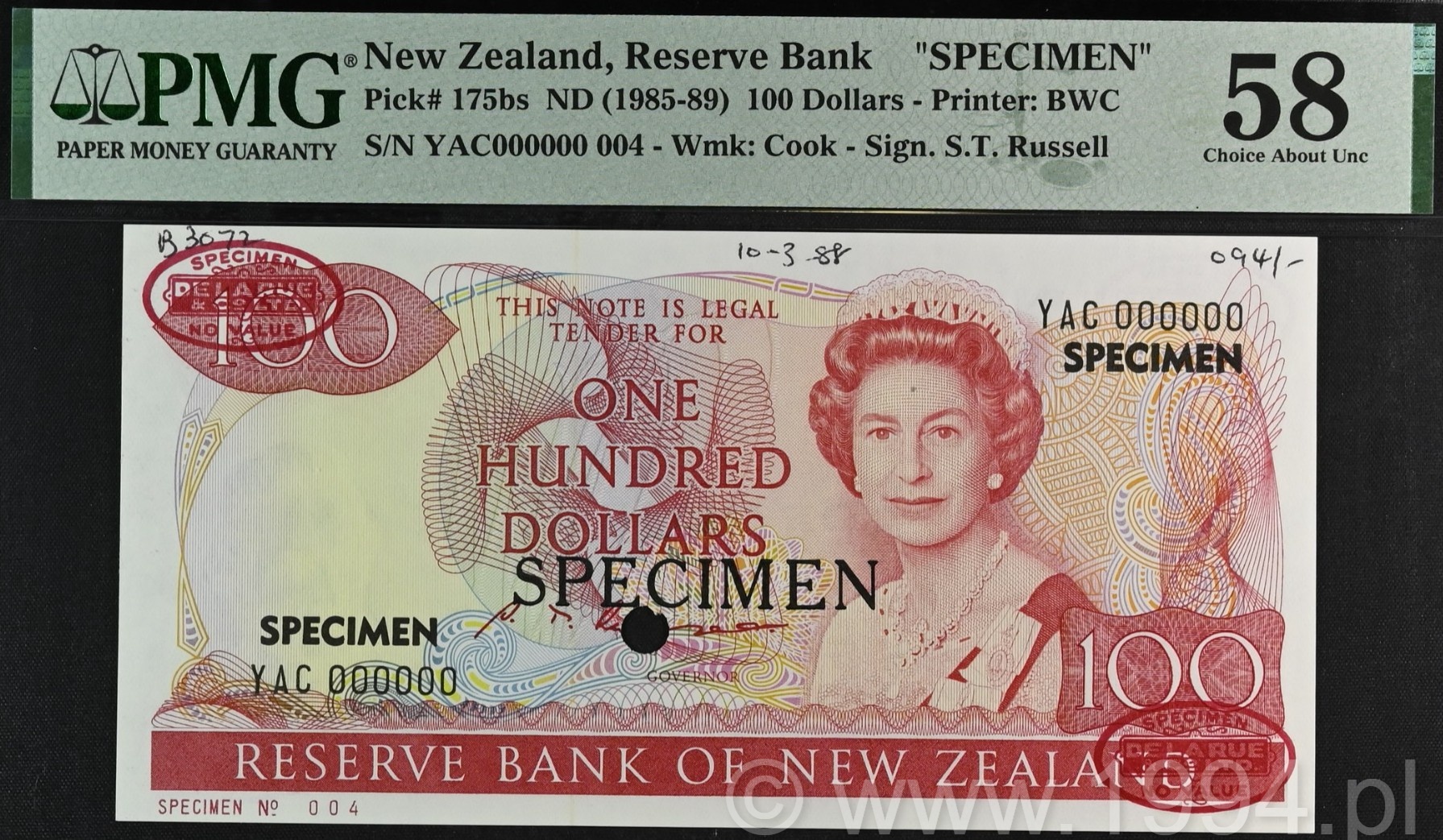
The 1985 one hundred dollars specimen represents one of the most complex and information-rich specimen formats produced during the final paper-currency era of New Zealand, issued within the ND (1985–1989) period under the signature of S.T. Russell as Chief Cashier. This series marks the closing stage of the traditional engraved paper hundreds before the transition to polymer. Read more →
The sheet is composed of six notes arranged in a structured dual-series format across a single full printing layout. Three denominations are present-fifteen sous, quarter dollar, and half dollar-with two examples of each denomination. Each denomination appears once in the A series and once in the B series, forming a mirrored arrangement: the left half of the sheet represents the B series, while the right half represents the A series. This results in six notes in total, with each denomination paired across both series. Read more →
This issued five dollars note of the Cayman Islands Currency Board forms part of the 1974 design series authorized under the Cayman Islands Currency Law of 1974. The series represents the mature phase of the Currency Board system, where disciplined monetary backing was combined with high-grade security engraving executed by Thomas De La Rue and Company Limited. Read more →
This 1996 five dollars specimen of the Cayman Islands Currency Board belongs to the revised series issued under the Cayman Islands Currency Law (Revised) and printed by Thomas De La Rue and Company Limited. Unlike the earlier 1974 phase, this series reflects the modernized design language of the late twentieth century while retaining the institutional discipline characteristic of the Currency Board system. Read more →
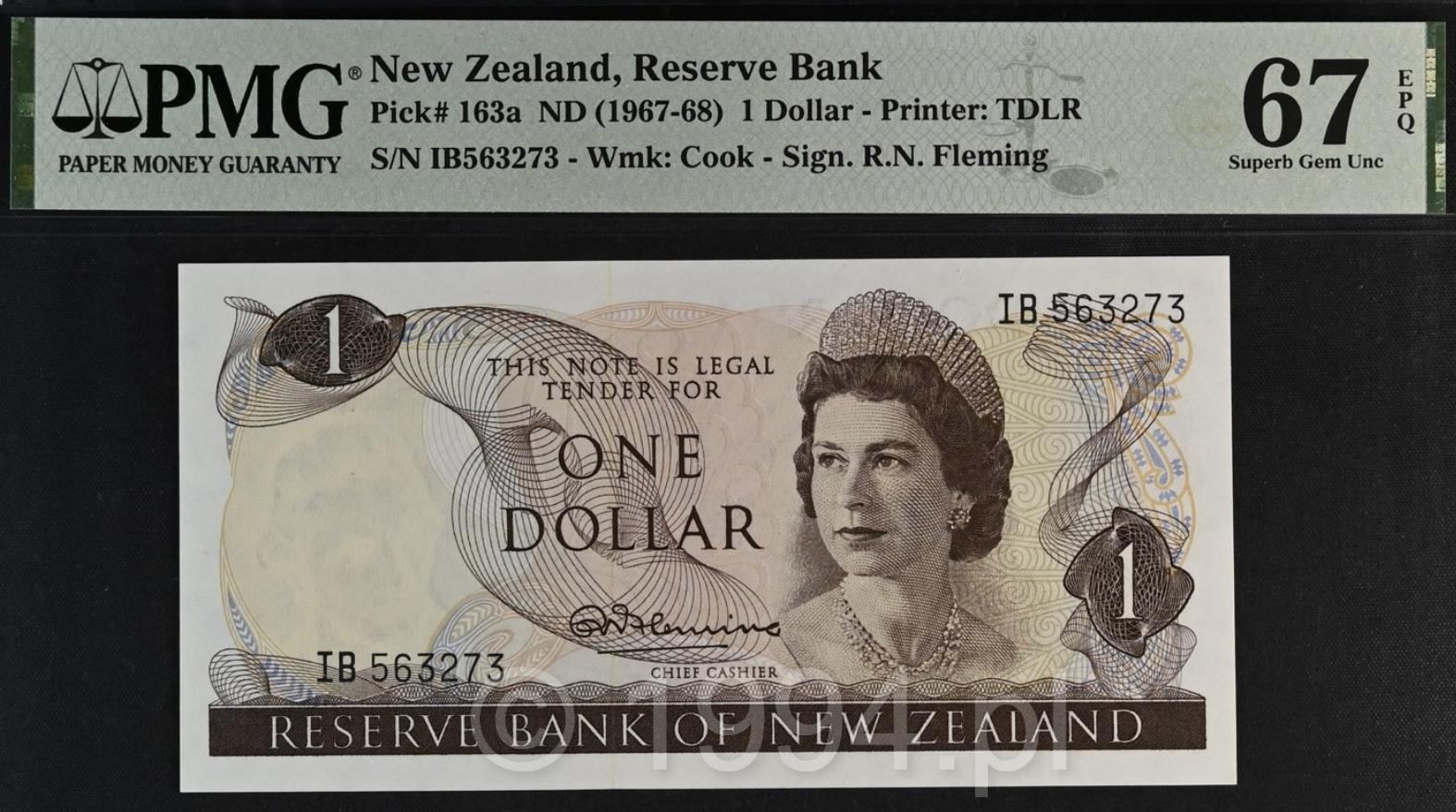
The 1967 one-dollar note represents the inaugural circulating issue of New Zealand’s decimal currency system, introduced in July 1967 to replace the long-standing sterling-based structure. This example bears the signature of Roderick Ninian Fleming, issued during the ND (1967–1968) period, marking the first Chief Cashier to appear on the decimal series. Fleming’s tenure, extending until 1969, defines a narrow production window at the very beginning of New Zealand’s modern monetary era. Read more →
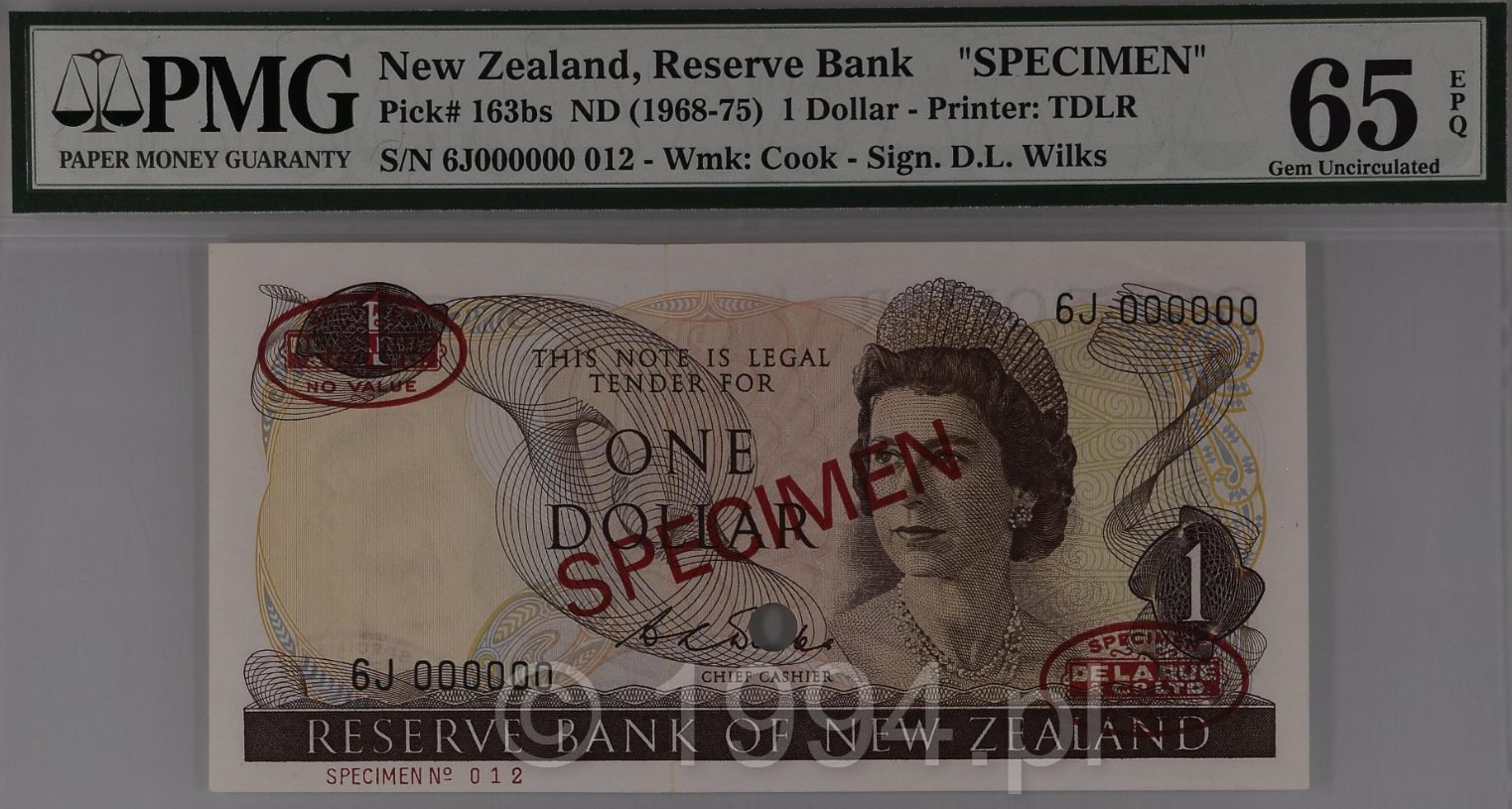
The 1968 one-dollar specimen represents the continuation of New Zealand’s decimal currency series following its initial introduction in 1967, now bearing the signature of D.L. Wilks as Chief Cashier. Issued during the ND (1968–1975) period, Wilks’ tenure marks the second signature phase of the decimal era, extending production beyond the short Fleming window and into the early years of system stabilization. Notes signed by Wilks therefore define the next stage in the development of New Zealand’s modern monetary framework. Read more →