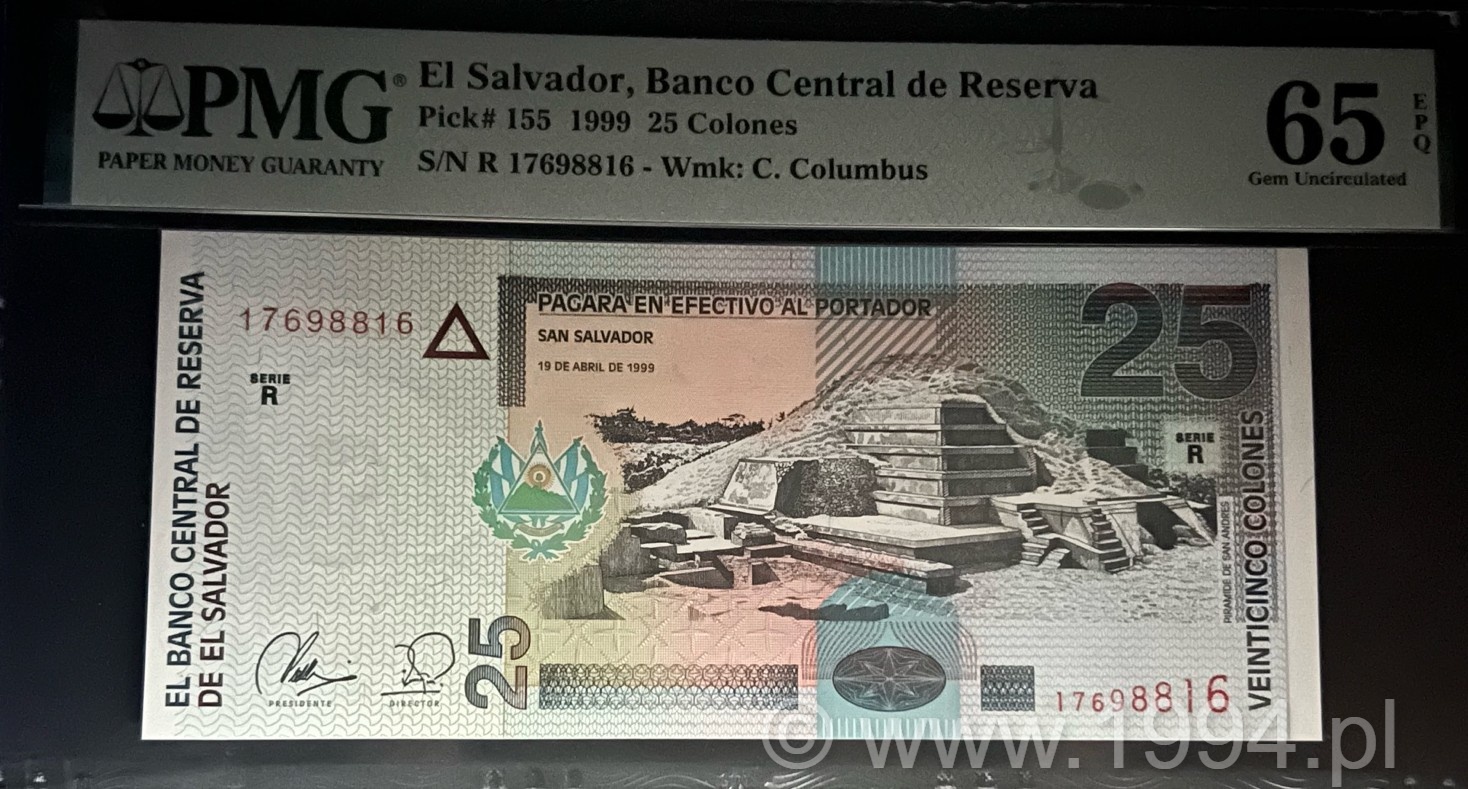
El Salvador 1999 - 25 Colones Issued Note (Pick 155)
Catalogued as Pick 155 and graded PMG 65 EPQ Gem Uncirculated, this issue represents the terminal stage in the 1996–1999 series that began with the Pick 149a introduction. Read more →
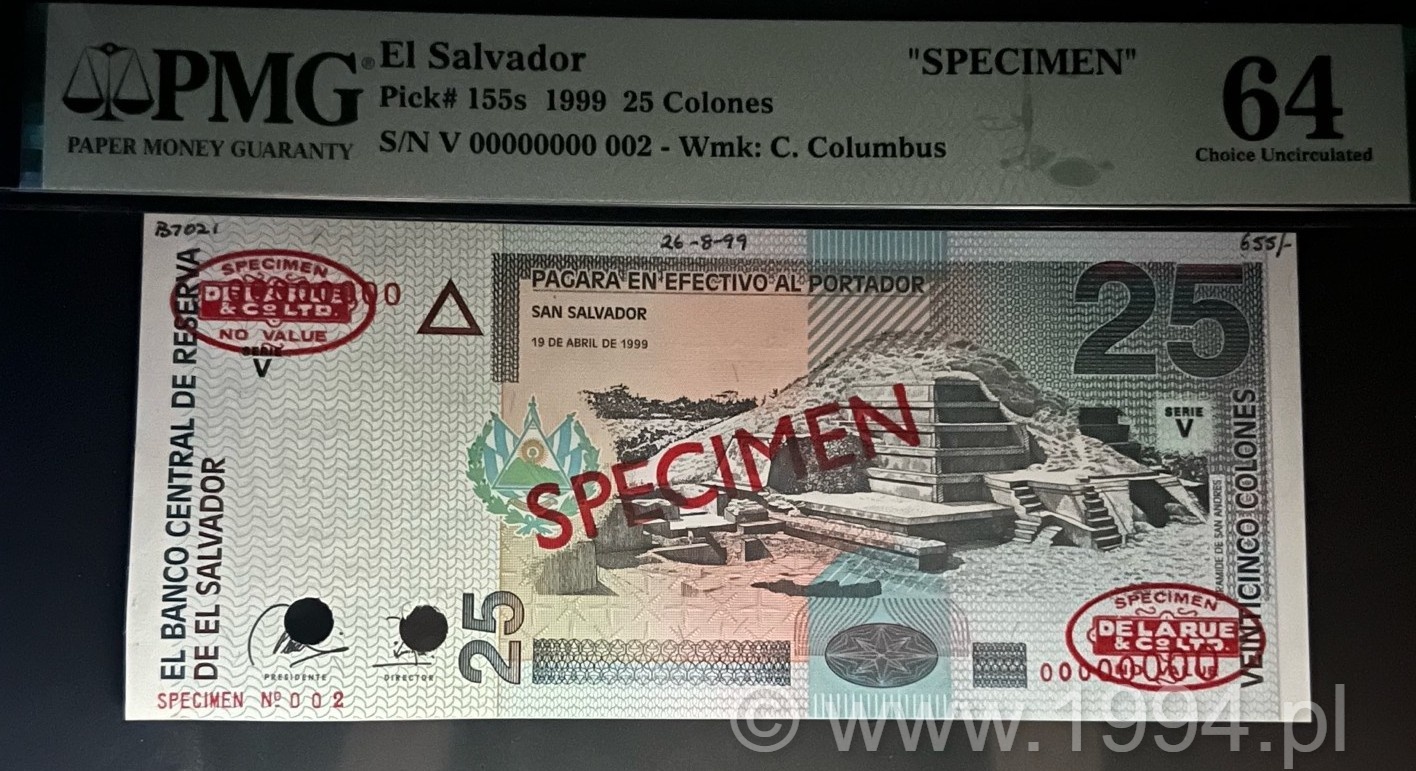
Graded PMG 64 Choice Uncirculated, this example concludes the 1996–1999 De La Rue sequence, connecting the proof (Pick 149p) through issued and specimen forms (149a–155s). Read more →
Engraved admission ticket for the 1948 Republican National Convention, held June 21–25 at Philadelphia’s Convention Hall. Produced by the E.A. Wright Bank Note Company, a leading Philadelphia security printer, this ticket fuses political spectacle with the visual language of currency. E.A. Wright-renowned for engraved stock certificates, checks, and early banknotes-applied its full security printing repertoire to this design, lending an air of gravitas and authenticity to an event that sought to project national confidence in the postwar years. Read more →
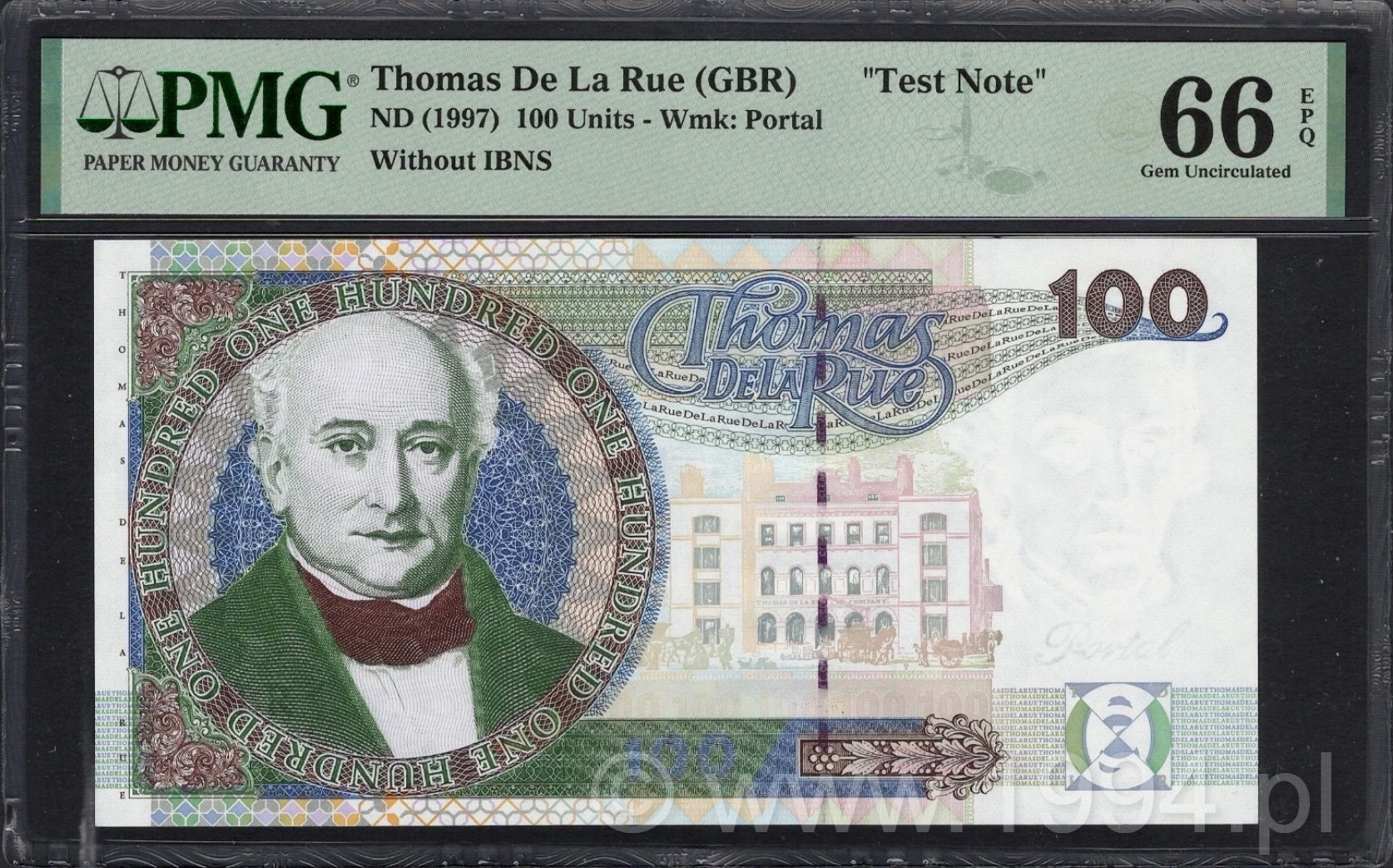
A rare Thomas De La Rue test note, issued as a demonstration piece rather than circulating currency. Dated ND (1997), this 100 Units note was printed to showcase De La Rue’s advanced banknote security design, incorporating microtext, guilloche patterns, and the portal watermark. The obverse features a portrait of Thomas De La Rue with multicolor lathework and the company’s headquarters vignette. Test notes like this were produced for presentations, sales demonstrations, and security trials, not for public issue, and remain highly sought after by collectors. Read more →
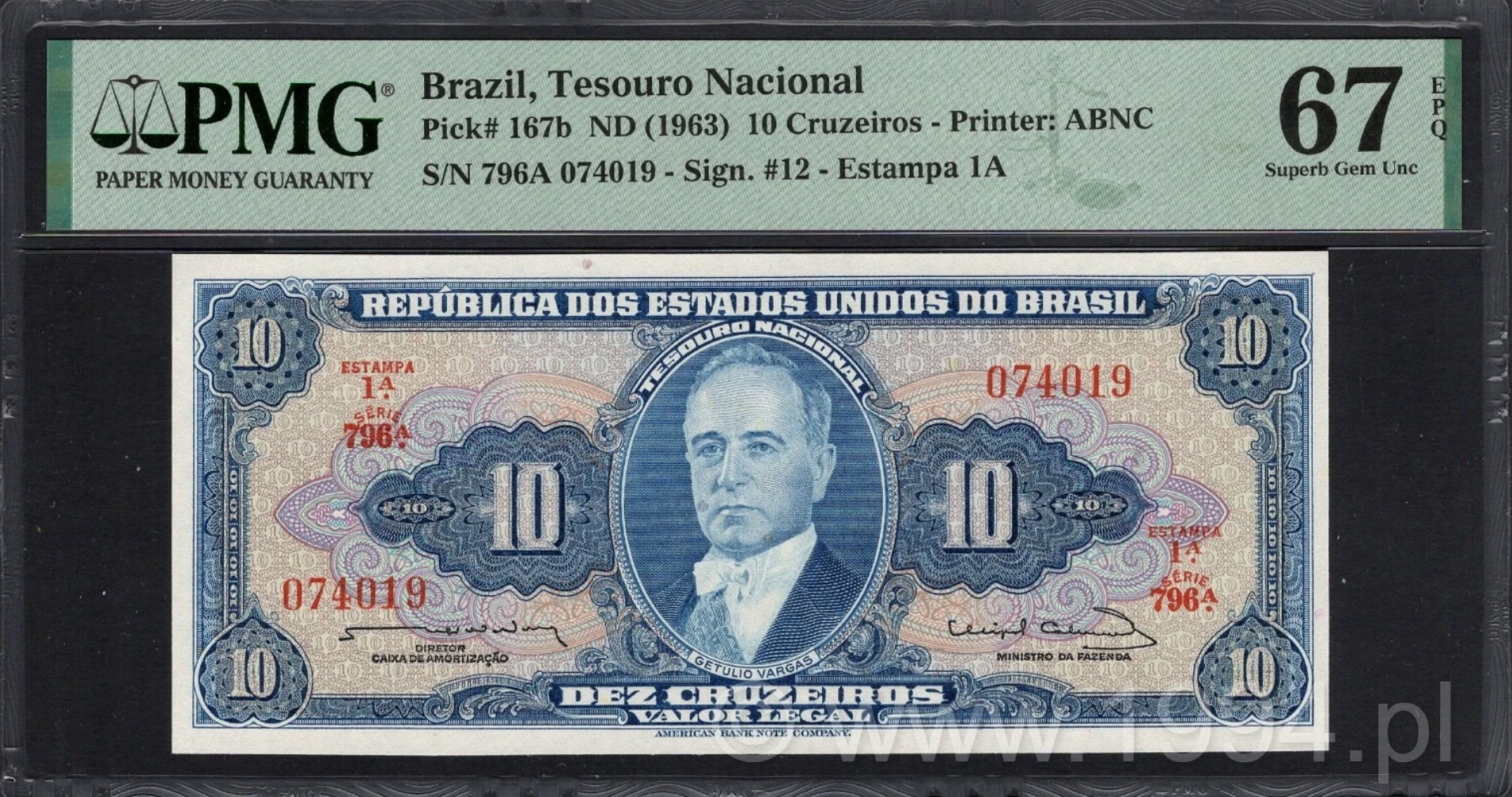
The 10 Cruzeiros note dated 1963 was issued by the Tesouro Nacional during the turbulent final years of Brazil’s first Cruzeiro monetary system. Printed by the American Bank Note Company in New York, it embodies the meticulous craftsmanship and classical design language for which ABNC was world-renowned. Read more →
In modern security printing, photographic transparencies were produced after the engraver completed the steel die but before the design was transferred to printing plates. High-contrast film positives were contact-made directly from the engraved source to capture the line structure of the vignette in its pure form. These transparencies allowed designers, engravers, and production engineers to examine every engraved stroke at full scale, confirming tonal balance, line density, and compositional clarity before color separation, plate transfer, and press calibration began. Read more →
At the center of the design appears the Maenad figure, derived from a classical bronze sculpture discovered at the archaeological site of Heraclea Lyncestis. The dancer’s dynamic posture symbolizes movement and vitality and became the defining icon of the denomination. The same Maenad motif is incorporated into the watermark of issued notes, linking the artistic centerpiece of the design with one of the banknote’s primary security devices. Read more →
The printed structure reflects the full late-twentieth-century De La Rue production methodology. A multi-color offset background establishes the geometric and ornamental framework of the design, over which a finely engraved intaglio key plate provides the principal portrait and denomination elements. This layered printing process produces the raised tactile texture characteristic of intaglio engraving while preserving the color complexity achievable through offset lithography. Additional protective elements include a metallic security thread embedded within the paper, microtext inscriptions, a see-through register that aligns when the note is held to light, and intricate guilloche patterns engineered to resist photographic or digital reproduction. Read more →
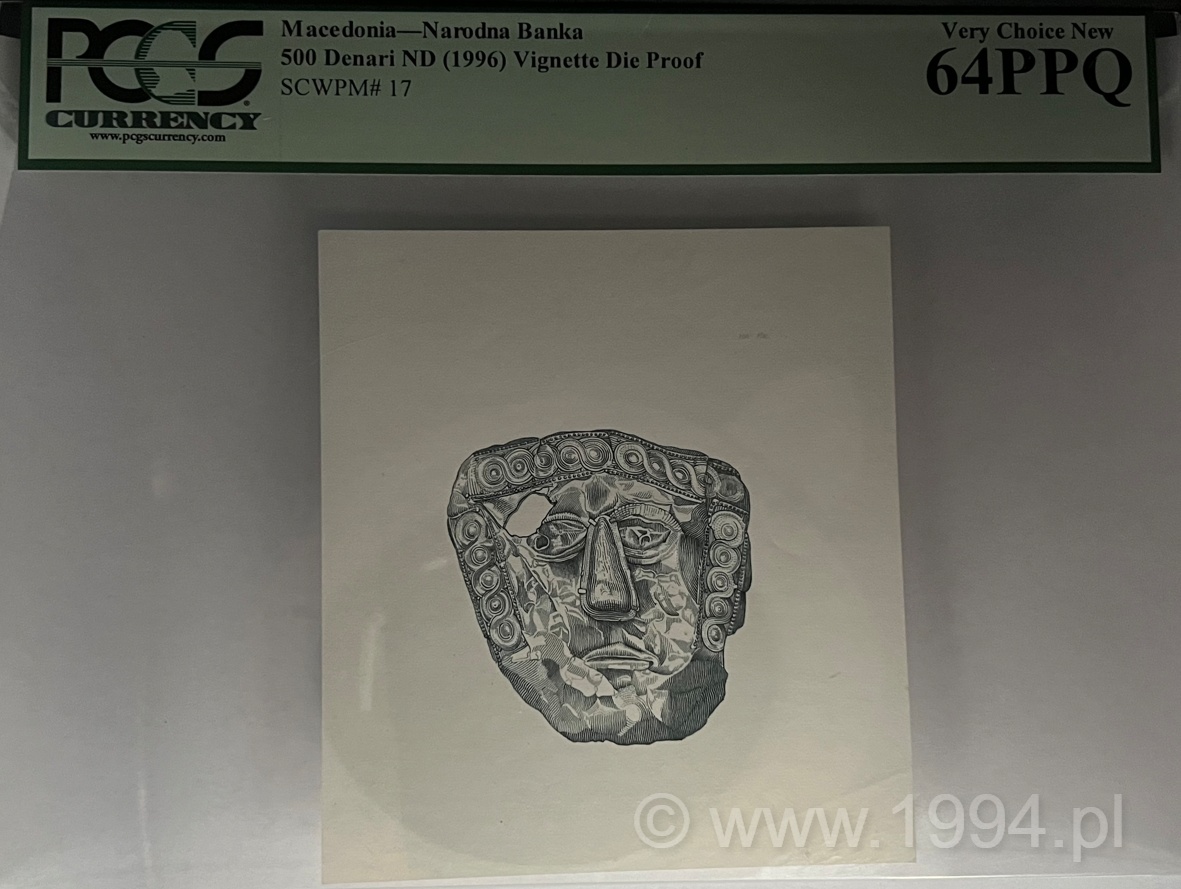
Within the documented production sequence of the 1996 Macedonian banknote program, the vignette die proof represents the foundational stage of the denomination’s design chain. After approval of the engraving, photographic transparencies were created for plate preparation, followed by printer specimens bearing control overprints and cancellation marks. The final stage of the process produced the fully issued banknotes placed into circulation by the National Bank of the Republic of Macedonia. Read more →
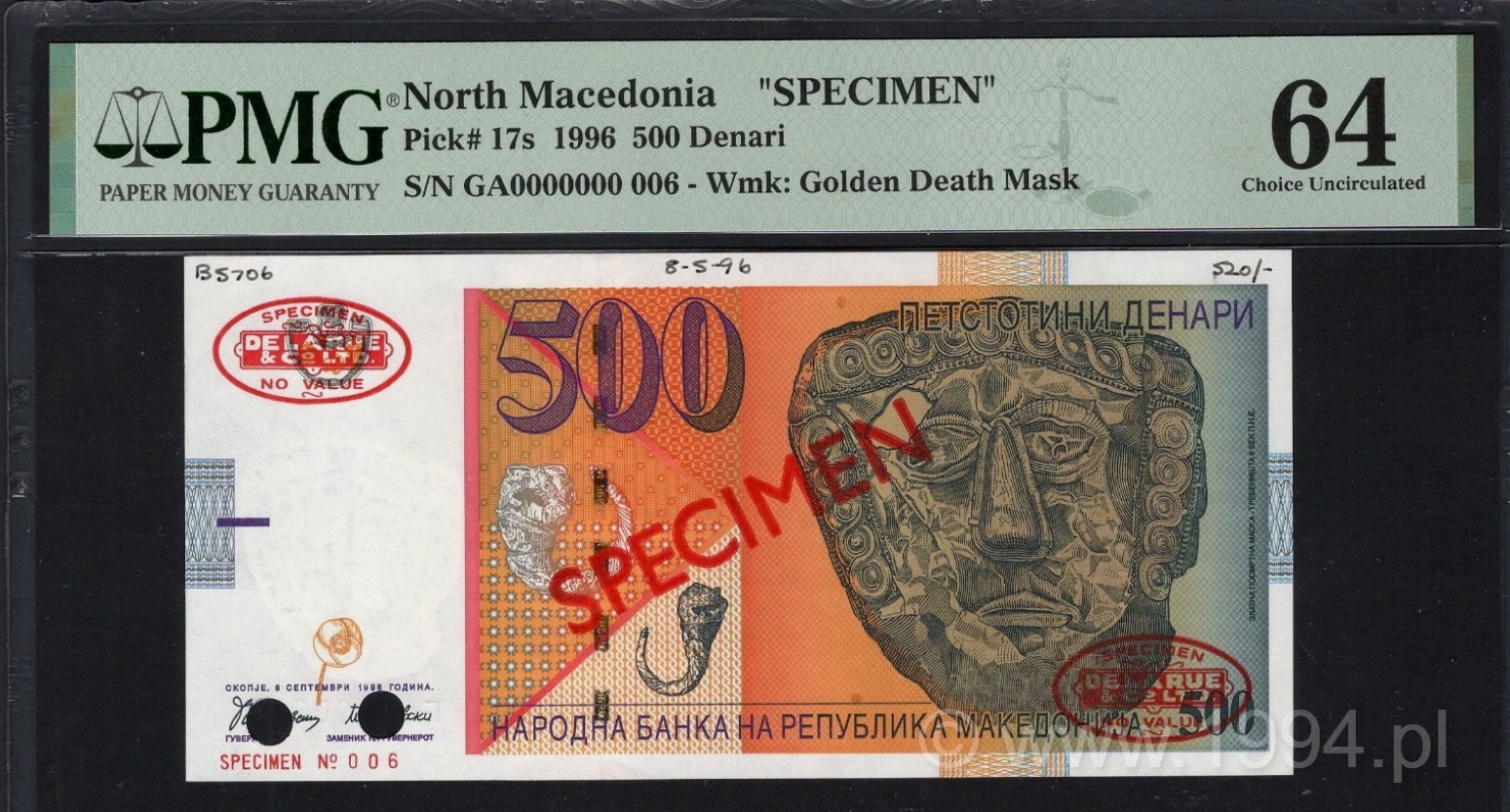
Certified PMG 64 Choice Uncirculated, this example retains crisp printing detail, sharp color, and clean paper surfaces. The punch cancels, specimen overprint, and control numbering are intrinsic elements of the specimen format itself and reflect the note’s function as a printer verification and archival reference piece rather than a circulating banknote. Read more →
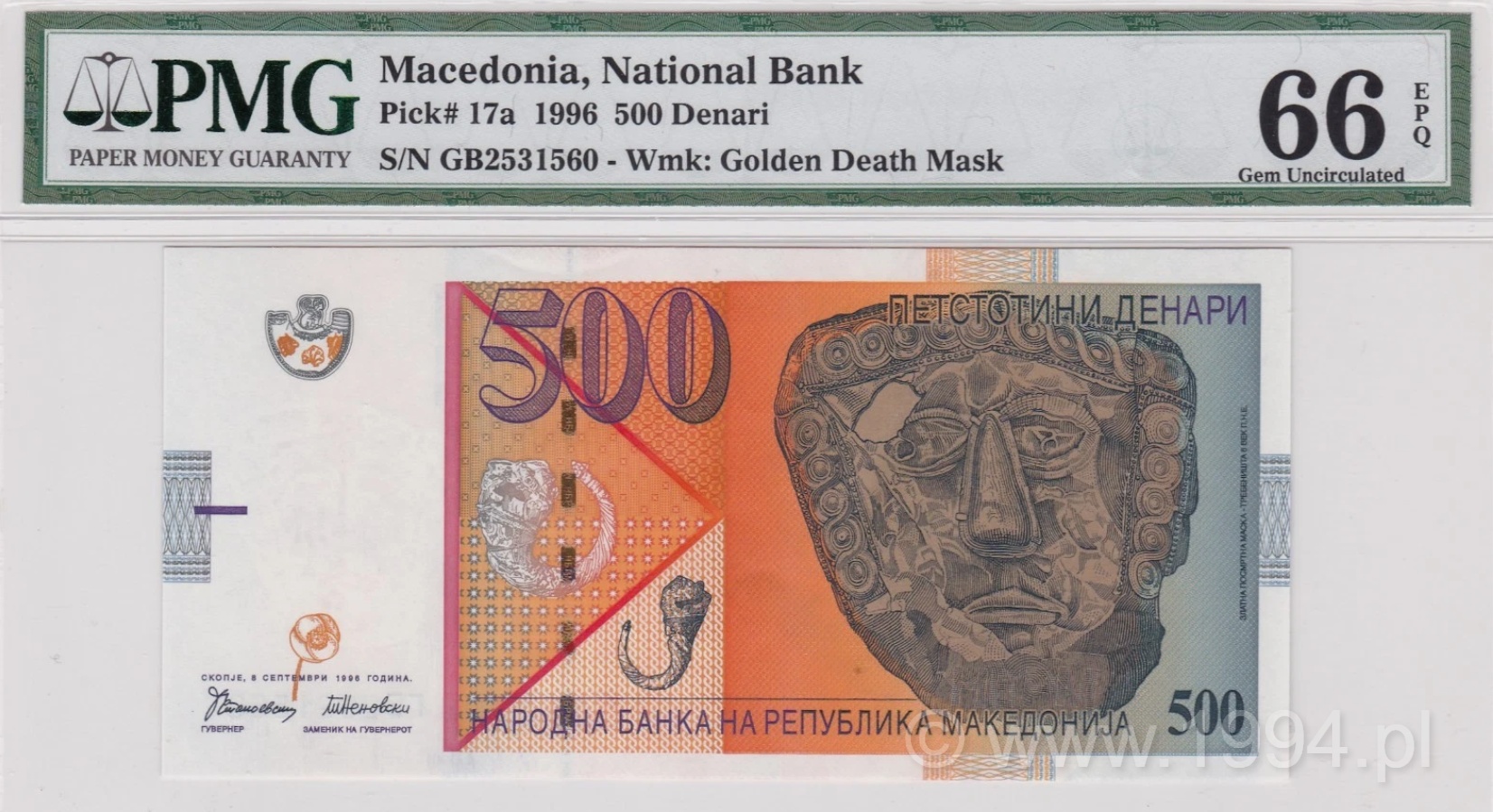
The 500 Denari banknote issued in 1996 forms part of the first modern currency series of the Republic of Macedonia following independence in 1991. Introduced by the National Bank of the Republic of Macedonia as part of the country’s early monetary stabilization program, the series established the visual identity and security standards of the newly independent state’s paper currency. Production was entrusted to Thomas De La Rue & Company Limited in London, whose security printing expertise shaped both the artistic and technical structure of the notes. Read more →
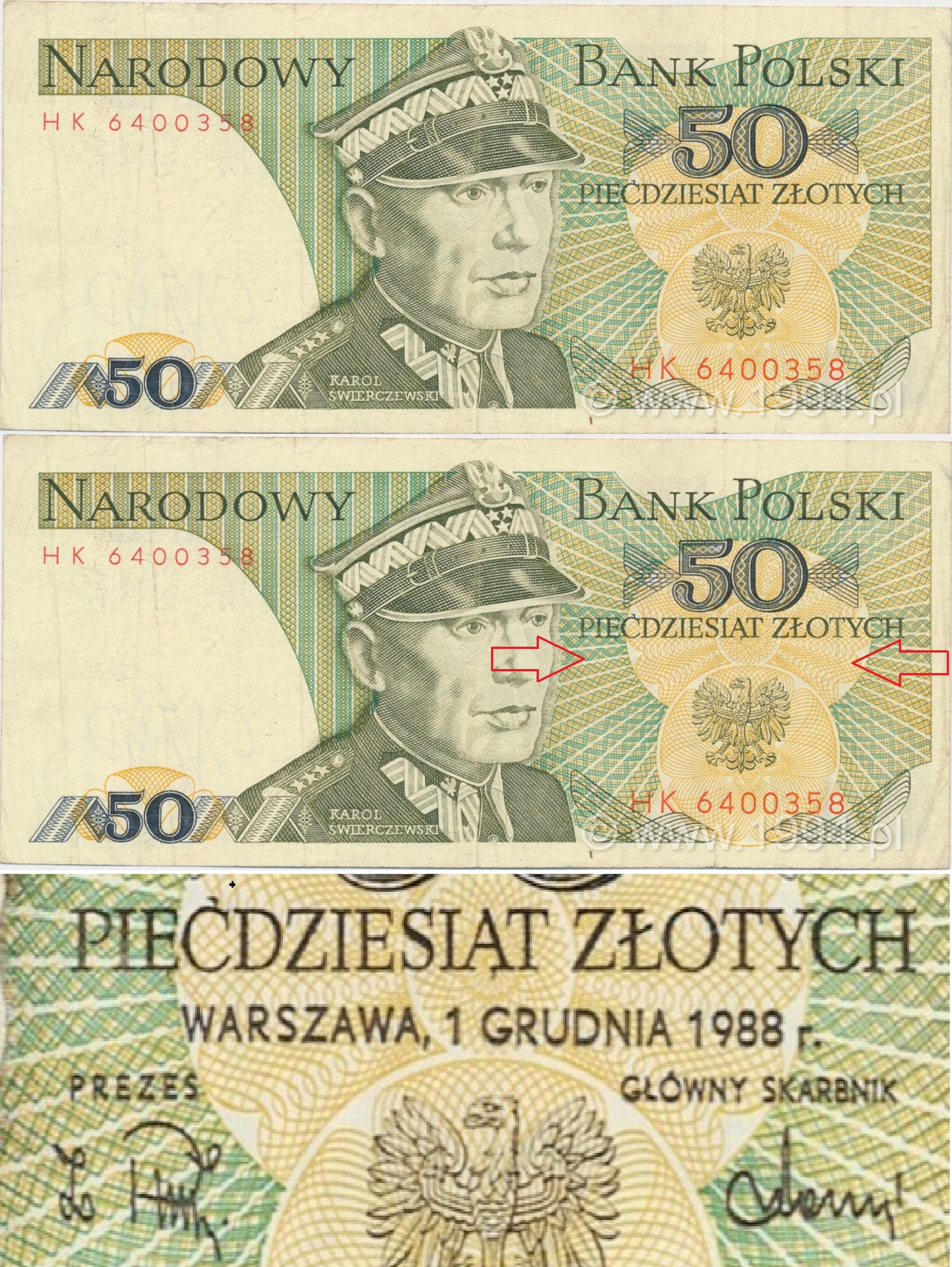
Issued 50 Złotych banknote of the Narodowy Bank Polski dated 1 December 1988 displaying a major typographic omission error. The entire printed layer containing the line 'WARSZAWA, 1 GRUDNIA 1988' together with the signatures of the issuing officials (Prezes and Główny Skarbnik) is completely absent. The national eagle emblem printed in the central guilloche remains intact, demonstrating that only the upper black typographic layer failed to transfer during printing. Read more →