Description and research notes
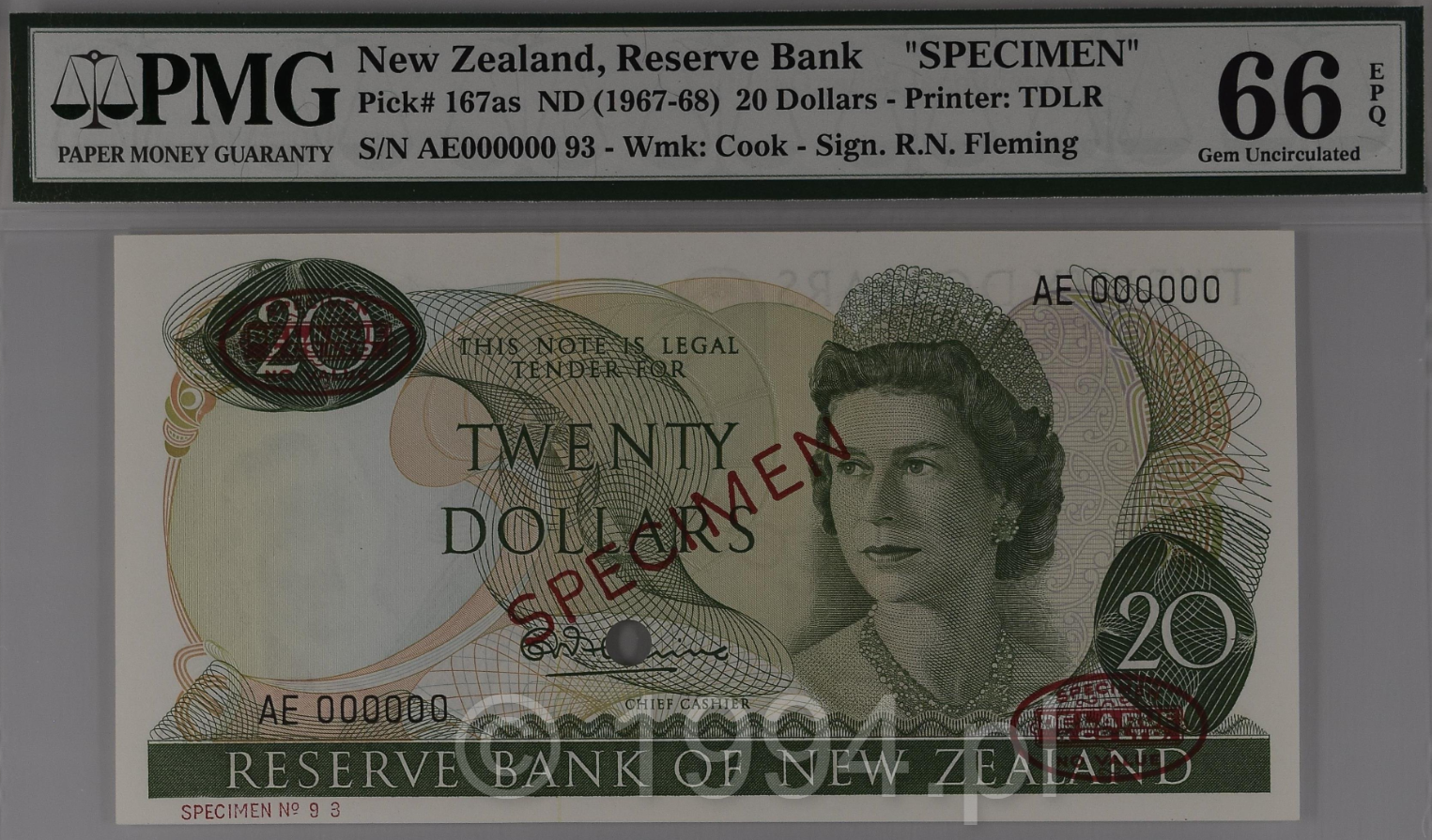
The 1967 ten-dollar specimen forms part of the inaugural decimal currency series issued by the Reserve Bank of New Zealand, marking the country’s transition from the sterling-based system to the modern dollar structure introduced in July 1967. This example carries the signature of Roderick Ninian Fleming, issued during the ND (1967–1968) period, whose tenure as Chief Cashier defined the initial phase of decimalization and makes his signed notes among the earliest products of the new monetary system.
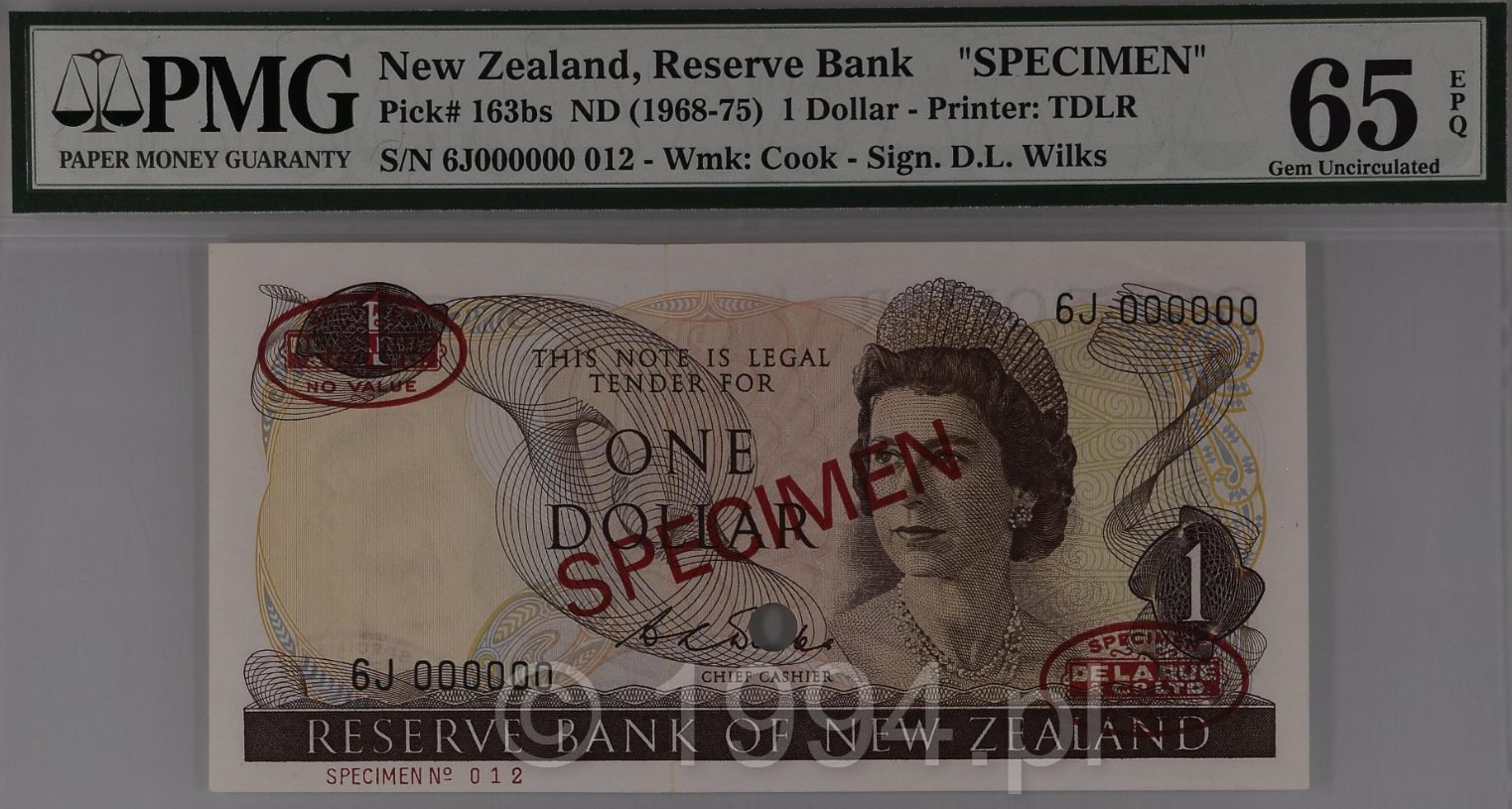
Printed by Thomas De La Rue & Company, London, the specimen was prepared for formal distribution to central banks and institutional collections. It displays the complete De La Rue presentation format: a bold red diagonal 'SPECIMEN' overprint, two oval De La Rue control stamps, and a single punch-hole cancellation. The note carries Serial C4000000 and is marked as Specimen No. 93, confirming its position within the controlled specimen allocation sequence produced for official use.
The design features Queen Elizabeth II on the obverse, executed in detailed intaglio engraving, while the reverse presents the New Zealand falcon in flight against a mountainous landscape-an iconic motif within the first decimal series. The Captain James Cook watermark remains embedded within the paper, linking the design to the broader historical narrative of New Zealand’s development.
As a Fleming-signed specimen from the ND (1967–1968) issue, this note represents both institutional transition and technical refinement in banknote production. The combination of limited specimen distribution, short signature window, and complete cancellation format defines it as a fully realized example of Thomas De La Rue & Company specimen practices of the late 1960s.
Graded PMG 67 EPQ Superb Gem Uncirculated, this note stands at the top of the PMG population for the type, with only two examples recorded at this grade and none certified higher at the time of cataloging. The Exceptional Paper Quality designation confirms full originality, undisturbed paper structure, and complete embossing. In this condition, the note serves as a reference-level specimen within the New Zealand decimal series.