Description and research notes
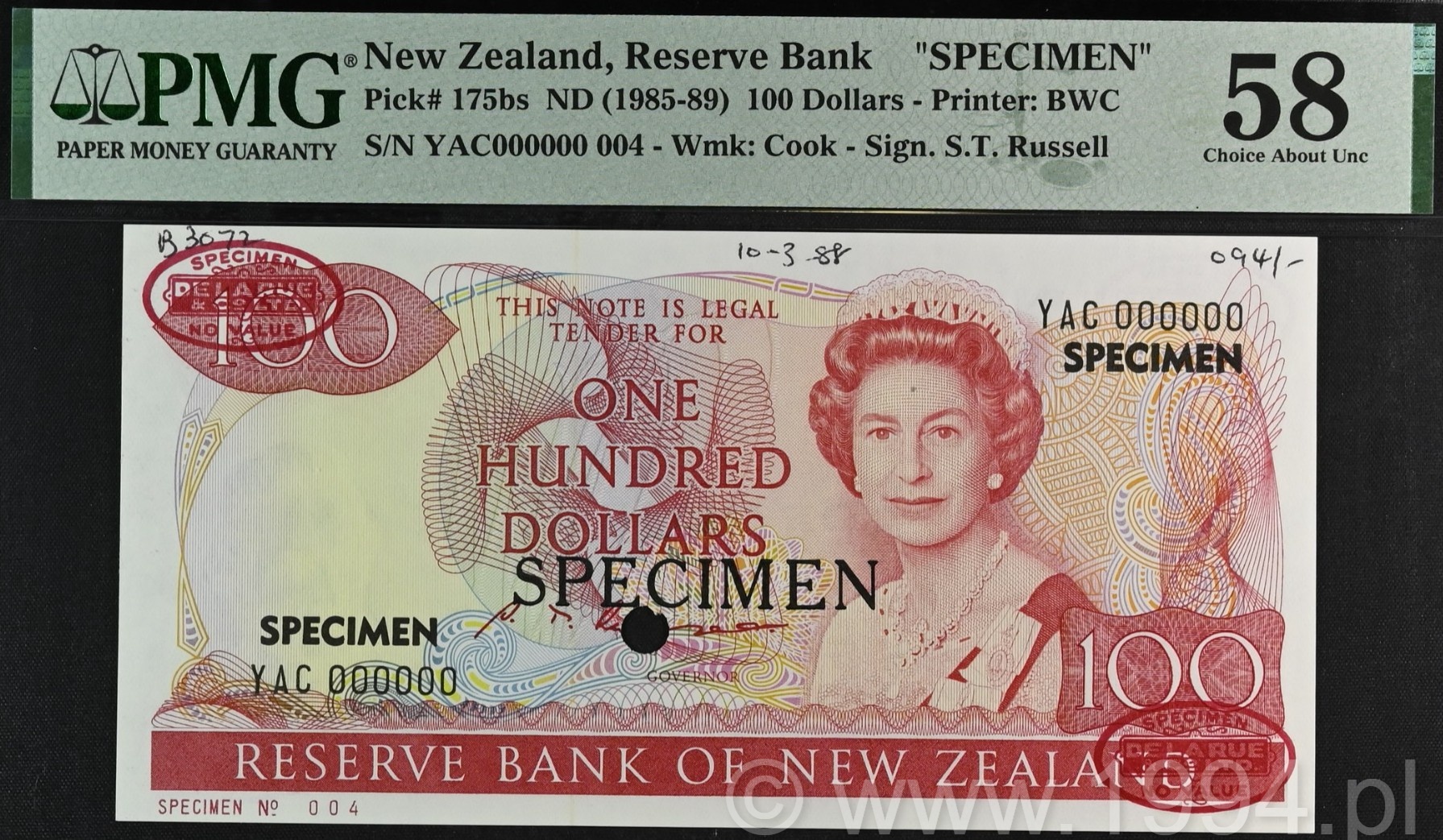
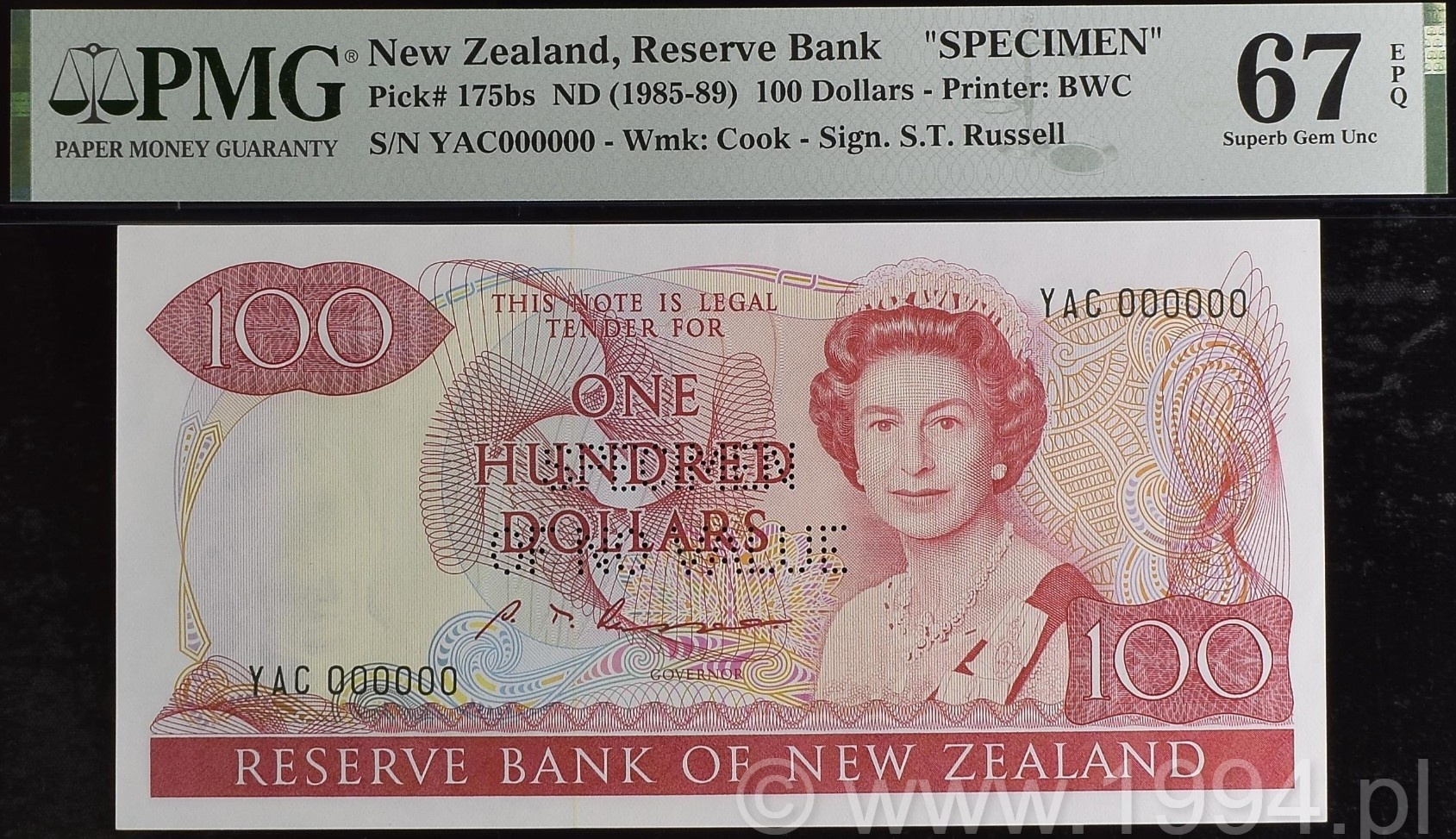
The 1985 one hundred dollars perforated specimen represents a highly specialized internal control format from the final paper-currency series of New Zealand, issued within the ND (1985–1989) period under the signature of S.T. Russell as Chief Cashier. This series marks the closing phase of engraved paper production before the transition to polymer substrates.
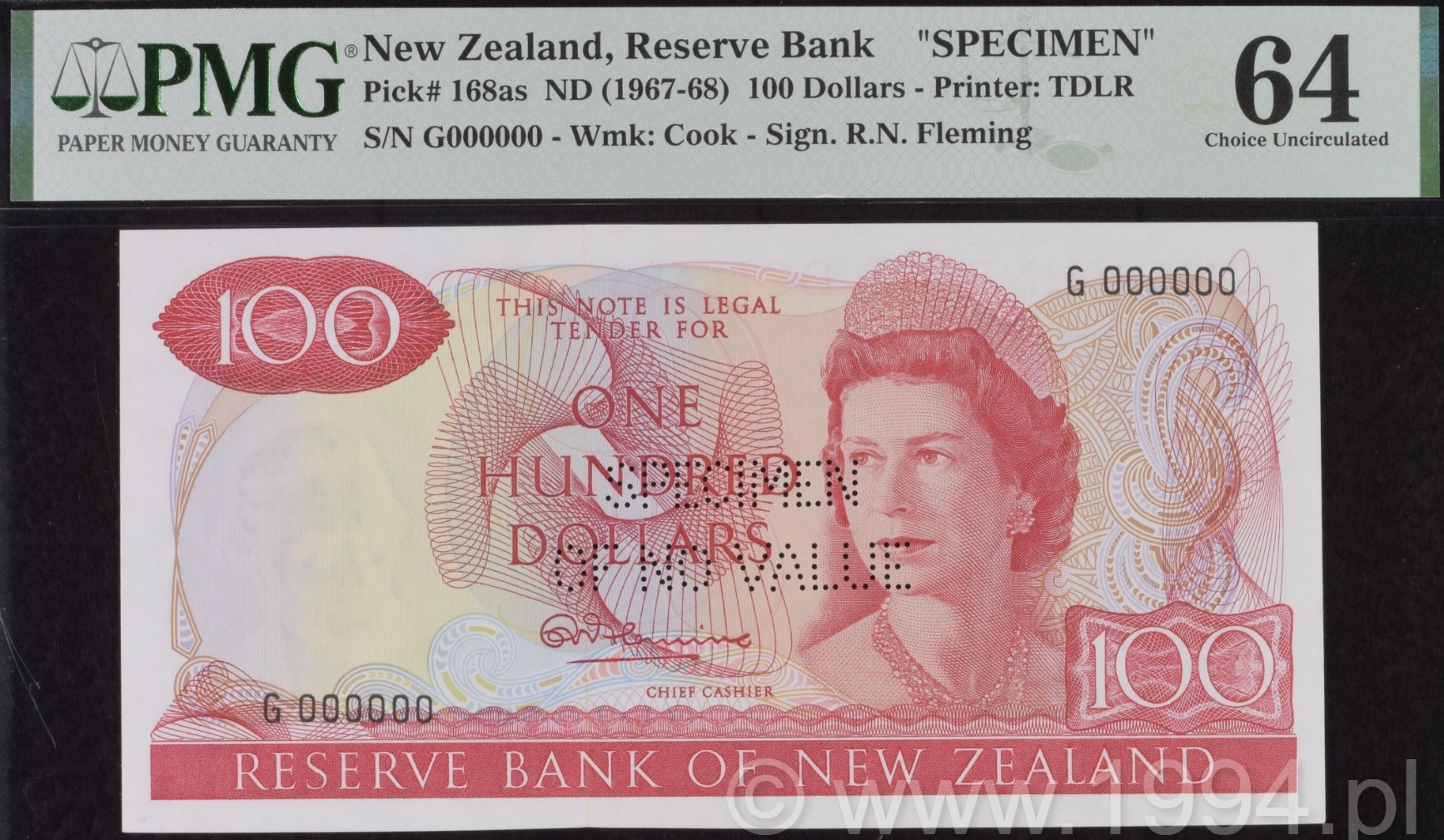
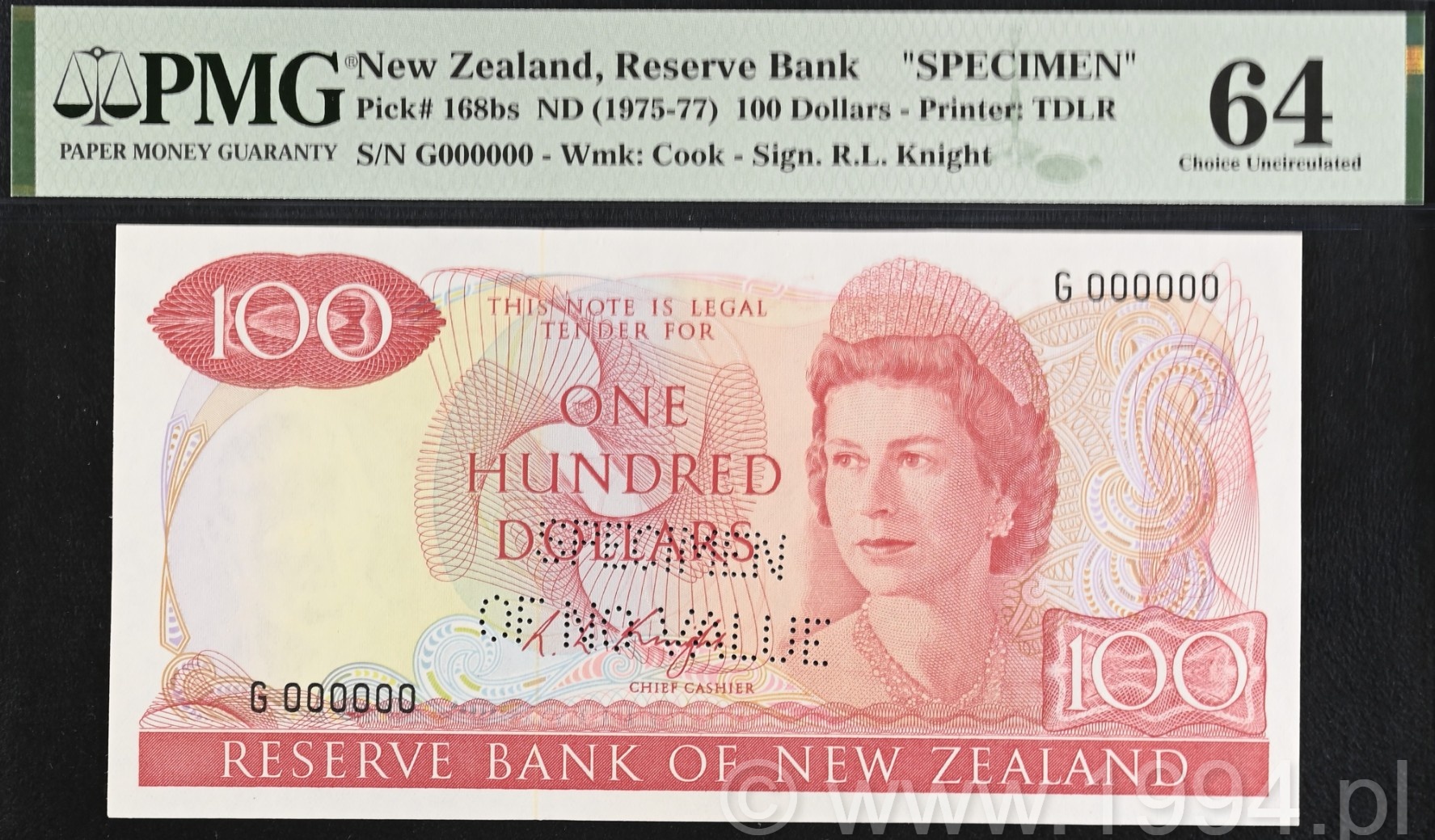
Printed by Bradbury, Wilkinson & Company, Limited, this specimen utilizes a perforated cancellation system forming the words 'SPECIMEN OF NO VALUE' across the central design. The perforations are precisely integrated within the engraving field, preserving full readability of the design while permanently invalidating the note. This format reflects a controlled archival and verification method used within printer and institutional environments.
The note bears Serial YAC000000, a standardized specimen-format serial used for internal identification and archival tracking. There is no ink overprint, no oval control stamp, and no punch-hole cancellation, emphasizing the exclusive use of perforation as the defining specimen control mechanism for this format.
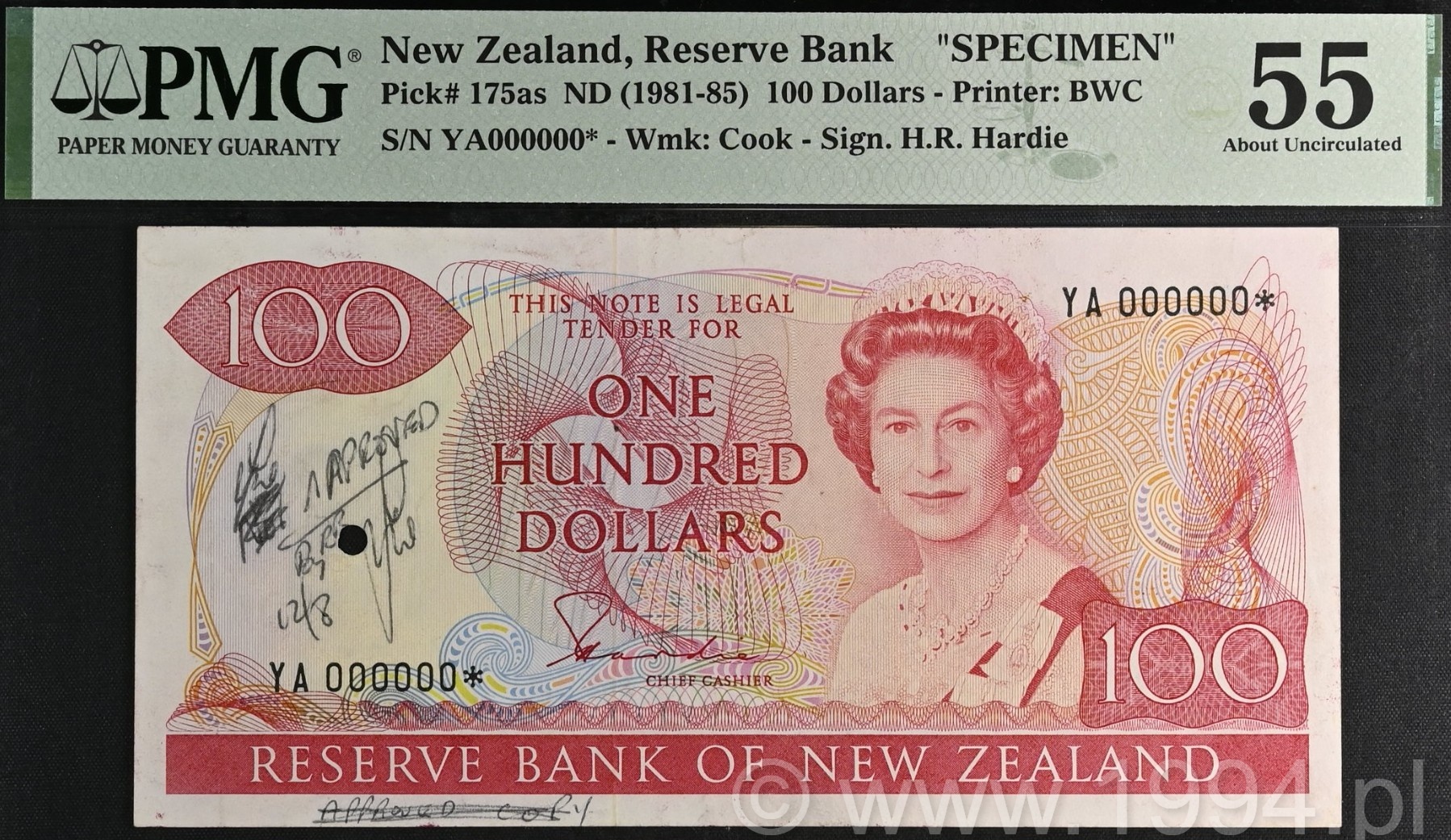
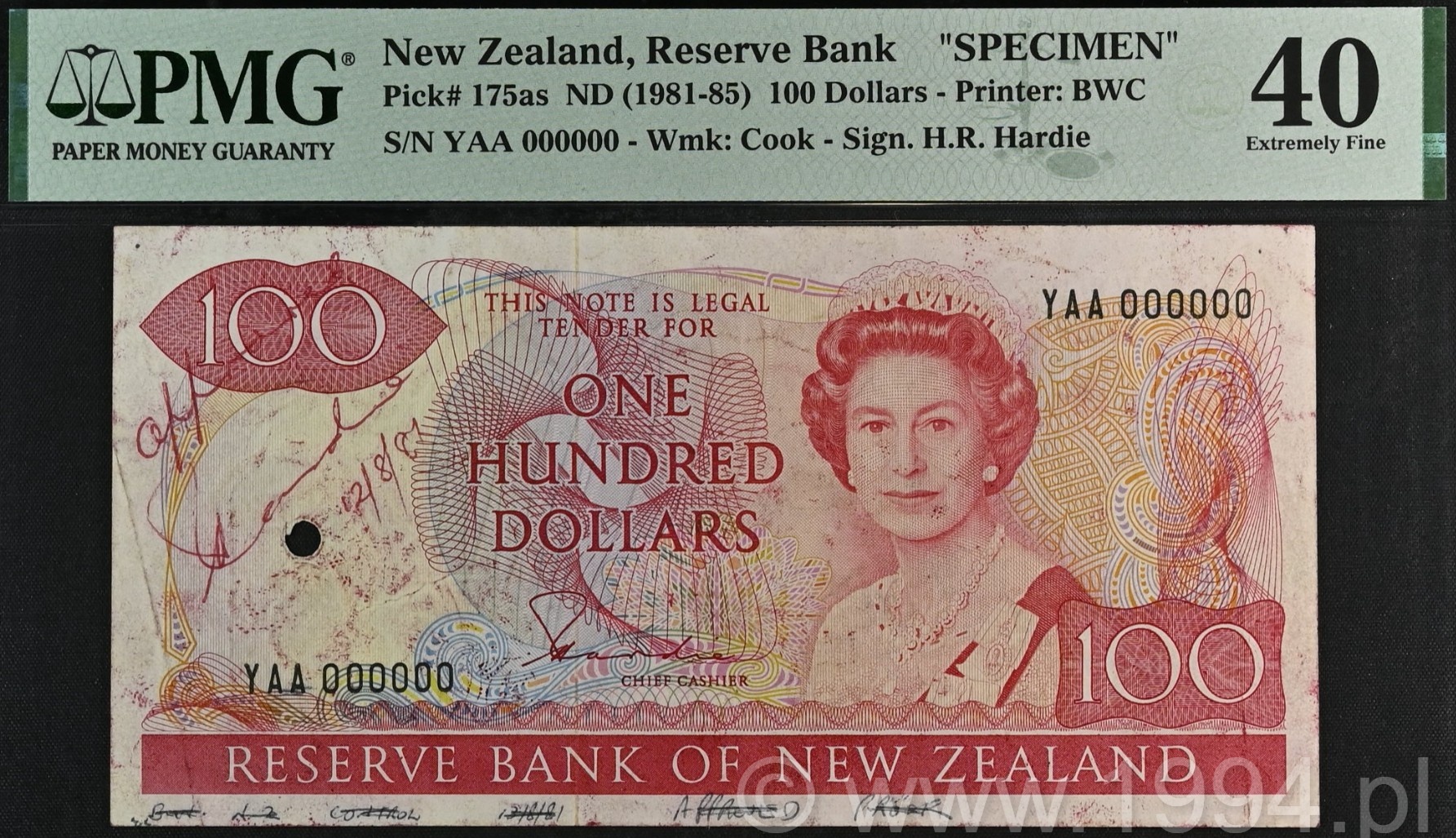
The design retains the full issued layout, featuring the engraved portrait of Queen Elizabeth II and the Captain James Cook watermark embedded within the paper. The multitone guilloche structure and deep crimson palette represent the fully matured engraving style of Bradbury Wilkinson during the late paper era.
As a perforated specimen from the Russell signature period, this note reflects a refined stage in specimen control methodology, where perforation-based systems replaced earlier multi-method approaches. The clean, uninterrupted design combined with precise perforation work defines this format as both technically advanced and visually distinctive.
Graded PMG 67 EPQ Superb Gem Uncirculated, this example stands alone at the highest certified level for this issue, with a population of one and no examples recorded in higher grades. This top population status places it at the absolute pinnacle of known survivals, combining elite preservation with a rare and technically distinct specimen format.