Description and research notes
The 1992 one hundred dollars specimen marks the introduction of the Rutherford design and the beginning of New Zealand’s final paper currency series before the transition to polymer. Issued by the Reserve Bank of New Zealand and printed by Thomas De La Rue & Company, London, this note replaces the long-standing Queen Elizabeth II portrait with Lord Ernest Rutherford of Nelson, symbolizing a decisive shift toward national scientific identity within the country’s banknote iconography.
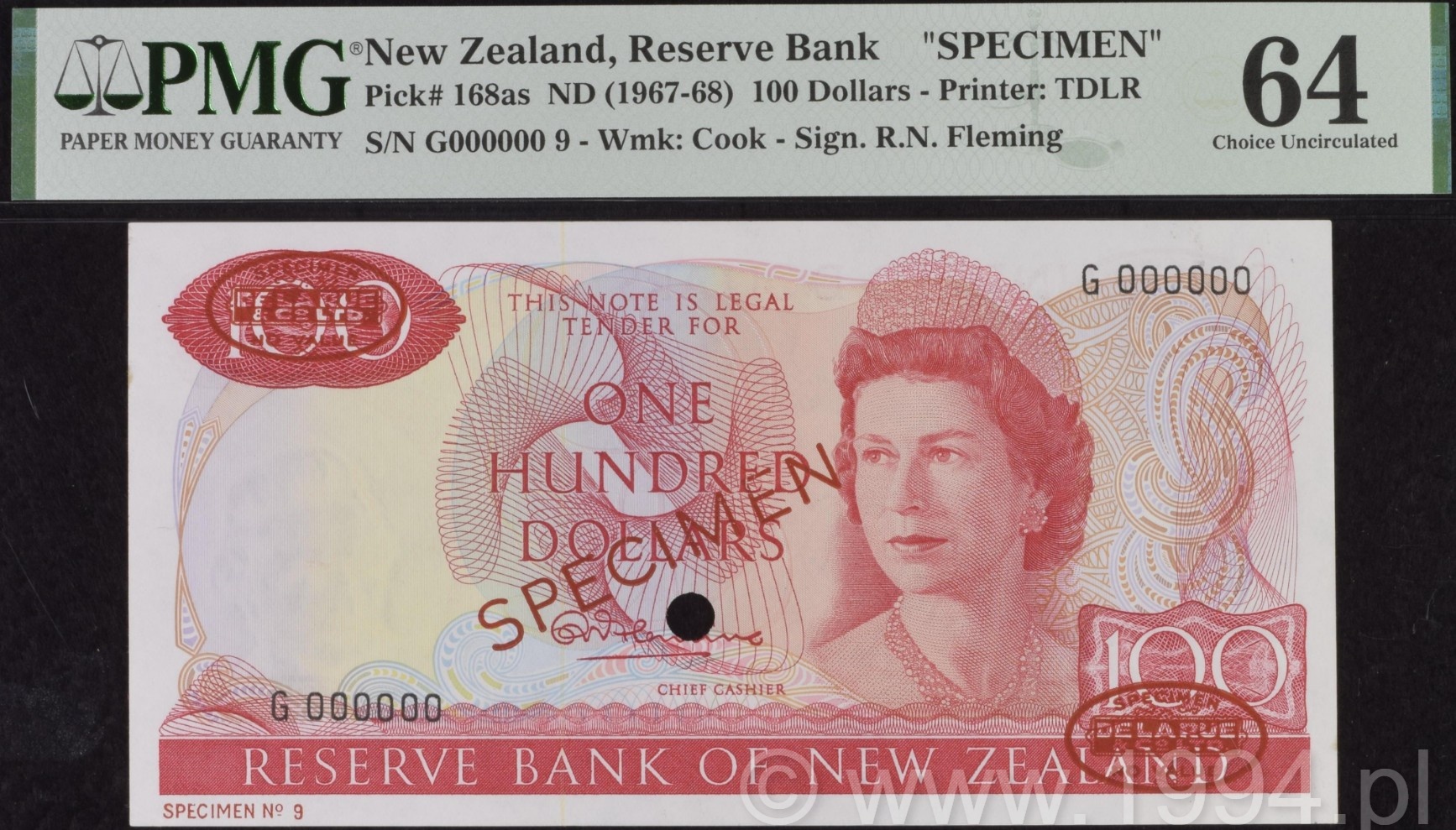
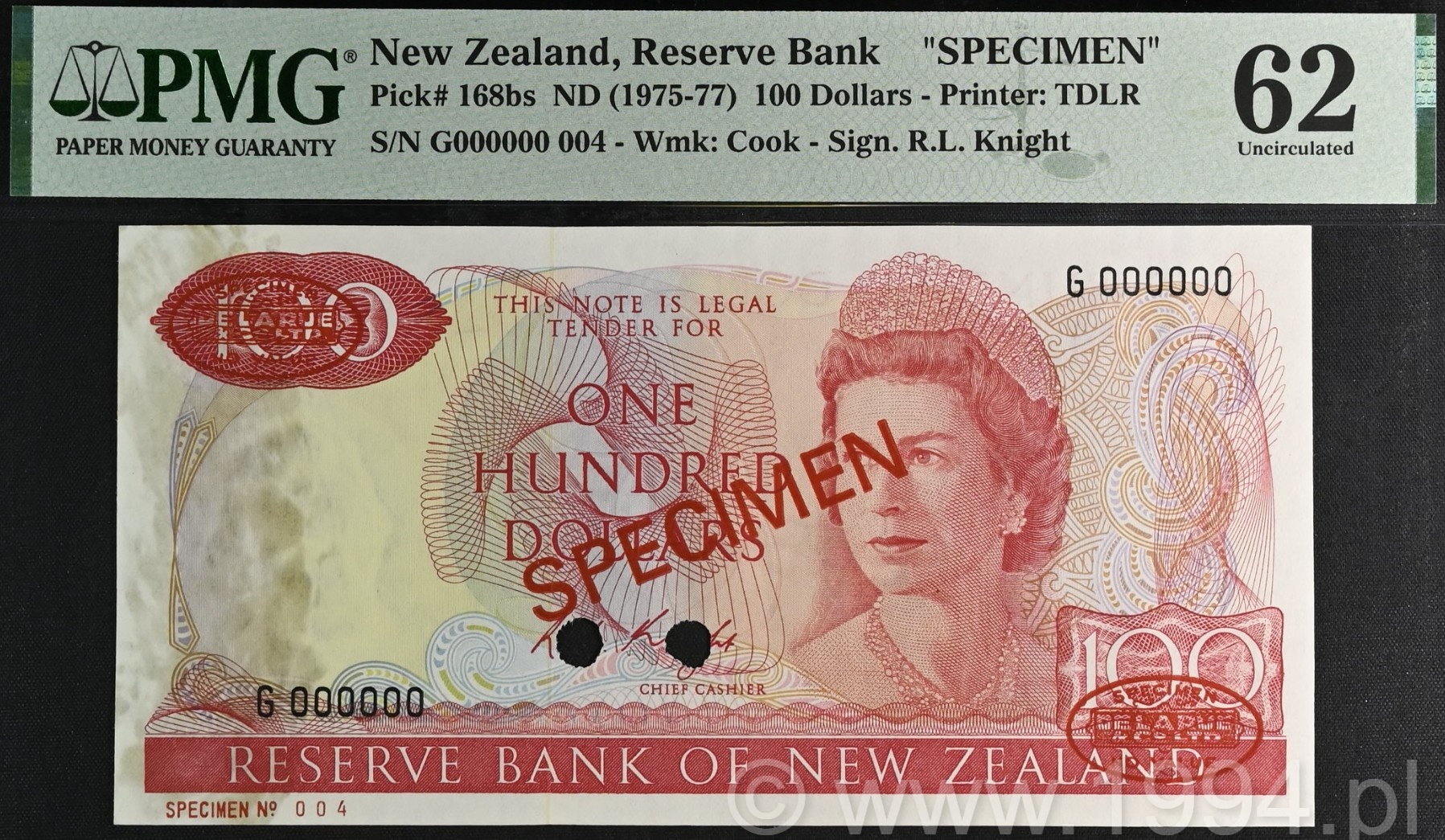
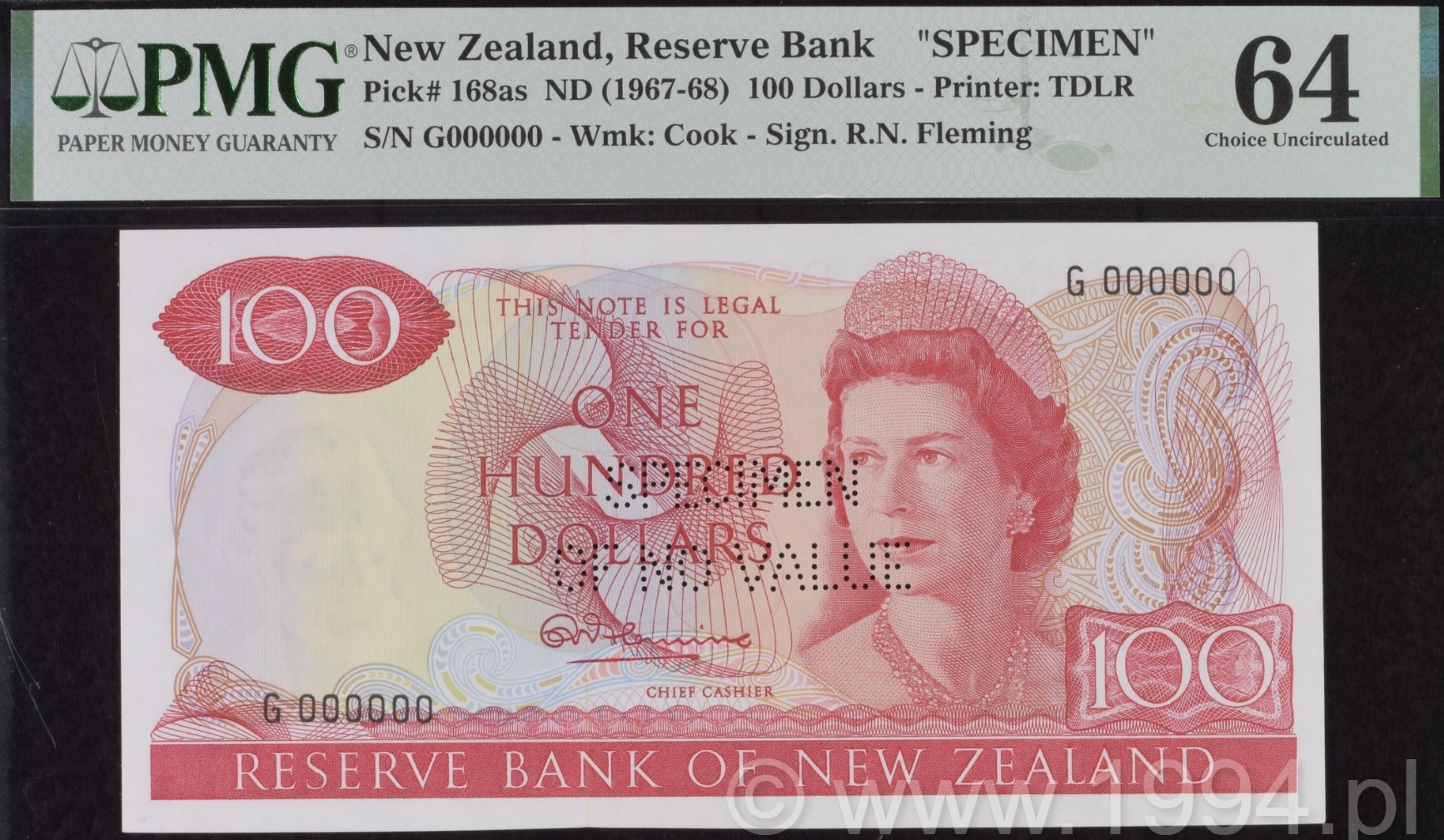
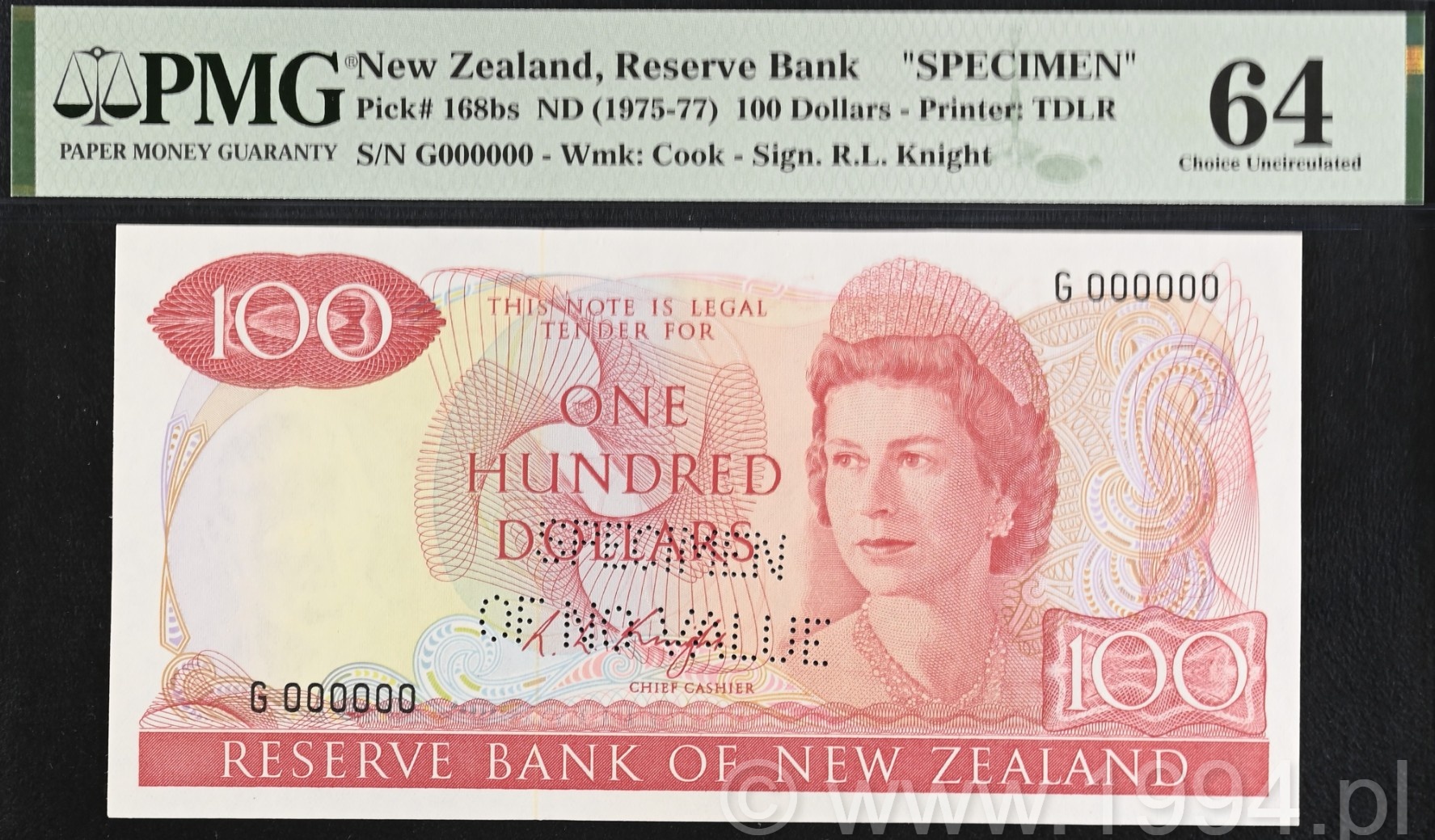
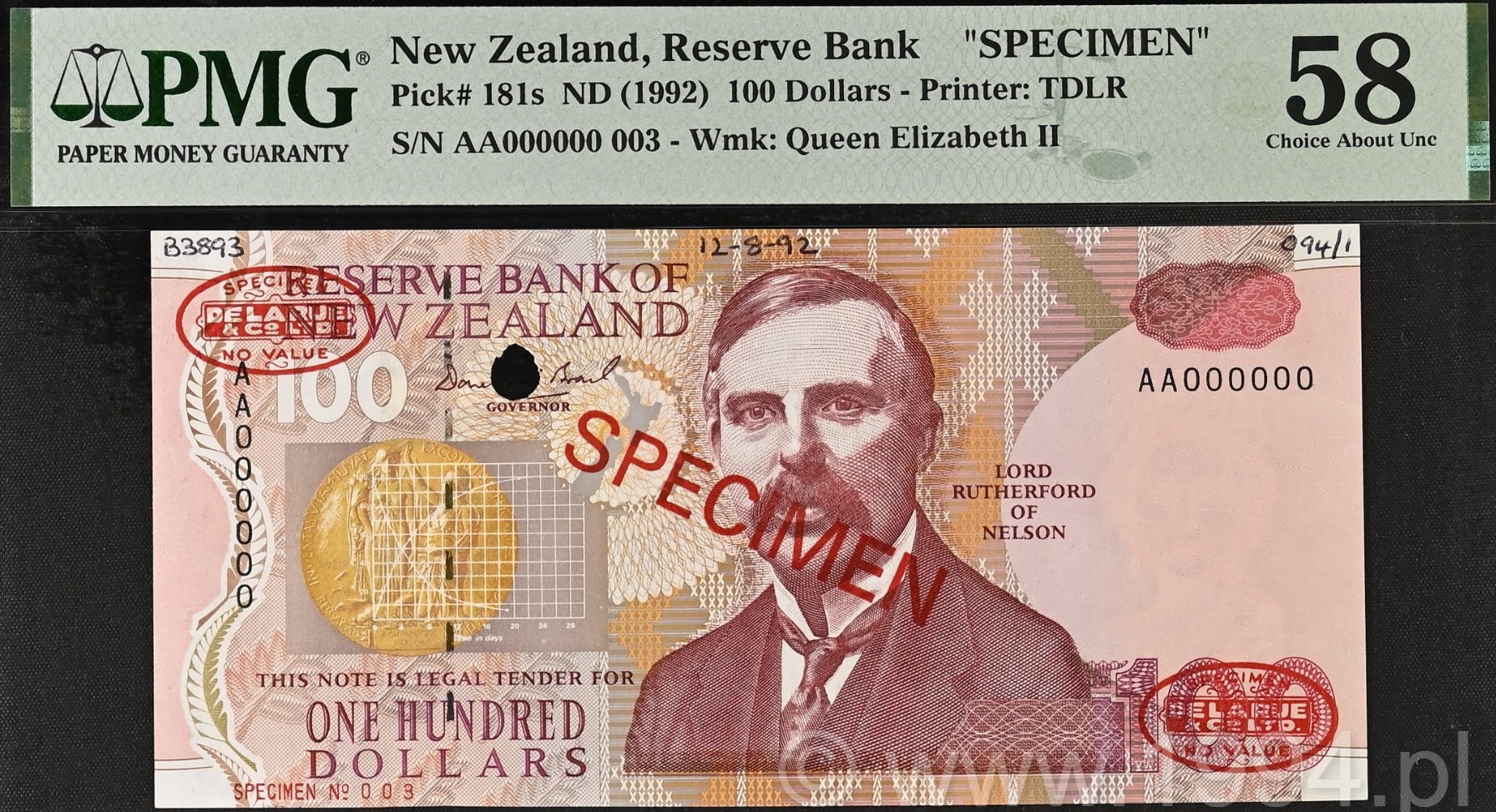
This example represents a complex internal printer specimen, combining multiple control and approval features rarely encountered together on a single note. The most visually striking element is the red 'SPECIMEN' overprint applied vertically from top to bottom across the portrait and central design. This orientation differs fundamentally from the standard diagonal format used on earlier De La Rue specimens, indicating a distinct production or presentation method within the 1992 issue.
Two red De La Rue oval control stamps marked 'SPECIMEN NO VALUE' are present, positioned separately across the design field, reinforcing its status as a non-circulating reference piece. A single round punch-hole cancellation is applied near the center, completing the physical invalidation process typical of controlled specimen handling.
Equally significant are the three clear handwritten annotations along the upper margin, each applied in different positions and likely at separate stages of internal review. These include production or archival references, numeric coding, and inspection notations. Additional manuscript markings appear within the design field, including ink annotations adjacent to the punch-hole and signature area. The printed signature of Don Brash as Governor remains fully visible, creating a layered interaction between formal issuance elements and internal printer workflow markings.
The note bears Serial AA000000 003, a structured specimen serial format used for controlled archival distribution and internal cataloging. The watermark of Queen Elizabeth II is retained within the substrate, forming a deliberate continuity link between the outgoing Elizabeth II series and the newly introduced Rutherford design.
The obverse integrates Rutherford’s portrait with scientific imagery, including atomic modeling references and the Nobel Prize medal, while the reverse presents native New Zealand flora and fauna rendered in complex multitone engraving. The precision of line work, color layering, and registration reflects the mature technical standard of Thomas De La Rue’s early-1990s production.
As a specimen, this note documents a transitional moment in both design philosophy and production control methodology. The combination of vertical overprint orientation, dual oval control stamps, punch-hole cancellation, and extensive handwritten annotations establishes it as a true printer’s working artifact rather than a standard presentation specimen.
Graded PMG 58 Choice About Uncirculated, this example preserves the full integrity of all applied control features and annotations, offering a rare and highly detailed insight into the internal processes behind the creation of New Zealand’s final paper one hundred dollar note.